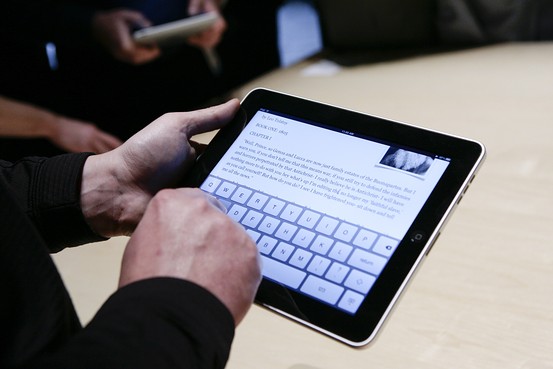
The Daily's tech bells and whistles can't save it from empty-calorie content.
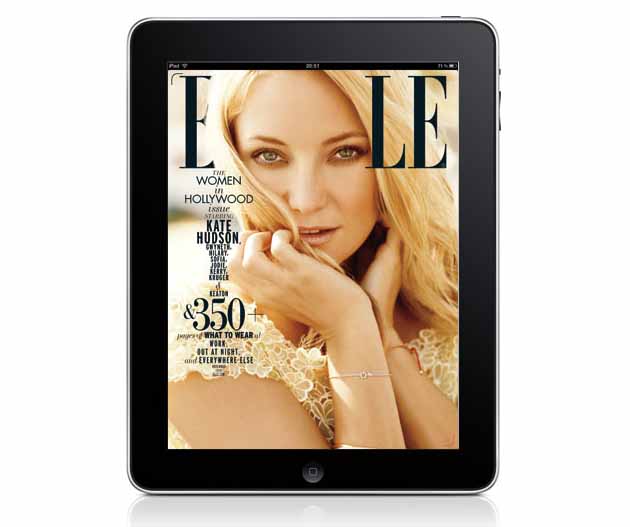
The Daily, the made-for-iPad product from Rupert Murdoch and News Corp., made a much-anticipated world debut Wednesday at the Guggenheim in New York. News Corp marketing promised “a package that’s smart, attractive and entertaining.”
Too bad it delivers an experience that’s pedestrian, plain and vaguely creepy. Not to mention prone to crashing.
Nielsen have stepped away from their television statistic to crunch the numbers on current smartphone ownership in the United States, and some of those numbers are fascinating indeed.
Perhaps the most interesting revelation is that right now, Android, Blackberry and iPhones are all pretty much in a dead heat when it comes to market share. That makes this a pivotal time for Google, Apple and RIM. We know Apple is well placed this year for some big numbers, thanks to the Verizon iPhone and the forthcoming iPhone 5, but can even those handsets stop Android from increasing its lead on iOS?
Also intriguing: according to Nielsen’s data, Asians are the most likely people to own an iPhone, while African Americans love BlackBerries. Smartphone penetration is also much lower amongst Whites than Hispanics or Asians, and use their phones less too.
Interesting stuff. If you’re intrigued by smartphone demographics, plunge in here for more.
We’re on the iPad’s case today — literally. We start of the day with two cases designed for the iPad. The first is the colorful iLuv case with Tatz Graphics. Next is a faux leather case. We round out the iPad accessories with a five-piece kit either for the the Apple tablet or the iPhone.
Along the way, we also check out a sportswrap for the iPod nano, an iPhone wall charger and an Apple TV media receiver. We also look at some software for your Mac, including Microsoft Office 2011. As always, details on these and many other products can be found at CoM’s “Daily Deals” page right after the jump.
Earlier today, Apple spokesperson Trudy Miller explained the sudden crackdown on e-reader apps that use an out-of-app billing systems (such as Amazon’s Kindle or Sony’s Reader app) in lieu of in-app purchases in order to sell users content.
“We have not changed our developer terms or guidelines,” Miller said. “We are now requiring that if an app offers customers the ability to purchase books outside of the app, that the same option is also available to customers from within the app with in-app purchase.”
Offending apps have until March 1st to comply or be yanked from the App Store.
It seems, though, from this wording that Amazon and Sony can comply simply by giving users the option of where they want to buy an e-book: directly from them via the web at the lowest price, or through in-app purchases at a higher price to take into account Apple’s 30% cut.
Google CEO Eric Schmidt has been seen hobnobbing around town with Steve Jobs on more than a few occasions, but now that Steve Jobs is sick and Eric Schmidt is voluntarily leaving his ten year stint as the head of the infamous search giant, journalists are starting to ask if Schmidt might be the successor to Jobs’ crown.
On Schmidt’s part, while being respectful of Steve and conscientious of his illness, he’s also being a little coy.
After months of being an open secret, News Corp’s iPad-only Newspaper, The Daily, is finally here… along with iTunes’ new in-app subscription API that will allow the Daily and other e-publications to finally begin to prosper. We’ve got the full details.
In an ironic twist, Apple is preparing to co-host unveiling an iPad-only newspaper that could save publishers, while also releasing guidelines limiting publishers’ app subscription options. The Cupertino, Calif. tech giant – which owns iTunes App Stores for the iPod, iPhone, iPad and Mac – is telling publishers to stop circumventing paying Apple’s 30 percent cut on sales.
The requirement to begin March 31 – which Apple spokespeople stress is not new – forbids companies such as Sony, Amazon and presumably others with ebook reader apps – from only initiating book sales outside the iTunes ecosystem. Others, such as the Wall Street Journal and the Financial Times also offer apps but use only private billing systems.
The arrests of nearly 30 people are expected to be announced today in a New York-based cybercrime ring targeting Apple stores.
Manhattan District Attorney Cyrus Vance Jr. will name names Wednesday of the dirty two-plus-dozen who forged credit card numbers to buy goods from Apple stores across the country.
The allegations involve a total of 27 people and roughly $1 million in ill-gotten gains from Apple stores across the country from New York to Los Angeles to Wauwatosa, Wis.
The indictment lists purchases in Apple stores including Las Vegas, Atlanta, Indianapolis and St. Louis, and smaller communities such as Altamonte Springs, Fla., and Stamford, Conn.
Group members of the group occasionally ran up sizeable tabs – more than $3,000 worth of products in one go — but other transactions were as small as a $53.45 tab for a laptop case, according to the indictment.
Accused ringleader Shaheed Bilal had thousands of stolen credit card numbers stored in e-mails and bragged on Twitter about using credit cards at restaurants, prosecutors said at his arraignment Tuesday.
It seems only appropriate News Corp.’s iPad-based “newspaper”, The Daily, will be officially unveiled today at the Guggenheim Museum, a repository of Post-Impressionistic artists. Like Cezanne and Manet, News Corp.’s Rupurt Murdoch and Apple’s Eddie Cue hope the application ushers in the age of Post-Print and Post-PC.
The ceremony is set to begin at 11 am Eastern, where reporters and analysts will gather to hear details of the project. So far, we only know there will be a $0.99 per week subscription cost. Will The Daily be a digital version of an actual newspaper, with staff, competition, ads and the rest? Can Apple finally find a subscription model that works both for the Cupertino, Calif. tech giant and the beleaguered print industry? Can the iTunes’ Eddie Cue really stand-in for the ailing Steve Jobs?
And you thought getting busted for checking out porn at work was bad: an Italian member of parliament was snapped checking out prostitutes on his iPad during a session.
Except that in the Viagra-fueled Italian government that’s pretty much business as usual. Simeone Di Cagno Abbrescia, 67, is a member of Italian premier Silvio Berlusconi’s PDL party, who perhaps thought checking out what to do after work on the iPad’s glossy 9.7-inch screen was no big deal.
The tablet computer – if he’d had a laptop he could’ve adjusted the screen down – was probably what got him busted by a fellow politician with a phone cam.
Well, this is a heck of a scoop to wake up to on Wednesday morning: 9to5Mac has got its grubby little hands upon what they claim to be the display of the iPad 2’s LCD, fresh off of the assembly lines of China.
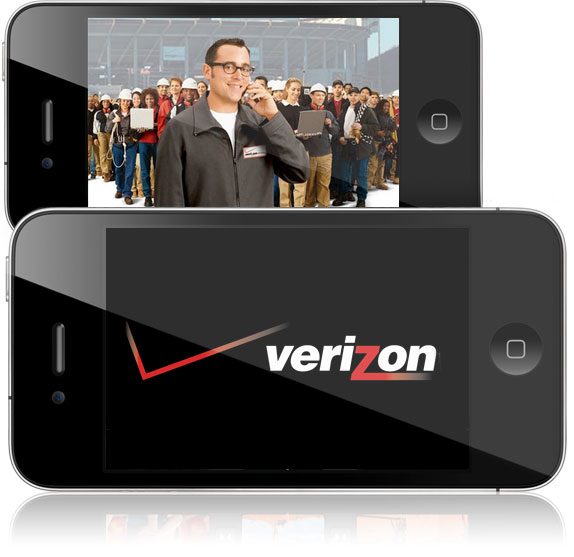
AT&T is waking up to the fact that it has lost its exclusive to the iPhone. Now the company is starting to try to prevent massive customer departures when the Verizon iPhone goes on sale this month. The first try directly aimed at current AT&T customers was the e-mail I received today titled: Feel free to make a call while reading this email.
Ever had a sudden hankering to crank out a few Real Racing HD laps on your iPad while river rafting? Yeah, neither have I (although that might have something to do with the fact that I’ve never been river rafting). But if the itch ever struck, it’d probably be best if the iPad was vacuum-sealed in a tablet-sized, waterproof DryCASE; luckily the company just added the tablet-sized version to their line at Macworld. The cases start at under $60 and includes a headphones/mic jack.
Oh, and think the whole whip-the-iPad-out-while-rafting thing is laughable? Yeah, so did I — until I came across this in the company’s press release:
“A new buoyant waist band has just been added by many requests by stand up paddle surfers and kayak enthusiasts.” Cool.
For the adventurous spirit wishing to go back to the 80s and live on the frontier of national cellular service, all the while carrying around a phone roughly the size of a Korean War field radio, here you go: Thumbs Up’s ’80s Phone, a case for your iPhone 4 that is sure to make you look like Gordon Gekko sent hurtling forward in time. Yours for about $20.
The App Store might have just racked up its 10 billionth download, but the vast majority of those apps have only been given the most cursory examination by users: in fact, according to analytics firm Localytics, 26% of all apps are only used once after they are downloaded.
Localytics’ findings aren’t specific to iOS: they studied thousands of apps across the Android, BlackBerry, iOS and Windows Phone 7 platforms. Across the board, though, one-time use was on the rise in 2010, making it more important than ever for app developers to make that first impression count.
Go down to your local Apple Store and you might just see this wonderful display for the new MacBook Air. Channeling Pixar’s Up, the display features a single helium balloon dangling aloft an 11-inch MacBook Air.
All is not as it seems, of course: nearly invisible fishing wire is being employed to create the illusion. The Air’s light, of course, but not so light that it can be lifted by a child’s balloon.
Still, this calls for an experiment: I wonder who out there is brave enough to figure out how many balloons are needed to send an Air into the stratosphere and willing to back up their math by lending their notebook and its iSight camera to the cause?
What with Apple and TV both as American as pecan pie (which, ironically, is actually way more American than apple pie), you’d think the U.S. would have a chokehold on TV-iPhone innovation. Nope — besides Al-Jazeera now streaming live news on the iPhone for free, last week Germans had a chance to watch and interact with the world’s first augmented-reality TV show.
Viewers of Galileo, a quiz show that airs on the German ProSieben channel, were able to interact with the questions on the TV screen by viewing and interacting with augmented reality versions of the questions on their iPhone screens, courtesy of augmented-reality app Junaio (For a visual demo, suffer through a short ad and watch the cute video). Not to worry though — Metaio, the German-based developer that makes Junaio, says similar stuff is on it’s way to the U.S. soon. Fantastisch!
What’s the opposite of putting a pig in lipstick? Making a leggy supermodel wear a sow mask? I’m just struggling to find the proper analogy here, because some mad man has just released a fairly exhaustive skin for iOS that makes your iPhone look like — horf — a Windows Phone 7 series device.
Hidden inside a sheathe of patents awarded to Apple today is a particularly interesting one that suggests that your future Mac just might be a slab of aluminum that glows.
If you look at the back of your MacBook, it’s pretty easy to piece together Apple’s current process in making the Apple logo glow. They carve a cut-out of the Apple logo in the MacBook lid, close it up with a sheet of opaque white plastic and when your display is on, the light leaking out causes the logo to emit light.
What Apple wants to do is make the logos and LED displays of future Macs glow without carving a hole in the aluminum. They basically want light-emitting logos and indicators to be invisible unless they are emitting light.
Search Google on your desktop browser and as long as it is HTML5 compliant, hovering your mouse over a link will give you a visual preview of that site, giving you all the more context as to whether or not it’s really the site you need.
Up until now, Google’s Instant Preview functionality wasn’t available to iPad and iPhone users, but it looks like the search giant’s on the cusp of changing that: while it hasn’t been rolled out far and wide, Google is currently in the process of testing a rollout of Instant Preview for Mobile Safari.
Once it’s live, the feature will work only if you tap the magnifying glass icon next to each search result. Tapping that icon will open a preview window that shows a snapshot of the page, which can be flicked through iOS style with your finger.
Extraneous, but neat (and, thankfully, optional). Unfortunately, it doesn’t appear that the feature is live yet, but it should be coming soon, so keep your iPads tuned.
Wondering just how you went through your 2GB allowance of data this month when all you did was do some browsing and email? A new lawsuit filed in California federal court says you’re not the only one.
The lawsuit filed by Patrick Hendricks alleges that AT&T has been systematically overcharging iPhone and iPad owners with capped data plans by falsely reporting the amount of data. According to Hendricks’ lawyers, this so-called “phantom data” can inflate the actual amount of incoming data by as much as three hundred percent.
“AT&T’s billing system for iPhone and iPad data transactions is like a rigged gas pump that charges for a full gallon when it pumps only nine-tenths of a gallon into your car’s tank,” the complaint reads.
San Franciscans like to share – heck, there are three startups here that will let you borrow your neighbor’s car for a small fee – so it seems like a great place to launch an app that lets you rent someone’s parking space.
Also, finding parking in San Francisco sucks. Enter iPhone app Park Circa, which lets you rent out your parking space to fellow drivers for a low rate or snag a spot on the fly without having to worry about having change for parking meters.
The app, in beta for iPhone and soon to come to Android and Blackberry phones, is free to download on iTunes.
For some time, makers of components required to build today’s headline-grabbing electronics, such as touch-screen phones and tablets, have been eclipsed by big-named electronics firms. The times have changed and Apple is the prime example. The latest instance is a report suggesting the Cupertino, Calif. company wants to corner the market used to build high-resolution “retina” displays for the next generation of smartphones and tablets.
Apple has inked agreements with LG Display, Sharp and Toshiba Mobile Display, the three suppliers one analyst firm says makes the technology behind the new display. Competition for display components “has reached a fever pitch” straining availability, according to iSuppli.
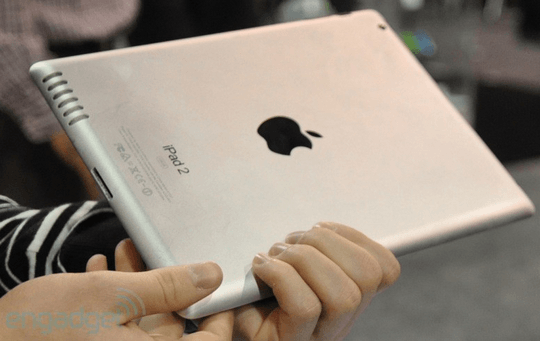
Amongst the constabulary of Mac scuttlebuttheads of which I am an earnest member, that the iPad 2 will ship with a built-in SD card slot — all the better to allow people to edit photos and video on the device, if not increase their storage capacity — is held in consensus.
The prediction is based upon the appearance of numerous iPad 2 cases coming out of Asia that not only have appropriate holes for front and rear-facing cameras and a slot for the iPad’ 2s beefier new speaker, but also a slot that seems just the right size to slide in an SD card.
AppleInsider is now throwing some cold water on those of us expecting to read SDs on the iPad 2, though, instead positing that it’s just a slot reflecting the relocation of the iPad 2’s SIM card slot.
Yesterday, Intel announced a massive hardware recall that surely stopped the hearts of a few investors: the Cougar Point chipset used for their cutting-edge Sandy Bridge CPU had a hardware bug that caused the SATA 3GB/s port to degrade over time, potentially harming hard drives and other devices connected to it.
All things considered, it’s not actually a huge issue. Intel expects that over 3 years of use it would see a failure rate of approximately 5 – 15% depending on usage model. Still, at the end of the day, Intel expects to spend a billion dollars recalling and replacing the chipset. Oof.
The good news, of course, is that a Mac owner, this won’t affect your current system a whit: there aren’t any Macs available with Sandy Bridge just yet. Here’s the bad news, though. That imminent imminent Sandy Bridge MacBook Pro refresh? That might get delayed.