One of the big problems from a developer perspective about the Mac App Store is that it doesn’t allow developers to sell paid upgrades to their apps. Similarly to the iOS App Store, if a developer wants to make money off of a particularly juicy update, they need to sell it as an entirely new app or else… tough beans. Especially on the Mac, this is an issue, since many developers monetize on-going development of apps by selling paid upgrades. But if you sell in the Mac App Store, it’s just not an option.
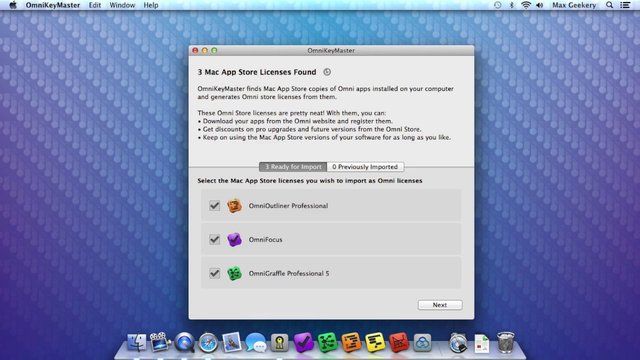
Last week, the Omni Group released a little app called OmniKeyMaster. The ingenious little app essentially allowed people who had purchased versions of Omni’s apps on the Mac App Store to essentially “break out” their apps from the MAS into standalone licenses which were eligible for paid app upgrades. Guess who didn’t like that idea?
Today, the Omni Group has announced that they were forced to remove OmniKeyMaster, presumably under pressure from Apple.
My apologies: I’m afraid we will not be able to offer upgrade pricing to our Mac App Store customers after all. So long as we continue to sell our apps through the Mac App Store, we are not allowed to distribute updates through other channels to apps which were purchased from the App Store.
This sucks, but it isn’t surprising. For example, when Apple released a new version of Logic Pro, they sold it as an entirely new app, and didn’t give upgrade pricing. In Apple’s world, an app is either new, or should be supported for free.
That’s a nice black-and-white way of looking at things, but it’s just facilitating the same race-to-the-bottom pricing on the Mac App Store that we see on the iOS side of things, where developers simply can’t justify supporting an app long-term because the money they are making per customer doesn’t justify on-going support.
On the other hand, the Mac App Store brings an app to the attention of many more Mac users, so it’s definitely a trade-off. However, I think Apple is ultimately shooting itself in the foot here. The goal of the Mac App Store is to be the one-stop shop for all app Macs (and give Apple a 30% cut of every app sold on their platform), but as long as Apple’s policies prevent developers from being able to support quality apps on an on-going basis, there’s going to be fragmentation, as users figure out that the best deal is to buy from a developer directly, and not buy through the MAS.
Via: MacStories

John Brownlee is a writer for Fast Company, and a contributing writer here at CoM. He has also written for Wired, Playboy, Boing Boing, Popular Mechanics, VentureBeat, and Gizmodo. He lives in Boston with his wife and two parakeets. You can follow him here on Twitter.

