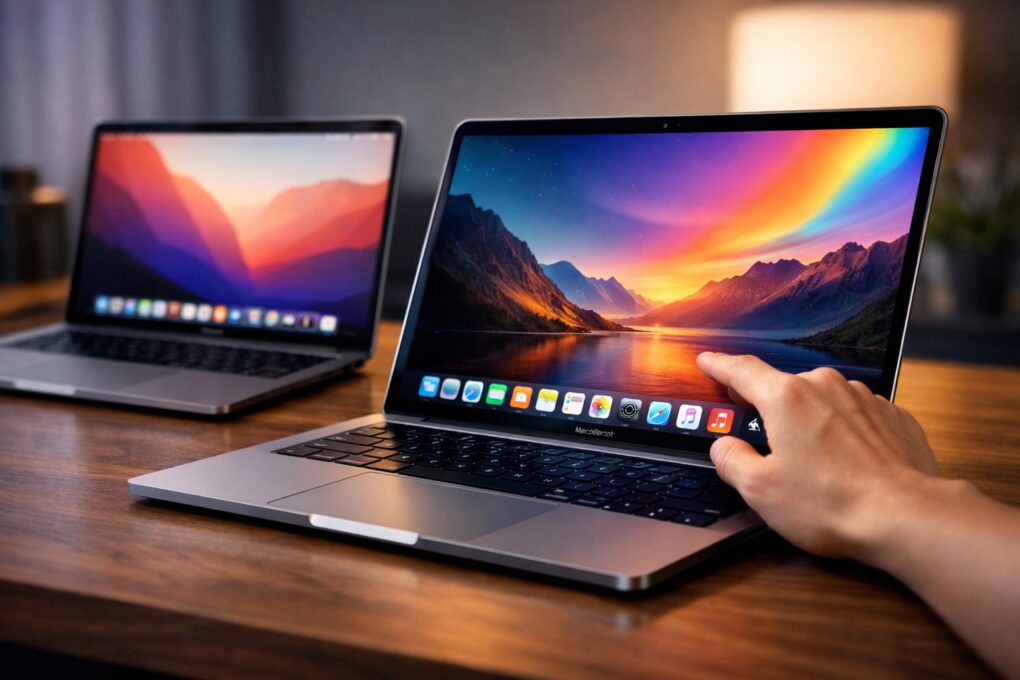
Apple’s long-anticipated high-end MacBook — the OLED-display machine, possibly with touchscreen, that many expect Apple to call the MacBook Ultra — could arrive a lot sooner than expected, according to a new report Thursday. As in, possibly as soon as 3Q 2026, which probably means September.
MacBook Ultra could come sooner than you think
Until now, the working assumption among Apple watchers placed the MacBook Ultra’s arrival no earlier than late 2026, or early 2027 following supply chain disruptions. The new report from market intelligence firm Omdia upends that picture. It notes that Samsung will supply displays for both screen sizes of the upcoming touchscreen MacBook Pro, aka Ultra. Samsung’s distribution could commence in July, with the devices expected to launch in the third quarter of 2026.
A Q3 release most likely means September. Apple rarely introduces major hardware in July or August. September aligns with its established pattern of fall product announcements tied to the iPhone event cycle. If that timeline holds, Mac fans could walk away from this year’s iPhone event with a brand-new laptop to obsess over as well.
A September debut would make the MacBook Ultra one of the most significant Mac launches in years. It could combine a new name, a new display technology, a new form factor and an entirely new interaction model via touch. Keep an eye on Apple’s fall event calendar.
New display sizes and a first for the laptop category
The Omdia report also puts numbers to what many had suspected about screen dimensions. Apple’s redesigned MacBook will likely come in 14.3-inch and 16.3-inch configurations. That’s a slight step up from the current MacBook Pro‘s 14.2-inch and 16.2-inch sizes. Whether that reflects a genuine increase or not remains unclear. But either way, owners of the current generation needn’t worry about a dramatic format shift.
More consequential is the display technology itself. Omdia confirms that Apple’s first OLED MacBook will use a hybrid OLED architecture that pairs oxide TFT (thin-film transistor) with tandem OLED layers. That’s a combination Apple already uses in its iPad Pro lineup, delivering higher brightness, better power efficiency and a longer screen lifespan than conventional single-stack OLED panels.
“Apple is adopting hybrid OLED for the MacBook Pro series based on oxide TFT and RGB tandem OLED technology,” noted Jerry Kang, practice leader at Omdia. “This combination is being used for the first time in this form factor and is designed to reduce power consumption compared to LTPO and RGB single OLEDs.”
That last point matters a lot for Mac users. A recurring concern around the MacBook Ultra has been whether an OLED screen — combined with what multiple sources describe as a thinner chassis — would compromise the battery life MacBook Pro owners rely on. The efficiency advantages of hybrid OLED could go a long way toward answering that question.
Apple poised to reshape the laptop display industry
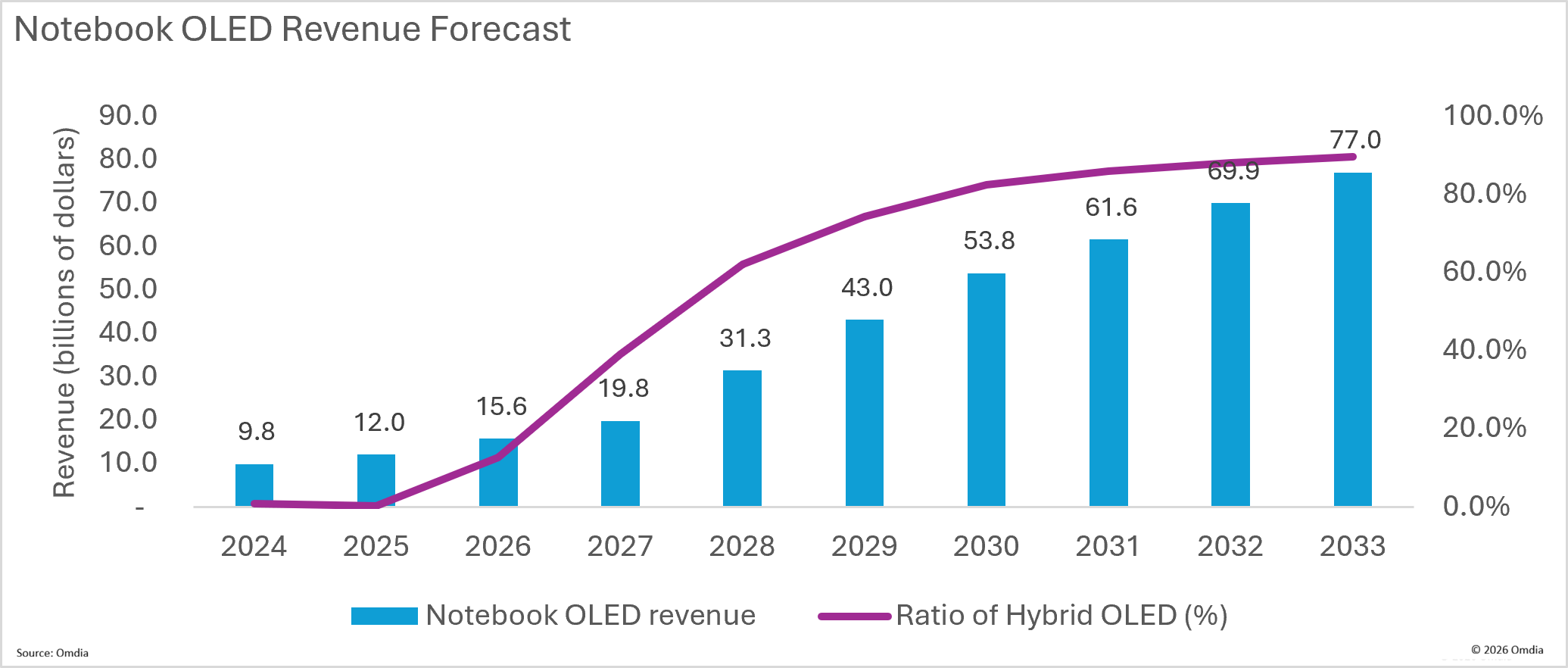
Photo: Omdia
Beyond what it means for the MacBook Ultra specifically, the Omdia report frames Apple’s adoption of hybrid OLED as a catalyst for the broader laptop market. The firm projects that hybrid OLED panels will account for 12.6% of all OLED laptop shipments in 2026, climbing dramatically to 89.5% by 2033.
Apple, in other words, is not just building a new MacBook — it may be setting the template that every other laptop maker eventually follows.
Samsung Display, the panel supplier, has invested heavily in an 8.6-generation OLED production line in South Korea, which recently cleared a key milestone for mass production. That manufacturing progress lends credibility to the Q3 launch window. Panels need to roll off the line reliably before Apple can commit to a ship date.
MacBook Ultra could come sooner than you think: What else to expect
Other details round out the picture of what MacBook Ultra might bring.
Analyst Ming-Chi Kuo and Bloomberg‘s Mark Gurman have both reported that the machine will include a touchscreen for the first time. And it’s likely to include a hole-punch or Dynamic Island-style camera cutout in place of the current notch.
Gurman has also said the laptops will carry thinner and lighter frames, with Apple chasing the slimmest possible design without sacrificing battery life or key features. That’s a goal the hybrid OLED panel directly supports.
Apple silicon-wise, the redesigned MacBook Pro models could run on M6 chips.

David Snow, an expert on Apple hardware and software, writes on a variety of technological and cultural topics for Cult of Mac. They include Apple news, technology buying guides, and features about computer setups and Apple TV shows and movies.
With 30 years of experience covering technology and other subjects, he has written and edited for numerous print and online publications, including CMP Media, TechTV.com, CNET, Wired News, Red Herring magazine, Law.com, The National Law Journal and Law Technology News magazine. Among other roles, he served as executive editor of the Law.com network of websites and editorial director, technology, for ALM Media.
Snow graduated with a B.A. from Syracuse University with majors in magazine journalism and psychology. While there, he worked as a reporter for The Daily Orange newspaper and associate editor of Equal Time magazine.
Founder of the blog At the Waterline, he can be reached on X (formerly Twitter) via @atthewaterline and on Mastodon via @dsnow.


One response to “MacBook Ultra could come sooner than you think”
I call hogwash on this rumor. There is NO WAY that on John Ternus’ first iPhone release, with the iPhone Ultra nearly guaranteed to be announced, would Apple clog up the media air space with a major Mac announcement like this. Apple LOVES dominating the media market, and a Novemebr announcement of the MacBook Ultra would do much more for Apple to control the news space from September through Christmas than a one-two punch between the two devices.