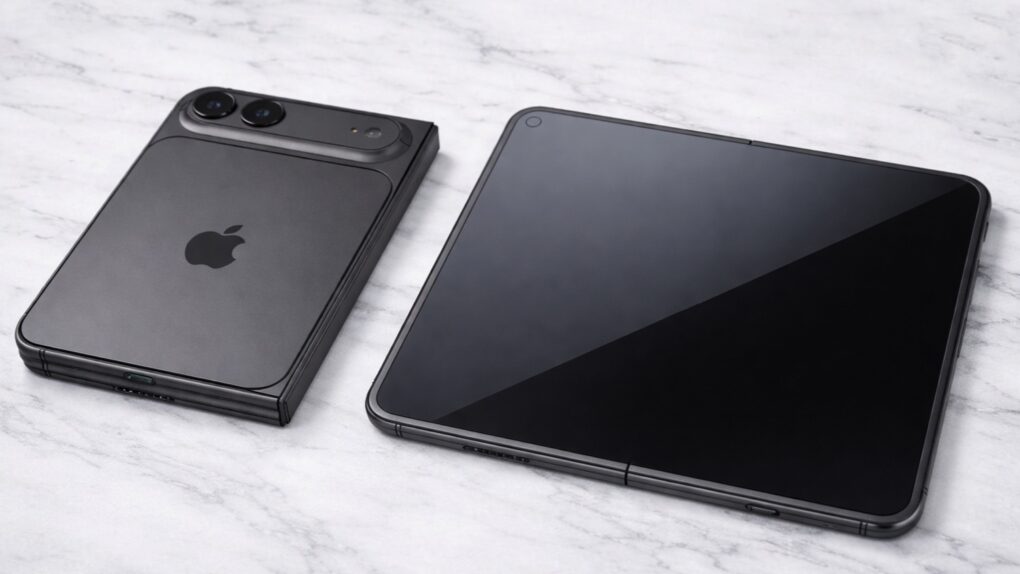
If you’ve ever looked at a foldable phone and winced at the visible crease down the middle of the screen, you’ll want to know what Apple has reportedly been working on as its first foldable iPhone approaches.
The industry’s approach to eliminating that unsightly fold line has fundamentally changed — and materials in development go well beyond clever hinge engineering, according to a new report. It’s how Apple’s fast-approaching folding iPhone will crack the crease problem.
How Apple’s folding iPhone will crack the crease problem
To understand what Apple is up against as it tries to bring a crease-free folding iPhone to market, it helps to know why folds crease at all. Creases originate from the misalignment of the neutral layer within the panel stack, which causes localized tensile stress, leading to micro-cracks or permanent deformation under stress concentration.
In simpler terms, when a screen bends repeatedly, the layers inside don’t all flex at the same rate, and the resulting stress leaves a visible ridge.
Until recently, manufacturers tried to address this mainly through mechanical means — sophisticated hinges and rigid support structures designed to distribute the bending force. That approach is now giving way to something more fundamental, according to new research from market intelligence firm TrendForce. It’s all about the screen itself.
A materials revolution
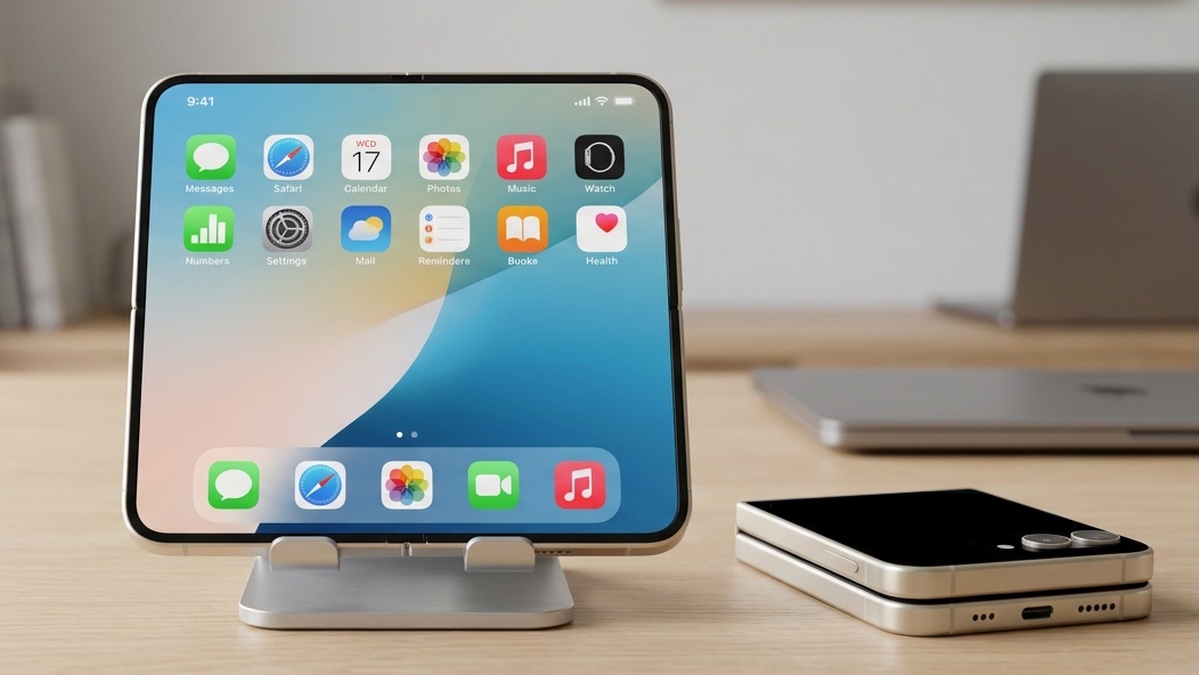
AI image: ChatGPT/Cult of Mac
TrendForce notes that efforts to reduce display creases are shifting from traditional mechanical solutions to a materials-driven approach centered on managing structural stress. Two materials in particular are at the heart of this shift.
The first is ultra-thin glass, or UTG, the hard outer layer you touch when using a foldable. As indicated in Apple’s patents, a variable-thickness design combined with chemical strengthening allows the folding area to be locally thinned at the bending axis to improve bendability. And nonfolding regions retain greater thickness for impact resistance.
The result is glass that is simultaneously tougher where you need it and more pliable where the fold occurs.
The secret ingredient: smarter glue
The more surprising innovation may be in a layer most users will never think about. The key breakthrough for foldable displays in 2026 lies in the evolving role of optically clear adhesive (aka OCA). No longer limited to a bonding function, OCA now exhibits pronounced viscoelastic properties through optimized modulus (referring to the material’s stiffness and resistance to deformation) design and material composition.
In plain language, the adhesive layer that bonds the screen components together has been engineered to behave differently depending on how it is stressed. An optimized OCA remains soft during gradual bending to reduce fatigue stress. When under sudden external force, its modulus temporarily increases to provide localized structural support.
This smart adhesive also performs a kind of self-repair over time. Its micro-flow characteristics allow it to fill microscopic irregularities formed over long-term use, reducing light scattering and further minimizing the visible crease.
Hinges aren’t dead yet
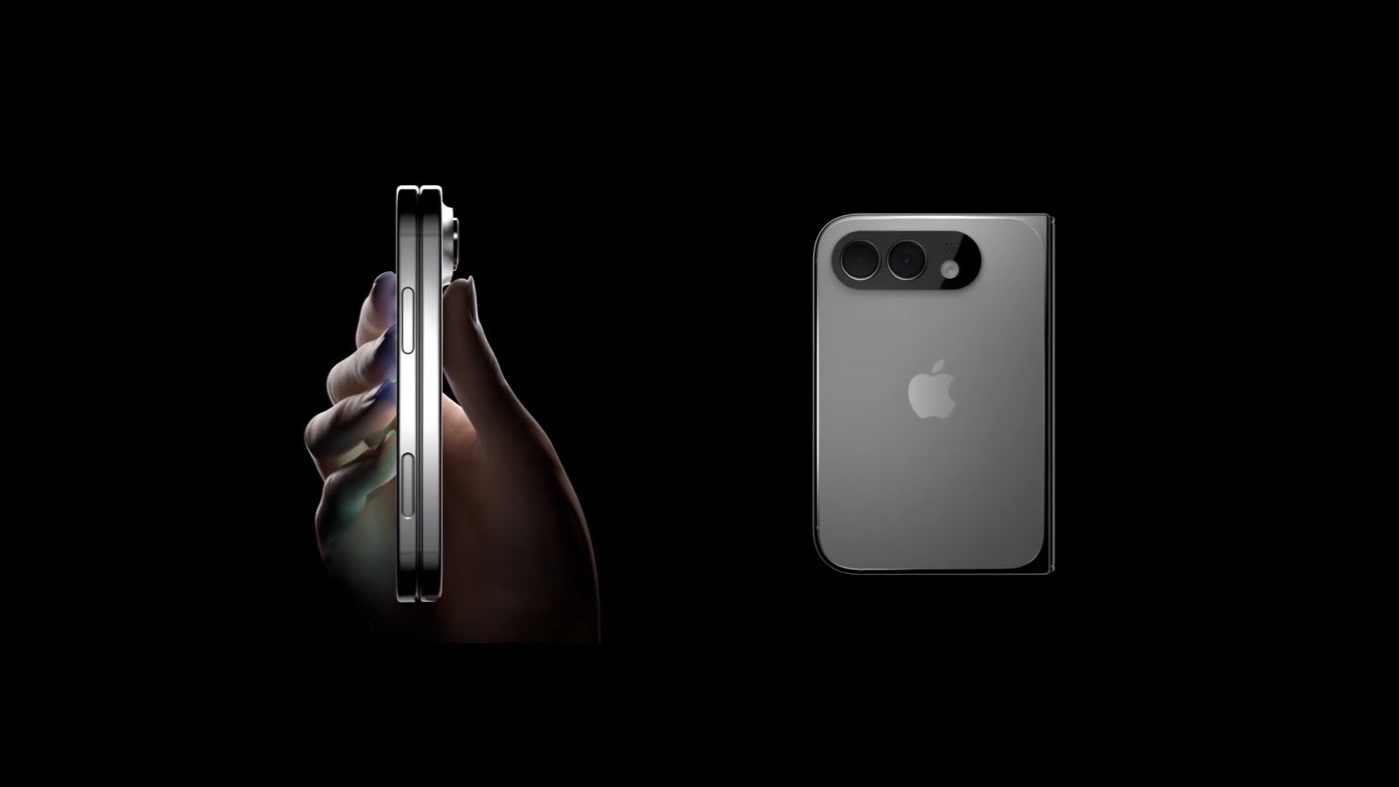
Image: Majin Bu
While materials science is now leading the charge, mechanical engineering still plays a supporting role. Apple competitor Oppo, whose Find N6 phone is marketed as “virtually crease-free”, incorporates precision machining and 3D printing technologies to enhance hinge flatness. Polymer materials fill structural gaps to prevent localised suspension and stress concentration.
Samsung Display, meanwhile, has adopted laser drilling technology to reduce hole spacing in bending areas. That achieves a balance between structural rigidity and flexibility.
These rival efforts give a sense of the competitive pressure Apple is entering — and the bar it will need to clear. For a while at least, Apple will use Samsung OLED panels in folding iPhones. The first one, likely called the “iPhone Ultra,” could arrive as early as this September.
How Apple’s folding iPhone will crack the crease problem: Apple’s market ambitions
TrendForce estimates that Apple, leveraging its strong brand positioning and consumer anticipation, could capture nearly 20% of the foldable market in 2026, compressing the share of competitors such as Samsung Electronics and Huawei to around 30% each.
That would be a remarkable debut for a first-generation product. But Apple’s track record of entering established categories late and quickly setting the standard — tablets, smartwatches, wireless earbuds — suggests analysts have reason for optimism.
The key to crease improvement has shifted from hinge design to the synergistic optimization of material modulus, thickness distribution and stress release. And if Apple’s patent filings are any indication, it has spent years preparing for exactly this moment.

David Snow, an expert on Apple hardware and software, writes on a variety of technological and cultural topics for Cult of Mac. They include Apple news, technology buying guides, and features about computer setups and Apple TV shows and movies.
With 30 years of experience covering technology and other subjects, he has written and edited for numerous print and online publications, including CMP Media, TechTV.com, CNET, Wired News, Red Herring magazine, Law.com, The National Law Journal and Law Technology News magazine. Among other roles, he served as executive editor of the Law.com network of websites and editorial director, technology, for ALM Media.
Snow graduated with a B.A. from Syracuse University with majors in magazine journalism and psychology. While there, he worked as a reporter for The Daily Orange newspaper and associate editor of Equal Time magazine.
Founder of the blog At the Waterline, he can be reached on X (formerly Twitter) via @atthewaterline and on Mastodon via @dsnow.