
Apple’s AirPods appear to have dodged a costly redesign after the European Commission carved out new exemptions to its upcoming replaceable battery rules for portable electronics.
The requirement could have also required changes to the design of the Apple Watch.
EU backs down on some replaceable battery rules
The European Union introduced its user-replaceable battery rules as part of a broader effort to reduce electronic waste. Regulators argued that many devices get thrown away long before the rest of the hardware wears out simply because their batteries degrade and are difficult or uneconomical to replace. By requiring batteries to be removable with commonly available tools, the EU hopes to encourage repairs instead of replacements.
The plan is to ban the sale in the EU of all products that don’t meet the battery replacement rules.
But this week the European Commission walked back some of the requirements by exempting six categories of products. Among the newly exempt devices are wearable products including wireless earbuds and smartwatches — categories that cover AirPods and Apple Watches.
No AirPods redesign is a lifesaver
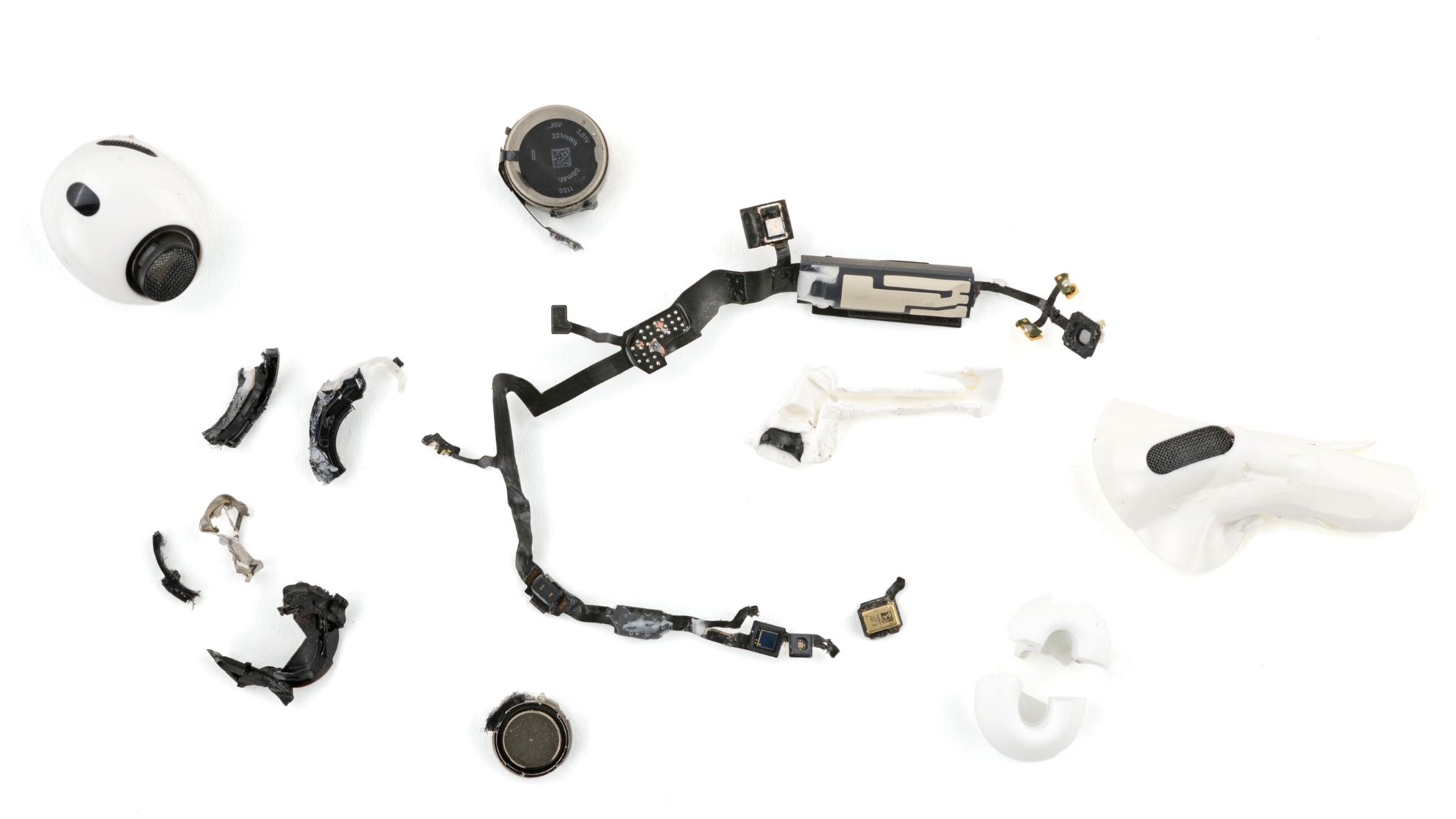
Photo: iFixit
Designing future Apple Watch models to make their batteries easier to replace doesn’t seem onerous — it’s something Apple should probably do anyway, no matter what EU regulations require. iFixit gives all Apple Watch models repairability scores of 3 or 4 out of a possible 10.
But forcing AirPods to become easily repairable would require redesigning the product from the ground up. The tiny wireless earbuds rely heavily on adhesives and densely packed components to achieve their small size that makes them so appealing. Users would have to give that up to make the battery easily replaceable.
An ongoing bureaucratic process
The European Commission said it spent more than a year consulting manufacturers, consumer groups, repair organizations and recycling experts before deciding which additional products deserved exemptions.
And note that this EC change is only a proposal and is not yet final. It must undergo scrutiny by the European Parliament and the Council of the European Union. It will go into effect only if neither body objects.

Ed Hardy has been writing full-time about tech for 26 years, and using it for much longer than that. His intro to Apple was a Macintosh SE/30 (which he still has), but now he uses a 13-inch iPad Pro as his primary computer.
That’s because he’s a “tablet first” type of guy. Rather than use a Macbook, he connects a keyboard case to the iPad. And instead of a desktop Mac, he connects his tablet to a 27-inch display and full-size keyboard. (So don’t try to tell him that everyone has to use a Mac to be productive.)
Before coming to Cult of Mac, Ed wrote for NotebookReview, TabletPCReview and Brighthand, as well as other sites.