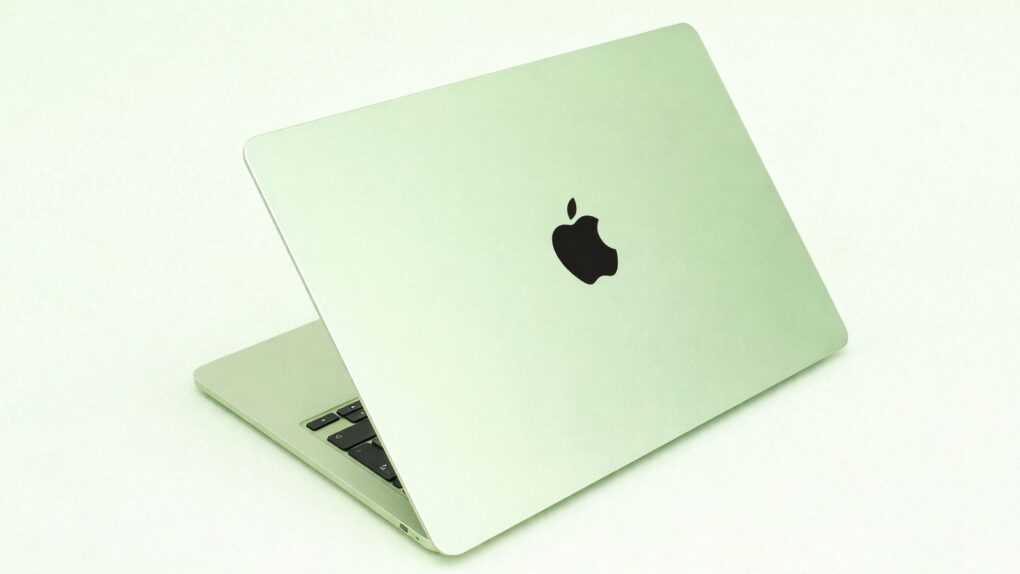
UPDATED: As expected, Apple launched the MacBook Neo on Wednesday. Learn all about it:
There’s huge anticipation for the budget MacBook that’s rumored to launch soon. But a critical question about the laptop has yet to be answered: Just how much will it cost? We already know it’ll be the most affordable macOS notebook ever, and there’s plenty of speculation about the exact cost.
There’s definitely a level that the price cannot go above if Apple wants the low-cost MacBook to succeed. Trouble is, the ongoing AI boom might force Apple to increase the cost of the device above its original plan. That raises questions about how successful the budget laptop will be.
Budget MacBook: The price means everything
Competent companies — and Apple is very competent — decide on the price for upcoming products early in the development process. They don’t design a product and figure out later what they’ll charge for it based on that design. Instead, they pick a price and let that control the design.
In the case of the budget MacBook that’s been the subject of so many rumors, the price is the single most important factor. There’s little room for surprises to push up the cost.
To understand why, consider the rumored touchscreen MacBook Pro. While Apple surely knows what it wants to charge for that notebook, if rising component costs or production problems push the price up by $100, it likely won’t have a huge effect on sales. It’s already going to be a high-end product with a premium price.
That is absolutely not true for the budget MacBook. It must cost substantially less than a $999 MacBook Air or there’s simply no purpose in releasing the product.
Budget MacBook needs an entry-level price
The best information we have on Apple’s first entry-level MacBook is that it will come in “well under $1,000,” according to Bloomberg‘s Mark Gurman, the source of many unconfirmed reports about the product.
There’s been speculation that it could cost as little as $599 — close to the average selling price for notebooks of all types. At that price, it would be quite appealing to first-time buyers, students and users who might otherwise choose a Chromebook or budget Windows laptop.
The same could hold true if the budget MacBook price came in at $699 or $749 — but $799 would seem to be the absolute top for the computer to become a success.
Can’t go too high
Apple can’t hope to charge more than $799 for its entry-level MacBook because there wouldn’t be enough separation from the $999 MacBook Air.
At $849 or up, the device would appeal mostly to people who would otherwise have bought a MacBook Air. Few people shopping for a budget Windows notebook or Chromebook would be interested.
Apple’s goal for this new product with a lower price isn’t to reduce its revenue by luring away MacBook Air buyers. Cupertino can only make more money on a cheaper model by selling more units, which means bringing in new customers with a very attractive price — and $599 would be perfect for that.
And to be clear, don’t think Apple’s $100 education discount will play a significant role. That discount is for university students, not K-12 kids. That greatly limits how much it’ll drive sales of the budget MacBook.
Price pressure thanks to AI
While Apple’s goal is surely to make its entry-level MacBook affordable to entry-level shoppers, it won’t be easy. That’s because the prices of some critical components are shooting upward.
Companies developing AI systems are building huge data centers filled with computers that need tons of RAM and enterprise-grade SSDs. This surge in demand is disrupting the entire computer market, driving up memory prices to about twice what they were this time last year.
In rough estimates, this means the 8GB of RAM that used to cost Apple $20 or $30 now costs $50 or $60. The price of SSDs is rising, too. These component price hikes must be paid for somehow — the money either comes out of Apple’s profit or it gets passed on to customers.
As noted, the budget MacBook needs a very competitive price, limiting Apple’s ability to pass along the higher component costs. According to a reliable source, Apple understands this and will absorb the increased cost of memory for all its Macs and iPhones. Here’s hoping that report is accurate.
Budget MacBook versus MacBook Air
To achieve a price $200 to $400 below that of a MacBook Air, Apple needs to cut some corners. Most notably, the budget MacBook will reportedly run an Apple A-series processor, not an M-series one like all other MacBooks.
An A18 or A19 chip should be sufficient for the tasks that beginners use a computer for: web browsing, writing documents, watching video, etc. Still, its performance won’t match the M5 MacBook Air, which is also expected to launch in March.
And the budget MacBook will supposedly include a screen measuring “just under 13 inches,” versus the 13.6-inch display in the smaller MacBook Air.
But don’t assume it’ll look cheap. It’ll reportedly have an aluminum chassis, not a plastic one. Plus, it could come in a range of colors.
Almost here!
The budget MacBook could jump from rumor to reality in just a few days. Apple CEO Tim Cook teased on Thursday that we can expect new products to launch next week. There could be as many as five announcements in the days leading up to a “special Apple Experience” on March 4.
When the budget MacBook gets unveiled, you can be sure Cult of Mac will be ready to report on it.

Ed Hardy has been writing full-time about tech for 26 years, and using it for much longer than that. His intro to Apple was a Macintosh SE/30 (which he still has), but now he uses a 13-inch iPad Pro as his primary computer.
That’s because he’s a “tablet first” type of guy. Rather than use a Macbook, he connects a keyboard case to the iPad. And instead of a desktop Mac, he connects his tablet to a 27-inch display and full-size keyboard. (So don’t try to tell him that everyone has to use a Mac to be productive.)
Before coming to Cult of Mac, Ed wrote for NotebookReview, TabletPCReview and Brighthand, as well as other sites.


5 responses to “Budget MacBook: How cheap is cheap?”
If the user experience is less than ideal – screen qualities, Wi-FI speeds, keyboard, overall build quality, battery life, comfortably capable of running most average Mac applications and peripherals, for example – this will run the risk of alienating both new and old Apple users. An inexpensive device may actually cost them big time.
Their efforts to convince users that an iPad was as good as a Mac – the “What’s a computer?” ad campaign from several years back crashed and burned. And nobody wants an Apple Chromebook. At a premium price.
The iPad “What’s a Computer” ad ran first in 2017. That year, Apple sold about 44 million tablets. Last year, Apple sold 162 million iPads. For reference, Apple sold 27.7 million Macs in 2025. Sounds like you don’t use an iPad, but it’s nevertheless an extremely successful computer.
Apple will SELL MILLIONS to current Happy Mac owners…who will buy one for the novelty of just owning it. Switchers and new laptop buyers will just be a swimming pool full of extra gravy…….just watch.
What if they don’t have a new MacBook Air? What if this is the new cheapest version and then it goes to pro?
Fortunately, that didn’t happen. Though Apple did bump up the price of the base model M5 MacBook Air:
https://www.cultofmac.com/news/m5-macbook-air-launch