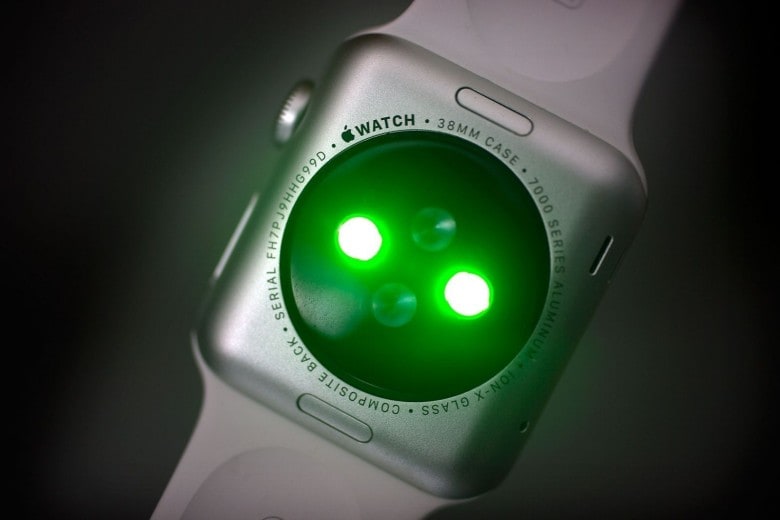
The Apple Watch is poised to become a serious medical device in the next few years thanks to a big new upgrade coming down the pipeline.
Apple is reportedly developing an advanced heart-rate monitoring system for Apple Watch that will utilize an electrocardiogram to take more accurate readings of the wearers’ health.
Since its release in 2015, the heart-rate monitor on Apple Watch has been credited with saving numerous lives for detecting heart conditions. Now Apple’s about to put tech usually only found in doctor’s offices and hospitals onto millions of wrists.
According to the report from Bloomberg, Apple is testing a version that requires the wearer to squeeze the Apple Watch with two fingers. An imperceptible current is then passed across the person’s chest to detect irregular heart rates and abnormalities.
The Apple Watch is currently great at gathering historical data about the body that can be used to find trends. By adding an EKG and other sensors to future Apple Watch models, the device could be able to predict some conditions before they even happen.
An EKG accessory for Apple Watch is already available from AliveCor. The company makes an Apple Watch band that comes with an EKG sensor at the bottom and it’s already FDA approved.
Adding an EKG sensor natively to the Apple Watch would be a huge upgrade. Of course, there’s no guarantee that the feature will actually

Buster Hein is a freelance writer who lives in Phoenix, Arizona. Twitter: @bst3r.


One response to “Apple Watch could get EKG sensor to boost heart monitoring”
It’s not possible to take an EKG reading at the single wrist. This gimmicky little app will only tell if your heart rhythm has irregularly spaced beats which you can discover yourself by palpating your pulse with your finger. An EKG requires electrical leads around the heart. Calling this an EKG is misleading and a false sense of security and may cause people to believe they have a healthy heart when I’m fact they could have Q-T prolongation, AV or Bundle Branch Block or any other arrhythmia that has a regularly spaced rhythm. Sure it’s gonna have a cutsie little animation that looks like an EKG but it’s not a true EKG so I wish all these tech sites would quit labeling it as such.