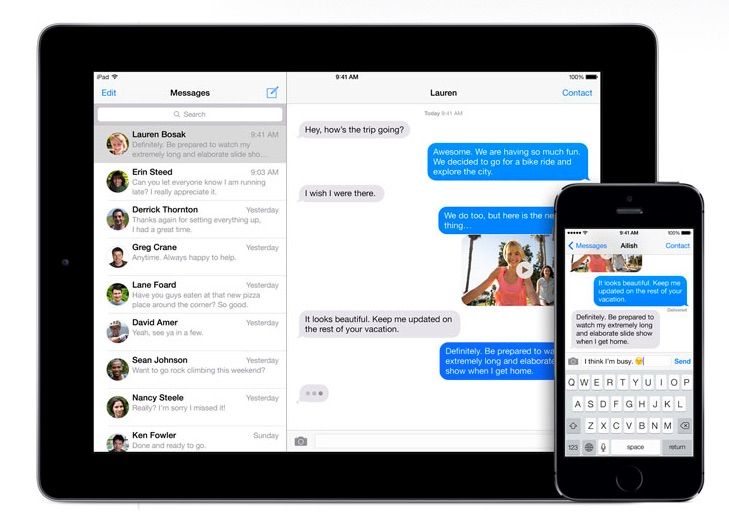
Apple is making iMessage and FaceTime harder to hack by turning on two-step verification for both services in an effort to tighten security for iOS and Mac users.
The extra security goes into effect today and gives users an extra layer of protection against hackers or anyone else trying to log in to your iMessage account to either impersonate you or steal data.
The optional two-factor authorization feature requires attackers to have not just your username and password to access your data, but also a second special code. Once two-factor authentication is activated on iMessage, users will sign in with their Apple ID and then be asked to verify their identity by using the second security code, or enabling access from another iPhone or Mac.
Apple added two-factor authentication to iTunes and iCloud accounts in 2013, but this is the first time they’re protecting data within specific apps as well. To setup two-factor authentication on your account, follow these steps:
- Go to My Apple ID.
- Select Manage your Apple ID and sign in.
- Select Password and Security.
- Under Two-Step Verification, select Get Started and follow the onscreen instructions.

Buster Hein is a freelance writer who lives in Phoenix, Arizona. Twitter: @bst3r.

2 responses to “iMessage and FaceTime just got a lot harder to hack”
I know that two step verification adds protection but I just don’t find it practical. For instance in Gmail, with tsv enabled, if you wanted to quickly check your email from a public place (or basically anything your not already logged on to), you need to first login, choose to have a code sent by voice or text, wait for call/text, type in code, and continue. You’d have to do this EVERYTIME unless you choose remember me (which you wouldn’t on a device other than yours).
I’d love for it to be tied to Touch ID on my device. I want to open up an app, use Touch ID. TSV on other devices needs a new solution, IMO.