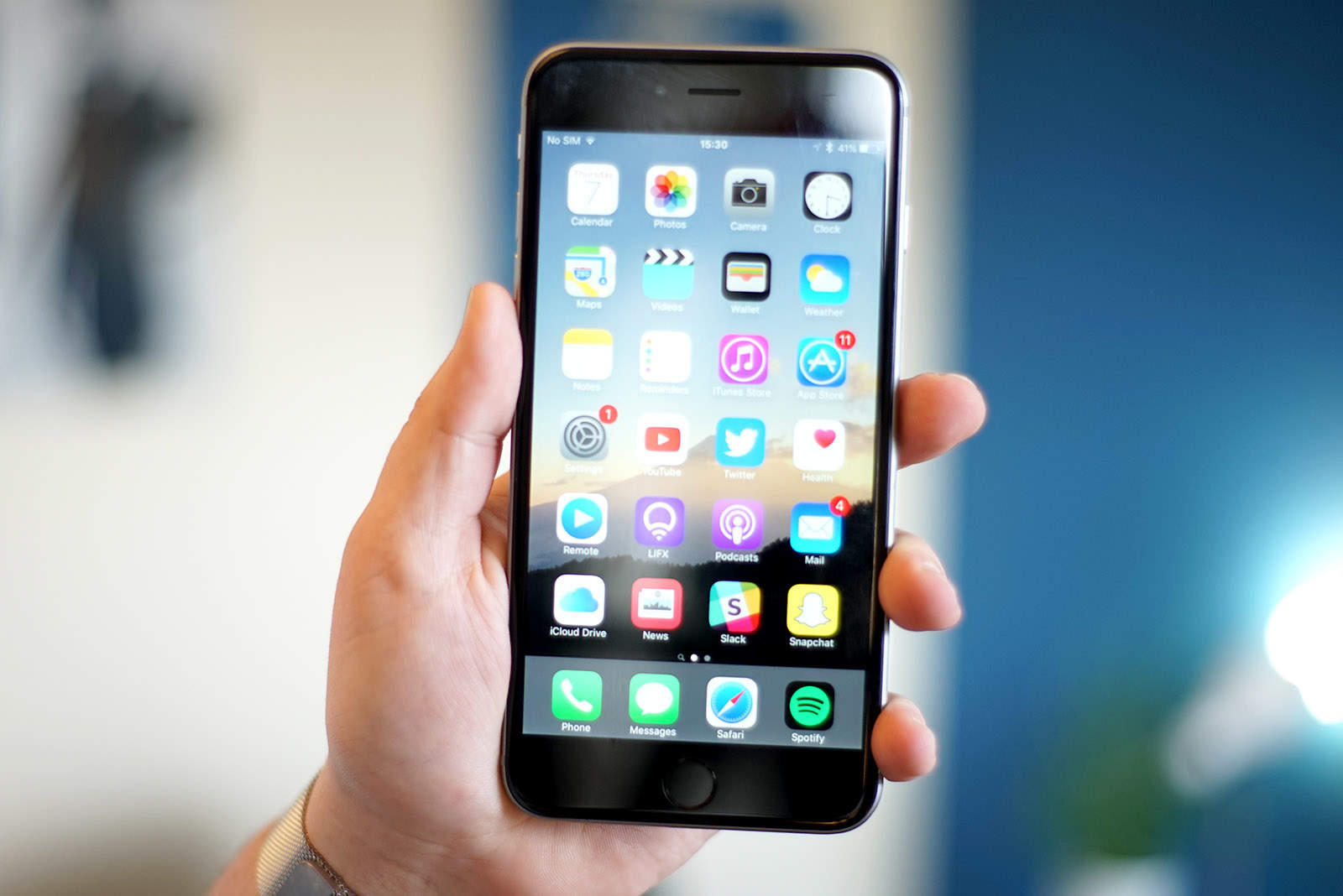
Starting next week, Apple will roll out major changes to the App Store that will effect how — and how much — you’ll pay for some of your favorite apps.
In a rare interview ahead of next week’s Worldwide Developers Conference, Apple VP of Marketing Phil Schiller talked about the company’s “renewed focus and energy” on the App Store. He also outlined key changes that will be unveiled during Apple’s WWDC keynote on June 13 in San Francisco.
Among the many changes coming to the App Store are search ads for apps, better revenue-sharing for developers, and new incentives for app makers to switch to subscription-based models.
More App Store subscriptions
Apple plans to open subscriptions to all apps. In the past, the iPhone maker only allowed apps for news, cloud services, dating and streaming to offer a subscription that’s billed automatically through iTunes.
“Now we’re going to open up to all categories,” Phil Schiller told The Verge, “and that includes games, which is a huge category.”
Part of the plan to get developers to push subscriptions involves Apple finally loosening its stranglehold on its 70/30 revenue split. After the changes take effect, if developers maintain a customer for more than 12 months, Apple will drop its take down to 15 percent, giving developers a small pay raise.
The extra revenue generated from subscriptions will be great for Apple and indie developers, which have been calling for changes for years, claiming it’s difficult to run a sustainable business under the current setup.
Bad news for iPhone and iPad owners?
iPhone users may not like the changes quite as much. After being fed free apps for years, the cost to keep the best apps on your iPhone and iPad will raise considerably. Even $1 monthly subscriptions for a couple favorite games, productivity apps, news apps, photography apps, fitness apps and more will quickly add up to a sizable monthly bill many users might not be willing to pay.
To make consumers happy, Schiller revealed Apple has built in some protections, like the ability to opt out of a subscription if the price is raised and a revamped App Store interface to manage subscriptions.
“We’re trying to protect the customer from surprises in pricing,” Schiller said.
Here come the App Store ads
Internally dubbed “Subscriptions 2.0,” the revamped revenue model isn’t expected to roll out until this fall, when the company also plans to unleash search ads for apps in App Store search results. The company resisted paid ads for years, but Schiller says the time is right.
“We’ve thought about how to carefully do it in a way that, first and foremost, customers will be happy with,” Schiller said, claiming the ad auction system will be “fair for indie developers too.”
Full details of the changes will be revealed next Monday during Apple’s WWDC keynote at the Bill Graham Civic Auditorium in San Francisco. Apple will also announce iOS 10, OS X 10.12, watchOS 3.0, tvOS 10, a Siri SDK and a lot more. Cult of Mac will be on hand to liveblog the entire event, so you’ll get to enjoy the Apple mania with us next week.

Buster Hein is a freelance writer who lives in Phoenix, Arizona. Twitter: @bst3r.

10 responses to “Apple is making huge changes to how much you’ll pay for apps”
I like the older model of ad-supported or paid app model. I don’t like the pay-to-play games. I lament that the app industry has moved to the “freemim” model. I am not against subscriptions. I subscribe to Netflix, and Spotify. Music and movies are very compelling content. I don’t have any other app installed compelling enough to entice me to pay a subscription for.
If I’m too cheap to pay monthly fees for games on any other (and better quality gaming) platform, then you can bet I’m too cheap to pay monthly for mobile games, iOS or otherwise…
Interesting how this also coincides with declining revenues from Apple. I expect a expect a harder to push from Apple toward extracting money from it’s customers.
That will really diminish how many apps I use as well. Microsoft got the cold shoulder and Apple is going to feel it to. I feel for the developers having to put up with Apples bullshit, but subscriptions are just another way companies are padding their bottom line.
If you want to charge subscriptions then the software has to be totally free without fine print.
Will affect, not effect.
What an absolute idiotic plan. And the 13th is Monday, not Tuesday.
Wait…. I have to pay now??? I don’t have a credit card…
I’ve collected and redacted a series of comments I’ve made elsewhere here on this subscription thing, especially as a consumer of high-quality music production apps from companies like Korg, Moog, Arturia, Virsyn etc. as well as many smaller developers.
I apologize for the length of what follows, but I feel very strongly about it. So, here goes :-)
———-
I also will not buy subscription apps *EVER* – or desktop applications come to that. I’ll gladly pay for upgrades. So, please, developers, don’t do this.
I don’t with Pro-Tools. I don’t with desktop FX, (Slate, EastWest) etc. etc. I simply won’t do it. Either I have it and “own” it (no, I know, not own, but have a perpetual license) or I won’t buy it. Period.
Here’s my bottom line. If an app is sold on a subscription-only basis, it’s a lost sale (to me).
Developers (I am one too!) we love you. We want to support you. We’d love to see more revenue go your way. We’re not saying we’re “cheap” (we’ve spent $100’s on your apps after all! :-) ). We want to find a way to see your income increase. But not subscriptions (only)!
Now *IF* there’s an option to buy a perpetual license too, then that’s a different matter. I do that currently. And a paid annual update subscription. Or pay outright for upgrades (as in the case of Presonus with Studio One for example). No problem with *that* model.
If it’s not imposed, if there’s an option, and if there’s a better way to recompense developers for major updates, that’s all good. Of course!
The bottom line in my reasoning *isn’t* that offering a subscription or rental service *alongside* a perpetual license is bad per se, but if it’s the *only* way of having access to something… No! Having the option to purchase outright is the issue.
So, again, if an iPad music app *only* offers a subscription in the new model, it would be a non-“purchase” for me.
I’m not saying there’s not a place for *any* kind of subscription model, as I say I pay an update fee for Pro Tools and Waves. BUT, my applications don’t stop *working* or get withdrawn or the like when those subscriptions run out because I already have a perpetual license for them. If I’d wanted to I could have continued using PT 8 until now. But, I paid for an update to PT 10/11 and got 12 along with it and have paid for updates for another year.
*However*, if I don’t care to pay that fee after another year, I can carry on using it for as long as I can maintain a working system on which to run it with which it’s compatible. *That’s* the rub here. It doesn’t go away… I “bought” it. It’s “mine” (yes, yes, I bought a perpetual license not the actual IP or code, sure, but that feels no different. If I never open my doors again to anyone or switch the Internet on ever again, I can carry on using it).
If apps provide both models, then, fine. If it’s subscription only that means an effective renting or it stops somehow, then no. Never.
My life in my hands here: :-) . I say this with some trepidation because I know it’s controversial, and I’m only *here*, by saying this, putting forth a viewpoint. But, here goes. The principle of subscriptions ultimately gets to the issue of the right of ownership of private property, and, yes, fundamentally freedom from some form of servanthood (having to toe the line with strings attached in some way where you are not in control in what is otherwise a “free” situation).
Consider the tangle of those strings if you have subscriptions to not only 75 iPad apps, but also, 15 different desktop products.
It also begs the question “What constitutes a product?” (vs. a service – we pay for lots of services by “rental” / subscription – electricity, phones – different animal). These apps are more like products than they are services. One can imagine paying for an online service – such as, e.g. an online CRM tool. You neither host it nor own it – it’s remote. Not yours. But the app is “in your possession” . Of course licensing in general may beg that question too.
What about your ebooks? You don’t own those either. You may think you do, but various vendors – Amazon, B&N to name but two – have removed books from access by ereaders because of “licensing” issues, when readers *thought* they had purchased them. What’s the difference? Electronics. You don’t *license* a paperback… (or subscribe to it – or a guitar, or a piano…)
You can’t will apps to your family. You can’t will ebooks to your family. Same with any electronic music libraries you “own”.
The principle of the right of ownership of private property was in the minds of the founding fathers of the US (and I say this as not a US citizen or taking sides here, but as a student of history :-) ). The contrary concept – of there being no right of private property that one owns – could in some circumstances be therefore considered un-American – let alone any other basis of what might be considered fundamental “rights”. (I’m not trying to take sides or be partisan to the US here, just pointing something out).
Subscription models could be considered in *some* sense a slippery slope into some aspect of a further erosion of that right.
(And then there’s privacy too… Ongoing having to give account of ones “use” or not of an app in some sense).
A subscription model, where the model includes updates, implies several things that do not fit into a known value proposition unless there is a contract between the consumer – us – and the developer and against which we can take action if the money is, effectively, taken without fulfillment of that promise.
1.) Paying for something on a promise when you have no idea when it will get updated unless Apple force the issue and stipulates what the update would comprise – in general terms of course, but some measure of known value.
2.) Paying for a promised update without any idea whether the value of what you are paying for on that promise will be worth anything to *you*.
3.) Paying for continuous use of something as though it is a service when it is not.
Ultimately, it amounts to a form of servitude of the buyer to the seller, who, err, isn’t really selling, but holding you under a gun.
To assume that Apple will be able to hold the large number of developers in check is a very large assumption – and not the issue in any case.
The better value proposition is for the seller to produce a quality product to start with, and then offer the update at a known price (which the app store does not currently support doing properly – and should as the means forward IMO). If the update is of value, the consumer will purchase it. *That*’s the incentive for the developer – i.e. to determinedly make something of value to the customer that they are confident the customer will spend more money on, not put the customer under ongoing servitude to them. It’s the cart before the horse and could be said to be trading on a number of wrong premises.
Other means exist for developers to get funding for new projects: outside investment in them, other product lines, other work. Presonus take this approach, and in general it has been exceedingly well received by their loyal customer base who stump up for the upgrades because they can *see* the value put before them, choose to pay for the upgrade, and do so!
In my mind it would be disastrous if any of the big players did this. If Korg introduced it for example, and it even hinted at retro-affecting any of their apps, that would be a bad move and cause me to remove them which would be one of the worst things imaginable for my use of iOS as a music platform (not sure how it would or could, but it might – we’ll have to wait and see), but certainly any new apps from Korg that were subscription would be a non-starter. That would be a crying shame…! :-(
Same if Arturia did it. Or Moog. Or Cakewalk. Or Virsyn. Or….
It would greatly, *greatly* diminish my use of an iPad as a creative tool and might even mean an effective end to it being functional.
It would, I think, only serve to encourage the smaller developers to do the same.
Now, I’m *hoping* that it won’t be retroactive. But, even if only for new apps, it’d mean no more cash going to those manufacturers moving forward for any apps that were subscription only. Not a dime. Would effectively kill ongoing iOS music making potential as far as new app purchases is concerned for me.
And, I’ll add this… I’ve been writing software for 36 years. So, not coming at this from a lack of perspective about software development!
OK. I’m ducking now… :-D
See ya, Apple!
Thanks for introducing this. I can see my phone storage getting free space :)