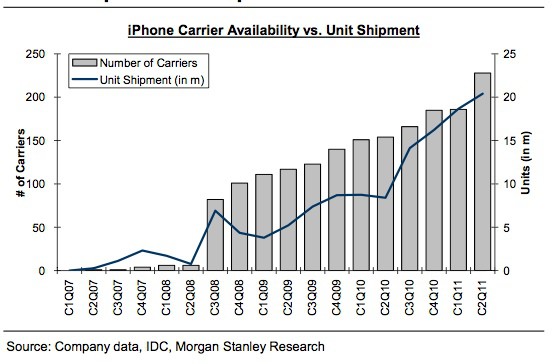
Yes, the iPhone design is sleek and sexy – and the Apple device is full of jaw-dropping features. But while that may convince some, what really puts the cash in Cupertino’s pockets are those boring, unexciting carrier agreements. Indeed, 50 percent of cell phone growth comes from adding new carriers. Although Apple has inked deals with 230 carriers, that is just 30 percent of the nearly 800 global service providers.
The nugget of information comes from Morgan Stanley analyst Katy Huberty, who found subscriber growth in 760 carriers over the past five years was evenly split between new subscribers to existing carriers and subscribers to new carriers. The iPhone has gone from just AT&T in 2007 to almost 230 carriers in 105 countries.
But there is plenty of potential growth. While 79 percent of the world’s wireless operators offer RIM’s BlackBerry, just 30 percent of cell phone networks sell the iPhone, Huberty said. And of that potential growth, Asia should be a ripe target for Apple.
Not only there 655 million Asian consumers of the target 25-34 age range, but 78 percent of carriers in the Asia-Pacific region now don’t offer the iPhone.
One sticking point for the iPhone has been its high price compared to cheaper feature phones. Huberty’s research also found more cell phone consumers are buying subsidized cell phones as part of post-paid plans than those who opt to go the pre-paid route.

Ed Sutherland is a veteran technology journalist who first heard of Apple when they grew on trees, Yahoo was run out of a Stanford dorm and Google was an unknown upstart. Since then, Sutherland has covered the whole technology landscape, concentrating on tracking the trends and figuring out the finances of large (and small) technology companies.