 Apple produced an amazing string of hit products over its 50 years, but to paraphrase Napoleon the pig: Some are more important than others.
Here are the most important products in Apple’s 50-year history. And no, this list is likely not what you were expecting. They’re not necessarily the biggest or the most well-known.
The most important Apple products of the last 50 years
Looking back, it sometimes seems that Apple’s most successful products were no-brainers.
The iPhone? Yeah, it was obviously going to be a smash hit. Except that’s not true. Many people initially panned the iPhone. It didn’t really take off until several years later.
In fact, Apple’s history doesn’t unfold as a straightforward parade of instant hits. In reality, it looks more like a series of successful second acts, with early misfires, half-formed ideas and underpowered debuts setting the stage for category-defining breakthroughs years later.
From the slow-burn success of the Apple IIe to the brilliant pairing of the iPhone and App Store, Apple’s biggest hits tend to arrive not with a bang, but through thoughtful iteration.
The company’s real innovation isn’t just invention — it’s persistence. Cupertino consistently refines its bright ideas until the world is ready for them. And in the process, it reshapes entire industries.
That’s true for almost all of Apple’s most important products, from the original Mac to AirPods.
Apple IIe (1983)
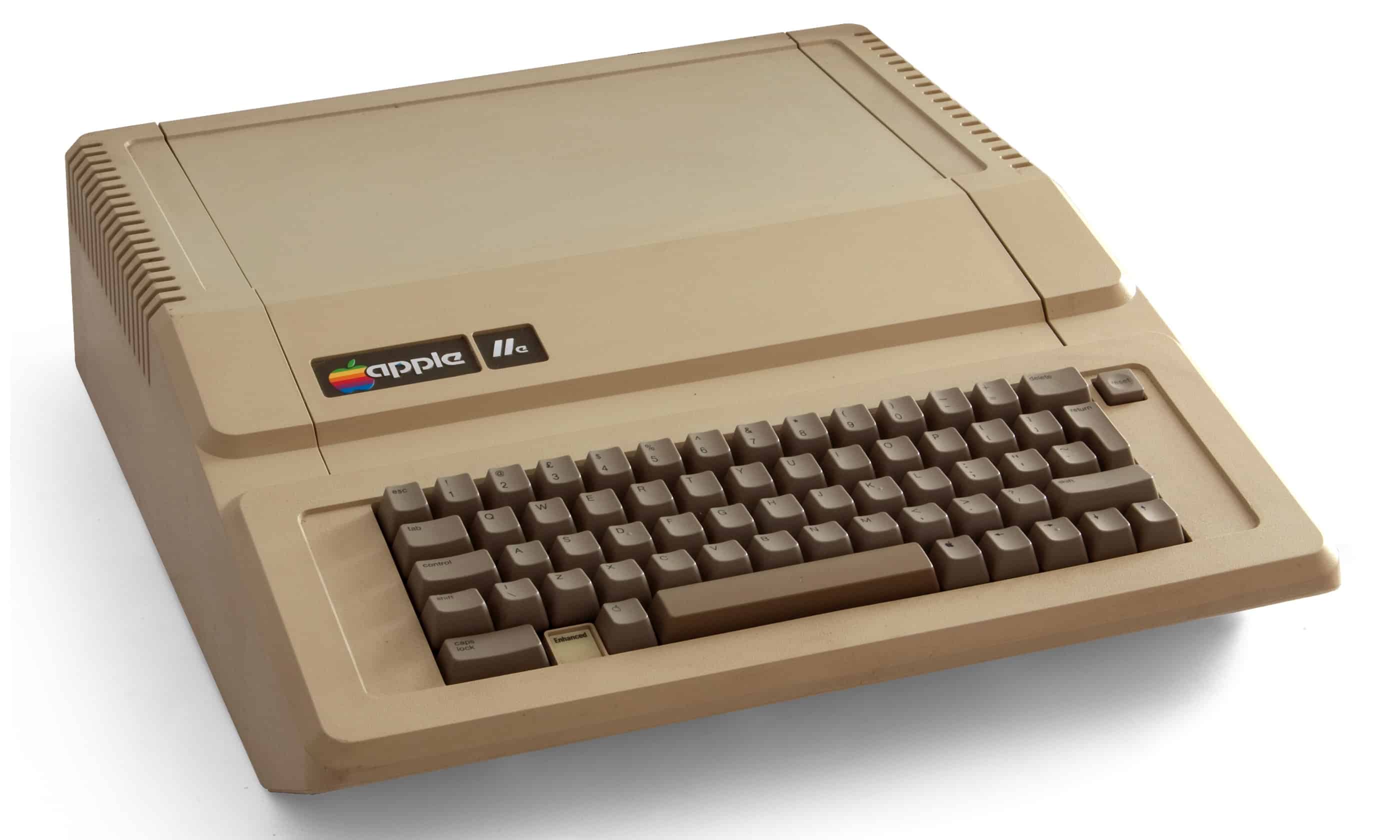
Photo: Bilby/Wikipedia CC
The original Apple II really was revolutionary, but it didn’t really take off until Apple released the Apple IIe, the third model in the series. It arrived in 1983 — five years after the original.
Apple co-founder Steve Wozniak designed the guts of the original Apple II in 1977, working mostly alone. It became the first personal computer sold preassembled (rather than as a kit). It came in a nice plastic case, with a built-in keyboard, color graphics and eight expansion slots. It was easy to hook up to a television that worked as a monitor.
Thanks to VisiCalc — a spreadsheet program that became the original “killer app” — the Apple II sold well. But sales skyrocketed after the introduction of the Apple IIe (the “e” stands for “enhanced”).
The IIe featured more memory, but its biggest innovation was support for both uppercase and lowercase text.
The Apple IIe proved massively popular in the home and education markets. Apple sold it with relatively few changes for nearly 11 years, making it the longest-lived computer in Apple’s history. It served as Apple’s primary source of revenue while the company struggled to develop the ill-fated Lisa computer and then the Macintosh.
Macintosh (1984) – Macintosh Plus and LaserWriter

Photo: D. Griffin Jones/Cult of Mac
Just like the Apple II, the Macintosh didn’t become popular until, again, the third model in the lineup: The Mac Plus (combined with one of the first laser printers, Apple’s LaserWriter).
Released to great fanfare in 1984, the original Macintosh initially sold like hotcakes because of its revolutionary graphical user interface that introduced the mouse to the masses. But as author Douglas Adams famously noted, it was “ludicrously slow and underpowered.”
It was also very expensive – about $7,700 in today’s money. After the initial excitement, the Macintosh faced an extended sales slump through 1984 and 1985, which contributed to Steve Jobs’ ouster from Apple.
That all changed with the release of the Macintosh Plus, which — combined with Adobe’s PostScript language, Aldus’ desktop publishing software PageMaker, and the LaserWriter — sparked the desktop publishing revolution.
The combination quickly democratized printing. Desktop publishing replaced expensive, traditional typesetting and paste-up and allowed mere mortals to print out what was on their screen with perfect fidelity (known as WYSIWYG – what you see is what you get).
By the late 1980s, desktop publishing was a major business buzzword. All kinds of companies, schools and nonprofits used it for everything from newsletters to annual reports. For the first time, high-quality publishing became accessible to small businesses, schools and nonprofits, not just major publishing houses.
PowerBook 100 (1991)
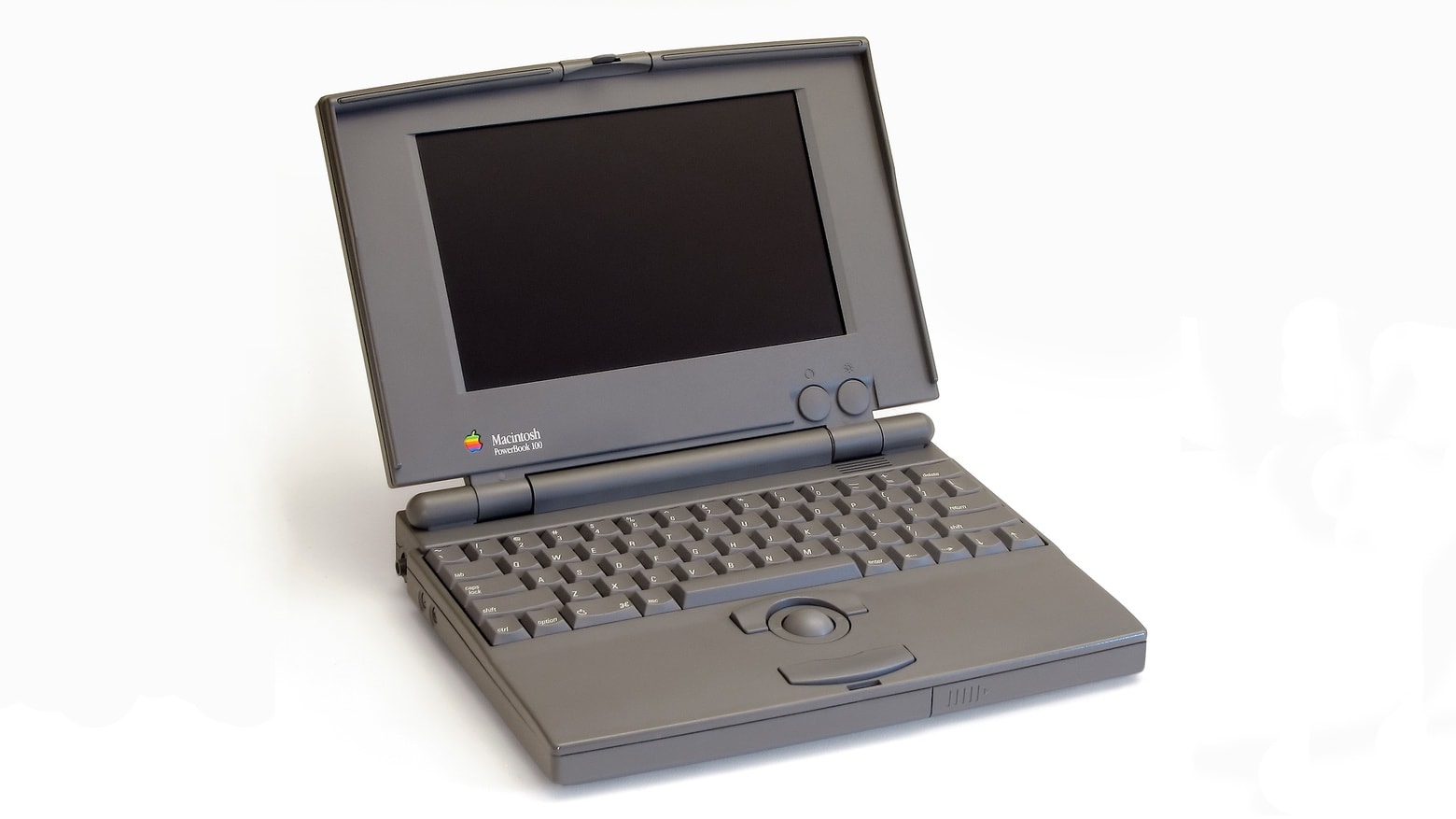
Photo: Danamania/Wikipedia CC
Released in 1991, the Apple PowerBook 100 was the forerunner of the modern laptop. It’s the machine that established the standard design language for almost all modern notebooks.
As well as being notably lighter and easier to carry than rival “lugggables” of the time, the PowerBook 100 came with a couple of firsts.
It was the first to have a keyboard that was pushed back toward the laptop’s screen rather than mounted toward the front. This, along with the center-front trackball, made it comfortable and ergonomic for typing.
Despite being an entry-level product, the PowerBook 100 was a huge success, contributing to the PowerBook lineup selling more than $1 billion in the first year of sales.
iMac G3 (1998)
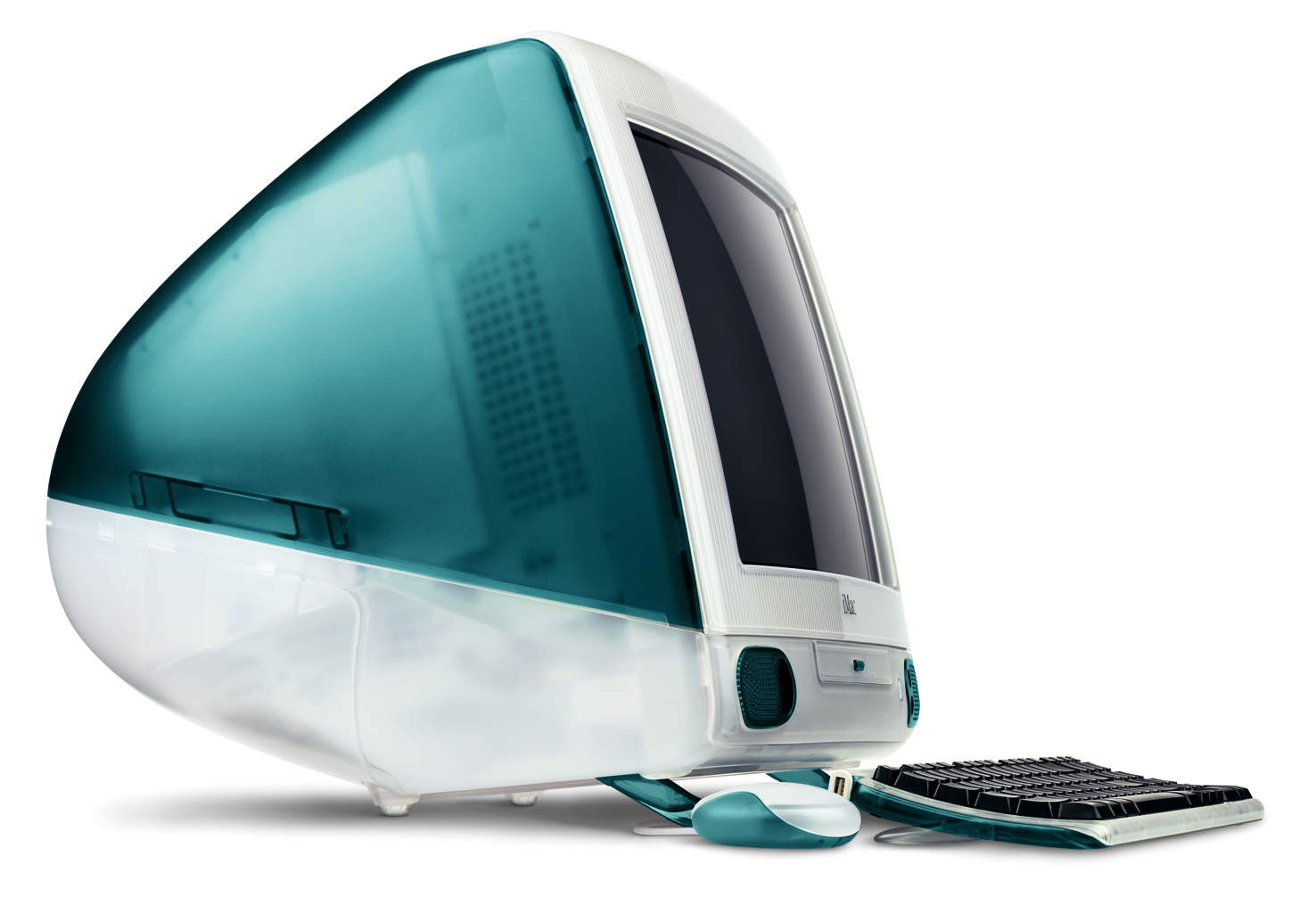
Photo: Apple
Released in 1998, the original Bondi-blue iMac G3 became a hit from the start. Apple sold 800,000 units in its first 20 weeks.
The iMac’s success had a lot to do with its radical design and bold choice of transparent plastic.
“It looks like it’s from another planet,” Apple CEO Steve Jobs said when unveiling it. “A good planet. A planet with better designers.”
The other key to the iMac’s success was the rapid rise of the internet — and how easy the iMac made it to get online.
“Presenting three easy steps to the internet,” said actor Jeff Goldblum in an early iMac ad. “Step one: Plug in. Step two: Get connected. Step three … there’s no step three. There’s no step three!”
Following the initial Bondi blue, Apple expanded the G3 line with a wide range of colors and patterns (like Dalmation and Flower Power) that maintained the computer’s popularity until the launch of the equally radical “sunflower” iMac G4 in 2002.
iPod 2G (2002)
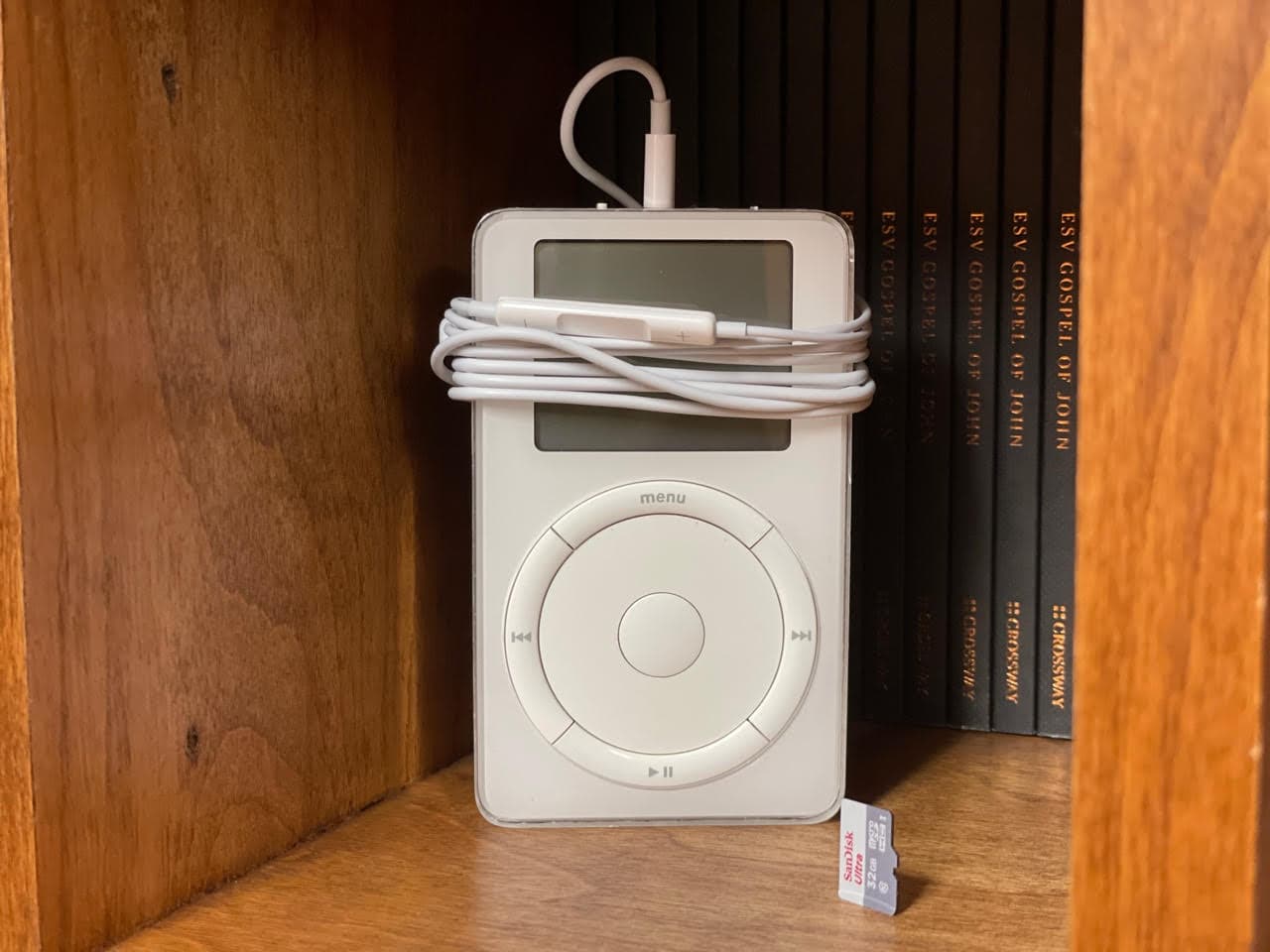
Photo: Tony Walker
When Steve Jobs unveiled the first iPod in 2011, the world yawned. Apple fans wanted an updated Newton MessagePad PDA, not a stripped-down MP3 player that was pricey to boot. One wag noted that iPod stood for “Idiots Price our Devices.” Plus, it was Mac-only, requiring a FireWire connection to sync with iTunes – and Macs weren’t very popular at the time.
But the iPod’s tiny hard drive allowed you to carry your entire music library with you (“1,000 songs in your pocket,” as Apple famously said). And its intuitive scroll wheel made it easy to navigate vast music libraries. But perhaps the biggest innovation was automatic syncing with iTunes, which made loading the device with songs super-easy.
The iPod really took off with the second- and third-generation iPods, which added Windows support (via Musicmatch Jukebox) and then USB connectivity (thanks to a new 30-pin Dock Connector).
Sales got another big boost with the launch of the iTunes Music Store in April 2003, and then the cheaper iPod mini in January 2004.
Over successive generations, the iPod shrank in size, ballooned in storage and gained color screens and video capabilities. It became an enormous cultural phenomenon that transformed Apple from a niche computer maker into a consumer electronics powerhouse, laying the foundations for the iPhone and the App Store that followed.
iTunes Music Store
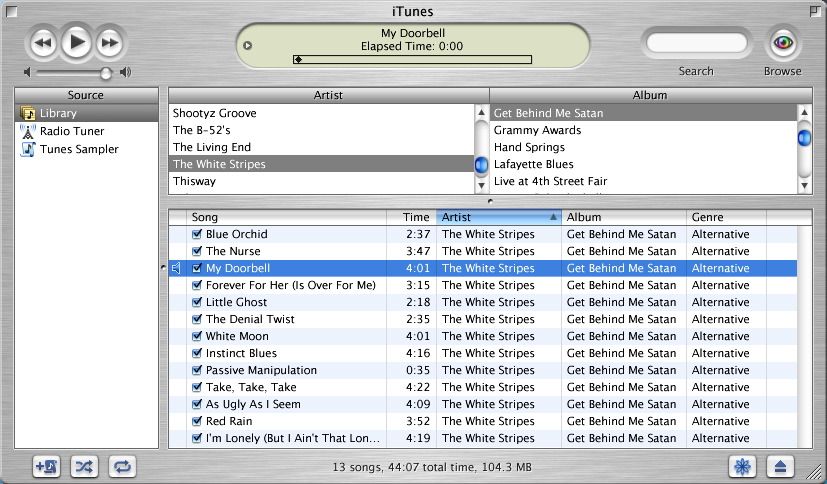
Photo: Apple
The iTunes Music Store was revolutionary for its time, transforming how consumers found and paid for digital media. Launched in spring 2003, the iTunes Music Store provided a legal, easy-to-use alternative to music piracy, allowing customers to buy songs individually for 99 cents (as well as full albums).
At the time, Napster, Kaazaa and other online piracy services were flooding the internet with pirated music. But thanks to its tight integration with iPod, the iTunes Music Store made it easier to get music legally. It was a success right from the get-go — and it led directly to the App Store.
iPhone and App Store
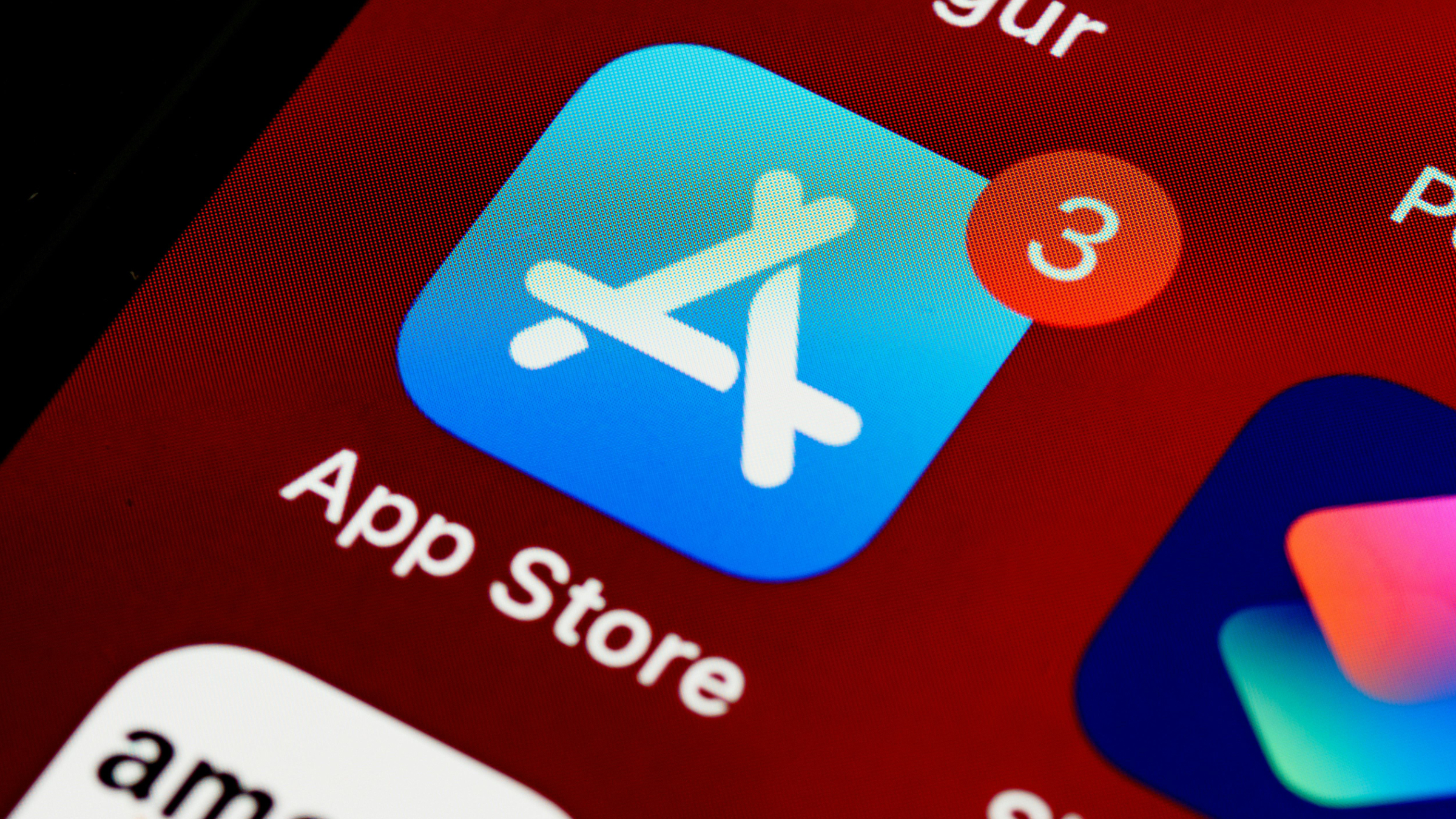
Photo: Brett Jordan
The iPhone is undoubtedly Apple’s most successful hardware product ever, but it wouldn’t have been a smash-hit success without the App Store.
The App Store allowed the iPhone to fulfill its potential as a computer in your pocket, and has spawned multimillion-dollar businesses in its own right, from DoorDash to Uber.
The App Store debuted in 2008 alongside the iPhone 3G. Steve Jobs was initially against third-party software running on the iPhone, but was persuaded to try a “walled garden” approach that emphasized safety, security and ease of use.
It’s been a blockbuster success, redefining how software is distributed, boosting Apple’s bottom line, and earning more than $550 billion in revenue for developers.
Apple silicon (2010)

Screenshot: Apple
Steve Jobs said Apple always strived to control the primary technology in its devices. But until 2010, Apple remained reliant on third parties for perhaps the most important component of its devices: the CPU.
Apple silicon goes back to the Apple A4, the first Apple-designed system-on-a-chip. The company introduced the A4 in 2010; it powered the first-generation iPad and then the iPhone 4.
A decade later, Apple introduced its first M-series chips for Macs in 2020. With a clever unified memory design, which eliminates bottlenecks by sharing memory between the CPU, GPU and Neural Engine, Apple silicon showed very strong performance from the start.
With each successive generation, Apple produced industry-leading chips that performed with a fraction of the power requirements of rivals’ processors.
And because Apple controls both the chip design and the operating systems that run on them, it can add features and optimizations that competitors using third-party processors cannot match.
Mac OS X
In the late 1980s, Apple struggled mightily to replace the aging and ever-unstable Macintosh System 7, eventually buying Steve Jobs’ NeXT to acquire its sophisticated operating system, NeXTSTEP.
It took Jobs and his lieutenants about four years to transform NeXTSTEP into Mac OS X, which Apple launched with much fanfare in March 2001.
Jobs played up how attractive it looked – “We made the buttons on the screen look so good you’ll want to lick them” – but Mac OS X was about much more than appearances. It has underpinned most of Apple’s major products since.
Mac OS X still provides the core architecture for all Apple’s modern operating systems, including macOS, iOS, iPadOS, watchOS, tvOS, audioOS and visionOS.
Apple Watch
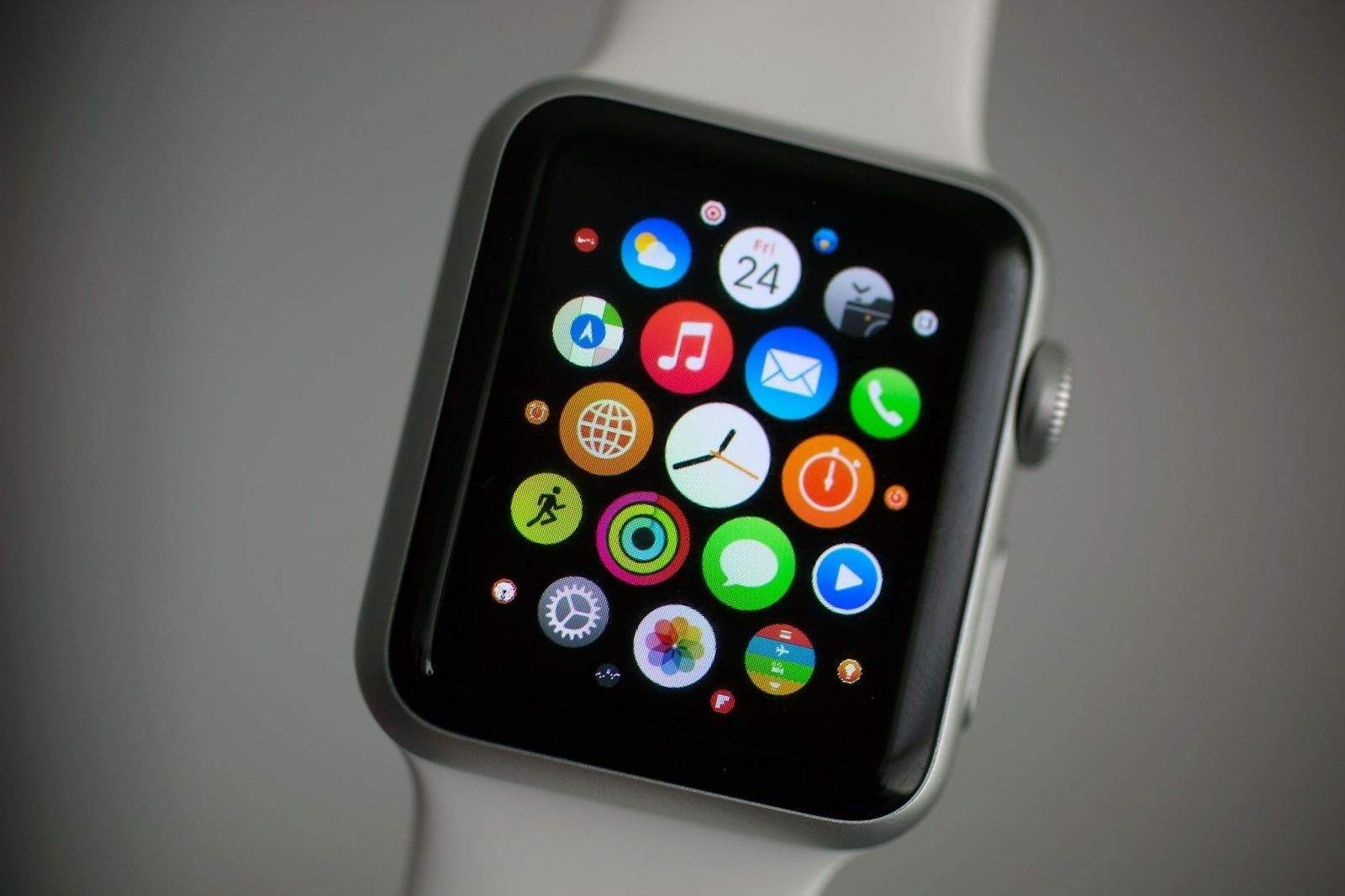
Photo: Jim Merithew/Cult of Mac
The Apple Watch has become a slow-burn sensation. Launched just over 10 years ago, the Apple Watch has become the single bestselling watch model in the world, by far.
Initially pitched as a fashion accessory, the Apple Watch morphed into an essential health and wellness companion, with an array of sensors and connectivity options.
It’s been cited many times for literally saving people’s lives, and looks set to receive more potentially lifesaving features in the future.

Leander Kahney is the editor and publisher of Cult of Mac. Leander is a longtime technology reporter and the author of six acclaimed books about Apple, including two New York Times bestsellers: Jony Ive: The Genius Behind Apple’s Greatest Products and Inside Steve’s Brain, a biography of Steve Jobs.
Leander has written for Wired magazine, Scientific American, The Guardian, The Observer, The San Francisco Chronicle, MacWeek and many other publications.