https://www.youtube.com/watch?v=CzsMSijofvc
Verizon has released its first iPad ad: “All the magic of iPad. All the nationwide power and reliability of Verizon.”
https://www.youtube.com/watch?v=CzsMSijofvc
Verizon has released its first iPad ad: “All the magic of iPad. All the nationwide power and reliability of Verizon.”
Comment of the week comes from reader Flash Man regarding the story that Adobe’s Flash kills battery life. Writes Flash Mac:
A new study also indicates that using web and desktop applications will significantly decrease battery life. In fact, in a stunning series of tests soon to be released, scientists have determined that simply running the computer would decrease the battery by up to 50X compared to keeping it in the ‘off’ or ‘standby’ mode. Scientists are looking for solutions to this problem. One five year old girl suggested plugging in some kind of ‘charging device’ to combat this threat. Fanboys quickly dismissed the idea as too simple and instead suggested purchasing multiple Macbooks and having an elaborate series of spares available at all times. Additionally, Apple suggests purchasing an AppleTV and an iPhone to make end users feel better.
In June 2008, on a flight home from Europe to San Francisco, I was given a fascinating demo of some jaw-dropping technology.
I was sitting next Inon Beracha, CEO of Israeli company PrimeSense, which had developed a low-cost chip and software to do 3D machine vision.
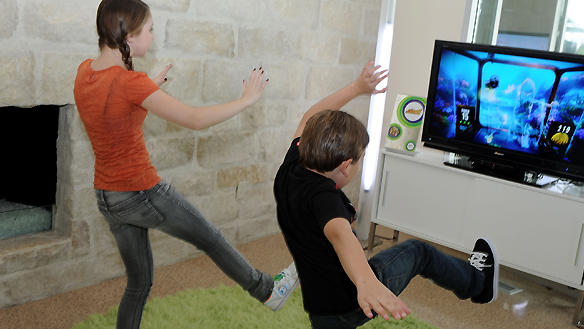
The system used a pair of cameras and an infrared sensor to highlight people and track their movements.
On his laptop, Beracha showed me videos of people waving their hands in the air to control Wii-like games. He showed people controlling TV programming menus by gesturing their hands in the air. And, most impressive of all, someone flipping through a photo slide show like they were Tom Cruise in Minority Report. It was so slick, I asked him if it was CGI. It was real, he said, and so cheap, the technology could eventually be found everywhere in the home, office and car.
Of course, PrimeSense’s system is at the heart of Microsoft’s new Kinect game controller, which is getting rave reviews and looks set to be a monster hit. It’s a “crazy, magical, omigosh rush,” says the New York Times‘ David Pogue.
And it almost belonged to Apple.
Apple’s massive new data center is a 21st-century broadcasting system to rival the TV networks of old, says a leading expert in cloud computing.
Nick Carr, author of the “The Big Switch” a bestseller about the cloud, says Apple’s North Carolina facility is a “broadcasting system” not unlike NBC or CBS, but one that distributes software as well as media.
“Apple increasingly views its mainstream computers, from iPod Touch to iPhone to iPad to MacBook Air, as media players, with “media” spanning not just audio and video but also apps,” Carr wrote in an email. “From that perspective, the North Carolina data center can be seen as essentially a broadcasting system that will enable Apple to make the shift from a downloading model of media distribution to a streaming model. It’s a proprietary broadcasting system (not altogether unlike traditional broadcasting systems), which means it’s a very different model of the cloud from the open model promoted by Google.”
At 500,000 square feet, Apple’s $1 billion data center will be among the largest in the world. The unusual size of the data center suggests that Apple has ambitious plans for cloud computing.
The massive facility is coming online before the end of the year, Apple has said, although what it will be used for, the company hasn’t detailed.
It’s assumed it will be used to stream music and movies from iTunes. Reports suggest the company is going to build a big office complex next door and is “going after the cable market.”
But it goes deeper than that, says Carr. The facility will help transition Apple from a download model of computing to a streaming model of computing.
Here’s what else he had to say about Apple’s unique take on the cloud:
We’ve received a tip about an unexpected application for the NFC chip Apple is expected to build into the iPhone 5.
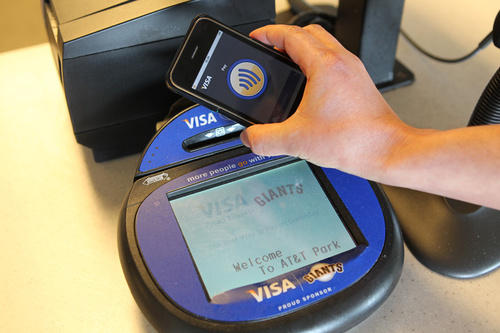
Near Field Communication (NFC) is a short-range wireless connection technology that would turn the iPhone into an electronic wallet or security passkey.
NFC is already in use in Asia and is expected to explode here in the next three to five years, especially if Apple adopts the technology. NFC has been rumored for the iPhone 5, and Apple appears to be gearing up for a NFC revolution. It has made a lot of NFC hires, including a a leading NFC expert and has patented a lot of NFC technology.
If the iPhone 5 does have NFC, applications like an eWallet are a no-brainer. But we’ve been told that Apple is also researching NFC for remote computing.
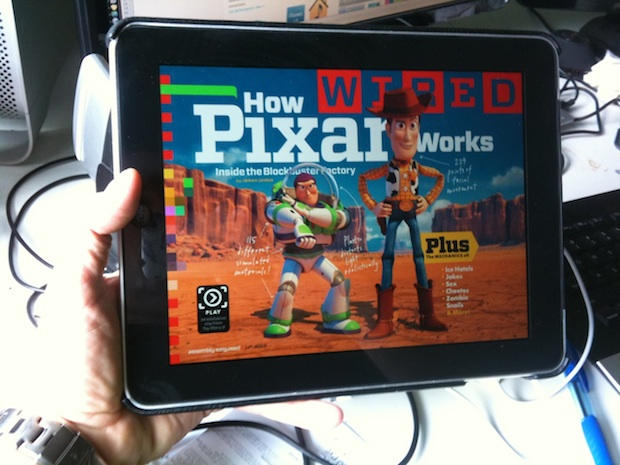
There’s been a lot of hoopla about magazine apps from the likes of Popular Science and Wired, which we reviewed favorably. But these standalone apps are doomed to failure, argues Web designer Khoi Vinh.
Stand-alone magazine apps appeal to publishers and their advertisers, but are totally at odds with the way users are interacting with their iPads, argues Vinh, who is famous for the celebrated redesign of the New York Times‘ site.
Take the recent release of the iPad app version of The New Yorker. Please. I downloaded an issue a few weeks ago and greatly enjoyed every single word of every article that I read (whatever the product experience, the journalism remains a notch above). But I hated everything else about it: it took way too long to download, cost me US$4.99 over and above the annual subscription fee that I already payfor the print edition and, as a content experience, was an impediment to my normal content consumption habits. I couldn’t email, blog, tweet or quote from the app, to say nothing of linking away to other sources — for magazine apps like these, the world outside is just a rumor to be denied. And when I plugged my iPad back into my Mac, the enormous digital heft of these magazines brought the synching process to a crawl.
Instead, Vinh said publishers should be looking to good, entertaining apps like EW’s Must List or Gourmet Live. “Neither of those are perfect,” writes Vinh. “But both actively understand that they must translate their print editions into a utilitarian complement to their users’ content consumption habits.”
What magazine apps have you guys seen that translate well to the iPad? Leave your suggestions in the comments.
Khoi Vinh: My iPad Magazine Stand.
Apple’s App Store has a lot of great software — the problem is finding it. With more than 250,000 apps to choose from, it’s hard to find the genuinely good software among thousands of substandard and me-too efforts. The star-rating system doesn’t work, and it’s easy to miss recommendations on sites like this one.
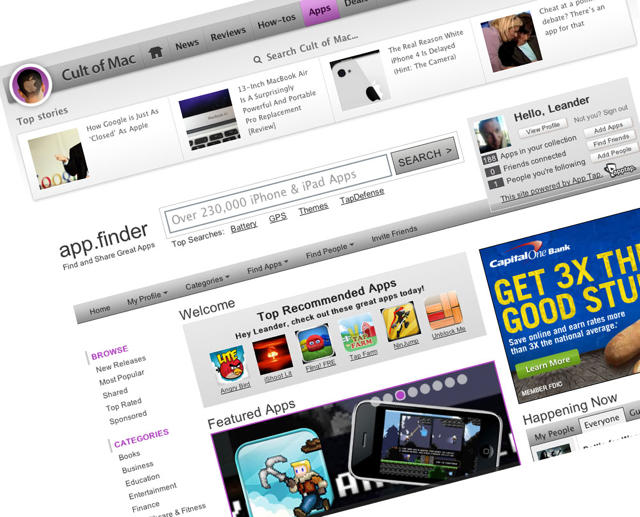
We’re pleased to announce a major new feature of the site: an app discovery and recommendation service powered by Mplayit’s App Tapp platform.
CultofMac’s App Finder helps you to find, share and discuss great apps. But the real power comes from signing in with your Facebook account. This allows you to get app recommendations from friends and colleagues. You can get also follow app experts, get personalized app recommendations, and share the apps you like with friends.
Using our App Finder is pretty self-explanatory, but here’s a brief tutorial showing how it works:
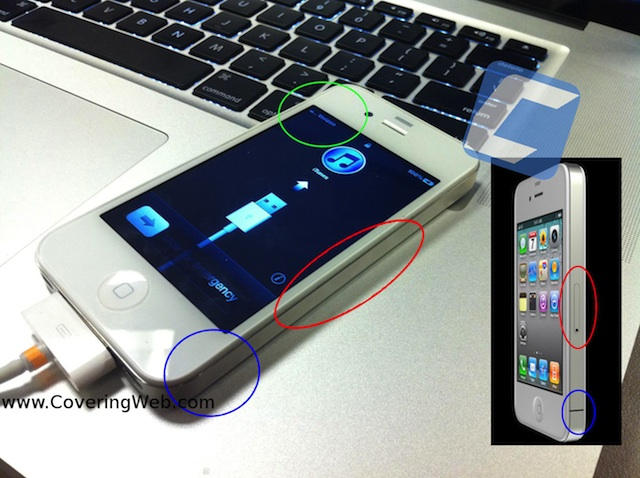
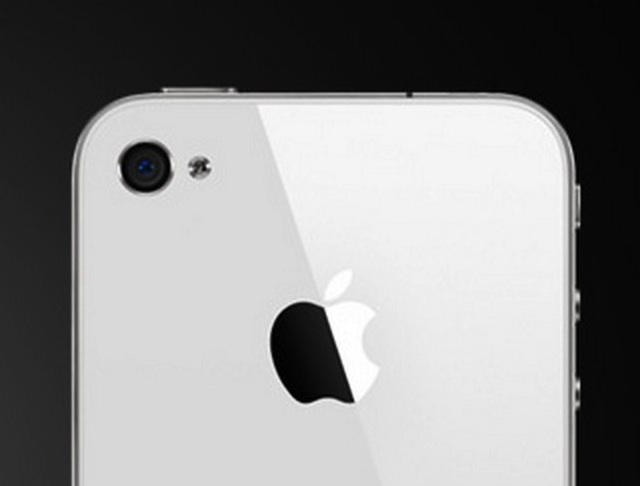
The white iPhone 4 has been delayed because it can’t take good pictures, a source with connections at Apple tells me.
The white case leaks light back in — especially when the flash is used to take pictures.
On Tuesday, Apple said the white iPhone has been delayed until next spring.
This is the third time the white iPhone has been pushed back: first to July, then the end of the year and now to next spring.
Once again, Apple didn’t explain the delay. In the past, the company has said the white iPhone was “more challenging to manufacture than we originally expected.”
Rumors have blamed light leaking from the case or a color-mismatched Home button.
The delay is related to light leakage, as previously rumored. But it isn’t light leaking out from the iPhone, it’s light leaking back in.
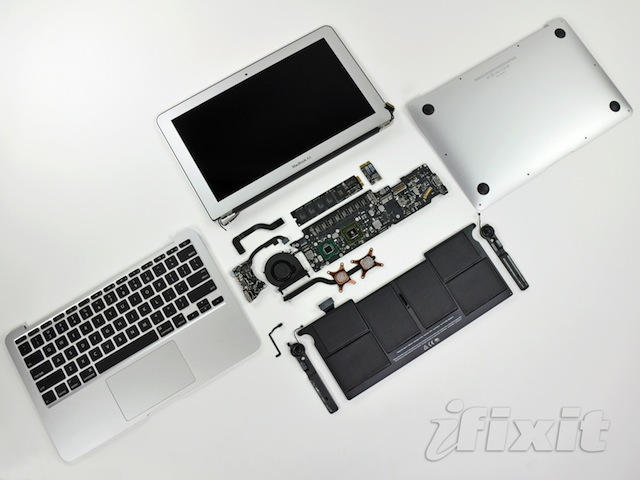
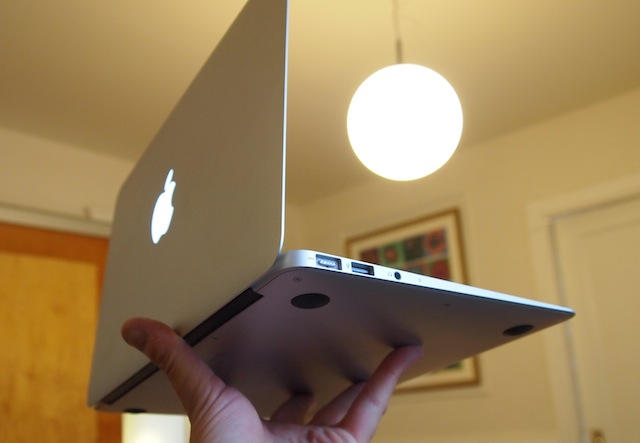
Apple’s new 11-inch MacBook Air is astonishing. It’s unbelievable. It’s the most exciting consumer PC that’s come out for years. It’s a netbook, but it’s not a PoS. It’s blazing fast. It’s unbelievably light and thin. It’s beautifully made. Really beautifully made.
It has an older CPU and skimpy RAM, but it is NOT underpowered. For users like me, who aren’t editing Hollywood movies, it’s more than adequate. Heck, it’s a huge leap forward. Like Jobs said at the launch, this is the future of notebooks. Extremely thin and light, yet capable of running dozens of applications without bogging down. There are compromises, of course, but the most important things — portability, durability and functionality — are very much in place.
Last year, I bought a 13-inch MacBook Pro, which I loved. But in comparison to the 11-inch Air, it looks like a bloated old relic. It’s positively primitive: a porky throwback to a previous computing era.
I know what you’re thinking, “Cult of Mac. This guy’s a zealot. He’ll buy anything Steve Jobs tells him too.” I admit, I’m a fan. But the Air is important. It’s different. It’s right up there with the iPad and the iPhone. This is a breakthrough product.
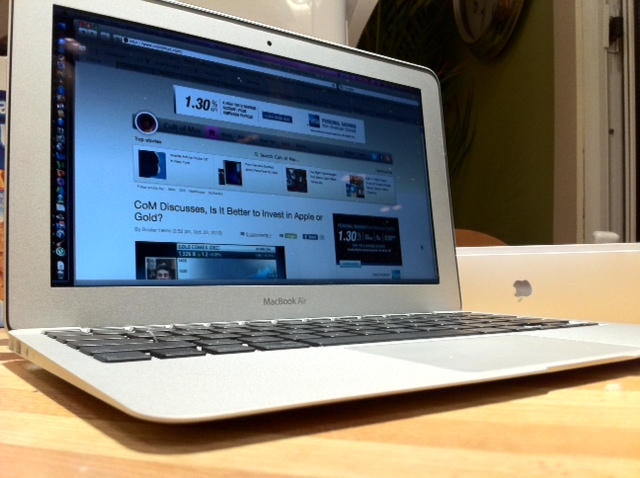
Holy Mackerel this thing is fast! 46 tabs in Safari and 21 in Chrome; 18 open applications, including hogs like Safari, Mail and iTunes.
No spinning beachballs!
There’s no slowdown whatsoever. It’s amazing. This thing flies. It’s the $999 11-inch MacBook with only 2GBytes of RAM — the machine people said would be underpowered. But it’s not. Not by a long shot.
It’s the fastest laptop I’ve used in years, and Apple is going to sell boatloads of them. It’s very exciting.
I’ve got to go on a scout trip with my son. Full review on Monday, and more pictures after the jump.
Steve Jobs is reportedly having a one-on-one meeting with President Obama.
Jobs is meeting the president just before Obama speaks at the Palo Alto home of Google executive Marissa Mayer’s this evening.
The meeting with Steve Jobs is not on the president’s official calendar, but a White House official confirmed the meeting will occur.
Jobs is no stranger to meeting presidents. In June, he hung out with Russian president Dimitry Medvedev (who is an iPad user), and has had President Clinton over for dinner. Jobs and his wife are Democratic party contributors; and Obama is a famous Mac user.
Obama’s speech at Marissa’s Mayer’s house is at 7PM PST/10PM EST.
Silicon Alley Insider: President Obama Meeting With Steve Jobs This Afternoon

I hate to crow, I really do, but we nailed it on the MacBook Air rumors.
Just look at our mockup above, which we published on Monday, and the real deal. It’s pretty uncanny, especially as the designer, Don Draper, mocked it up based on a description from a source. Of course, Apple is very consistent with its design language, which makes things easier. We got the color of the screen bezel wrong and forgot to include the headphone jack. But still — just look at it.
We got most of the specs right too.
This is the software reinstall disk for the new MacBook Air. Cool eh?
Here’s the details of what’s on it, according to Apple’s knowledgebase article:
During his anti-Google diatribe this afternoon, Steve Jobs said the Google-versus-Apple, open-versus-closed debate is a smokescreen. It makes no sense to say Apple is closed while Google is open when the real issue is fragmentation versus integration.
Jobs said Google’s Android platform is fragmented. There are too many different versions of the operating system and too many devices, making it a headache for consumers and developers. Apple’s iOS devices on the other hand aren’t fragmented, because they are “vertically integrated.” Apple closely integrates the software with the hardware, and they “just work.”
But what does he mean exactly by “vertical integration?” And why is it so important?
I wrote about this at length in my book, Inside Steve’s Brain. In fact, I think it’s critical to understanding why Jobs and Apple are killing it in consumer electronics right now.
So here’s Chapter Eight — “Total Control: The Whole Widget,” — in its entirety.
Steve Jobs is no stranger to hyperbole, but sometimes he says things that make the hair on your neck stand up. Here he is on the future of the iPad:
Well, the iPad is clearly going to affect notebook computers. And I think the iPad proves it’s not a question of if, it’s a question of when. There’s a lot of development and progress that will occur over the next few years, but we’re already seeing tremendous interest in iPad from education and, much to my surprise, from business.
We haven’t pushed it real hard in business and it’s being grabbed out of our hands. I talk to people every day in all kinds of businesses that are using iPads… The more time that passes, the more I am convinced that we’ve got a tiger by the tail here and this is a new model of computing — you know we’ve already got tens of millions of people trained on with the iPhone — and that lends itself to lots of different aspects of life, personal, educational, and business. I see it as very general purpose and very big… One could argue about the timing endlessly, but I don’t think you can argue it’s going to happen.
Check out the great graphic below from designer Spencer Caldwell. It shows the screen sizes of Apple’s full lineup of machines — and where the rumored 11-inch MacBook Air will slot in.
Look how neatly it slots into the lineup. It’s pretty stunning. It’s almost like there was a hole just begging to be filled with a 11.6-inch machine.
On Wednesday, Steve Jobs will likely introduce a redesigned 13.3-inch MacBook Air with a bigger battery and more ports — yet thinner and lighter — than the current model, CultofMac.com has independently confirmed.
Apple will probably also add a second, smaller 11.6-inch “Netbook” version, according to our well-placed source.
Our information independently corroborates recent reports by AppleInsider, and Engadget, which ran a picture of a purported prototype over the weekend.
The new model is also apparently much snappier than its underpowered predecessor. “It boots so fast, it’s unbelievable,” our source says. “It’s amazing how fast it boots up.”
There may be a new smaller, cheaper MacBook Air in the air, according to rumor reports:
MacRumors: Apple to Introduce 11.6-Inch MacBook Air With ‘SSD Card’ Integrated Storage Next Week?
AppleInsider: Sources: Apple to unveil revamped 11.6-inch MacBook Air next week
Hot on the heels of our interview with John Sculley, Bloomberg has posted its 50-minute Game Changers documentary about Steve Jobs, which also features Sculley. I’m in it too, making dumb comments about Afghan goat farmers. It airs tonight on TV at 9pm and 11pm ET.
UPDATE: Lots of reports that the video isn’t working in Safari. Try Firefox of Chrome.
Comment of the Week comes from @Ron regarding our interview with John Sculley about Steve Jobs. Going against the common wisdom that ex-CEO John Sculley was bad for Apple, @Ron has a different take on Sculley, who I feel has been unfairly demonized for his decade-long stint at Apple’s helm.
Great article. I worked with John occasionally in his last years at Apple. I didn’t realize at the time how burnt out he was, but it make sense now in retrospect. He was shy and seemed withdrawn.
John was a great CEO for the first few years. It’s easy to forget that Steve left Apple in complete disarray – it’s safe to say that he hadn’t developed his management or relationships skills at that point. Sculley held things together and got the place to run as a business. It’s only later when his lack of product vision caught up with him.
In 1983, Steve Jobs wooed Pepsi executive John Sculley to Apple with one of the most famous lines in business: “Do you want to spend the rest of your life selling sugared water or do you want a chance to change the world?”
Jobs and Sculley ran Apple together as co-CEOs, blending cutting edge technology (the first Mac) with cutting edge advertising (the famous 1984 ad) and world-class design. But it soon soured, and Sculley is best known today for forcing Jobs’ resignation after a boardroom battle for control of the company.
Now, for the first time, Sculley talks publicly about Steve Jobs and the secrets of his success. It’s the first interview Sculley has given on the subject of Steve Jobs since he was forced out of the company in 1993.
“There are many product development and marketing lessons I learned working with Steve in the early days,” says Sculley. “It’s impressive how he still sticks to his same first principles years later.”
He adds, “I don’t see any change in Steve’s first principles — except he’s gotten better and better at it.”
Here’s a full transcript of my interview with John Sculley on the subject of Steve Jobs.
It’s long but worth reading because there are some awesome insights into how Jobs does things.
It’s also one of the frankest CEO interviews you’ll ever read. Sculley talks openly about Jobs and Apple, admits it was a mistake to hire him to run the company and that he knows little about computers. It’s rare for anyone, never mind a big-time CEO, to make such frank assessment of their career in public.
UPDATE: Here’s an audio version of the entire interview made by reader Rick Mansfield using OS X’s text-to-speech system. It’s a bit robotic (Rick used the “Alex” voice, which he says is “more than tolerable to listen to”) but you might enjoy it while commuting or at the gym. The audio is 52 minutes long and it’s a 45MB download. It’s in .m4a format, which will play on any iPod/iPhone, etc. Download it here (Option-Click the link; or right-click and choose “Save Linked File…”).
It seems a little nutty, but Steve Jobs deemed that the team developing the original Macintosh couldn’t exceed more than 100 people. Here’s why.
What did Steve Jobs do when Sony founder Akio Morito do gave him one of the first Sony Walkmans off the production line?
It’s commonly believed that Apple wouldn’t have nearly gone out of business if it had only licensed the Mac operting system to other computer makers, like Microsoft did. But John Sculley explains why that was impossible: