Mobile menu toggle

Apple TV - page 130

Can Apple and the Mac mini learn from Dell’s Studio Hybrid?

By •

post-2425-image-007610c085afdfad4dbbc74185c3107d-jpg

Although once famously proud of annihilating its R&D budget, it appears Dell is now in some cases reading from the Book of Apple, in taking existing ideas and–at least in some ways–improving them. In recent weeks, we’ve seen the Dell Dock, taking the UI device from OS X that’s loved and loathed in equal measure and adding handy auto-categorization. (And, yes, I’m well aware Apple didn’t invent docks, but if you’ve been paying attention, that’s kind of my point.)

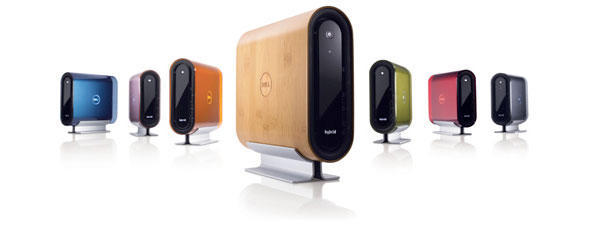
However, while the Dell Dock is an interesting curiosity, the Studio Hybrid (depicted) is a rather more ballsy production, not only taking on the Mac mini and AppleTV, but exposing some of the shortcomings in Apple’s range of highly consumer-oriented desktop machines.

In terms of hardware, the Studio Hybrid is nothing new: Dell has shoe-horned a laptop’s guts into a small and fairly contemporary form factor. But when it comes to options, Apple’s machine is trumped in some key areas. Dell offers Blu-ray as an option (albeit with a $250 price-tag), HDMI video out, a card reader, and also pushes adding a TV tuner. (Amusingly, you can also add a bamboo shell for $130, which almost makes Apple’s black MacBook price-tag look sensible.)

Sure, there are compromises, not least the Dell lacking Mac OS X, the bizarre omission of wireless in the stock model, and the fact that on Dell’s online store, you have to click ‘Go to Next Component’ about 56 billion times to configure your unit (versus the streamlined and efficient approach taken on the Apple Store). But, to some extent, it does highlight the manner in which Apple is almost dropping the ball when it comes to living-room computing.

AppleTV shows promise, and the future of media is undoubtedly going to be centered around downloads. However, we’re not there yet, and people have too much investment in optical media. Therefore, AppleTV becomes an additional unit to homes already suffering from clutter under their televisions. And the mini, despite offering loads of potential, seems to have been practically shunned by Apple, banished to the corner like an unloved and unwanted child.

Rumors always abound regarding future Apple kit, with pie-in-the-sky wishes dashed by the brutal hand of reality upon an Expo or WWDC keynote. My wishes are rather simpler, though: a Mac mini that genuniely makes a play for the living room. Take a leaf out of Dell’s book, Apple, and bundle in that card reader, so people can more easily bung photos on their TV screen. Add that Blu-ray option for people who want to own media rather than rent downloads. And add HDMI video out by default, so people can connect their mini to a new TV without faffing about with additional leads.

Don’t worry about the bamboo option, though.

Apple offers movie rentals for the UK and Canada

By •

cult_logo_featured_image_missing_default1920x1080

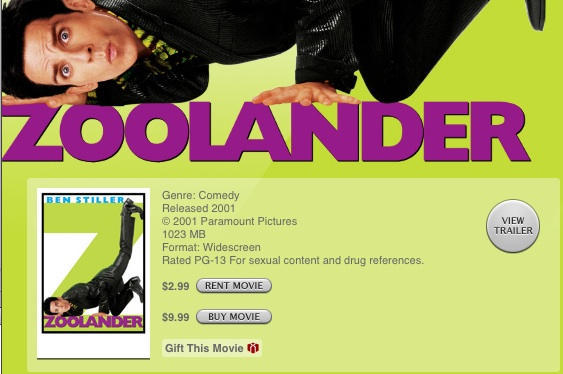
Brits (and Canadians) finally got to join the iTunes movie party this week, with Apple unleashing movie rentals and purchasing for the two territories. I’d actually been mulling over grabbing an Apple TV for a while (what with my ten-year-old DVD player starting to make strange buzzing and wheezing noises), but decided against it. Instead, I bought a cheap replacement DVD player and an iPod dock, and so I was initially feeling a little irked.

And then I looked at the prices and felt much better. In the UK, rental pricing initially doesn’t seem too awful at £2.49 for old stuff and £3.49 for shiny new films, which is mostly on a par with high-street rental outlets such as Blockbuster and DVD-by-mail companies. However, this is the realm of digital, and so there aren’t as many barriers to business regarding upkeep, location, shipping, and so on. A swift comparison with the US store sees that Apple’s making an extra $2 on library titles and $3 on new releases (the price of which almost doubles during a film’s trip across the Atlantic). Take into account taxes, and the extra profit is reduced, but still pretty hefty. On the plus side, you do at least get a 48-hour window to watch, which is a small added bonus.

However, it’s the purchase price-tags that really have me confused. They come in at £6.99 for library titles and £10.99 for new releases (the latter of which is $14.99—about £7.50—in the US). Even when you add on British taxes, this doesn’t look like a great deal, and with the usual raft of cheap outlets available (HMV, Play.com, Amazon UK), I fail to see how Apple will make a dent in the market with this pricing model.

Commentators are already saying this pricing has nothing to do with Apple (“Blame the movie studios!” “Apple is innocent!” “I wuv Apple and will GET YOU if you write bad things about Stevie!”), and how it’s more expensive to do business in the UK (blah, blah, blah), but this just reminds me of Adobe doubling CS3’s pricing when it goes across the Atlantic and offering a toothy grin in return.

With hardware, there’s now very little difference when taxes are taken into account, and I’m happy for Apple to mark things up a little in case Sterling tanks or the US Dollar rallies. In software, pricing is generally getting better (if you pretend CS3—something of an exception—doesn’t exist), and Apple again is gradually taking the piss less and less with each new release.
So why does the difference in pricing remain in media, when there’s no shipping, no printed artwork, and no shelf-space required? Apple always makes a point about thinking different, but in this case, it looks like the company’s done a quick price-check of its rivals and is thinking exactly the same.

aTV Flash Unlocks your Apple TV

By •

post-2012-image-0789b5171e6422a9915c3b71adb65ae9-jpg

Update: reader Michael Pantoja shares his experience with aTV Flash in the comments, worth a read.

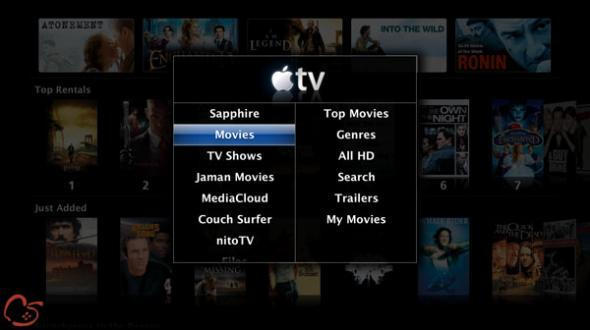
The AppleTV is great for playing video from iTunes, but can’t play video from alternative sources like file-sharing networks. Now, a software update from Apple Core, called aTV Flash promises to unlock tons of great functionality for the Apple TV.

aTV Flash is essentially a bundling of open source hacks for AppleTV originally published at awkwardtv.org into a convenient flash based package that promises to take the guesswork out of applying the updates. aTV ships as a flash drive, that automatically updates your AppleTV as soon as it’s plugged in. The package claims a plug-n-play installation with 1 year of free updates.

Features include:

– Play most video formats (DivX, Xvid, AVI, WMV, RMVB + more)
– Play DVD files WITHOUT converting them
– Sync, organize and watch non-iTunes video files
– Browse the web with a Safari based web browser
– Rent & watch Hi-Def movies from Jaman.com
– Stream media from UPnP(v1) media servers
– View local weather forecasts
– View RSS Feeds
– Enable SSH access

As well as supporting just about all popular CODECs, the $60.00 flash update could greatly enhance your AppleTV experience.

Caveat

Applecore’s website asserts that when applying these patches you’re not voiding your warranty, that said you are hacking the OS of your AppleTV, and preventing it from updating itself in the future. While we researched the manual patching process at awkwardtv.org and it does seem to be reversible we do believe that one should enter into such endeavors eye’s wide open.

Apple’s Movie Rentals Great In Theory, Sucks In Practice

By •

post-1667-image-c6dcae0f1d6135cc245456fb1707a0f5-jpg

Steve Jobs’ much-ballyhooed movie rental service looks all fine and dandy, but the question in my mind is: “How long will it be before the service offers a single decent movie to rent?”

At present, the movies on offer are even shittier than the local video store, or those available on-demand from my cable providor, Comcast, which utterly stinks.

It’d be depressing if all Apple offered was popcorn garbage. Surely the service is serving the wrong demographic. Early adopters, the kind that run out to buy an AppleTV box, are surely more interested in less mainstream fare. How long will it be before there’s some independent movies, classics, artsy fartsy foreign stuff, and genre titles?

Convert BitTorrent Video for AppleTV

By •

post-506-image-9c6286407e8c9342ea66f205502bdfa5-jpg

Owners of a shiny new AppleTV who are also fans of obscure foreign TV shows like Life on Mars or Doctor Who Series 3 might be interested in VisualHub.

VisualHub is a $23 video converter that transforms popular BitTorrent formats (DivX, XviD, AVI, all forms of MPEG) to MP4 format — which play nice on the AppleTV or video iPods.

VisualHub can batch process files and automatically add them to iTunes. It offers encoding up to 720p and claims to be much faster than QuickTime Pro.

For Windows users, there’s Videora AppleTV Converter, a free video converter designed especially for the AppleTV.

When combined with Videora, a file search and download program, video can be automatically found, downloaded and converted for the AppleTV using BitTorrent and RSS, according to the site. This must be the killer app for AppleTV — if it works. I’m downloading it right now to find out.

Anyone tried it?

 Doctorwho Gallery S3 03Gallery 800 40