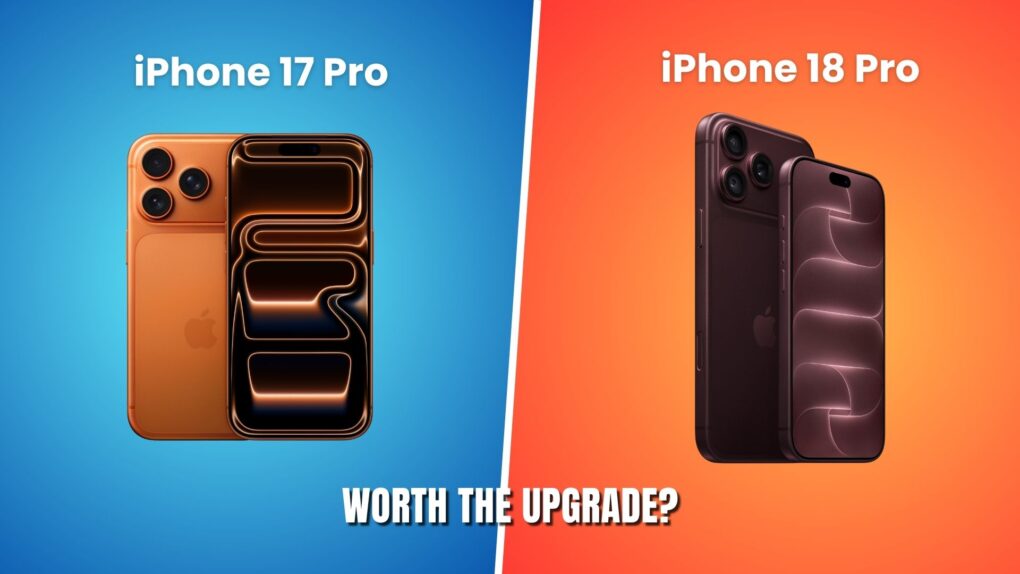
The iPhone 18 Pro gets a flashy new main camera, longer battery life, and some other nice-to-have upgrades. But if you already got an iPhone 17 Pro last year, are these improvements enough to justify an upgrade?
While there’s plenty to like about the iPhone 18 Pro, the higher starting price makes the decision a little harder. Here is how Apple’s two Pro iPhones compare.
The iPhone 18 Pro builds on changes Apple introduced with the iPhone 17 Pro last year. There’s a bigger focus on camera improvements, sustained performance, and battery life. Individually, these upgrades may not seem like a big deal, but they have a real impact in daily use.
The bigger question is whether these improvements justify upgrading from a year-old iPhone. Before getting into what those changes mean, here’s how the key specifications compare.
iPhone 18 Pro vs. iPhone 17 Pro: Key differences
| Specs | iPhone 18 Pro / Pro Max | iPhone 17 Pro / Pro Max |
|---|---|---|
| Design and dimensions | ||
| Materials | Aluminum unibody; Ceramic Shield 2 front; Ceramic Shield back; IP68 certified | Aluminum unibody; Ceramic Shield 2 front; Ceramic Shield back; IP68 certified |
| Dimensions (height × width × depth) | Pro: 5.91 × 2.83 × 0.34 inches (150 × 71.9 × 8.75 mm) Pro Max: 6.43 × 3.07 × 0.34 inches (163.4 × 78 × 8.75 mm) |
Pro: 5.91 × 2.83 × 0.34 inches (150 × 71.9 × 8.75 mm) Pro Max: 6.43 × 3.07 × 0.34 inches (163.4 × 78 × 8.75 mm) |
| Weight | Pro: 7.44 ounces (211 grams) Pro Max: 8.78 ounces (249 grams) |
Pro: 7.27 ounces (206 grams) Pro Max: 8.22 ounces (233 grams) |
| Colors | Black, silver, glacier, burgundy | Silver, cosmic orange, deep blue |
| Display | ||
| Display size and type | Pro: 6.3-inch Super Retina XDR OLED Pro Max: 6.9-inch Super Retina XDR OLED |
Pro: 6.3-inch Super Retina XDR OLED Pro Max: 6.9-inch Super Retina XDR OLED |
| Resolution and refresh rate | Pro: 2622 × 1206 pixels Pro Max: 2868 × 1320 pixels 460 ppi on both 120Hz ProMotion |
Pro: 2622 × 1206 pixels Pro Max: 2868 × 1320 pixels 460 ppi on both 120Hz ProMotion |
| Brightness | 1,000 nits typical; 1,600 nits peak HDR; 3,000 nits peak outdoor; 1 nit minimum | 1,000 nits typical; 1,600 nits peak HDR; 3,000 nits peak outdoor; 1 nit minimum |
| Dynamic Island | Smaller design; displays up to three Live Activities simultaneously | Dynamic Island |
| Performance and storage | ||
| Processor | A20 Pro | A19 Pro |
| CPU | 6 cores: 2 super cores and 4 efficiency cores | 6 cores: 2 performance cores and 4 efficiency cores |
| GPU | 7 cores with Neural Accelerators; hardware-accelerated ray tracing | 6 cores with Neural Accelerators; hardware-accelerated ray tracing |
| Neural Engine | Dual 16-core Neural Engine (32 cores total) | 16-core Neural Engine |
| Cooling | Next-generation vapor chamber | Vapor chamber |
| Storage options | Pro and Pro Max: 256GB, 512GB, 1TB, 2TB | Pro: 256GB, 512GB, 1TB Pro Max: 256GB, 512GB, 1TB, 2TB |
| Cameras and video | ||
| Main camera | 48MP, 24mm; variable aperture: f/1.48, f/1.8, f/2.8, f/4.0; second-generation sensor-shift stabilization | 48MP, 24mm; fixed f/1.78 aperture; second-generation sensor-shift stabilization |
| Ultrawide camera | 48MP, 13mm, f/2.2; 120-degree field of view; macro photography | 48MP, 13mm, f/2.2; 120-degree field of view; macro photography |
| Telephoto camera | 48MP, 100mm, f/2.8; 4x optical zoom; 3D sensor-shift stabilization | 48MP, 100mm, f/2.8; 4x optical zoom; 3D sensor-shift stabilization |
| Front camera | 18MP Center Stage, f/1.9, autofocus; Dual Capture | 18MP Center Stage, f/1.9, autofocus; Dual Capture |
| Rear-camera video | Up to 4K Dolby Vision at 120fps on the main camera; Cinematic mode: Up to 4K Dolby Vision at 60fps | Up to 4K Dolby Vision at 120fps on the main camera; Cinematic mode: Up to 4K Dolby Vision at 30fps |
| Battery and charging | ||
| Video playback | Pro: up to 36 hours Pro Max: up to 45 hours |
Pro: up to 33 hours Pro Max: up to 39 hours |
| Wired fast charging | Both: up to 50% in around 15 minutes with a 60W-capable or higher adapter supporting Adjustable Voltage Supply | Both: up to 50% in 20 minutes with a 40W or higher adapter |
| Wireless charging | MagSafe and Qi2: up to 25W | MagSafe and Qi2: up to 25W |
| Connectivity and controls | ||
| Cellular | 5G: sub-6GHz and mmWave | 5G: sub-6GHz and mmWave |
| Wireless connectivity | Apple N1; Wi-Fi 7; Bluetooth 6; Thread; second-generation Ultra Wideband, C2 modem on Pro, Qualcomm modem on Pro Max | Apple N1; Wi-Fi 7; Bluetooth 6; Thread; second-generation Ultra Wideband |
| Price | ||
| Starting price (256GB) | Pro: $1,199 Pro Max: $1,299 |
Pro: $1,099 Pro Max: $1,199 |
Design and display: A smaller Dynamic Island
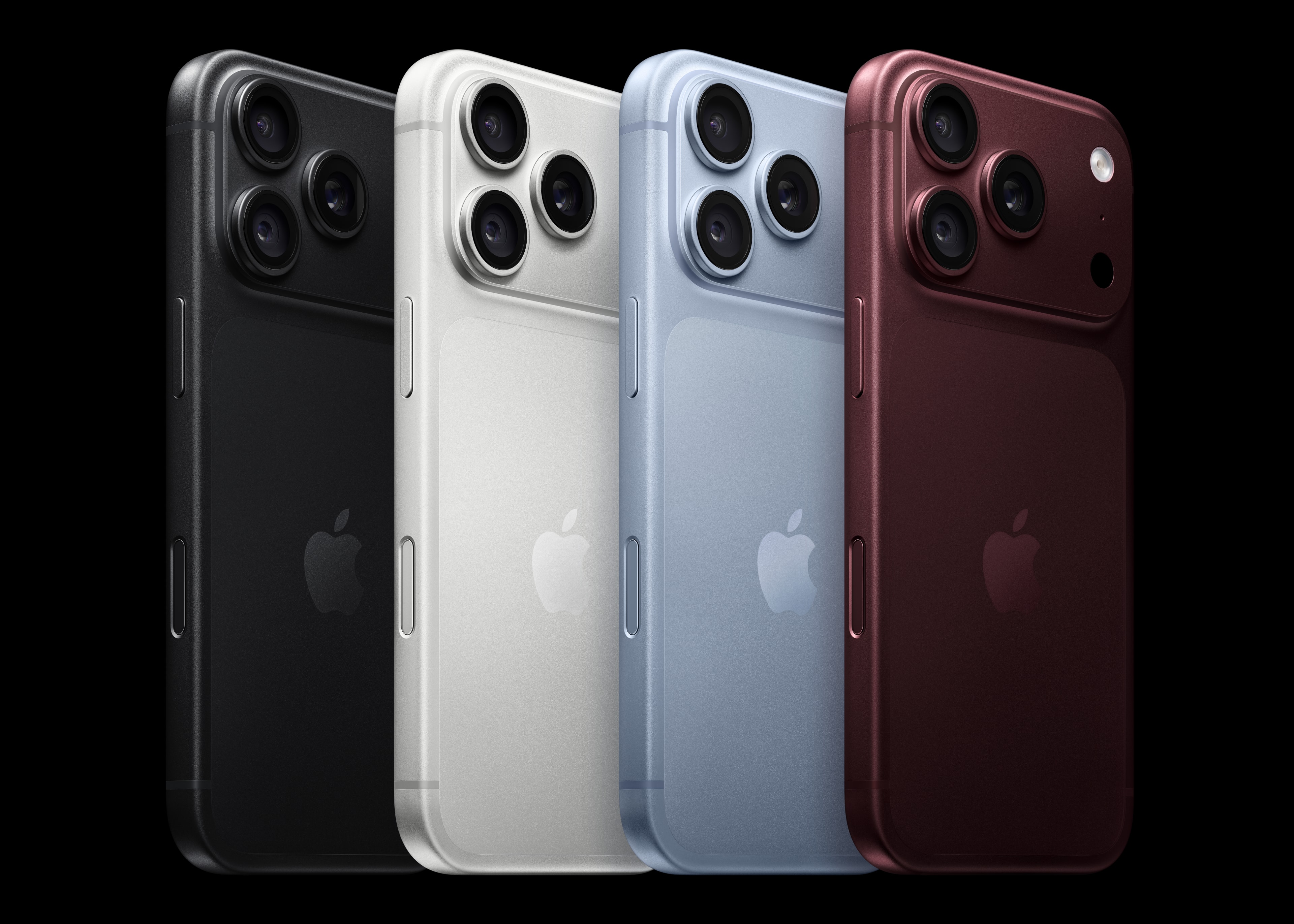
Photo: Apple
iPhone 18 Pro does not introduce any major design changes. Apple sticks with the aluminum unibody, Ceramic Shield 2 front and Ceramic Shield back. The iPhone 18 Pro also retains its predecessor’s dimensions, though it’s now a few grams heavier.
Gone is the cosmic orange color, replaced by burgundy as the hero shade. Other new colors are black, silver and glacier. This time around, the aluminium frame matches the phone’s color for a more unified look.
The screen remains the same, too. Both new and old Pro iPhones pack a 6.3-inch or 6.9-inch ProMotion OLED panel with always-on display, an anti-reflective coating and up to 3,000 nits of peak brightness.
The most notable front-facing design change on the new iPhone is a smaller Dynamic Island. It also gets a functionality upgrade and can show up to three Live Activities simultaneously.
From a display perspective, it makes no sense to upgrade from an iPhone 17 Pro to an iPhone 18 Pro. The changes aren’t significant enough to justify the upgrade.
Cameras: More control over the main lens
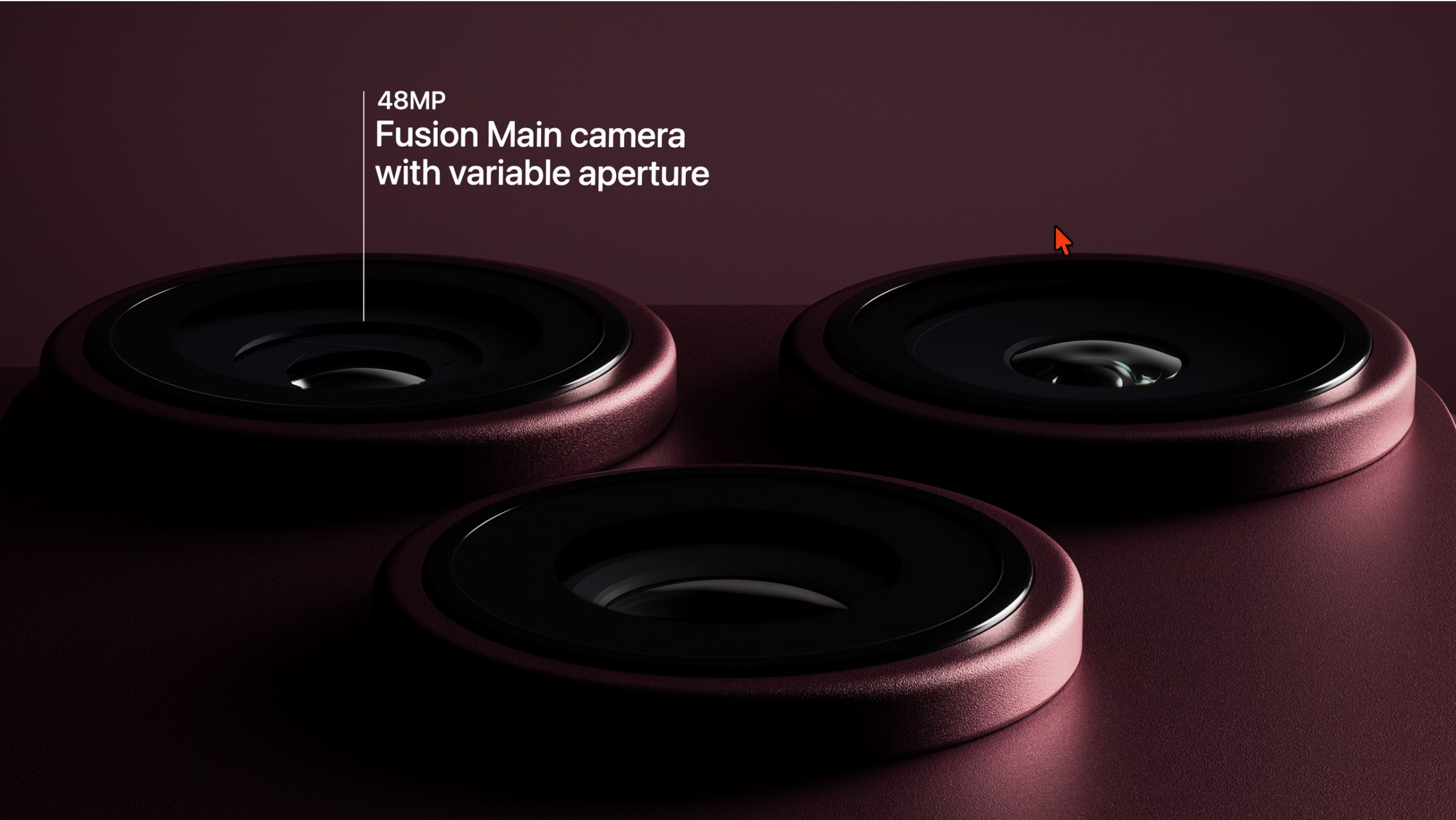
Photo: Apple
With the iPhone 18 Pro, Apple is giving the main camera a significant upgrade after a few years. There’s a new 48MP image sensor, with a four-stop variable aperture being the key highlight.
It supports four aperture settings: f/1.48, f/1.8, f/2.8 and f/4.0. For comparison, the iPhone 17 Pro uses a fixed f/1.78 aperture.
Apple does not seem to be using a larger main camera sensor. But the wider f/1.48 aperture will allow more light to reach the sensor, helping improve low-light images. That aperture should also enable a stronger bokeh effect.
Typically, such a wide aperture leads to blurring and focus issues when shooting close-ups. The variable aperture should help with that, as it can automatically switch to f/1.8 or f/2.8 in such situations.
The upgraded Pro mode on the new iPhone provides manual control over the aperture. It also adds shutter speed, histogram and white balance controls.
Other camera hardware seemingly remains the same between the two Pro iPhones. Apple did not make any meaningful upgrades to the telephoto or ultrawide lenses. It’s the same with the front-facing 18MP Centre Stage camera.
Video recording gets one notable upgrade on the new Pro iPhones. Cinematic mode now supports 4K Dolby Vision at 60fps, up from 30fps. Plus, you can now apply the Cinematic mode effect to a video after recording it.
Performance and connectivity: More power under pressure
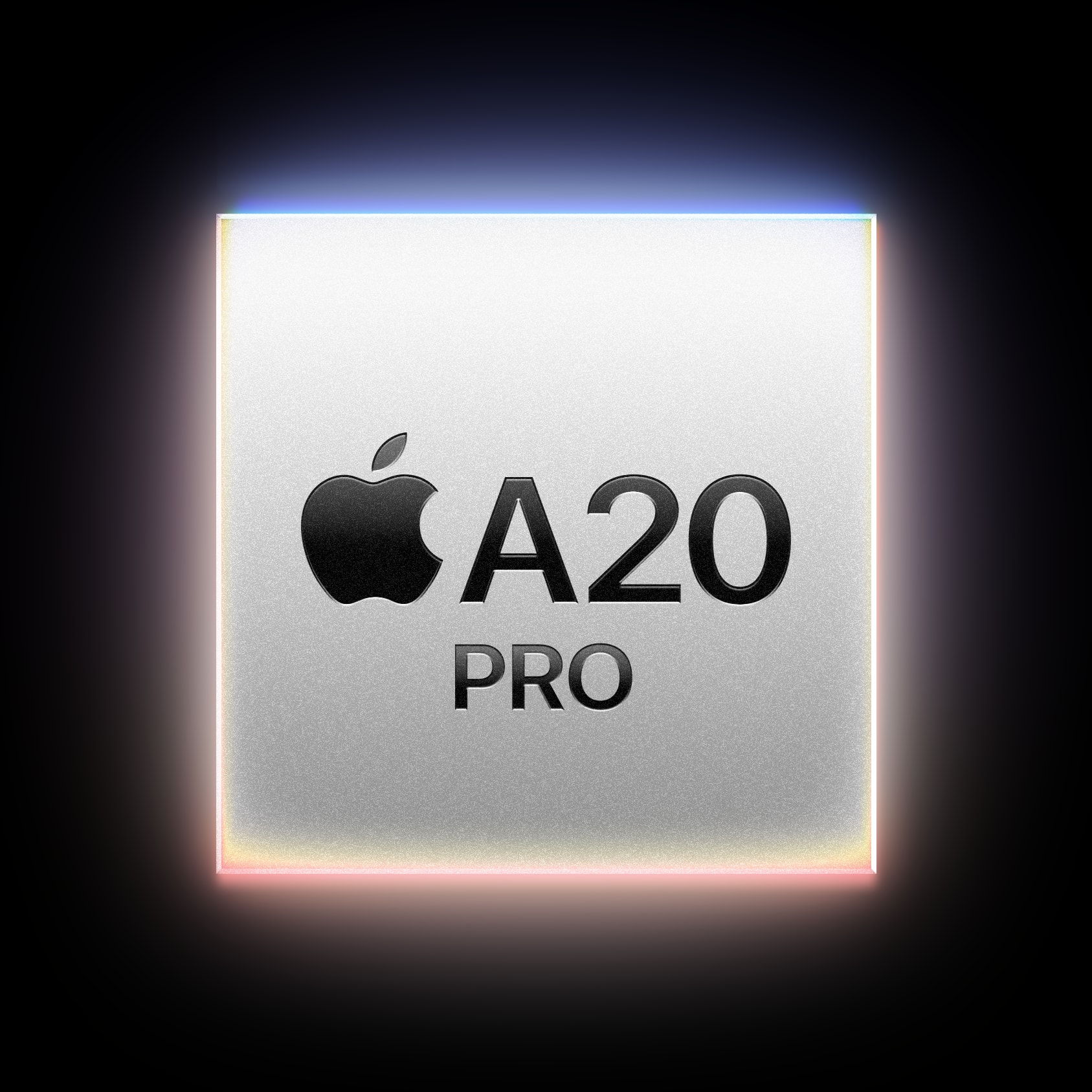
Photo: Apple
iPhone 18 Pro uses Apple’s new A20 Pro chip. It’s the world’s first SoC fabricated on TSMC’s 2nm process node. More importantly, it uses a new packaging technology that removes the memory from the die for better heat dissipation.
Apple claims some big performance improvements with its latest chip. The 6-core CPU features two super cores and four efficiency cores, delivering up to 20% faster performance than the A19 Pro.
Apple calls it the fastest CPU in a smartphone. The new 7-core GPU also delivers up to 40% faster performance, while memory bandwidth gets a 50% boost.
AI performance should also be better, thanks to a dual 16-core Neural Engine. That’s twice the cores as on the iPhone 17 Pro.
Apple debuted vapor chamber cooling on the iPhone 17 Pro. Just a year later, it has revamped the system with new materials and three times the surface area. Combined with the A20 Pro’s new packaging, Apple says this enables up to 40% better sustained performance.
None of this means that the iPhone 17 Pro is slow. It remains one of the fastest smartphones on the market right now. Unless you are a real power user, there are hardly any workloads where you will be able to tell the difference in performance between the iPhone 17 Pro and 18 Pro.
For connectivity, iPhone 18 Pro relies completely on Apple’s in-house chips. The N1 chip handles Wi-Fi 7, Bluetooth 6, Thread and Ultra Wideband. Apple used the same chip in the iPhone 17 Pro.
A new C2 modem handles 5G connectivity.
Apple says its new modem delivers up to 50% faster upload speeds while being 15% more power efficient. Plus, it supports mmWave in the US for faster 5G speeds. The iPhone 18 Pro Max still uses a Qualcomm modem.
While there are no real connectivity upgrades, the switch to Apple’s in-house modem should lead to better and more efficient coverage in challenging situations
Battery life and charging: Quicker top-up
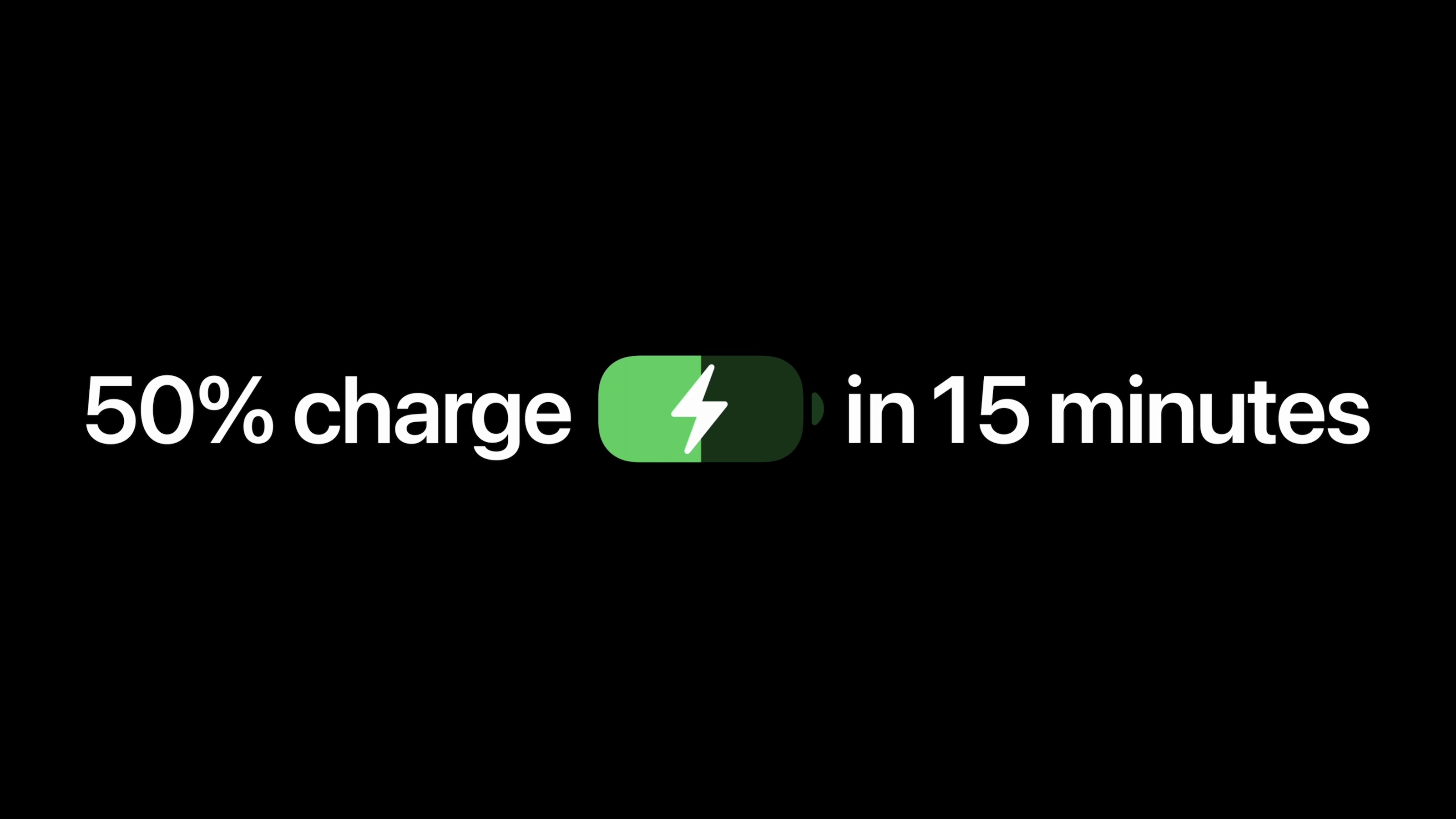
Photo: Apple
Apple dramatically improved the battery life with the iPhone 17 Pro and Pro Max last year.
This time, it’s taking things even further. It says the iPhone 18 Pro delivers battery life similar to the iPhone 17 Pro Max. And the iPhone 18 Pro Max gets the biggest battery boost ever for an iPhone to deliver unprecedented battery life.
Apple rates the iPhone 18 Pro to deliver three additional hours of video playback compared with the iPhone 17 Pro. For the iPhone 18 Pro Max, the difference is even bigger at six extra hours.
Wired charging gets a speed boost too. The new iPhones can charge up to 50% in around 15 minutes — that’s 5 minutes faster than iPhone 17 Pro. This will require using a compatible 60W fast charger, though.
Five minutes might not sound like much. But if you frequently plug in just before leaving home, a quicker top-up could be more useful than another performance benchmark.
Wireless charging doesn’t get any such upgrade. The iPhone 18 Pro supports up to 25W through MagSafe and Qi2, the same as its predecessor.
Price and storage: A $100 hike
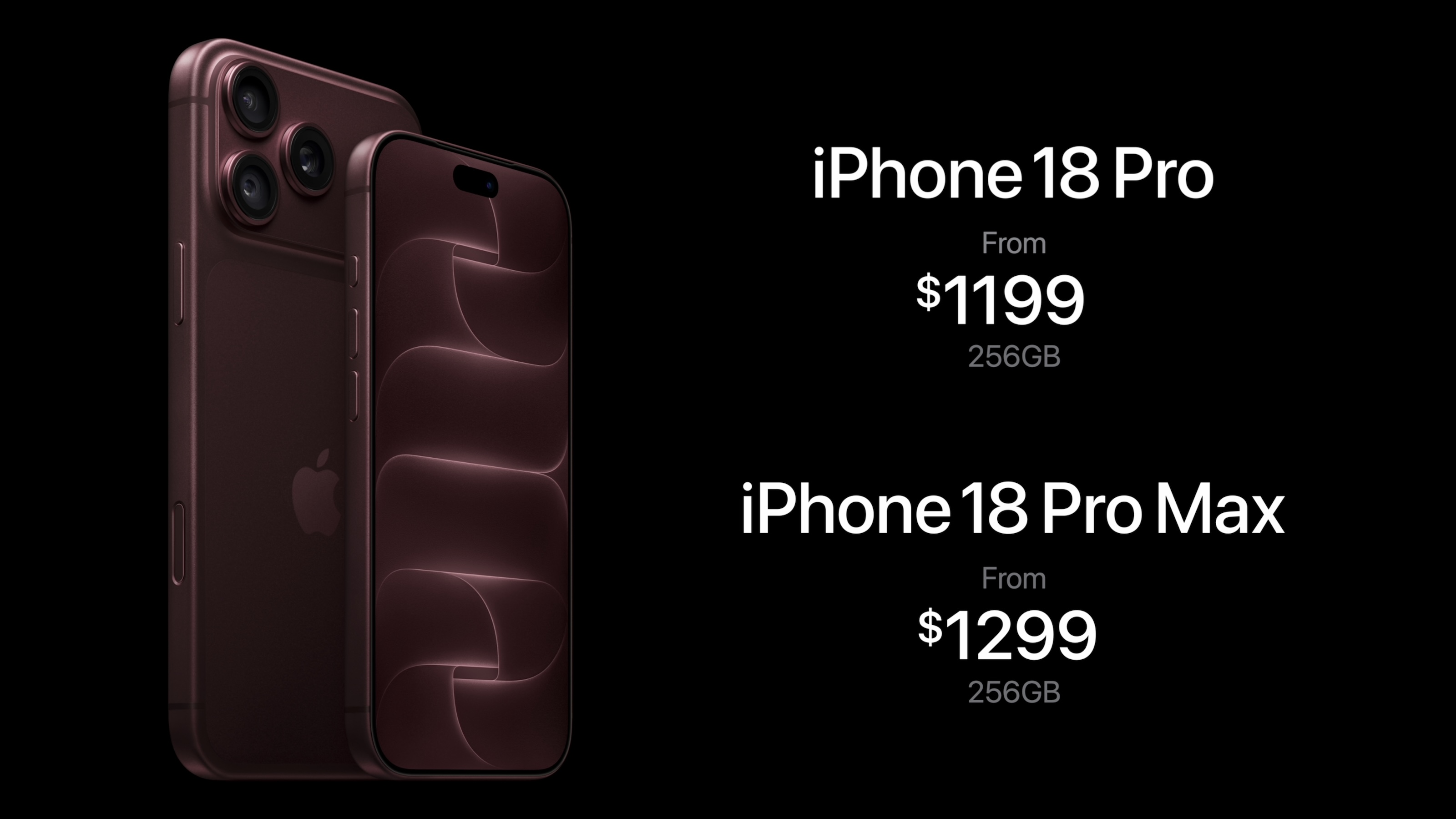
Photo: Apple
The iPhone 18 Pro starts at $1,199 for 256GB, $100 more than the iPhone 17 Pro’s launch price for the same storage. Likewise, iPhone 18 Pro Max starts at $1,299 — $100 more than its Pro Max predecessor.
That’s actually a reasonable price increase, as other smartphones, laptops and consumer electronics have gotten way more expensive due to the increased RAM and storage prices.
An extra $200 will double the storage to 512 GB, while the 1TB model costs an extra $600. The 2TB iPhone 18 Pro Max costs an eye-watering $2,499 before taxes.
Should you upgrade to iPhone 18 Pro from iPhone 17 Pro?
If you already own an iPhone 17 Pro, I’d recommend sticking with what you have. Yes, the iPhone 18 Pro packs some compelling upgrades, including a more versatile main camera and longer battery life.
However, the improvements aren’t big enough to justify upgrading so soon, especially with the higher starting price.
If you’re upgrading from an older iPhone, though, like the iPhone 14 Pro, the iPhone 18 Pro makes more sense. That’s especially true if you plan to keep your next phone for three to four years.
In that case, I’d spend the extra money on the newer model for its camera improvements, faster performance and longer battery life.
Buy now
iPhone 18 Pro: Apple

Rajesh has been writing about consumer technology for over a decade, with a strong focus on iPhones, Macs and Apple’s ecosystem. He enjoys digging into Apple software updates, hardware changes, and discovering new Mac apps that make work faster and more enjoyable.
You can reach out to him at mail[at]rajeshpandey.me.


2 responses to “iPhone 18 Pro vs. iPhone 17 Pro: How much better is the new Pro?”
I agree, it’s not worth upgrading. I don’t normally upgrade my phone, but every two years I feel like every two years is when they do a big update, and the years in between they just do little bitty things to make you think it’s so much better
Should I upgrade from iPhone 16 Pro Max to iPhone 18 Pro Max?