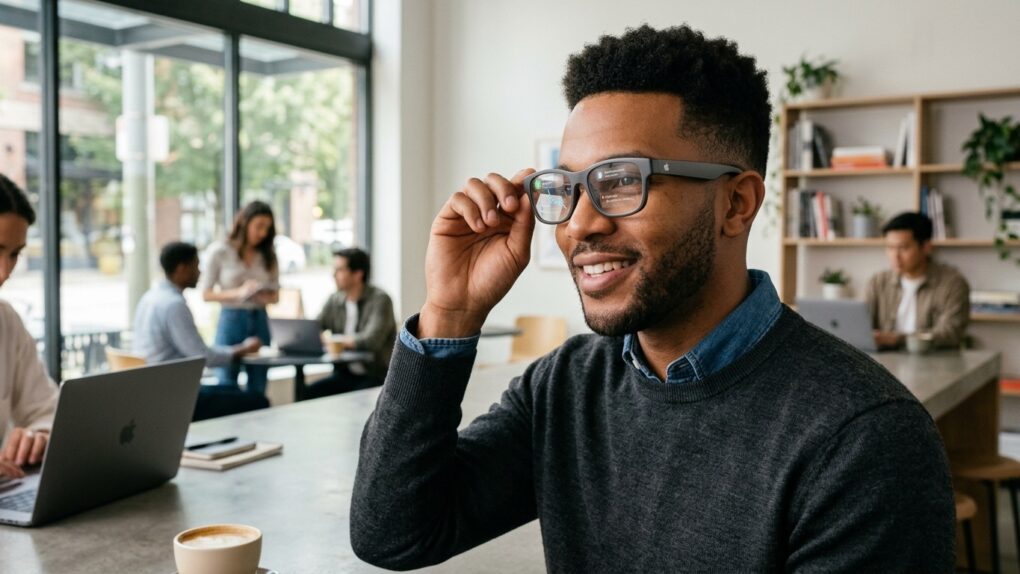
Apple will reportedly enter the smart glasses market in 2027, but the company is apparently worried the wearable will tarnish its reputation for protecting privacy. The cameras built into rival devices face criticism, and a new report describes Apple’s efforts to avoid the controversy.
Unfortunately, many of its options would block the feature that makes smart glasses most interesting to me.
Smart glasses revive old privacy criticism
Way back in 2012, Google Glass was an ambitious attempt to bring augmented reality to everyday life through a lightweight pair of smart glasses. The device featured a tiny display positioned above the wearer’s eye, voice controls, internet connectivity and a built-in camera.
While Google Glass was more a proof of concept than a mainstream product, the always-available camera quickly sparked a privacy backlash. Critics worried that people easily could be recorded without their knowledge, leading some businesses, restaurants, bars and even theaters to ban smart glasses.
Google Glass ultimately failed but both Google and Meta recently revived the smart glasses category with models taking advantage of the tremendous advances in AI. They can identify objects, translate languages, answer questions about what the wearer is seeing and even livestream video directly to social media.
Like their 2012 predecessor, the latest smart glasses have also drawn criticism from privacy advocates, who warn that their discreet cameras and sophisticated AI capabilities could make it easy to record or analyze people without their knowledge, raising concerns about consent and surveillance.
Apple smart glasses face familiar privacy concerns
For months, leaks and rumors have pointed to Apple actively working to get into this category, too.
“Apple is currently aiming to unveil its first smart glasses at next June’s Worldwide Developers Conference, ahead of a consumer release by the end of 2027,” Bloomberg‘s Marc Gurman reported Sunday in his Power On newsletter.
Just like Google and Meta, Apple’s smart glasses will inevitably need to answer many questions about privacy, given that the company describes privacy as a “fundamental human right.” That’s why the development process includes more than just building hardware and software.
“Apple’s engineering and marketing teams have been working to refine not only the product, but also the company’s privacy message,” Gurman wrote.
Some of the options the company is exploring include blocking the smart glasses from taking pictures or recording video.
But the wearable also might not include facial recognition capabilities, or even completely lack cameras. And that’s a problem for me — I don’t know how interested I’d be in Apple Smart glasses without them.
Facial recognition is why I want Apple smart glasses
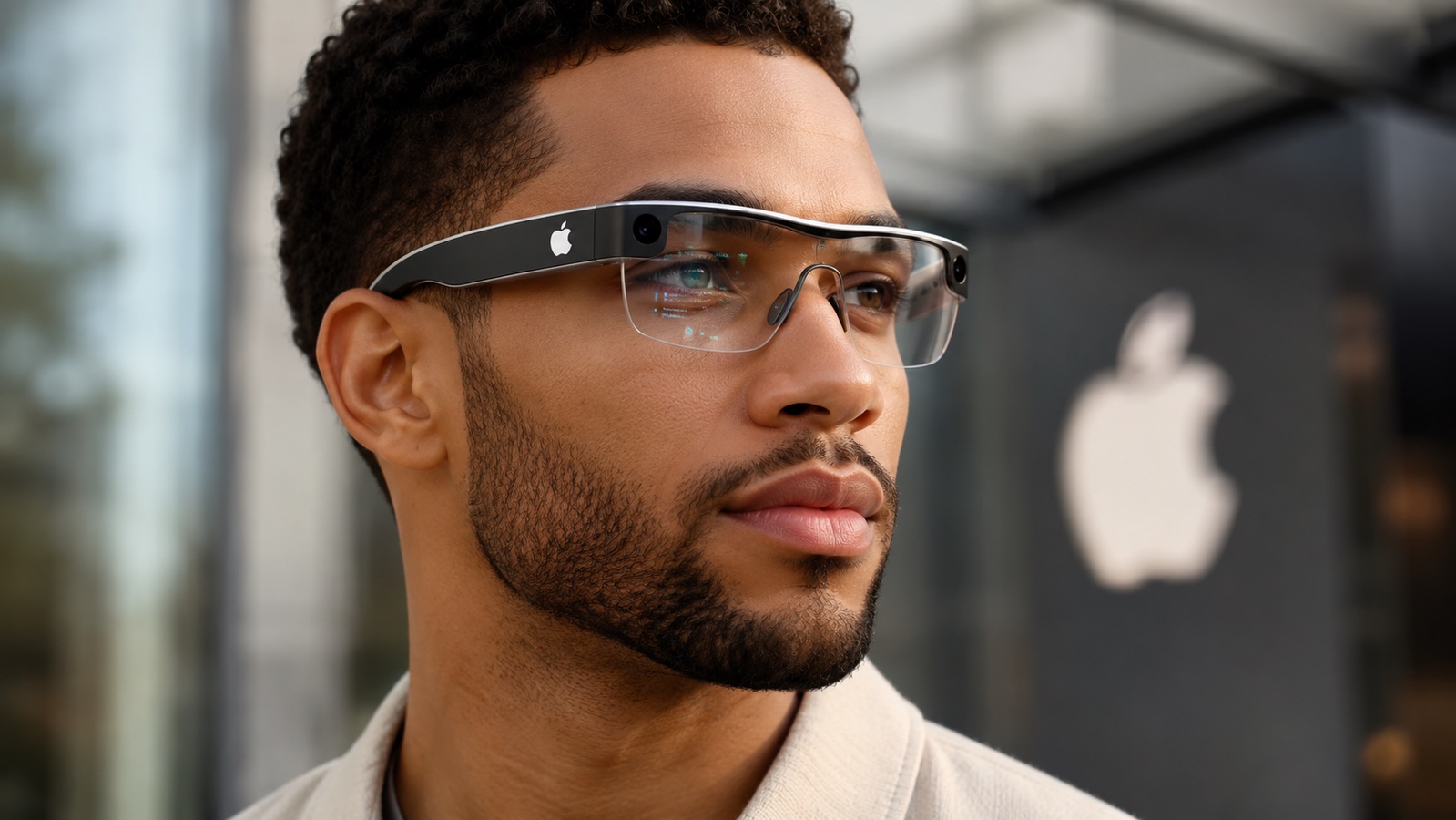
Photo: ChatGPT/Cult of Mac
I understand the people who want cameras in their smart glasses so they are always ready to snap a photo of their children, pets, etc., but that’s not me. I have an iPhone for that. I want facial recognition.
Why? So I can walk down the street and bump into my neighbor and have a little pop-up appear in the corner of my eye that says “This is Allison.” I need this because I’ve known my neighbor for five years and can never remember her name. (It’s not Allison, BTW.)
I don’t want anything creepy. I don’t expect to meet a new person and have my Apple smart glasses search social media to discover their name. I’m happy if the device can simply tell me the name of someone that I run into at a business event if I’ve previously told the device that’s what it is. Or remind me that my brother-in-law’s birthday is coming up when I see him.
If Apple smart glasses can’t do this, I’m going to be very disappointed.
Apple can’t ignore a potential iPhone replacement
To be clear, I’m absolutely convinced that smart glasses are the Next. Big. Thing. In 10 years or so, they are going to start by replacing our iPhones and Apple Watches, and eventually become the only screen any of us need.
Obviously, Apple can’t ignore the product category. It’ll simply have to work through the privacy problems. I’m confident it will — it just might take some time and a few hardware versions.

Ed Hardy has been writing full-time about tech for 26 years, and using it for much longer than that. His intro to Apple was a Macintosh SE/30 (which he still has), but now he uses a 13-inch iPad Pro as his primary computer.
That’s because he’s a “tablet first” type of guy. Rather than use a Macbook, he connects a keyboard case to the iPad. And instead of a desktop Mac, he connects his tablet to a 27-inch display and full-size keyboard. (So don’t try to tell him that everyone has to use a Mac to be productive.)
Before coming to Cult of Mac, Ed wrote for NotebookReview, TabletPCReview and Brighthand, as well as other sites.

6 responses to “Apple smart glasses might skip the feature I want most”
I can see the utility of facial recognition but does anyone remember the days before gps, smartphones, and AI? Don’t get me wrong, some of these things are incredibly useful, especially gps for ones like myself who are somewhat directionally challenged. That being said, I used to remember people’s phone numbers, now I don’t except for three or four people close to me. Having tech devices and/or AI do everything for us doesn’t seem like a good idea to me. There is a lot of truth to the saying “If you don’t use it, you lose it”. I’d rather not lose the ability to remember people’s names on top of not remembering their phone numbers.
I remember a quote from Einstein that said, ‘Don’t memorize anything you can look up.’ He said that how many years ago?
Just remember how you feel when your normal pair of glasses get broken, damaged or lost. If you do not wear normal glasses then you have no idea of the financial pain as well the inconvenience of replacing them. So now smart glasses will many more times fragile as well as ungodly expensive. So you expect people who use contact lens to give them up for a walking address book. We are fast reaching having devices think for us. What will we do with all this relief from using our minds? Reading books is almost non existent and writing is a lost art. You write how important privacy is but count the ever increasing street cams and use of drones by local governments. Sadly citizens here will not act anymore responsible than governments or corporations. Convenience or privacy, I’ll take privacy any day.
If anyone wants to see the potential directions smart glasses and AI tech can take, read Daniel Suarez’s 2006 book Daemon and its sequel, Freedom. The story prominently features smart glasses integrated with AI, and it also explores how other functionality is used.
I agree that smart glasses will replace iPhones. I think the simple solution to privacy re always on camera, is that it only recognizes (or provides info on) people in your own iCloud ecosystem such as photos you’ve named. These names are should/can be associated to your contacts. From there, your messages, emails, calls (facetime, tel, etc) all fall into people you have a relationship with. I can imagine everyone will start better organizing their Contacts by entering the correct data in the correct field. This not only reinforces and aligns with the tools Apple already offers but strengthens the iCloud relationship which is profitable for the company. As for my family members that say “I used to memorize…” insert info that technology assists with today. My answer is “well now you don’t have to remember that stuff and you can use your memory for…” insert the thing they keep forgetting about. Or rather “… learning that new fun thing you wanted to do.” We can only remember so much and wasting it on people’s phone numbers or directions or birthdays is just a waste of it. People resist change, likely because it requires learning/adding to their memory. I’ve learned to shed memory of things technology does and it makes it easier to learn new things.
Why don’t you take a little time to remember the people around you? Stop relying on technology to accommodate your laziness