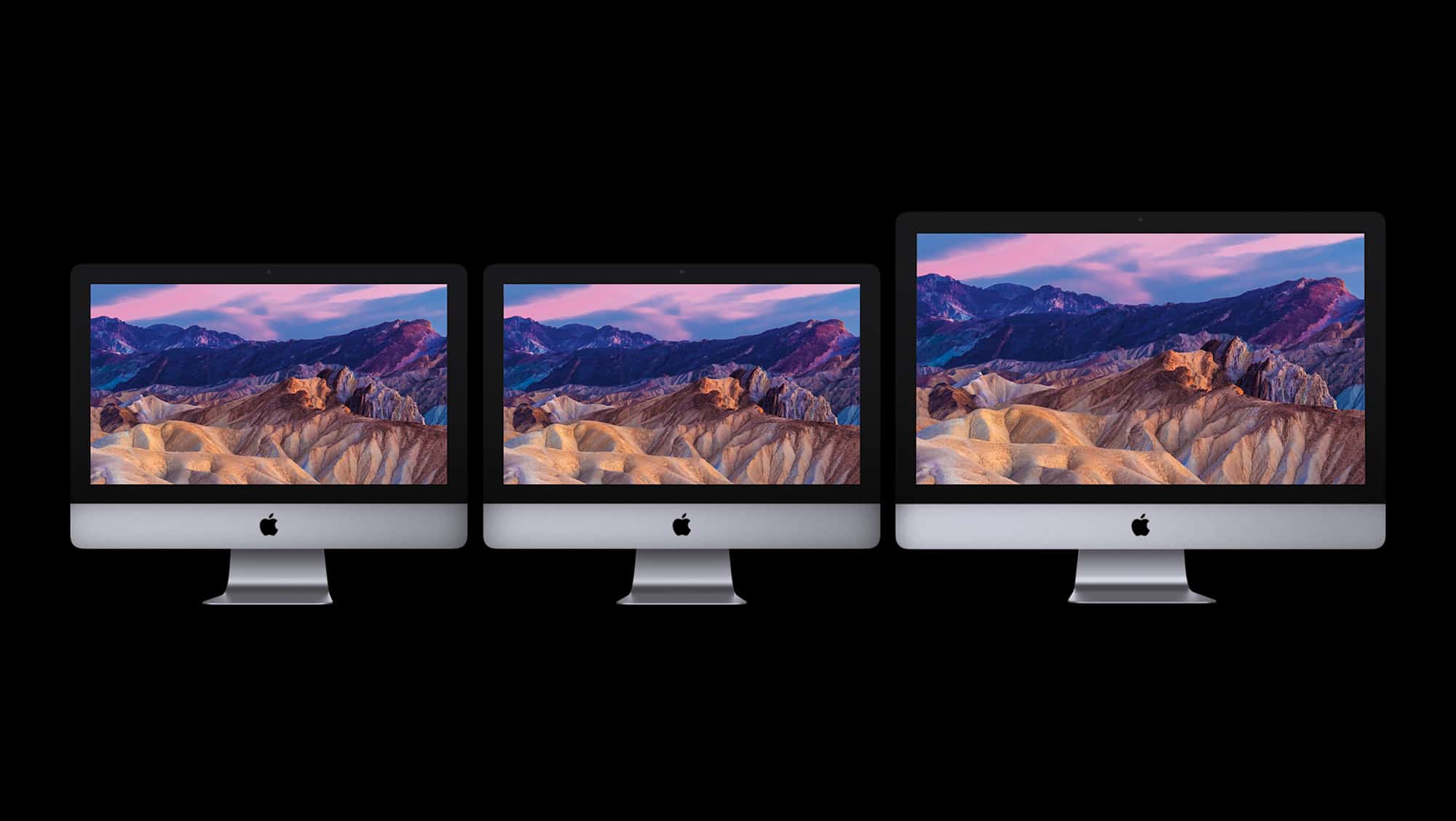
The new Macs that Apple unveiled Monday bring welcome upgrades to Intel’s latest Kaby Lake processors. However, if you want to use the latest Apple computers for virtual reality, you’ll need to add an external graphics card in a pricey Thunderbolt 3 enclosure.
It’s yet another problem “solved” by Thunderbolt connectivity, but the do-it-all USB-C connector Apple is forcing down our throats isn’t the answer to everything.
Thunderbolt 3: Great but not for every use
Thunderbolt 3 is certainly a wonderfully versatile connectivity standard. A single cable can transfer four times the data of USB 3.1 at 40Gbps, twice the video bandwidth, and up to 100 watts of power to go with it.
It’s so speedy, it can transfer a feature-length 4K movie in as little as 30 seconds. It can drive two super-sharp 4K displays at 60Hz. Thunderbolt 3 can also be daisy-chained so that up to six devices can share one port. It can connect a desktop graphics card to your notebook.
It’s by far the best connectivity standard there is today.
Pros need flexibility, not a Thunderbolt fix
Apple is relying on Thunderbolt to make our Macs more powerful for things like virtual reality — and when you’re talking about notebooks, it’s an ideal way to get the job done. But when it comes to desktops, upgrades over Thunderbolt are a flawed solution to a fundamental problem.
When creative professionals, video producers and other power users spend thousands of dollars on a desktop, they need flexibility. They need to be able to add more storage as it’s needed, and additional RAM as newer applications demand it.
Pros also need reliability. They need to be able to replace individual components at an affordable price when they fail out of warranty, not spend another $5,000 on a brand new desktop because the graphics chip is soldered to the logic board.
There was a time when the Mac Pro met these demands. It was a true desktop computer, and its components were replaceable and upgradeable. It was almost as flexible as a Windows PC, with the ability to upgrade the CPU, RAM, storage and even video cards with ease.
The problem with the current Mac Pro

Photo: Ste Smith/Cult of Mac
The current Mac Pro doesn’t offer this. With crucial components soldered to the logic board, the power you get the day you buy the machine is the power you’ll live with for as long as you keep it. And if anything fails out of warranty, good luck getting it repaired on the cheap.
We’ve come to expect this from notebooks, but not desktop PCs. Especially not when those desktop PCs cost thousands of dollars.
Apple already admitted it made a mistake with the most recent Mac Pro. Not giving power users the option to upgrade their machines forced many to switch to Windows. Some even cobbled together Hackintosh machines — custom-built PCs that run macOS.
The upcoming “badass” iMac Pro doesn’t solve this problem, either. Just like every other iMac, its crucial components will come permanently fixed in place. It might be possible to upgrade the storage, but good luck with that; the only way to get into an iMac is by removing its display.
Fortunately, the iMac Pro looks insanely powerful, so you won’t need to upgrade any of its components for some time. But it starts at a whopping $4,999 — most will spend more than that — and there’s no way to speed it up later on.
Thunderbolt solution is a pricey one
Certain “upgrades” do work well over Thunderbolt, such as adding additional storage (the easiest and most affordable one). You can also add a new dedicated video card — as I mentioned earlier — but that’s going to cost you.
To add NVIDIA’s high-end GTX 1080 Ti card to a Mac, you would first need to obtain the card itself. You can currently bag one for $669.99 on Amazon. You then need a Thunderbolt enclosure, like the Razer Core, which costs $499.99. That’s almost $1,200 in total.
To add the same card to a traditional desktop (a Windows PC), you only need to pay $669.99 for the GPU itself. And of course, in almost all cases, the PC would have been a lot cheaper to buy or build in the first place.
Furthermore, it’s easier to get the most out of that pricey graphics card on a PC. If you find your processor or RAM becomes a bottleneck that holds that GTX 1080 Ti back, you can just upgrade them when you have the cash. You don’t get that option with a Mac.
For those who need the portability of a MacBook Pro, but want to get their game on in their spare time, Thunderbolt upgrades are great. They make notebook computers more powerful than ever before.
But if you’re spending $5,000 on a beefy desktop because you need power all the time, then you should get the flexibility to easily update it yourself when it’s no longer powerful enough. You shouldn’t be stuck with an outdated machine just three years later.
Apple embraces VR and AR, but get ready to pay
What makes this problem even more frustrating now is that Apple is finally embracing virtual and augmented reality. The company announced new technologies Monday during its Worldwide Developers Conference keynote, like Metal 2 and ARKit, that will finally make the Mac great for gaming. Even Valve’s SteamVR platform is now on macOS.
But gamers don’t buy computers they can’t upgrade. I ditched my Mac for a custom-built Windows PC because I wanted a high-end gaming experience, and the ability to switch my components — not my entire desktop — as new games demanded more power.
Maybe Apple’s next-generation modular Mac Pro will change all this. Maybe it will return to its roots with a traditional desktop design that makes upgrades and repairs super-simple. But I’m not holding out too much hope.

Killian Bell is a freelance writer based in the U.K. He has an interest in all things tech and also covers Android over at CultofAndroid.com. You can follow him on Twitter via @killianbell.


12 responses to “Hey, Apple! Thunderbolt isn’t the answer to everything”
I disagree, we need a one-size-fits-all standard to rid the world of the current chaos.
its the Same Connector but not the same Protocols.
If u not like Apple Hardware than go to the Windows Hardware.
Before u make wrong Statements please do proper research
Augmented Reality on a desktop? I am trying to see the use case for that.
Virtual Reality is real good for games and certain types of training, but, so far I don’t see a bigger role for it.
Clickbait.
Apple despises user-upgradeable options for obvious reason: its postponing future sales.
But it could also cement people into buying Mac’s in the future, having to replace a $3000 machine every five years is pointless to me when I just upgrade my GPU and overclock my CPU and make up the gains without having to go out and buy a brand new system.
This notion that macs can’t be upgraded… I just don’t get it. Whatever you might have paid $3000 for 5 years ago (2012) is probably worth anything from $500 to $1000 now, depending on what it was. Why can’t you upgrade your GPU now by selling your 2012 model for $X and buying a 2013 model with a generation newer GPU and CPU from ebay for $X plus a few peanuts? (assuming whatever you buy has the same RAM and storage as what you’re selling). Although… why, after 5 years, would the GPU and sort of the CPU, be the only things you’d upgrade? I don’t get it.
I doonoo. I need a machine that I can cart around with me, but seemlessly plug in somewhere and get the extra power I need.
I have a hackintosh at home that I built for less that $500 and more powerful that anything else I could have bought years ago…still works for my music software (especially as I don’t upgrade that machine). Fact is, my shit MacBook can still do 95% of what I do on that machine and thus, it is RARE that I even turn it on.
I don’t need a machine that is 100% modular…I like the idea of a breakout box for the few times I need the juice. Hell, it would even be more awesome if I could go to coworking spaces and just plug into one of these and get what I need and then unplug when I’m done. Keep all my own software, all my licensing, not have to update the system or transfer files…just plug in, get the power needed, do my job and move on. Hell…the few times I use my Hackintosh its to offset something that would take hours to render on my macbook, and it can do it in almost realtime. Get on, get off, get back to doing something useful.
We don’t always need a dumptruck to get the job done.
Professionals buy and depreciate their hardware to zero for a period of three years. Any value left over from that is a “nice to have”… only consumers who pretends to be pros upgrade their hardware…
Without thunderbolt u couldn’t even add a external GPU with full Speed. Thunderbolt is the Best Possible Protocol because it had Direct PCI-E Lanes while the shitty USB its to slow.
Why should Apple Abandon a Top Technologie?
Is the Write of this Article even a Specialist in this Technologie???
I don’t get why people complain about not being able to upgrade Macs. you CAN upgrade a Mac. Macs hold their value. Sell your current one on eBay for 70% of what you paid for it a year ago and then buy the new one. For 30% of the price of the whole thing you’ve upgraded EVERYTHING to latest tech.
Historically I’ve bought a maxed out 15 inch MBP every time they’ve released new ones for the last 10 years or so – or more accurately, I wait a few months after the release, for them to come out on the refurbished store for 15-20% less. (Occasionally I’ll wait a little longer after major refreshes. The 2012 rMBP came in significantly more expensive than the previous model when it first arrived, but it had the amazing retina display for the first time. This 2016 refresh was similar).
On average I’ve owned what costs new about $3500 every year and it’s cost me less than $800/year.
I’m a pro user and so I always want the latest and greatest and maxed out. If you don’t need that much stuff, then halve those numbers for lower end machines. Last year’s 32GB iMac is now 64GB. But also, last year’s 8GB iMac is now 16GB. In both cases, they’re worth about 70% what you paid for them now to sell. In fact the lower end stuff usually holds its value better.
Alternatively, if you buy the latest tech today and if you did have the option to upgrade stuff, how much would you spend upgrading everything over time? And over how much time? When and why do you need to upgrade pieces? Why would you want to upgrade your CPU in 6 months, and your RAM 6 months later and your storage 6 months after that? How can you not know now how much RAM you need in 6 months time and plan for it now?
I know in the PC world a PC, 6 months later, is worth 20% of what you paid for it, give or take, and so yeah, you want to upgrade it instead of buying a new one, because the old one is worth virtually nothing to sell. But that’s not the same with Macs.
So yeah… I don’t get it.