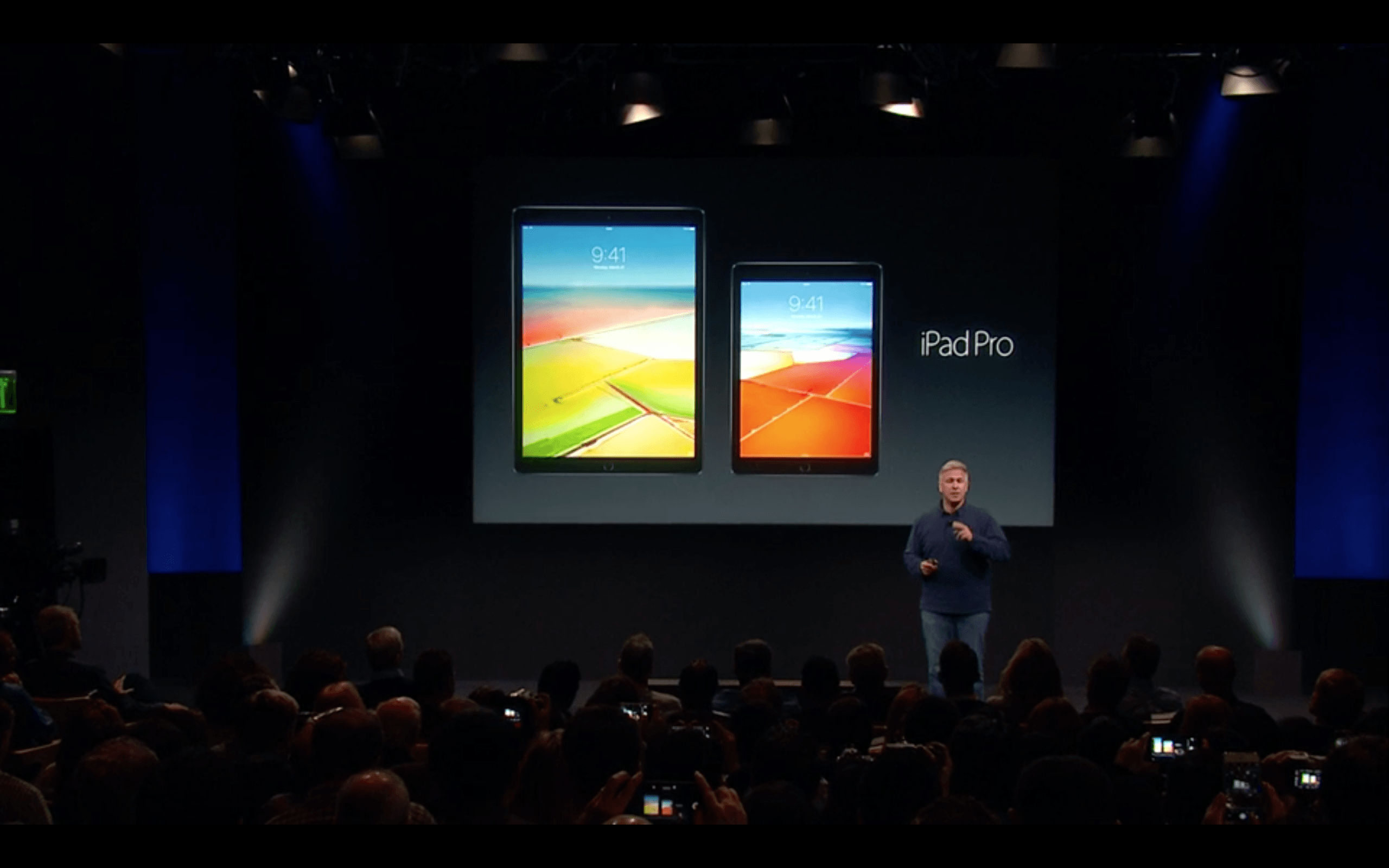
The new iPad Pro packs Apple’s fastest chip ever, but it turns out the tablet is actually slower than the 12.9-inch version.
Both iPad Pros use the A9x processor. However, when Phil Schiller was gushing about the new 9.7-inch iPad Pro’s “grunt” during Monday’s iPhone SE keynote, he didn’t mention that Apple underclocked the new processor and reduced its horsepower.
After years of declining tablet sales, Apple is pinning its hopes for revival on the two iPad Pro models. Packing increased processing power, and working with advanced accessories like the Apple Pencil and the Smart Keyboard, the iPad Pros are far more capable than previous versions.
Apple is positioning the iPad Pros as desktop replacements, and placed particular emphasis on luring Windows users during Monday’s unveiling of the 9.7-inch iPad Pro, which could be Apple’s most important iPad since the launch of the original in 2010.
Why is new iPad Pro slower?
In a spec-sheet comparison of the two iPad Pro models, Apple revealed that the A9X chip in the 9.7-inch model is slightly slower than that found in the 12.9-inch in terms of CPU performance.
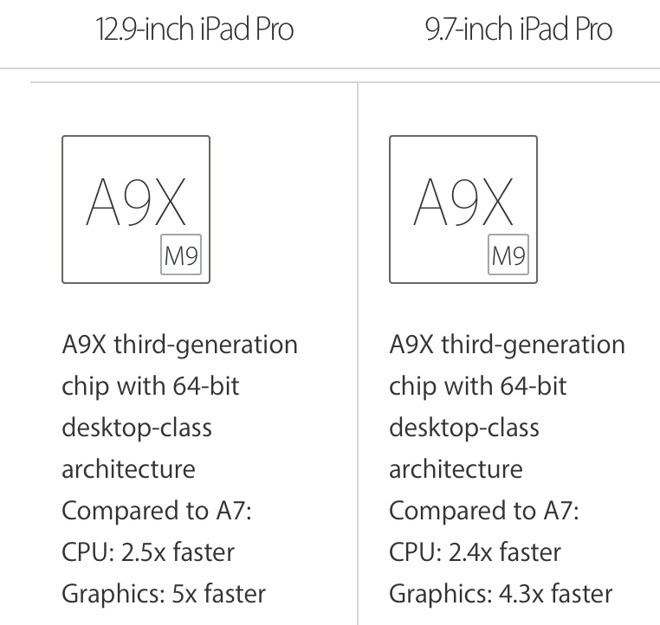
The big difference comes in graphics, with the 9.7-inch unit’s A9X chip being 4.3x faster than Apple’s A7 processor, while the 12.9-inch unit’s A9X chip is 5x faster. TechCrunch’s Matthew Panzarino ran a GeekBench analysis during the hands-on time at the keynote and also discovered the smaller iPad Pro only has 2GB of RAM while the bigger model comes with 4GB.
The new iPad Pro’s single-core hit 3022 while the bigger unit scores 3231 (higher is better). In the multi-core test the 9.7-inch iPad Pro scores 5107 and the 12.9-inch iPad Pro scores 5482.
https://twitter.com/panzer/status/712331691579219968
It’s unclear why Apple underclocked the 9.7-inch iPad Pro’s processor. Apple may have made it slower to preserve battery life, or it could have something to do with overheating in the smaller space.
The A9X processor isn’t the only trade-off buyers have to consider between the two models. Apple included USB-3 support on the 12.9-inch model’s Lightning port, but the 9.7-inch iPad Pro only supports USB 2.0 speeds. The display on the smaller model is better overall and it has a better camera, but the larger size packs more pixels.
Preorders for the new 9.7-inch iPad Pro open March 24, with units hitting stores March 31.

Buster Hein is a freelance writer who lives in Phoenix, Arizona. Twitter: @bst3r.


12 responses to “New iPad Pro is slower than 12.9-inch model”
I like how slower=clock speed, and that the fact that the 12.9″ model “has more pixels” seems to be a reason that it has an advantage in display in some way. Total BS. Given the difference in resolutions between the models, performance is likely to still be better on the 9.7″ model.
12.9″ has 4GB of RAM while 9.7″ only has 2GB.
The 12.9″ iPad Pro’s display is about 80% larger than the 9.7″ iPad Pro’s display, which is why it has more RAM.
The 9.7″ iPad Pro has a CPU and graphics that are about 72% faster than the CPU and graphics that are found in the iPad Air 2.
The 9.7″ iPad Pro is significantly faster than the iPad Air 2.
80%? What math are you using?
I downloaded an app that measures graphics, and actually what youre saying is true, more proccessor speed and ram isnt equivalent to more speed because of the detail of the resolution on the screen
lol, more pixels? It’s the same 264ppi for both models. It must has more pixels in the bigger iPad, but let’s call it “bigger screen”
Since the 12.9″ has literally 3.2 more inches than the 9.7″ one, it does indeed have more pixels…
The 12.9″ iPad Pro has about 80% more pixels than the 9.7″ iPad Pro.
Unclear?? It’s so Apple can maintain the same battery life (or close to) the larger iPad with the bigger battery.
Haven’t we all learned to ignore Benchmarks and do end user experience testing? When will we finally learn this.
Other tradeoffs to consider:
– No Tru Tone display in the Pro 12.9″
– Better front and rear cameras in the Pro 9.7″
– No Live Photos on the Pro 12.9″
Also, the larger iPad Pro is, well, larger and heavier. It sounds obvious but it is one of the most important factors for me. If you use an iPad for work, that won’t matter, but if you want an iPad for leisure (like me), the lighter model wins.