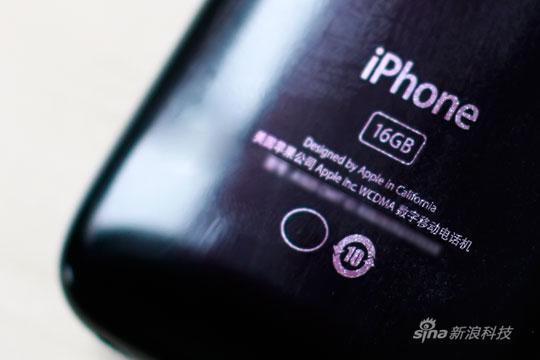
Chinese regulators have approved a modified iPhone for the giant Chinese market, which uses the speedy GSM/WCDMA chipset but has no WiFi.
Why no WiFi? Hit the jump for an explanation (It’s partly business, partly snooping).
A listing on the China’s State Radio Regulatory Commission website (China’s version of the FCC) reveals the iPhone approved for sale in China is a GSM/WCDMA model — a next-generation 3G standard. It is a 16GB model, and features Bluetooth but no WiFi, according to Engadget.
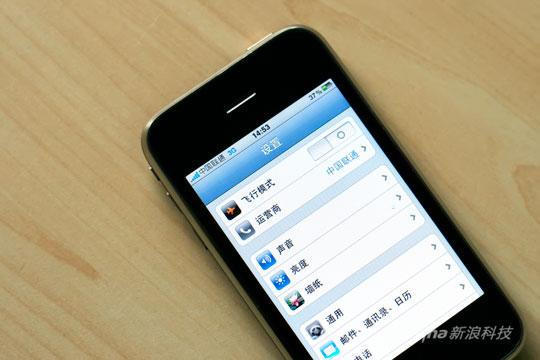
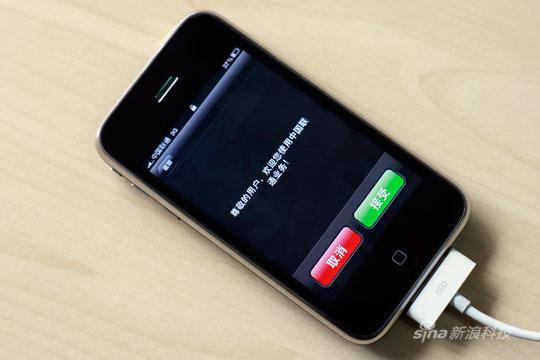
Meanwhile, the iPhone will likely be offered by China Unicom, China’s number two carrier, according to a report by Sina Technology Zhiguo site (translated by iPhoneChina.com). Pictures published by Sina show a Chinese iPhone with a “ä¸å›½è”通†(China Unicom) carrier signal.
China Unicom boasts 135 million subscribers (AT&T claims 78 million wireless customers), but is China’s second largest wireless carrier, trailing state-owned China Mobile, which claims 471 million subscribers, which makes it the world’s largest carrier.
Vetern tech journalist Glenn Fleishman, an expert on WiFi, says the absence of WiFi is mostly for business reasons: the Chinese government is trying to protect its investment in 3G networks.
It’s to “preserve 3G revenue,” Fleishman says.
The Chinese government tried to get Apple to incorporate its own flavor of WiFi — WAPI. Apple refused, which is one of the reasons the iPhone has been delayed in China.
China wanted Apple to use WAPI mainly to force cutomers to use 3G networks, built at huge expense, instead of free WiFi in China’s ubiquitous cyber cafes.
“The Chinese government, which has highly intertwined interests with major corporations, wants to protect call revenue from VoIP,” Fleishman wrote on his blog. “An iPhone with Wi-Fi could be used with a VoIP app like Skype, or, if restricted, could be jailbroken and used with VoIP programs over both Wi-Fi and 2G/3G systems.”
There’s also a snooping aspect. It’s easier for the Chinese government to monitor internet usage over the cell network than it is over WiFi.
“You know a specific device on the network via a specific cell,” Fleishman says. “With Wi-Fi, there’s no central tracking mechanism, so if you use anonymizers or Tor or VPNs or whatever, you are much less trackable. The phone ID isn’t embedded into trackers. And hotspots are less regulated.”

Leander Kahney is the editor and publisher of Cult of Mac. Leander is a longtime technology reporter and the author of six acclaimed books about Apple, including two New York Times bestsellers: Jony Ive: The Genius Behind Apple’s Greatest Products and Inside Steve’s Brain, a biography of Steve Jobs.
Leander has written for Wired magazine, Scientific American, The Guardian, The Observer, The San Francisco Chronicle, MacWeek and many other publications.