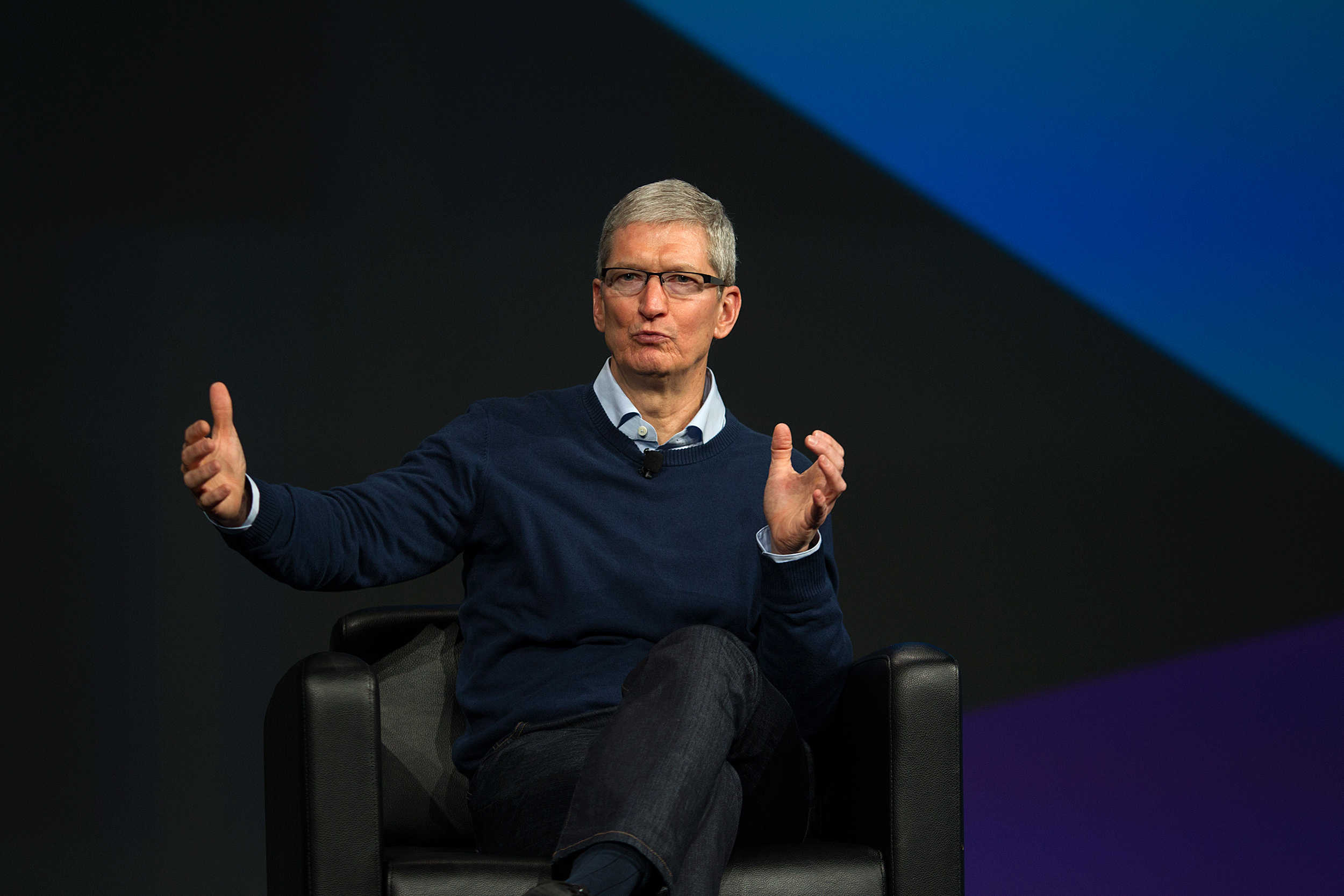
Apple has posted an open letter, signed by Tim Cook, in response to the FBI’s request that Apple unlock the iPhone at the center of a San Bernardino court case.
While United States magistrated judge Sheri Pym wants Apple to hand the FBI a custom firmware file that would allow the unlocking of the handset in question, Apple argues that this represents an, “unprecedented step which threatens the security of our customers.”
And Cook wants the public to be aware of all the details.
“This moment calls for public discussion, and we want our customers and people around the country to understand what is at stake,” Cook writes. He goes on to argue that, “We can find no precedent for an American company being forced to expose its customers to a greater risk of attack.”
Cook’s entire letter (which is well-worth reading) can be seen here. He writes that, while Apple will willingly help with investigations up to a point, it draws the line at creating a backdoor for devices:
“When the FBI has requested data that’s in our possession, we have provided it. Apple complies with valid subpoenas and search warrants, as we have in the San Bernardino case. We have also made Apple engineers available to advise the FBI, and we’ve offered our best ideas on a number of investigative options at their disposal.
We have great respect for the professionals at the FBI, and we believe their intentions are good. Up to this point, we have done everything that is both within our power and within the law to help them. But now the U.S. government has asked us for something we simply do not have, and something we consider too dangerous to create. They have asked us to build a backdoor to the iPhone.”
This is something that Cook ends the letter by equating to the FBI undermining, “the very freedoms and liberty our government is meant to protect.”
This is far from the first time Apple has clashed with governments around the world over the issue of encryption. In a previous open letter from FBI director James Comey, the FBI boss argued that iPhone encryption has the potential to aid terrorist groups like ISIS.
Apple, meanwhile, has put its name to an open letter to President Obama asking him to reject anti-encryption proposals, while Tim Cook told the Telegraph newspaper in the U.K. that:
“None of us should accept that the government or a company or anybody should have access to all of our private information. This is a basic human right. We all have a right to privacy. We shouldn’t give it up. We shouldn’t give in to scare-mongering or to people who fundamentally don’t understand the details.”
Recently, Apple has also clashed with the U.K. government over its so-called “snooper’s charter,” suggesting that making companies create backdoors for encryption services like iMessage could “hurt law-abiding citizens.”
Who do you side with in this case, and why? Leave your comments below.

Luke Dormehl is a U.K.-based journalist and author, with a background working in documentary film for Channel 4 and the BBC. He is the author of The Apple Revolution and The Formula: How Algorithms Solve All Our Problems … and Create More, both published by Penguin/Random House. His tech writing has also appeared in Wired, Fast Company, Techmeme and other publications.

8 responses to “Tim Cook: Apple will fight to stop the FBI accessing your data”
This FBI request is a sad day for freedom and democracy. I stand with Apple 100%. This is America we shouldn’t have to choose between privacy and security.
“… choose between privacy and security…”
LOL…
sorry I must’ve missed the part of that which was funny….
Choose between Columbine and San Bernardino. That’s quite funny, right ?
Are you actually suggesting the government being able to break into our phones would’ve stopped those events?
I very much agree with you, David.
Judge in this case does not understand that the FBI is capable right now to brute force this without having Apple do anything… This scenario is being used as an excuse to force us to give up our freedom. Hey FBI – Make a Copy of the RAM of the phone (you do have physical access right?) – Try as many times as you can until the software wipes the phone… then restore the phone with your image of the phone, and pick up where you left off. Rinse and Repeat… Obviously this should be done using an automated approach – but it is certainly possible. When is someone in the press going to expose this as nothing more than a ruse by FBI to force the writing of a backdoor. When one has physical access to an encrypted device – there is nothing from stopping your from imaging the device, and retrying to brute force it – You can also turn off the networking and reset the clocks guys… When will the public learn they are being misled.
The FBI request is for this single phone, NOT to create a new IOS version to be applied to millions of iPhones. Let’s not mix bananas with tomatoes. So, if we understand that, let’s not get crazy about protecting the privacy of a dead terrorist. This request is NOT about surveillance of a potentially suspicious individual that has yet to commit an act of terror. For those invoking the “slippery slope” argument, you are taking a page out of the NRA playbook; that’s the one about the belief that closing the gunshow loophole (or doing background checks) will automatically destroy the second amendment. Lastly, don’t forget that the FBI request has been endorsed by a judge; if you don’t trust this judge, then let’s shoot this request up to the Supreme Court judges. If you don’t trust these judges, then you have nowhere to go. In my book, if a judge tells you to comply on such a Narrow request (remember, a single phone of a dead terrorist), then do it. Apple … Unlock the phone!