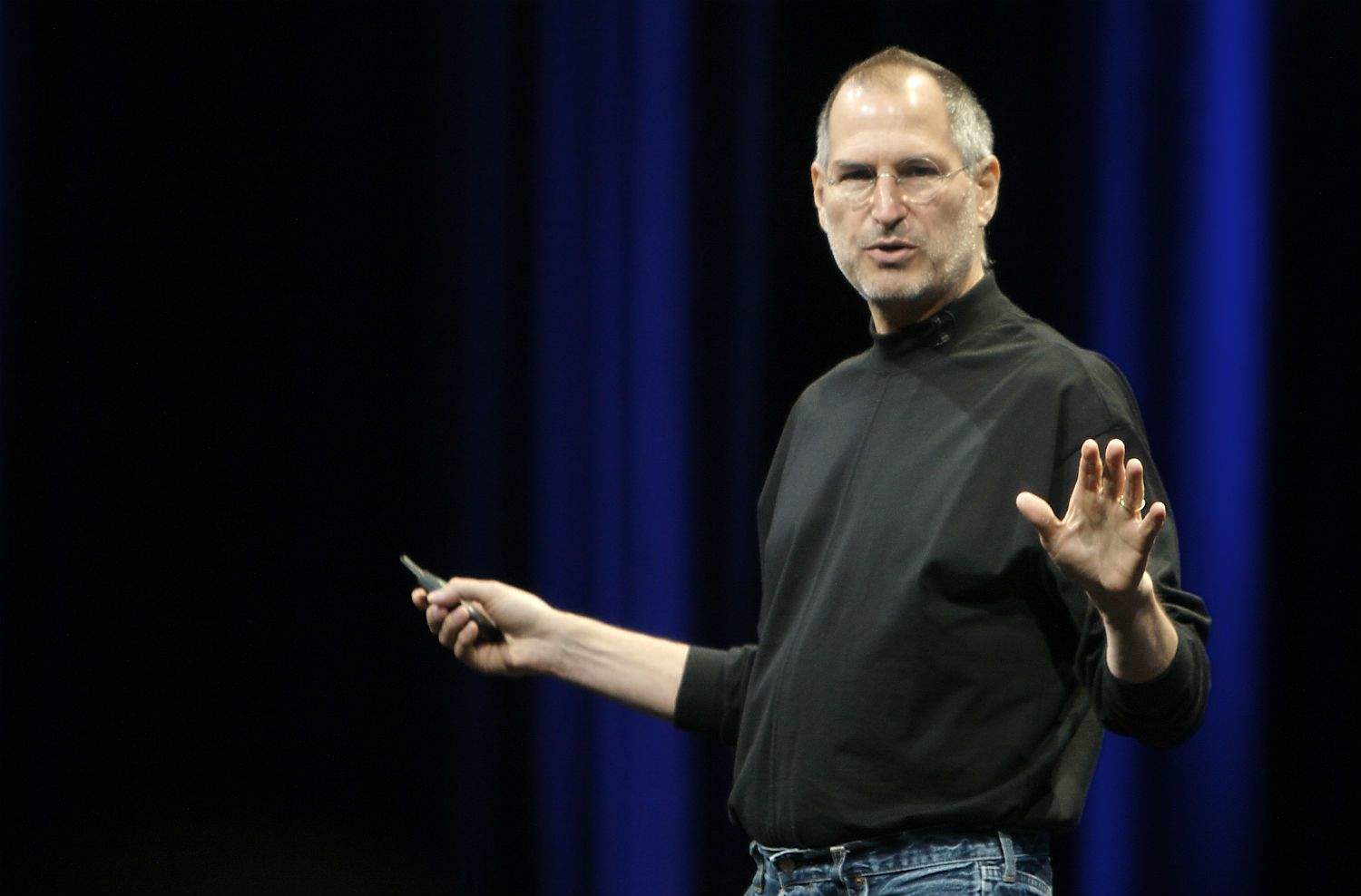
Oscar-winning director Alex Gibney’s Steve Jobs documentary, Steve Jobs: The Man in the Machine, debuted over the weekend at the South by Southwest (SXSW) film festival in Austin, Texas.
Financed by CNN Films, the 127-minute doc was described by its maker as delivering a “far more complex interpretation” of Jobs than any of the previous movies depicting the life of Apple’s iconic co-founder.
But what did the press think? Well, the first reviews are out and, while they’re generally strong, they certainly don’t describe a documentary that paints Jobs in a favorable light — or one that contains too many revelations that will be new to anyone who read Jobs’ maligned 2011 biography by Walter Isaacson.
One theme returned to in reviews is idea that Steve Jobs: The Man in the Machine follows the through-line of Citizen Kane: Orson Welles’s classic movie depicting the rise, fall and eventually lonely death of a (possibly) great man. Like Kane, The Man in the Machine begins with the death of its central figure and then jumps back to tell the story of its central figure from start to finish.
“Alex Gibney portrays Steve Jobs as a modern-day Citizen Kane, a man with dazzling talent and monomaniacal focus, but utterly lacking in empathy,” writes the U.K.’s Guardian newspaper in a four-star review.
“The film points out that Jobs’s genius was in personalising computers – Lisa being the first – but it also reveals that this impulse came from a pretty messed-up place. As well as being deeply ambivalent about being a father, Jobs also felt at once rejected and anointed by the fact that he was adopted. Jobs has somehow transmitted that mess to us too. Our iPhones connect us to faraway friends and family, yet we spend increasing amounts of time alone with them, seduced by machines that can never really fulfil us.”
The Boston Herald describes the documentary as, “a coolly absorbing, deeply unflattering portrait of the late Silicon Valley entrepreneur that expands, not altogether convincingly, into a meditation on our collective over-reliance on our favorite handheld gadgets.”
The Hollywood Reporter, meanwhile, focuses less on Gibney’s points about technology, and instead runs through some of the film’s anecdotes:
“We hear how Jobs threw a tantrum when his high school girlfriend got pregnant; we’re told that around the time Apple’s IPO made him worth $200 million, Jobs lied in order to deny his paternity and was angry about paying $500 a month in child support. We hear how he alternately cajoled and bullied the tech reporters who were given a misplaced prototype of the iPhone 4, then pushed law enforcement to retaliate by breaking into a reporter’s house and taking crates of possessions. We’re walked through illegal and/or unseemly maneuvering to do with backdated stock options and profits hidden from the taxman.”
No doubt more reviews will trickle out over the next few days, but the consistency of these reviews suggests we know what we’re in for.
Jobs is said to feature in about half of the archival clips used in the movie, although I haven’t found any references to previously-unseen interviews or materials. There was also no involvement from Apple, which hilariously claimed not to have the “resources” to help Gibney with his film. (Read: they heard the angle and politely declined.) As a result, there’s no Tim Cook, no Jony Ive, no Laurene Powell Jobs, etc.
It will be interesting to hear the thoughts of those in the tech press in the coming weeks and months, given that this audience was generally more critical of Walter Isaacson’s 2011 biography (which this documentary sounds reminiscent of) than those in the literary press.
I saw a reader comment in one of our earlier posts on the movie, taking issue with Gibney’s desire to create an “impressionistic” documentary about Apple’s co-founder, suggesting that doing so is missing the point of documentary. While I appreciate the point, I respectfully disagree. Having written about and worked in documentary myself, I’m painfully aware that there is no way to make a wholly subjective documentary, so any doc is going to wind up being “impressionistic” to some extent or other — based on the challenges of filmmaking (the anecdotes used, the cutting decisions made, the camera angles employed) and reducing a complex subject into a two-hour run-time.
With that said, what I hope that this film can do is to uncover some aspect of Jobs’ life that highlights a quintessential truth about who Jobs was, and what he saw his mission as. (What Werner Herzog calls the “ecstatic truth.”) Going off these reviews, I’m somewhat nervous about whether this has been achieved. For instance, prompting a description of Jobs as lacking empathy is flat-out wrong, given his ability to put himself in the shoes of potential computer users less well off or tech-savvy than himself.
I love Alex Gibney’s work as a filmmaker, and I’ll reserve judgment until I see the movie, but these early reviews do set a few alarm bells ringing.

Luke Dormehl is a U.K.-based journalist and author, with a background working in documentary film for Channel 4 and the BBC. He is the author of The Apple Revolution and The Formula: How Algorithms Solve All Our Problems … and Create More, both published by Penguin/Random House. His tech writing has also appeared in Wired, Fast Company, Techmeme and other publications.


9 responses to “New Steve Jobs docu depicts a man ‘utterly lacking in empathy’”
It’s been over three years since his death. Why trample all of his grave now? We all know that Steve Jobs wasn’t a saint, and that he was often times very hurtful to others. It’s not necessary to keep rehashing. I wish I had worked for Steve Jobs. I had a leader a little like him once, and he pushed me to achieve things that I didn’t think I could, and I’m thankful for it. We all need a good kick in the arse from time to time.
I’ve always felt that documentaries about persons were a tricky pursuit, especially those deceased. It’s a patchwork of events, writings, and testimonials from those associated with the person. That last source is then of course based on the opinion of how someone viewed and interacted with the subject…in short, a biased view, whether good or bad.
We’ll never know, other than Issacson’s bio which could have been easily manipulated, who Steve Jobs really was without his direct words. Perhaps that’s the greatest irony about him…the man who was king of “Perception is Reality” is understood by the world in just those terms.
I had the same reaction as you when I saw the comment about Jobs not being empathetic. He was obviously empathetic; it is in fact his greatest legacy that he knew what we wanted before we did.
The problem may stem from misuse of the word empathy. I believe they were reaching for “Sympathy” and missed.
Well said
There’s no such thing as bad press, right Alex? Even if you’ve got to stoop to gutter levels to get it.
Jobs was an outstanding capitalist titan of his day, but it may still be too soon for a sober assessment of his lasting achievements. An excessive devotion to what his personal qualities were–good or bad–smacks a bit of a cult of personality. As a cult watch site, “Cult of Mac” is uniquely positioned to warn us of the dangers of any such cult.
This talented man shares some characteristics with those who have Aspergers Syndrome. If this was the case, we should not be demeaning his personality, but celebrating how insightful he was in his field of expertise.
Being perceptive to consumer needs and market desires is NOT empathy. By almost every account, Jobs treated people horrendously. He was however, fantastically rich and successful, and an extremely gifted designer. And how good is Apple! Bravo Steve Jobs, Boo stupid filmmaker telling us things we don’t want to know.
Jobs was a genius at what he did which was to make Apple great. He also could be a real jerk. To suggest he wasn’t because of his capitalistic acumen is missing the point. Personally, I repected the Steve Jobs who came back after being booted out on his ass because when he returned he had matured into what would really be his legacy at Apple.