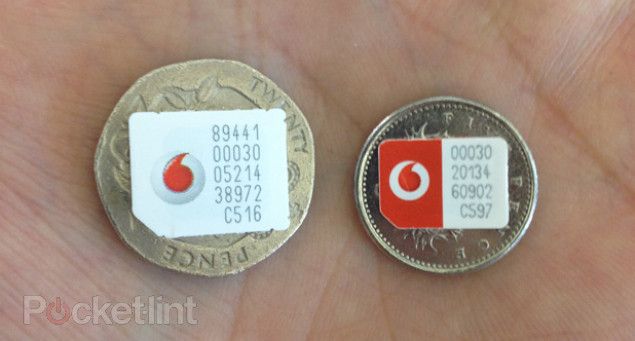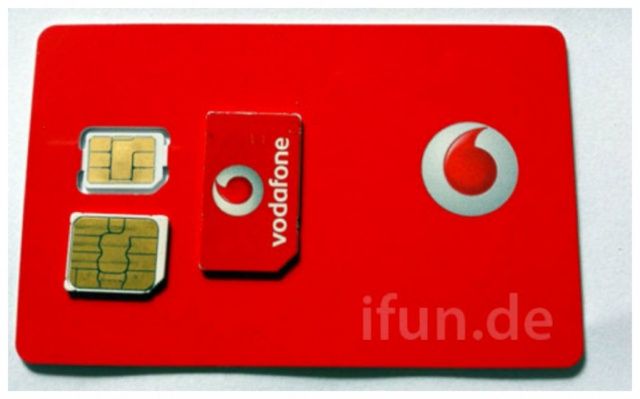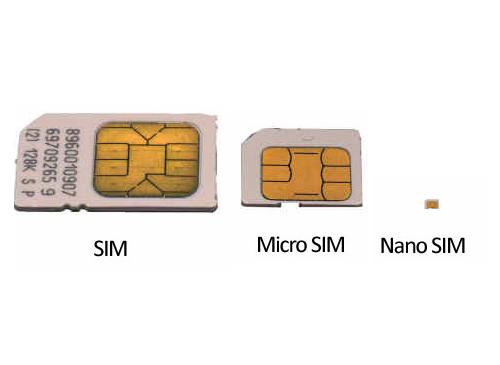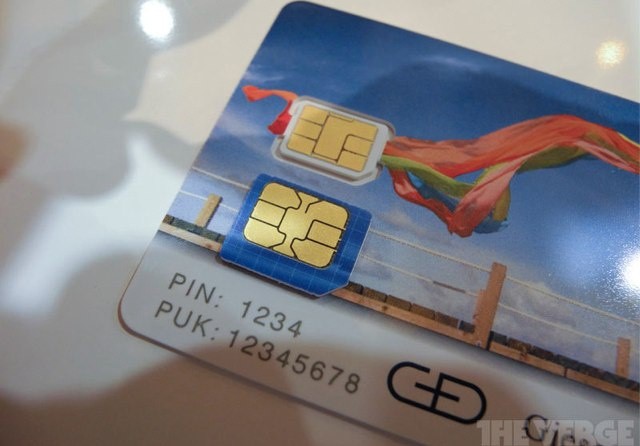
The nano-SIM isn’t just smaller than the micro-SIM — it’s also thinner.
If you’re expecting a new iPhone 5 on Friday, and you’re buying it unlocked directly from Apple, you’re going to need a nano-SIM to go with it. Obtaining one is easy if your carrier is one supporting the new device, because you can just call them up and request one. But what if you’re already stuck in a contract with a carrier that doesn’t provide nano-SIMs yet?
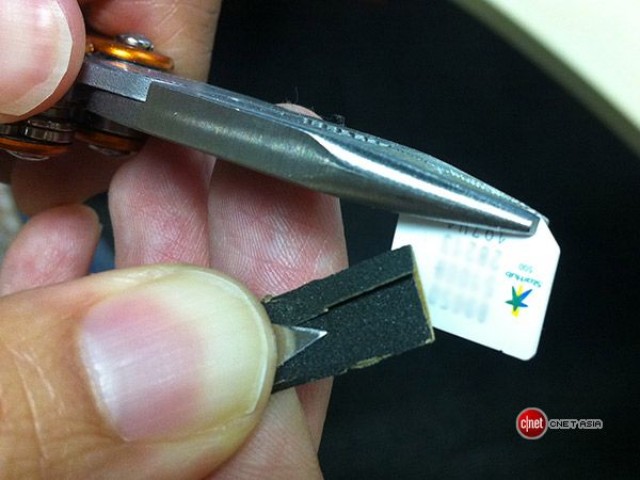
Fortunately for you, scissors, some sandpaper, and a pair of steady hands will allow you to cut down your existing SIM or micro-SIM into a nano-SIM.

On Tuesday, it was reported that Vodafone Germany had received its stock of nano-SIMs for the upcoming iPhone 5, which is expected to launch on September 21. Vodafone U.K. has now confirmed — prematurely! — that it, too, has received half a million nano-SIMs, which are ready to ship to early iPhone 5 adopters.
With Apple’s iPhone 5 announcement now just over 24 hours away, and a possible launch just over one week away, carriers are preparing for what will undoubtedly be the fastest-selling smartphone of all-time. Vodafone Germany is the latest to receive stock of the handset’s new nano-SIM, and they’re ready to be shipped out to the iPhone 5’s early adopters.
Go to T-Mobile for an iPhone 5 and you could be coming away with an Android.
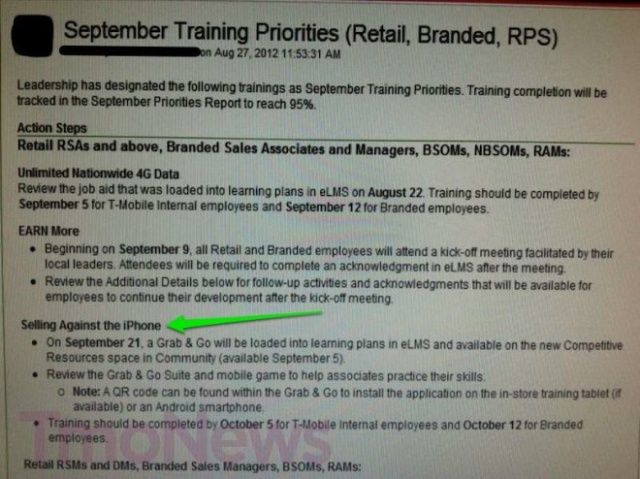
If you’re a T-Mobile customer who was hoping that the iPhone 5 would be the first iPhone to gain official support for your carrier, then look away now. A leaked T-Mobile memo reveals the company is instructing its staff to sell “against the iPhone” from September 21, and it looks like they’ll be trained to help customers choose alternative smartphones instead.
I bet you’ve never seen an iPhone 4 like this before.
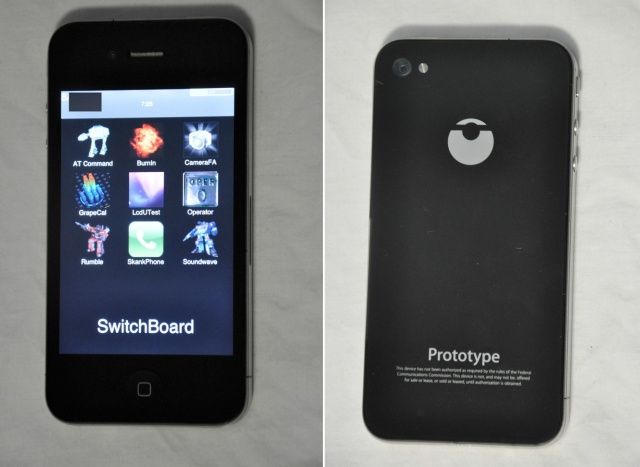
A rare iPhone 4 “N90’ prototype has surfaced on eBay with a strange prototype logo, or “protologo,” on its rear panel. Its seller insists it is the first iPhone 4 prototype to be listed on the online auction site, and they’re currently looking for starting bids of $4,500, or $10,000 for an instant sale.
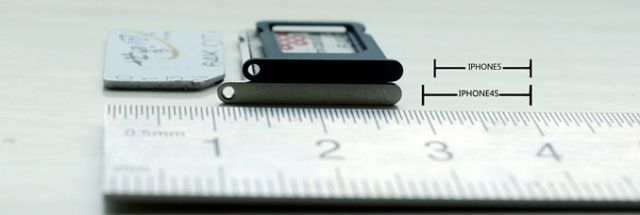
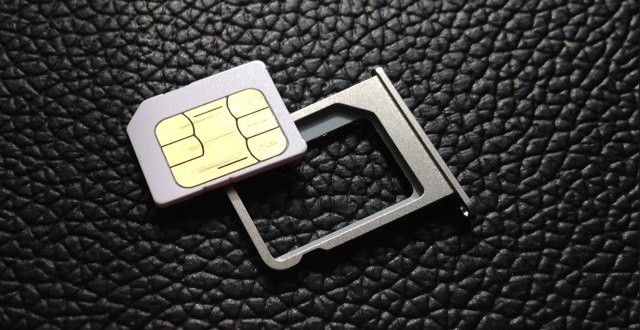
This is the nano-SIM tray your iPhone 5 will carry.
After getting its nano-SIM (4FF) proposal approved by the ETSI earlier this year, Apple’s new technology was always going to make its debut in the sixth-generation iPhone. And in case you needed proof of that, here are several pictures of the new iPhone’s nano-SIM tray up against the iPhone 4S’s micro-SIM tray. As you can see, it’s significantly smaller this time around, measuring less than a centimeter wide.
Even though Apple hasn’t confirmed the iPhone 5, nor whether it will use the mini SIM card it won the design proposal for, many European mobile carriers are placing orders for the tiny little smartphone cards in anticipation of the iPhone 5 launch, which is rumored to drop in September or October of this year.
This is the nano-SIM card that will be in your future iPhones.
Despite disapproval from its rivals, Apple’s new 4FF nano-SIM format has been approved by the European Telecommunications Standards Institute (ETSI) this morning, edging out other proposals from the likes of Motorola, Nokia, and Research in Motion. The new card is said to be 40% smaller than existing micro-SIM cards, but it offers all of the same functionality.
Apple’s effort to make the future iPhone smaller and thinner has caused it to focus once again on making SIM cards even smaller. The Cupertino company has designed a new “nano-SIM” that is even smaller than the micro-SIM that was introduced with the iPhone 4 back in 2010.
Apple has agreed to give rival smartphone makers free licensing if its nano-SIM standard is adopted.
It was revealed last week that Apple is pushing to make its new nano-SIM the next industry standard for miniaturized SIM cards. The company has the backing of most European mobile operators, but rival smartphone vendors — particularly Motorola, RIM, and Nokia — are against the idea.
In a bid to win them over, Apple has promised that it will make nano-SIM licensing free if its proposal is approved.