Top stories

Coming Soon: Steve Jobs, the Sitcom

Fake Steve creator Dan Lyons just signed a deal to bring Steve Jobs to another small screen near you.
The half-hour series called “iCon” is billed by the presser as “a savage satire centering on a fictional Silicon Valley CEO whose ego is a study in power and greed.”
Making sure the barbs prick will be the [...]

Commuter Delays? iPhone Tube Refund App Pays for Itself

Londoners stuck in the tube now have a handy iPhone app to request ticket refunds.
Tube Refund, which costs $0.99, zaps off the request for riders whose journey is delayed over 15 minutes.
Depending on where you go and what time of day, a one-way tube ticket can cost from £1.80 to £4.00 ($2.75 – $6 circa) [...]

What’s Next For the iPad? A Tabletop iPad, According to Xerox PARC Circa 1991

Way back in 1991, just as Apple was transitioning from 68k to PowerPC chips, the braniacs at Xerox PARC were predicting it’s entire iPod, iPhone and iPad strategy. And next up for the iPad is a blackboard-sized device.
Nearly 20 years ago, just as personal desktop computers were taking off, researchers at Xerox started thinking about [...]

iPhone App Arms Users With Silent Panic Button

A new app called Silent Bodyguard features a panic button that sends an SOS distress signal with GPS coordinates to potential rescuers without alerting onlookers.
While the $3.99 app, available on iTunes, isn’t the first ICE (in case of emergency) app, this one is backed by Dr. Clint Van Zandt, former FBI chief hostage negotiator and criminal [...]

Apple Changes App Store Sorting, Makes Updated Apps Harder To Find

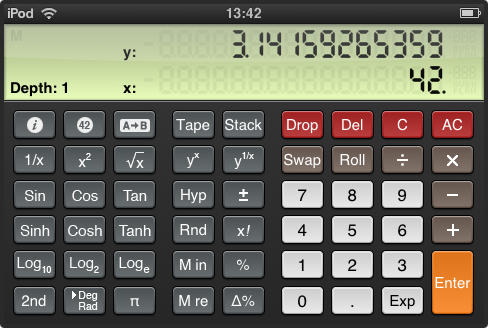
PCalc: one of many early but regularly updated apps that's now harder to find on the App Store.

PCalc: one of many early but regularly updated apps that's now harder to find on the App Store.

James Thomson of PCalc fame noted late yesterday on Twitter that the App Store’s again updated the way it deals with app sorting: “Looks like sort by release date in [the] App Store only sorts by original release date now, not update date. Say hello to page 342 of Utilities…”

Thomson’s referring here to PCalc now being housed on the penultimate page in the massive utilities section, because it was one of the earliest apps on the store, released on July 11 2008. However, the app was last updated on October 18.

Although release date sorting was open to ‘abuse’, dodgy developers regularly updating apps to move them to the top of the list, it strikes me as a bad decision to list apps by their original release dates, regardless of how often they’re updated. What impetus does a developer have to update a major app released in 2008, if no-one’s going to see the update unless Apple deigns to include it in ‘new & noteworthy’ or ‘what’s hot’? This decision could start a spate of app removals and ‘updates’ via entirely new products, reducing the likelihood of free updates for long-time users.

A simple workaround would be for Apple to provide an alternate sort option of ‘recently updated’, which would, presumably, make everyone happy. In the meantime, some of the earliest developers for the platform who care about updating their apps just got another kick in the crotch.

If you enjoyed this article:
Subscribe via RSS or email, or follow us on Facebook and Twitter

About the author

Craig Grannell

Craig Grannell is Cult of Mac's designer and an occasional contributor. He also runs iPhoneTiny.com, a Twitter-driven reviews site for iPhone apps and games. Follow Craig on Twitter @CraigGrannell and visit his website, Snub Communications.

Email the author | Read more posts by Craig Grannell.

12 comments

    or, you could visit the updates page on the app store, that will present you with any apps that have updates available!

    “A simple workaround would be for Apple to provide an alternate sort option of ‘recently updated’, which would, presumably, make everyone happy.”

    But Apple likes “easy to use”, and that added functionality, so they seem to believe, might confuse too many typical iPhone users.

    Their entire strategy with the interface of the iPhone seems to be to strip functionality (like eliminating multitasking and hardware buttons) from the device in order to make it appealing to simple folks.

    The date scheme Apple had before (manipulatable release dates) was broken, and the developer you quoted merely exploited that as their primary means of marketing–to get to the top page of a category temporarily–and is now complaining that they can’t manipulate the system any more. Although I’m a developer who is also struggling with limited-to-nonexistent marketing, I’m not sympathetic. I decided several months ago to stop manipulating the release date (it wasn’t really helping sales anyway), and focus instead on how I might really market my apps, as well as on quality and reputation (reviews) so that my app figures high in a keyword search.

    Do potential customers really know or care about when an app was released or updated? I found that manipulating the date was not really helping my app sales in a meaningful way.

    What I would prefer to see Apple do in the App Store is overhaul the categories, maybe provide two-level categories, and provide second and third level category-specific collections for “what’s new” and “staff selections”.

    I don’t understand – when I sort by release date, I’m looking for NEW apps, not old ones that have been updated. For that, there’s the UPDATE button, which shows all new updates to my old apps.
    What exactly is the problem here?

    What about massive updates to apps you don’t own, that you’ve missed, and that the dev has spent dozens of hours working on? Those are now, to all intents and purposes, dead. The way things are now, devs may as well release App 1.0 and then forget it and work on something else once it’s out of the top 100—or remove App 1.0 and create an update via the all-new App 2.0, rather than updating 1.0 with new functionality.

    In my opinion, Apps should be listed by their original release date. Why else would the sort option be called ‘release date’ .

    I dont see a problem here. It would be a good idea to add ‘last update’ to the sort options, but if users select ‘release date’, thats exactly what it should mean. The date it was released!!

    1. this is a new function, who is to say what else Apple has up their sleeve.

    2. it seems like a lot of the griping by developers is that they want Apple to be the chief marketer for their stuff. rather than getting out there themselves.

    Some good things…

    First, it removes an incentive for developers to spam Apple with updates to their apps. This may mean fewer apps to review, which may translate to reviews that are faster AND more consistent… which may lead to higher quality software in the app store. Overall, this may be an improvement, not a detriment, to the quality of apps.

    Second, it makes the user reviews more relevant. Right now it can get hard to figure out if a particular criticism was fixed in an update or not… fewer updates reduces these complications.

    The bad… and I’m disappointed that the author misses this obvious point…

    These dodgy developers will just submit minor rehashes of their apps as whole new applications. This will pad Apple’s “App Store App count” statistic, which may please Apple’s id, but it’s not manageable or desirable in the long run. Presumably the whole point of the review process was to introduce some quality control, and 400 versions of apps that are nearly identical provides no value to the consumer. At least with update spam there is still only 1 listing in the Store.

    I agree with those who say that constant miniscule updates (like iFitness) were the primary marketing tool of many developers. They were using Apple’s massive marketing of the iTunes App Store to market their apps which came to the top of the list every week.

    But Apple has no incentive to encourage this. Why? Because Apple has to go through the cost of re-reviewing these apps every time they’re submitted, and Apple is getting no additional income (because they’re free updates to existing apps).

    And, as others said, it made no sense for users, either. If I’m looking for specific functionality, I’ll search or browse for it. I won’t just look at what’s new. You only get impulse sales there; those kinds of sales won’t sustain a full-time developer.

    @Bill: I’m not sure it’s a case of customers ‘caring’ per se about when an app was released, but I find the current limitation regarding sorting troublesome. If a developer makes a huge effort overhauling an app, updating it in a big way, but it gets zero coverage in the store, what’s the point? I know marketing should happen elsewhere, too, but imagine if MacUpdate and, for that matter, the Mac press in general pretty much avoided talking about any products that were updated, and only talked about those that were new! LaunchBar 5? Pfft! Etc.

    @Jason: I’m not sure Apple’s decision will make the slightest bit of difference to app reviews, nor to the overall quality of software in the store. Good point about the thing I missed, though.

    Yea, if you bought the APP, not only does the iphone App store app tell you but clicking on APPLICATIONS in iTunes will ask if you want to update the apps that have updates.

    Otherwise, it does seem some developers are/were gaming the system – this way, those there the longest actually get the righteous better placement but really, the ulatimte decisin still rests with you andor the reviews.

    Good grief. Again, I’m not talking about apps you already own. I’m talking about when a dev spends weeks turning Great App 1.0 into Great App 1.1 with a ton of new features, and that doesn’t show up in the store as new. I suspect that in future, we’re going to see a whole lot more of what atebits did with Tweetie—the original app will be removed entirely and be replaced by an update.

    “those there the longest actually get the righteous better placement”

    Actually, they don’t—they get the worst placement, because you have to go through hundreds of pages to see their app, even if they yesterday released a major update with bells, whistles and more whistles.

Add your comment

Name(Required)

Mail (required, but not published)

Website

Comment

Buy Inside Steve's Brain Buy from Amazon.com Buy from Barnes & Noble

