Back in the day the entertainment industry tried to stop consumers from videotaping TV shows to watch at a later time. But the courts and Congress said taping TV shows is a non-infringing use of copyrighted works: it is “fair use.”
Now, the Copyright Office has determined that Apple locking the iPhone to prevent it running unapproved apps is an unfair restriction on consumers’ fair use rights.
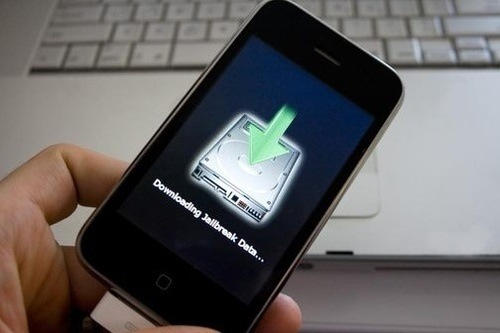
Consumers should be allowed to jailbreak their iPhones and install whatever applications they like: not just those approved by Apple. Unlocking your iPhone to install non-approved apps is a legal exemption to the DMCA, the Copyright Office has just ruled.
To reach this conclusion, the Copyright Office applied the four famous “fair use factors” to the case:
1. The purpose and character of the use,
2. The nature of the copyrighted work,
3. The amount and substantiality of the portion used, and
4. The effect of the use on the potential market for or value of the copyrighted work.
In a written explanation of the ruling (here’s a PDF), the Library of Congress’ Federal Register said the four fair use factors “tend to weigh in favor of a finding of fair use.”
1. In most cases, jailbreaking is done for non-commercial purposes and to add functionality to the iPhone. “…the purpose and charachter of the modification of the operating system is to engage in a private, noncommercial use intended to add functionality to the device owned by the person making the modification…”
2. Operating systems are designed to run apps, and running apps on top of them does not violate its copyrights. “It does not and should not infringe any of the exclsuive rights of the copyright owner to run an application program on a computer over the objections of the owner of the copyright in the computer’s operating system. If Apple sought to restrict the computer programs that could be run on its computers, there would be no basis for copyright law to assist Apple in protecting its restrictive business model.”
3. The Register rejected Apple’s argument that jailbreaking reuses large portions of the firmware code. “The amount of copyrighted work modified in a typical jailbreaking scenario is fewer than 50 bytes of code out of more than 8 million bytes, or approximately 1/160,000 of the copyrighted work as a whole.”
4. Allowing jailbreaking will have no effect on the value or market for iPhones. “Since one cannot engage in that practice unless one has aquired an iPhone, it would be disfficult to make that argument. Rather, the harm that Apple fears is harm to its reputation. Apple is concermned that jailbreaking will breach the integrity of the iPhone’s ‘ecosystem.’ The Register concludes that such alleged adverse effects are not in the nature of the harm that the fourth fair use factor is intended to address.”
The conclusion is sure to send Steve Jobs into a rage:
“On balance, the Register concludes that when one jailbreaks a smartphone in order to make the operating system on that phone interoperable with an independently created application that has not been approved by the maker of the smartphone or the maker of its operating system, the modifications that are made purely for the purpose of such interoperability are fair uses.”
The Electronic Frontier Foundation, which lobbied hard for the jailbreak exemption, said Apple’s restrictions were nothing to do with copyrights and all about control. Apple was misusing the copyright portions of the DMCA to block non-infringing uses.
EFF lawyer Fred von Lohmann said Apple’s position is clear if you make an automobile analogy.
“One need only transpose Apple’s arguments to the world of automobiles to recognize their absurdity,” von Lohmann said. “Sure, GM might tell us that, for our own safety, all servicing should be done by an authorized GM dealer using only genuine GM parts. Toyota might say that swapping your engine could reduce the reliability of your car. And Mazda could say that those who throw a supercharger on their Miatas frequently exceed the legal speed limit.
“But we’d never accept this corporate paternalism as a justification for welding every car hood shut and imposing legal liability on car buffs tinkering in their garages. After all, the culture of tinkering (or hacking, if you prefer) is an important part of our innovation economy.”

Leander Kahney is the editor and publisher of Cult of Mac. Leander is a longtime technology reporter and the author of six acclaimed books about Apple, including two New York Times bestsellers: Jony Ive: The Genius Behind Apple’s Greatest Products and Inside Steve’s Brain, a biography of Steve Jobs.
Leander has written for Wired magazine, Scientific American, The Guardian, The Observer, The San Francisco Chronicle, MacWeek and many other publications.

