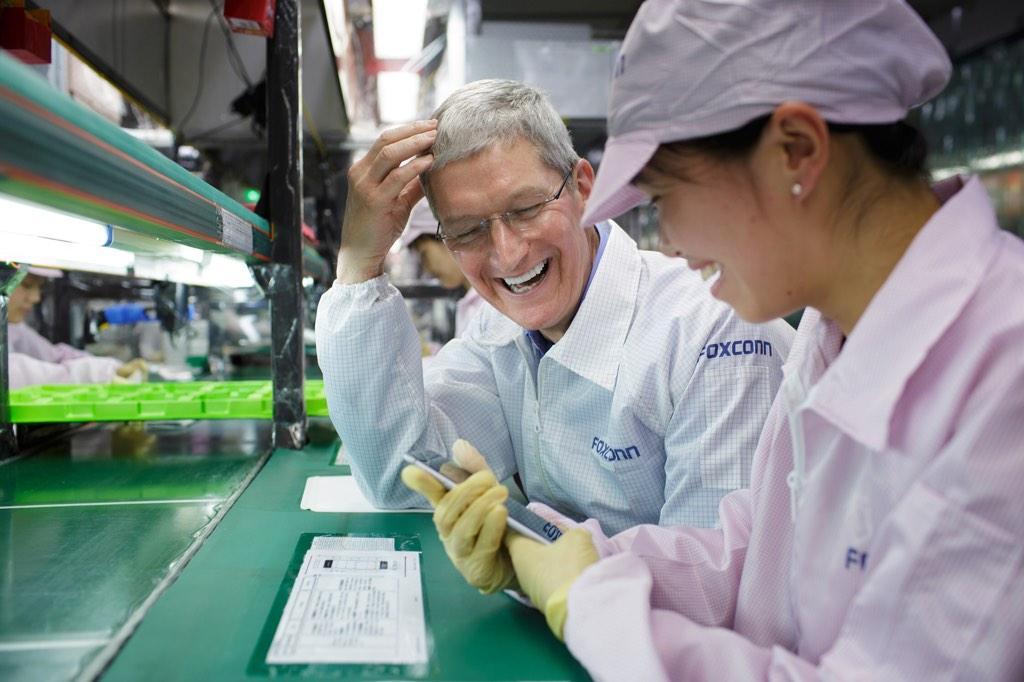
Having been the subject of Pulitzer Prize-winning reports and BBC documentaries, the questionable standards of conditions at Apple supplier Foxconn’s factories has made the company notorious, while its work building iPhones has made it rich.
But a new tour of the company’s sprawling Shenzhen factory — where the company makes iPads and Macs among other products — is eager to paint a very different picture: one of changing company, more like a university campus, with plenty of educational opportunities, and suicide stats below that of the U.S.
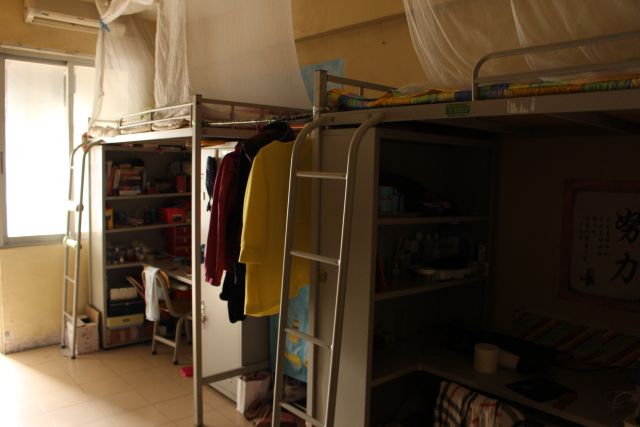
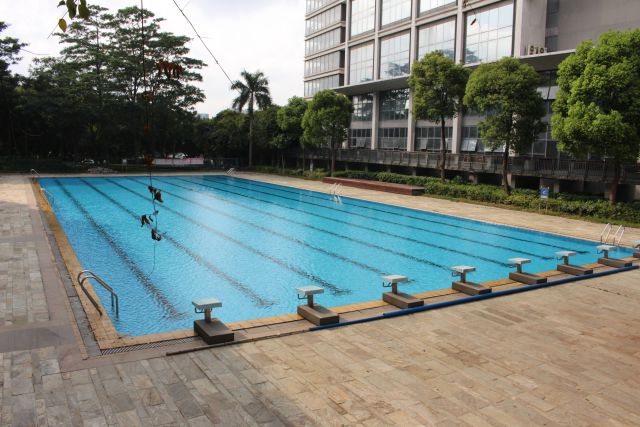
Reported by Re/code, the tour shows off a Foxconn at odds with the one depicted in grimmer, more Dickensian interpretations: with college-like dorms for a population consisting of mainly 18-25 year-olds, swimming pools, and a 24-hour hotline for counseling.
One interesting section describes both the almost citified feel of the manufacturing plant (no wonder when you consider that Foxconn facilities routinely employ 140,000 employees, while the company in total has some 1.4 million workers), and an Apple University-type educational facility for employees:
“The Internet cafe is located on a tree-lined main street, with fast food restaurants, cafes, banks and other shops. It’s reminiscent of the company towns of a bygone era in American history, when the employer would provide its workers housing, goods and services (often at prices that, at least in the U.S. at the turn of the last century, were deemed excessive). [Foxconn spokesman Louis Woo] said Foxconn’s dorms and shops are independent businesses, and workers are free to live off campus.
The centerpiece of the tour … is Foxconn University. The poster articulates the seven traits for success, including a willingness to work, three hearts (responsibility, motivation, ambition) and work ethic. Woo said some 1.5 million students have completed their trade education at the school since 2007. ‘Our No. 1 priority is to provide better working conditions and salaries to our workers,’ Woo said, as we toured the campus in a golf cart. ‘Changing perceptions is secondary.'”
Of course, you’d have to be naive to believe the Foxconn-as-utopia narrative entirely. Despite what Tim Cook has tried to do to improve working and living conditions for people who work on the Apple supply chain, there are still problems: as evidenced when Re/code talks about the hauntingly omnipresent suicide nets, which are still present in the facility.
The publication also notes that, “To be clear, we were not allowed unfettered access” to the plant, and that “We weren’t permitted to observe the factory floor.” However, it’s an interesting counterbalance to some of the other reports you read about Foxconn, which often open themselves up to accusations of bias by, for instance, focusing exclusively on Apple’s association with Foxconn, despite it being just one of many customers.
Hopefully it is indicative, however, of a company which realises how it is often perceived, and is taking proactive steps to change that: not just with “everything is awesome” propaganda, but also with very real improvements to benefit the lives of workers.

Luke Dormehl is a U.K.-based journalist and author, with a background working in documentary film for Channel 4 and the BBC. He is the author of The Apple Revolution and The Formula: How Algorithms Solve All Our Problems … and Create More, both published by Penguin/Random House. His tech writing has also appeared in Wired, Fast Company, Techmeme and other publications.


6 responses to “Rare tour tries to prove Foxconn isn’t the hellhole we thought it was”
No one in the swimming pool!
Probably because it was photographed during the work hours or maybe it was too cold or because it was a media photo shoot where they didn’t want employees photographed in their bathing suits rather than normal business/work attire.
I had one possible reason why it might lead to suicide which the media hasn’t mentioned. There have been a lot of leaked photos to the media about future Apple products, plus there is always some amount of theft in a production environment. My theory is that MAYBE some of the people that committed suicide were under investigation for leaking photos, or stealing product and they were about to get caught so instead of facing the humility of that, they took another route. So, until they release actual reasons for the suicides, we can only speculate and I think there are a lot of potential reasons and it might not necessarily be due to work or living conditions. The media likes to assume. I’m just thinking of the possibilities.
People always had unrealistic imagination about the “China laborer.” No, these people did not live in the slums as plotted in all those first world movies. They’ve not-good-but-decent salary, medical care, dormitory, and even meals and commodities are supplied by enterprise. In fact, they eat more healthy than most Americans.
The reason behind each tragedy is quite complex. But I can plot you a big picture of the “problems” of China laborer: poverty, education, and competition.
The inequality problem is China is severe. 1% of the Chinese population possesses 1/3 of the country’s wealth. For the “ordinary” people who have had only basic education, the living standard as a labour is much more wealthy than being a farmer in the countryside. But the question is, when billions (you read it right, billions) people have the same idea, what will it be ?
Suppose you’ve successfully entered the enterprise. You’ll soon learned that your treatment is closely tied to performance. Not your personal performance but the overall performance of your production line, and the performance index is ridiculously high. And you’ll also learned that you’ll be the target if you can not keep pace with you colleague. The result ? Overtime work under the name of “volunteer,” high mental stress, and even bullying — if you can not “fit into the group” (which means “keep quite” in most cases).
Sound familiar ? Of course you do. It is the standard capitalism problem, and it’s now severely strike the social of this communalism country, how ironic.
iSlaves!
Seriously… This is in China… you WILL NOT SEE what the actual work environment looks like. You will see happy… video game playing, massage getting very relaxed and happy workers in China. STUPID STUPID article to in any way FoxConn is not the hell hole… they were not allowed inside the factory.