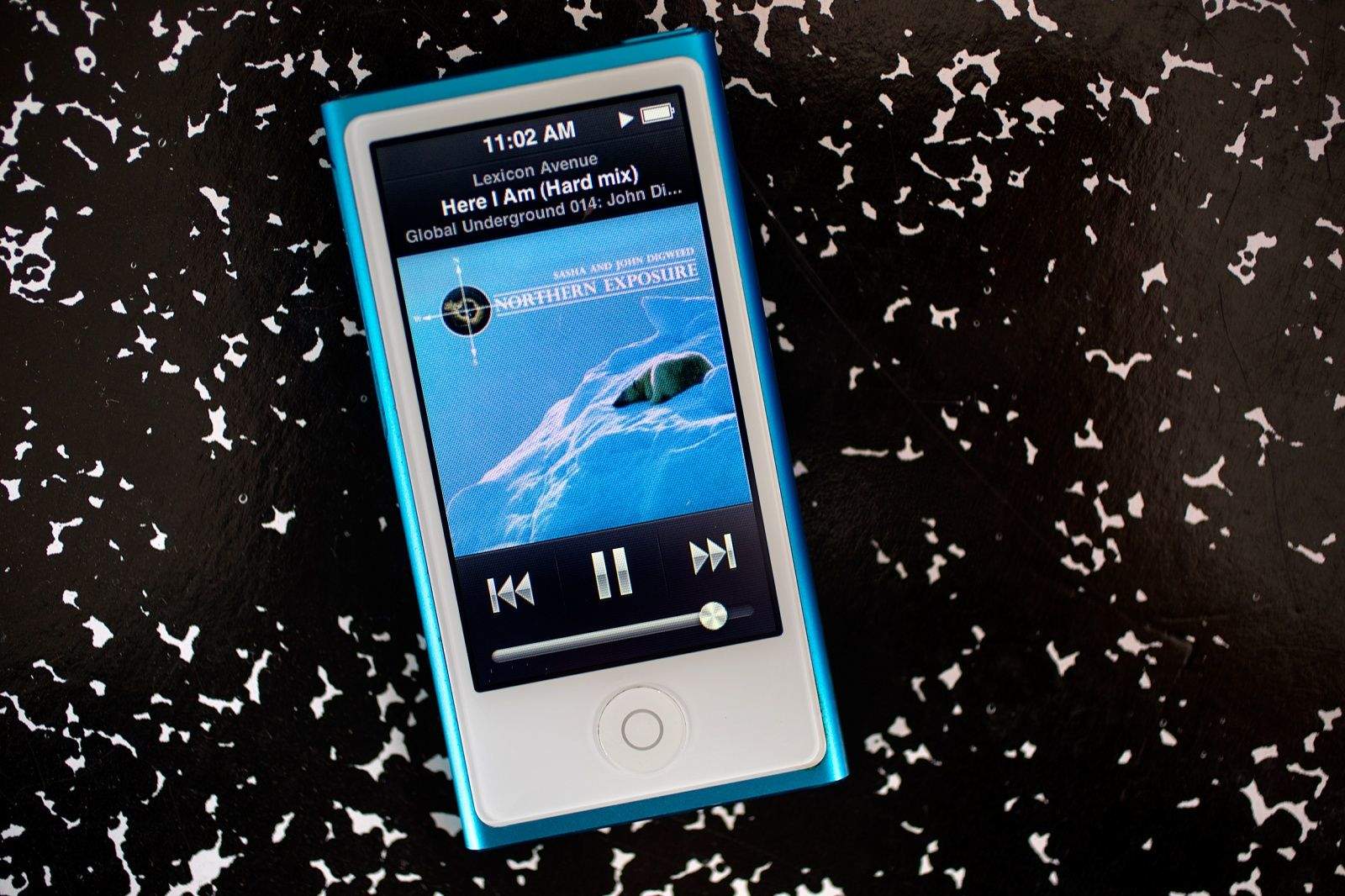
Tim Cook and U2 just got roasted for forcing music onto customers’ iPhones, but from 2007 to 2009, Steve Jobs’ Apple was allegedly playing a different tune, and deleted music off of iPods that was purchased on rival music services.
That wouldn’t have been so bad if it were just your embarrassing Nickelband albums, but attorneys for consumers at the ongoing antitrust lawsuit, say iTunes deleted all rival files without ever giving users a warning that they were about to lose their tunes.
Attorney Patrick Coughlin said that Apple deciding to give users “the worst possible experience and blow up” a user’s music library, reports the Wall Street Journal. Coughlin accused Apple of designing the iTunes system so that users weren’t told there would be a problem.
Users who tried to sync an iPod to iTunes with music from a rival service would receive an error message. The only way to get rid of the error was to follow the instructions to restore to factory settings. Once users’ reset, rivals’ music would disappear completely.
Apple’s attorneys told the court they deleted the files because of security concerns. Evidence was submitted that showed Steve Jobs himself was concerned about hacking. In an email to Eddy Cue, Jobs wrote reason “someone is breaking into our house,” referring to music pirates and tormenters invading iTunes.
Apple’s security director said the company just didn’t want to confuse users, saying, “we don’t need to give users too much information.” She also blamed hackers such as “DVD Jon” and “Requiem” for increasing Apple’s paranoia of protecting iTunes.
Phil Schiller and Eddy Cue are also expected to testify at the trial this week. Plaintiffs in the decade-old class action suit playing out in Oakland, Calif, are seeking damages of $350 million.
Source: WSJD

Buster Hein is a freelance writer who lives in Phoenix, Arizona. Twitter: @bst3r.

19 responses to “Apple scrubbed non-iTunes tracks from iPods”
2009 is a long time ago. Who gives a damn at this point in time? Wouldn’t the music downloaded from a rival site still be available for that user if they logged on again? Dragging up things like this is just plain stupid. I hope Apple simply pays these people off so they’ll be happy and they’ll quietly go away. Imagine waiting around 10 years trying to get compensation for a handful of music files. Absolutely ridiculous. This suit is all over the internet. I’ve seen this more than the recall of those vehicles’ faulty airbags.
Yeah, I am hoping they just push the money at them and make the idiots go away. By the way, this is the first time I have ever heard that songs were being deleted like that.
I never heard that it was deleting files. If it was, that sucks. oh well, not my problem.
Or, did it take this long for the case to finally get to court?
Who gives a damn? Anyone that thinks they can get money.
Meaningless BS of a lawsuit. who cares about buying music from services other than iTunes. iPod is an Apple product designed to work with Apple Software and Services. Why is the expectation that it would work with other services and jailbroken devices. If I was Steve Jobs I would have just short circuited their iPods if the user tried to buy music from other services.
So sad. Each of you who have posted are about the biggest sheep I’ve seen. You should care when a company destroys or deletes your property.
How quickly we forget the lay of the land when the first iPod came out. There were tons of pirated music out there in the wild, oh excuse me, shared files. There were incompatible (to Apple) files. And because the whole world was running Windows at the time, there were bugs, worms, viruses, malware, trackers, etc., etc., etc. In that environment you’re obligated to be paranoid. What other goodies might be hiding in that supposed MP3 or WMA file? What evil lurked in that WinAmp file or the many other audio files that had been unleashed, half-baked and ill-supported, on an unsuspecting public? Maybe that file is legit, purchased from vendor. But it maybe one of the millions of files sitting on e-mule, e-donkey, Napster, etc.,etc., etc. that could screw up iTunes or the iPod.
And seriously? You’re not backing your files up? You dump them into a brand new device and service and don’t look back? You don’t have those files sitting on a separate drive just in case? And remember, you are running Windows an OS notorious for face-planting and eating files and just plain dieing without warning, without a back up? And even if you were one of the few, the proud, running Apple you are an fool. First rule of computing, back up your files, then back up your back up. It’s been this way since 3.5 inch floppy drives.
As it your property, you really should protect it. These people did not bother to do the absolute minimum to protect their property, having a spare copy. If you could afford an iPod back in the day, you sure as hell could afford a USB hard drive to back up your files. Get back up, then get your toys.
The few. the proud?
You aren’t a marine sonny, you’re a fanboi.
I’ve used Apple, Windows, and Linux extensively and know the strengths and weaknesses of all three.
Nobody really writes virii for Apple. Not worth the effort due to the relatively small user base. Same goes for Linux. That means that your virus bull is just that. Bull.
Apple wanted to kill competition. They’ve proven that time and time again. Stop supporting evil. Feel free to keep buying it, but don’t fool yourself into thinking Apple is any better than Windows. As a company, they’re worse.
If you want to talk about good, go look at Linux. Grass roots OSes are the way to go if you want to be proud of the association. By they way, if you need to feel proud that you’re using a certain OS, then you’re a sheep. Grow a pair and stop trying to glam off of your computer’s mojo.
Keep in mind that not all iPod users are Apple users also. there is iTunes for Windows. So the notion of folks downloading malware is legit.
And at that point they really had no idea whether or not their iPodOS was super secure or not. So keeping hacked materials out of that system would be something they would be thinking about.
Did you even read the article? Steve Jobs referred to specific people when he said he was afraid of iTunes being attacked.
But haters gonna hate hate hate hate hate…
NOT Apple, the walled garden consumer cult built by a Turtleneck-wearing. acid-dropping Machiavelli?
Say it ain’t so!
Oh, it be so!
And check out the portrait of ‘M’ to enjoy the similarities.
Real’s software would protect purchased tracks with Fairplay DRM so they
could be played on iPods and still remain protected. For the iPod to be
able to play them, it needed the Fairplay key, and Real’s software
couldn’t just grab the authorized key from iTunes. It generated a new
key and replaced the key on the iPod. This broke the ability to sync
protected tracks from iTunes, and the only *supported* way to reset the
key is to restore the iPod, wiping all tracks. All Apple did was detect
the error and provide a way to fix it.
So those competitor services were trying to smuggle music tracks into iPod by cracking DRM ? And these cracked tracks would cause conflicts when syncing with iTunes, because iTunes could not verify these cracked DRM signatures ?
If that’s true, they should first solve the legal problem of these competitors for cracking digital rights protection, before waging anti-trust war against Apple.
likely users not Real itself. But yeah you have the general idea right.
Well OK then, how about this: some dude Jailbroke his phone, installed Cydia apps, got wiped out the next iOS upgrade, sued Apple for anti-competition in rage, and the lawyers got their pay from such ridiculous lawsuit.
I should listen to my mom and went to law school twenty years ago.
So fun and games with DRM plus Real and Apple not playing nice with each others DRM solution. There should been a way to strip out Real’s DRM and turn those files to plain vanilla MP3. But then I can see why Apple did not even want to mention that road. Got to push those iPods out the door, let’s not screw this up by adding FUD to the equation. And back in the day every vendor, including Apple, had its own DRM solution that was incompatible with their competitors.
No company was playing nice with each others DRM because the labels didn’t want them to. They loved the idea of each service having a different DRM cause then if you wanted to change players you had to buy tracks over again. so mo’ money for them.
The DRM was the fault of the music labels, not Apple or Real. Steve didn’t want to do any DRM, but the labels were already delving into new territory and wanted some assurance that iTunes-purchased tracks wouldn’t end up on Napster (and such) to be easily passed around.
When Apple re-negotiated with the labels in 2007-8, they were able to convince the labels to allow their music to be DRM-free on iTunes. Since they were also upping the quality of iTunes downloads, you could upgrade to the higher-quality, DRM-free tracks for all of your iTunes purchases (for an extra 30 cents each).