Mobile menu toggle

Search results for: woz

Ebay Watch: Apple I To Go on Sale

By

CC-licensed, thanks to Ed Uthman on Flickr.

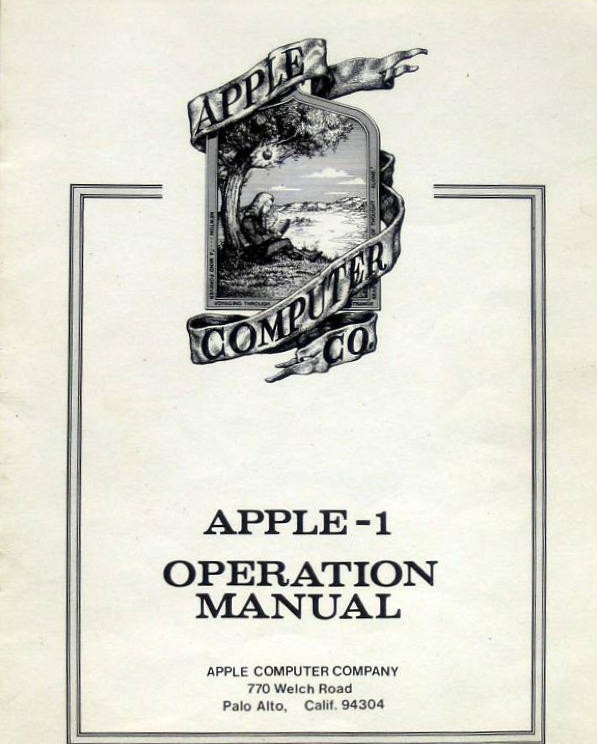
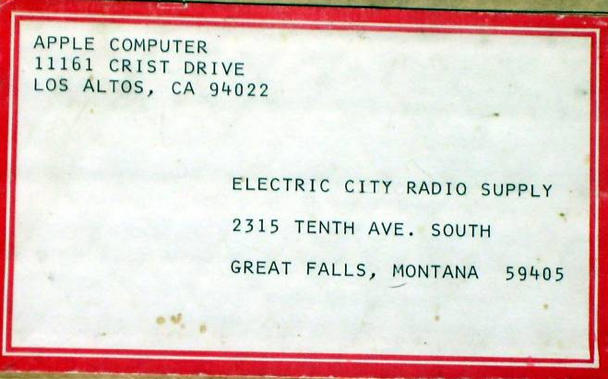
A man describing himself as an “82-year-old antique” is putting a relatively young 32-year-old Apple I for sale on eBay in the next few weeks.

One of 200 computers hand made by Steve Wozniak, somewhere between 30 and 50 are thought to be still around. (If you’re more interested in seeing one than buying one, the Smithsonian has an Apple I on display as it’s being presented to the Homebrew Computer Club in Palo Alto).

Back in July 1976, the Apple I sold for $666.66.  The computers, sold in a kit,  came with 4KB standard memory, that you could bump up to 8KB or 48KB with expansion cards. You had to add your own case, keyboard and display.

Guesstimates say the computer could fetch between $14,000 and $16,000.

The seller wrote in to San Francisco Chronicle tech columnist David Einstein about how he might get publicity for the sale.

Einstein replied, “I don’t think your computer is valuable enough to spark much general media interest before you sell it.”

Alas, he underestimated the Cult of Mac.  Mr. Antique, we want to hear from you!

The Presentation Secrets of Steve Jobs: The Real Deal Behind The Reality Distortion Field

By

steve_jobs_rockroll

Steve Jobs made a welcome return to the public eye last week at a special music event to introduce Apple’s 2009 holiday iPods.

“The September music event was classic Apple. It marked the return of the world’s greatest corporate storyteller,” says communications coach, Carmine Gallo, author of The Presentation Secrets of Steve Jobs: How to be Insanely Great in Front of Any Audience.

Gallo’s book will be published later this month by McGraw-Hill and can be pre-ordered now from Amazon. Gallo’s written some insightful analyses of Steve’s presentations in the past, so we asked him to take a look at last week’s event. After the jump, Gallo breaks down his top ten presentation tips from Jobs’ latest speech.

Cult of Mac

By

cult_logo_featured_image_missing_default1920x1080

“The Macintosh is more than a computer, it’s a way of life. This book is about what it is to be a Macintosh person. It gives insight into the greatest love and loyalties of any product of our era.”
Steve Wozniak, Apple Co-founder

“If you want to know what’s happening in the Apple underground, talk to Leander Kahney.”
Eric Hellweg, CNN Columnist

About the Book

cult_mac_big-1

There is no product on the planet that enjoys the devotion of a Macintosh computer. Famously dedicated to their machines, many Mac fans eat, sleep, and breathe Macintosh. The Cult of Mac is the first book about Macintosh culture, arguably the largest distinct subculture in computing.

Written by Wired News managing editor Leander Kahney, The Cult of Mac is an in-depth look at Mac users and their unique, creative, and often very funny culture. Like fans of a football team or a rock group, Macintosh fans have their own customs, with clearly defined obsessions, rites and passages. From people who get Mac tattoos and haircuts, to those who furnish their apartments with empty Mac boxes, this book details Mac fandom in all of its forms.

The paperback edition includes an all-new chapter about the iPod, updates throughout, and new photos that reflect current Apple technology.

Purchase

Cult of Mac is available from these fine booksellers.

barnesandnoble 8ooceoread amazon

Download the Entire Book

Click here to download Chapter 8; or download the entire book using Bittorrent.

Reviews

“This unique coffee table book is not only a must for any Mac fan, it also makes fascinating reading for anyone interested in the intersection of technology and popular culture, or discovering the unique people who live their lives by Apple’s ‘Think Different motto.” — Corporate Media News and AEC Newsroom, Sept. 9, 2004

“This account of Macintosh fanaticism will strike a chord with anyone who’s ardently defended (or cursed) an operating system… sure to end up on Quadra-based coffee tables everywhere.” — Wired Magazine, October 2004

“Who knew there were so many Mac tattoos out there?” — Village Voice, Oct. 21, 2004 (Full review)

“I’m certainly glad this book came out before Christmas. Now I know what I am going to give a couple of my fellow Macaddicts.” — Slashdot, Oct. 29, 2004 (Full review)

“To some extent, Newton loyalty fits into the broader context of Apple loyalty, which is the subject of a new book, ‘The Cult of Mac,’ by Leander Kahney.” — New York Times, Oct. 31, 2004 (Read article)

Mr. Kahney’s informal history of the Mac is interspersed with trivia and delightful details, and intriguing photos, and is wrapped up in an entertaining style. This is a coffee table book that only a geek might love — but it’s also one lots of people will enjoy reading.” — Washington Times, Nov. 23, 2004 (Read article)

5/5 Rating: “This is a wonderful book to look at and read. Many of the stories are captivating, and made me want to look up more information online of the people he writes about in the book… Written with detail in mind, The Cult of Mac is a large and ambitious project that was put together with loving care by the author.” — MyMac.com, December 2004 (Full review)

Hot Review: “A fun book, one that any self-respecting Mac addict will delight in receiving as a present, and displaying on the coffee table. That is, if they can keep wiping the drool off the pages.”  — MacNN, December 2004 (Full review)

UPDATED: Apple’s Design Genius is What Gets Left Out

By

8252-bigthumbnail
Image via Desktop Nexus

The Internet has lately played host to a near-infinite amount of fol-de-rol regarding a rather silly post from Weblogs, Inc. and Mahalo founder Jason Calacanis in which he railed against Apple’s recent paranoia. There’s plenty wrong with the gist of his argument (as Leander points out in this rather nice post), as well as a few things that are right on.

But I’m not here to dwell on that. I just want to make one thing very clear: what makes Apple great is not what it puts into its products. It’s what gets left out. As exciting as visions of flying iPhones with 8 sim slots, a Zip disk slot, and dual head-mounted displays might seem, the original iPhone (and iPod, for that matter) became iconic because of its limitations — not in spite of them. Innovation, contrary to Calacanis, is often more about editing than possibility. Apple, more than most companies, is defined by its unwillingness to do too much. The greatest design impact is in what we can’t see.

Fake Steve’s Must-Read Take on Schmidt’s Board Resignation

By

post-14070-image-a7ec67c4bac1f542ad2be066927cd2fc-jpg

Fake Steve has a hilarious series of posts about Eric “Squirrel Boy” Schmidt’s resignation from Apple’s board. Much better than the real news and boring analysis. Starts with Squirrel Down! and continues:

“Eric, let me tell you something. After what you pulled here at Apple, no one will ever trust you again. You’re a dead man. Okay? You are the herpes of the tech industry. You lame-ass spy. You backstabbing, flack-fucking thief. You sat in our meetings and learned all of our secrets. You listened to our product development plans. Then you went off and copied our products and now you’re trying to fuck me in the ear with my own ideas.”

Then he goes on to detail the hilarious phone calls Steve has taken from wannabes looking to fill Schmidt’s empty seat, including Woz, Kara Swisher, Jon Shirley, Guy Kawasaki, Robert Scoble and Chris Anderson.

Worth reading in order to appreciate how the joke builds (I made the mistake of reading them backwards). Highlights are the Kawasaki and Anderson posts.

Link.

Apple History: First Business Plan, IPO Now Public

By

This is one of 200 hand-built Apple-1 computers made in 1976.
It all started with the Apple-1 computer.
Photo: John Moran Auctioneers

Tech buffs can delve into Silicon Valley history by perusing Apple Computer’s first business plan and IPO documents.

The 1977 38-page IPO filing, done in a typewriter-y font with the odd punctuation issue, lists management as the fourth risk factor for potential investors:  “Apple Computers’ Management team is young and relatively in-experienced in the high volume consumer electronics business.”

And would you put money into a company headed by these key execs?

*  “S.P. Jobs, V.P. Operations, Attended Stanford and Reed College, Engineer – Atari – 2 Yrs”
* “S.G. Wozniak, V.P. Engineering, Attended University of Colorado and University of California at Berkley [sic], Engr. Tennant – 1 Yr., Engr. Electroglass – 1 Yr., Engr. – Hewlett-Packard – 3 Yrs.”

The IPO document was donated to the Computer History Museum by original Apple investor Mike Markkula, who saw massive potential in the green startup. In 1977, Steve Jobs met with Markkula and convinced him that personal computers were an exciting opportunity. Markkula invested $250,000 in Apple for a one-third stake in the company and served as president from 1981 to 1983.

Exclusive: Steve Jobs Will Return, But Not For Long, Says Silicon Valley Psychic

By

post-10750-image-ee9c186c05fd0aef1e75cf3126484773-jpg

Like everyone else, I’m dying to know if Steve Jobs will be returning to work at the end of June.

Since I haven’t got a clue, and neither does anyone else, I figured I’d ask someone who might know. Not the usual blowhard pundits, but Barbara Courtney, a corporate psychic known as the “Seer of Silicon Valley.”

Personally, I’m very skeptical of psychic predictions, but Courtney has a long and storied history as Silicon Valley’s leading clairvoyant. Indeed, she’s the only person on record who correctly predicted Steve Jobs’ return to Apple back in 1997.

Speaking by phone from her home in Redwood City, Courtney said Jobs will return to Apple in June as promised — but he won’t stay long.

“My feeling is he will come back,” said Courtney. “I’m not seeing June as too soon.”

Jobs took six months medical leave in January saying his ongoing medical problems were “more complex” than suspected and he needed time off work to concentrate on his health. The company has promised several times that Jobs will return in late June as planned, but many are pessimistic.

On Tuesday, hopes were further dashed when Apple said the WWDC keynote in early June will be given by a team of executives led by head marketer Phil Schiller. The slot has traditionally been Jobs’, and many hoped (and are still hoping) he’d put in a surprise appearance.

Film Preview: “Art & Copy” — a Tribute to When Apple’s Ads Were Emotional

By

post-10334-image-37a67cf86c4cab371ad9be8ba6240f94-jpg

Yesterday, I had the pleasure of viewing “Art & Copy,” a new documentary about the best ad agencies on the planet, during the San Francisco Film Festival. It’s a wonderful film, full of great stories about the creative process and the origins of the 20th Century’s most memorable ads. Critically for Mac fans, this includes a brilliant blow-by-blow for how Apple’s amazing “1984” commercial was created, courtesy of TBWA Chiat-Day Chairman Lee Clow.

The clip itself isn’t available to embed, but what Clow says about “1984” — and then demonstrates in 1997’s “Think Different” — is worth remarking upon for anyone who has a long-term relationship with Apple. Clow says that the reason “1984” could be brilliant is that, first of all, he was given absolute creative freedom, second, Ridley Scott typified a new way of making movies that was just starting to take off in the U.S., and, most important, Apple actually had a revolutionary product and was aware of how revolutionary it was. When a great creative force gets a near-unlimited budget to promote a genuinely amazing product, it would be hard not to do so well.

Fascinatingly, Clow claims Apple’s board tried to kill “1984” right before it aired, at which point Jobs and Woz offered to split the cost of airing it in the Super Bowl — so it helps to have rich, passionate executives, too.

What’s interesting about looking back to “1984” and “Think Different,” both of which are considered in the film, is just how emotional they are. They make a profound appeal to people who feel like outsiders, rebels. Whether Apple ever really represented that feeling or not (I personally believe that it did), those spots went an incredible distance toward summing up what being a Mac user meant in the pre-iMac era. It meant everything, in a lot of ways. Pretty much any long-time Apple user will get misty watching either spot — or even talking about them.

That’s why the segment of the movie that shows Clow and his team working on iPod dance commercials in the present day was ultimately such a shock. Apple doesn’t make passionate ads any more. The emotion is gone. Apple makes cool ads — iPod dancers, Mac v. PC — and it makes educational ads — iPhone explanations, iPod touch as gaming system — but it no longer makes a real emotional appeal. Now, this transition is unquestionably more successful. But it does make me feel less a part of a movement. And that’s something I miss pretty much all the time.

I can’t recommend this film, which gets distributed in September, highly enough — nor that you click through the jump to watch “1984” and “Think Different.”

Steve Jobs Doll: Soft, But a More Than a Little Menacing

By

cult_logo_featured_image_missing_default1920x1080

The doll version of Steve Jobs wears a black turtleneck, jeans and the kind of intense gaze bound to make you feel guilty while downloading useless apps instead of masterminding something great.

Brought to you by podbrix, the same folks who created a limited-edition Young Woz and Jobs Playset in Lego (unfortunately sold out), this plush version of Jobs will cost you about the same as a pair of Apple earbuds ($32.00, shipping included).

Only 500 available, so if you want a pocket guru, now’s the time to act.

Via Macenstein

25 Years of Mac: TekServe Exhibit Closes Sunday in NYC

By

post-7702-image-3f79ec0913f2f1741c024191de55ea08-jpg

Image © 2009, Robert Boethe

The TekServe store in Manhattan has been celebrating 25 Years of Mac this week with what it calls “a petting zoo” of Macs at the largest independent Apple shop in the US. The store’s exhibit includes an original Macintosh 128k signed by Steve Wozniak himself, a Lisa, the original Mac Portable, a Newton, a NeXT cube, the G4 Cube, various Powerbooks, the eMate, the legendarily laughable 20th Anniversary Mac, and the first iPod.

If you happen to be in the New York area and want to get a first-hand look at the Mac’s evolution, be sure to stop by TekServe by Sunday, the exhibit’s final day.

The event is free and open to the public. Tekserve is located at 119 West 23rd Street, just west of 6th Avenue. Store hours are Monday through Friday 9 am till 8 pm, Saturday 10 am till 6 pm, and Sunday noon till 6 pm.

Via Macworld