Mobile menu toggle

Search results for: woz

The Dizzying Rise (And Fall?) Of Apple 1 Prices

By

AAApple1prices

Price info from auction houses; view sources here.

The very first computer Apple ever made has all the hallmarks of a valuable collectible: scarcity, novelty and impracticality.

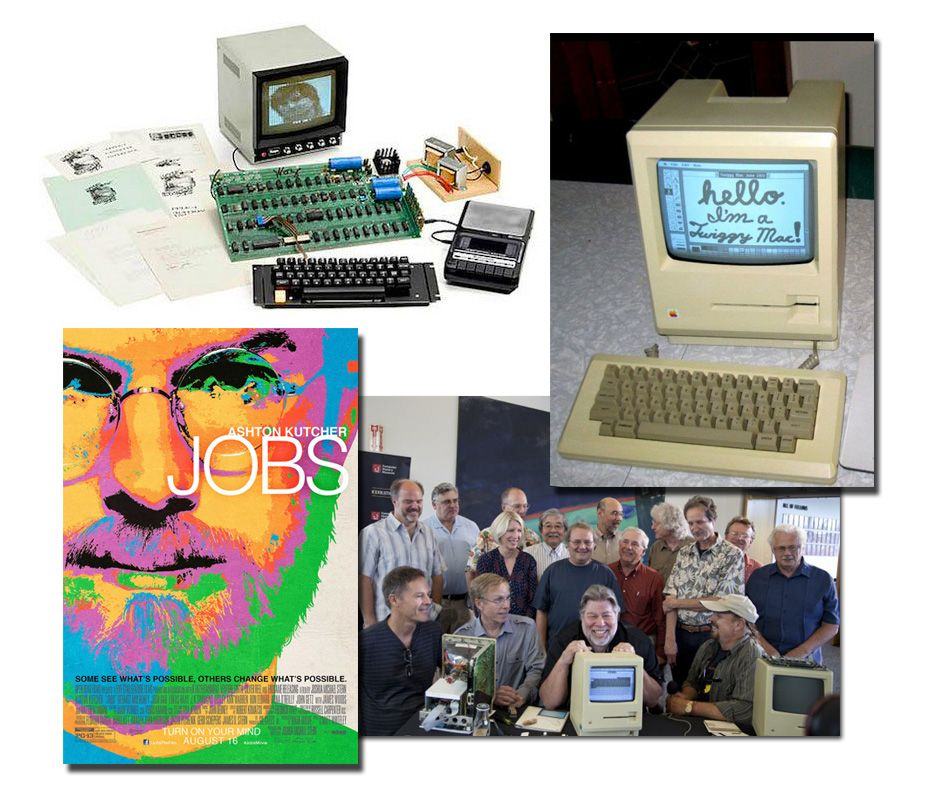
Steve Jobs and Steve Wozniak cobbled together about 200 of them in a Los Altos garage in the late 70s. (That garage is now slated to become an historical destination.) The Apple 1 cost $666.66 and the pioneers of home computing who bought it had to add their own case, keyboard, video display and power supply to actually use it.

Those machines seemed to be largely forgotten on the larger resale market until 2009, when the economic squeeze made collectors realize those humble-looking relics could morph into serious cash.

The auction escalation for these machines began slowly, with a tech journalist telling the seller of the first one of the bunch to crop up on eBay that “I don’t think your computer is valuable enough to spark much general media interest,” but that a small following of avid collectors would be enough to start a “bidding war.”

Not exactly: that first machine earned its owner $18,000, about $2,000 over the top sum the journalist thought it might fetch. Not bad, but not enough to pay off your mortgage, like the ones selling for around $300,000 just a few years later.

Very few of these iconic homespun machines work – those that can still crunch the cassette interface are worth a lot more, so are those that come with the collateral, including the original box and typed letters on binder paper from a young man who signed himself Steven Jobs. (Watch Wendell Sander, Apple employee no. 16, fire up his Apple 1 for a memory dump using an iPod in our video.)

Since that first auction, media interest has soared. And so have the prices. Once the large auction houses got involved, the prices levitated to a record $671,000 for a working Apple 1 this year.

“I do feel that some of the recent auction prices attained for the Apple 1 are absurd,” Dag Spicer, senior curator of the Computer History Museum told Cult of Mac. The Mountain View, California home to calculating curios holds over 100,000 items, most of them donated, including two Apple 1s. “The death of Steve Jobs and Apple’s ascendancy as the world’s most valuable company has something to do with it.”

There are a few signs that the trend won’t keep climbing. The New York Times reported that an Apple 1 on the auction block in London failed to meet its $75,000 reserve price and another one sold for $375,000 instead of the $500,000 Christie’s expected. The most recent auction in Germany closed without a single bid — though the Apple 1 fetched about $330,000 after the last gavel sounded.

The friendly atmosphere – and the amateur collector-friendly prices – stopped when the auction houses realized that there was plenty of new money to be had with old circuits.

“Auction houses exist to maximize profit for the seller (and thus themselves as they get a hefty commission),” Spicer said. “The effect this has is (in my opinion) to inflate the monetary value of objects.  Auction houses live on what early 20th-century circus barkers called ‘ballyhoo’ — they whip up emotions with arresting curatorial text and glossy catalogs in order to create a sense of magic and uniqueness about an object.  And, of course, the auction process itself, in which passionate, well-heeled buyers compete against each other, itself serves to raise prices.”

Still, if you want to dig into garage and estate sales seeking a mother lode in a motherboard, you might want to keep Mike Willegal’s site bookmarked. Willegal tends an online registry that has positively ID’d 48 Apple 1s and warns that reproductions are getting harder to tell from the originals. Willegal says owners may be in good faith but cautions: “If you are in the market for an original Apple 1, be extremely careful about what you are investing in.”

And it pays to watch prices, Computer History Museum’s Spicer says: “I have seen an Apple 1 selling for $75K in the last year… so to that buyer who spent 500,000 Euro on one…well, ooops!  Lesson: Do your homework!”


The Second Life Of The World’s Oldest Working Macs

By

Hello I'm a Twiggy Mac
Macintosh 128K prototype with Twiggy floppy disk drive (photo: Adam Goolevitch)

Old computers tend to lead sedentary lives. Parked in shelves and closets, maybe touched by the occasional dusting; the lucky ones still run old games from time to time. But sometimes one becomes a sensation.

The Twiggy Macintosh is a prototype Macintosh 128k that used a 5.25-inch disk drive. Long thought lost to history, two of these primordial Macinti were recently resurrected and returned to life in full working glory. Their rebirth brought about a rare reunion of the original Macintosh design team. And one of them recently repaid the effort by fetching about $40,000 at an auction.

They are — without a doubt — the oldest working Macs in the world.

Here is the story of their amazing journey.

Apple 1 Sold for $330k After Auction Close

By

Apple 1 Sale
Working Apple 1 from the November 2013 Breker auction.

On Saturday Cult of Mac reported that a working Apple 1 failed to sell at auction in Germany, a notable result in the growing market for vintage Apple collectibles. It turns out that result was premature: the Apple 1 did sell for €246,000 ($330,000), after bidding on the item had closed.

Vintage Apple Auction News: Twiggy Mac Sells for 33K, No Sale For Apple 1 & Lisa 1

By

Vintage Apple at Auction
Another Apple 1 and a Twiggy Macintosh were recently up for auction

UPDATE: Cult of Mac has learned that the Apple 1 did sell after the auction closed. Read more here.
—–

Markets rise and markets fall – that’s true for stocks, real estate, tulips, etc. That’s also true with vintage computers – though even in a down market there’s still some money to be made.

At an auction in Germany held on Saturday November 16, a working Apple 1 – from the first batch of 50 units made – did not receive any bids. Nor did a restored Lisa 1, with dual Twiggy floppy disk drives. But a prototype Twiggy Mac, one of only two known working units, sold for €25,000 ($33,725), quite possibly the highest price ever paid for a vintage Macintosh.

Publisher’s Letter

By

striscia

Leander Kahney, Publisher

Sir Jonathan Ive is extremely self-effacing. The only time he says “I” is when he’s talking about the iPhone or iPad. Talking about his work, he replaces “I” with “we.” It’s always about his team, his collaborators, and Apple, the company he works for. For Jony, it’s all about the work.

As senior vice president of industrial design at Apple, the world’s most valuable company, he’s been the world’s leading technology innovator for more than two decades. He’s led the design of a string of iconic products: the iMac, iPod, iPhone and iPad, plus a score of other innovations in between. He’s won every design award under the sun. He’s even been knighted.

In 2011, Sir Jonathan Ive was promoted to Apple’s overall design guru, in charge of both hardware and software. It was a position formerly held by Apple co-founder Steve Jobs. Jony provides direction and leadership for industrial design, the group primarily responsible for hardware, as well as the human interface software teams. Hardware and software have traditionally been run as separate divisions at Apple. Only one man straddled both groups — Steve Jobs. Jony has stepped into the role that Jobs left with his passing. Tim Cook is CEO, but Jony is Apple’s creative driving force. He’s Apple’s MVP.

You wouldn’t know it if you met him. Born in Chingford, Essex, the 43-year-old Brit is quiet, even shy. He’s super friendly and soft spoken. He is extremely private. Even Apple says it doesn’t know his precise date of birth. He dresses in jeans and T-shirts and always seems to be carrying something in a plastic bag. He speaks softly but he doesn’t look like a wallflower: he’s big and muscular, a legacy of a lifetime working out. He has close-cropped hair, which might make him look menacing if he wasn’t so obviously a nice guy.

Jony is the most celebrated designer of his generation. In 2002, he was named the first Designer of the Year by the Design Museum, which he won again in 2003. That year he was inducted as a member of the Royal Designers for Industry (extremely prestigious). The following year he was given the Royal Society of the Art’s Benjamin Franklin Medal and the BBC named him the “Most Influential Person on British Culture,” beating out JK Rowling and Ricky Gervais.

In 2005, Jony was presented with three Silver Pencils from the British Design & Art Direction (D&AD) association, some of the most prestigious awards in the industry. In 2006, he got a fourth, the most Silver Pencils ever awarded to an individual. One Silver Pencil is a career maker; four the mark of an off-the-charts genius. He subsequently got six Black Pencils, more than anyone else, ever. Jony has a record number of D&AD awards; and he got them in a stretch of just 10 years. In 2006, he was made a Commander of the British Empire; and in 2010 he was knighted by Princess Anne at Buckingham Palace. By March 2013, he was named in more than 600 design and utility patents.

In 2011, D&AD bestowed another giant award on Jony: it named Apple’s design team the best design studio of the last 50 years. It was one of the first public recognitions for the group as a whole, and Apple felt the award was important enough to fly the normally reclusive, ultra secretive group en masse to London to receive it — the first time ever.

While racking up awards, he’s helped push Apple’s sales off the charts. In the nearly two decades that Jony has been at Apple, the company has pulled back from the brink of bankruptcy and is now one of the world’s most valuable companies. In 1992, the year he joined Apple as a designer, the company made $530 million profit selling beige computers. In 2012, Apple’s made $41.7 billion profit on $156.5 billion revenue. Yeah, billion!

The company makes gorgeous products that compel customers to camp out overnight and sometimes even riot. AAPL, as it is listed on the New York Stock Exchange, currently has a market cap of about $475 billion, making it the biggest company on the planet after the oil giant Exxon.

A lot of this had to do with Steve Jobs of course, the genius who toiled for three decades to bring personal computers to the masses. Jobs always had an eye for talent, launching Apple in 1977 with the hardware genius Steve Wozniak. For the last dozen years, his chief creative partner at Apple was Jony Ive. Jony is a genuinely original thinker. His products are not just the same old things repackaged to look new; they are new. They are products no one could have imagined a few years ago.

All You Need To Know About Apple Campus 2 – In Pictures

By

campus
Sustainability is a key theme of Apple's forthcoming Apple 2 campus.
Photo: Apple

Did you know that the new Apple Campus 2 “spaceship” is wider across than the Empire State Building is tall? It’s going to cost 60 times more than the Pentagon did back in 1943, too. Heck, you’ll be able to cram up to 35 jetliners full of passengers in its rounded confines without breaking a sweat.

The Cupertino City Council unanimously approved Apple’s plans for the tech company’s a couple of weeks ago, after a long, heartfelt public comment session.

We thought it would be great, then, to take a look at some of the details of the new campus, set to finish construction in 2016.

It's big. Like, Pentagon big.
It’s big. Like, Pentagon big.

The proposed Apple Campus 2 is huge. Apple plans to put a 100,000-square-foot fitness center, 11,000 parking spaces, 2,000 bike parking spaces, 2.8 million square feet of office space, and a 100,000-square-foot lab. Oh, and a restaurant. All of this in four stories, housing 12,000 employees.

The Pentagon, in contrast, which itself was completed in 1943, has 3.7 million square feet of office space, is seven floors tall, and houses 25,000 people.

A lot of krill, and a lot of oil, really.

The Apple Campus 2 will have a 1,522 foot diameter, which means the Empire State Building could comfortably lie down somewhere inside its massive circular footprint. Heck, a T1-class Supertanker could fit in there, as well, with its 1,246 foot length, and you’d have to get somewhere around seven or eight blue whales–the largest known mammal on Earth–just to get across half of the diameter of the new Apple Campus. That’s a lot of krill.

I'd pick sunny California, too.
I’d pick sunny California, too.

The spaceship campus has plans to hold 12,000 employees within it’s solar-panel-using, green technology hallowed halls, which would fill something like 160 double-decker buses, or 35 Boeing 747 jets. The Apple folks will have it easier, as they’ll at least be able to get nice food there, and a much less foggy view in Cupertino than in London.

Beam me up, Ivey.
Beam me up, Ivey.

Of course, no look at anything tech-related is complete without a comparison to a fictional starship, and since we’ve been calling this the spaceship campus since Steve Jobs unveiled the design two years ago, it seemed fitting to see how it stacks up against the USS Enterprise. Unfortunately for trekkies, the new Apple Campus 2 has a diameter quite a bit larger than the original Gene Roddenberry creation.

Nice salaries, folks.

The city of Cupertino itself, home not only to Apple founders Woz and Jobs but also author Raymond Carver and actor Aaron Eckhart, only has around five times the population as will work in the Apple Campus 2. Interestingly, the median income of Cupertino-based Apple employees is a bit lower than that of Cupertino in general, but perhaps that’s just a function of how much larger the city is than the building. Which, to be honest, doesn’t seem to be that much of a news item. It is, however, funny that a .27 square mile building can cause the kind of traffic jams that the city of 11.26 square miles seems to be mostly worried about.

Image: City Of Cupertino

Twiggy Mac Update: World’s Oldest Working Macintosh Goes to Auction

By

Twiggy Mac
The Twiggy Macintosh running early MacPaint software (photo: Auction Team Breker)

Auctions for rare Apple equipment have attracted a lot of attention the past few years, with prices for the Apple 1 going as high as an astounding $671,000! Another Apple 1 is going up for auction in Germany next month on November 16, but in addition a very different rare Apple item will be on the same auction block. One of only two known working Twiggy Macs in the world is going up for sale.

Twiggy Macs were prototype versions of the original Macintosh and used a proprietary 5.25-inch floppy disk drive, instead of the 3.5-inch disk which ultimately shipped with the system in 1984. All Twiggy prototypes were ordered destroyed by Steve Jobs – and long thought lost – but the last couple of years have seen an eventful rediscovery of this piece of Macintosh history. Now one can be yours – if the price is right.

Steve Jobs’ Childhood Home Gets Official Historical Site Designation

By

gty_steve_jobs_house_kb_130924_16x9_992

The Los Altos family home that Steve Jobs grew up in has now been designated as a site of historical significance, thanks to the seven-member Los Altos Historical Commission  that unanimously approved a recent historic property evaluation on the home.

Steve Jobs and his foster parents moved into the house on 2066 Crist Drive in Los Altos, California, when he was in 7th grade and continued to live there though his high school days. The decision to mark the house as a historical site gives the single-story, ranch house protection from builders seeking to demolish it, although Steve Jobs step-mom, Marilyn Jobs, still  lives there, so good luck getting her out anytime soon.

Regarding the reasons for why the Jobs house is worthy of being historicized, the property evaluation cited the following:

Apple’s Privacy Scorecard

By

EFF-Report-Full
Chart Source: EFF.org
Note: Companies are listed in alphabetical order.

When we share our innermost thoughts on a blog, send pictures of loved ones through Facebook, or even divulge the unhealthy foods we ate for dinner from our iPhone, we trust the companies that run those services with our data. Companies like Apple, Facebook, Twitter, and Google. Companies like Dropbox, AT&T, Foursquare, and Linked In.

The Electronic Frontier Foundation (EFF), initially funded by three big donors in 1990 including Apple’s own Steve Wozniak, published its third yearly report on the best and worst of these companies.

The results may surprise you: Apple has one of the worst scores on the chart.

The Cupertino company gets only one star – on par with internet behemoth Yahoo and telcom giant AT&T – and that was awarded for fighting for privacy rights in congress. (It’s worth noting that Yahoo’s one star gets an extra sparkly patina due to the company’s “silent battle for user privacy” in the Foreign Intelligence Surveillance Court).

The report examined the public policies of major internet companies, including service providers, cloud storage companies, blogging platforms, social networking sites, and the like, to figure out whether they were committed to backing us up when our own government wants access to our data. The point of the report is to motivate companies to be more transparent, and do better.

EFF’s scorecard was released in the spring, before NSA and PRISM were in the spotlight, but the criteria were prescient.

Companies were rated by whether they:

  • Require a warrant for content of communications.
  • Tell users about government data requests.
  • Publish transparency reports.
  • Publish law enforcement guidelines.
  • Fight for users’ privacy rights in courts.
  • Fight for users’ privacy in Congress.

Apple earned its lone star for joining the Digital Due Process Coalition. However it does not require a warrant, tell users about government data requests, publish transparent reports or law enforcement guidelines, nor does it fight for users’ privacy rights in court.

Compare this to a company like Twitter, which does all of these things. The microblogging service scores favorably across all the EFF categories, as does internet provider Sonic.net.

Google rates a five out of six, falling short a star for not telling users about government access requests; Dropbox ranks the same, demoted a star for not fighting for users’ privacy rights in court.

Overall, it’s great to know how private our communications are. (Or not, as the case may be.) Reports like this one are a step towards transparency and understanding of our own ability to interact privately, at least within the realm of the law. If a company we trust is cavalier about our own data, perhaps we should contact them and ask them why they aren’t scoring so well. Maybe the companies will make some changes in policy, or maybe they’ll lose some customers when they don’t.

Either way, if privacy is important to you, you can see above exactly how important it isn’t, and the companies it isn’t important to.

You can download the full PDF report here.

Source: Electronic Frontier Foundation

1 57 58 59 60 61 77