Whenever you’re able to load up your Mac with a slew of useful apps, it’s something you should take advantage of – and this Cult of Mac Deals offer is no exception.
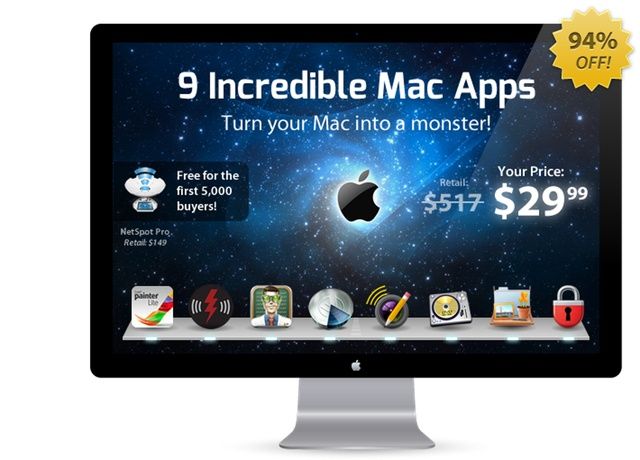
Right now you can get $517 worth of Mac apps for just $29.99 with The iStack Mac Bundle 3.0. That’s 9 powerful Mac apps to add to your digital toolbox for a fraction of what it would cost to be them on their own.
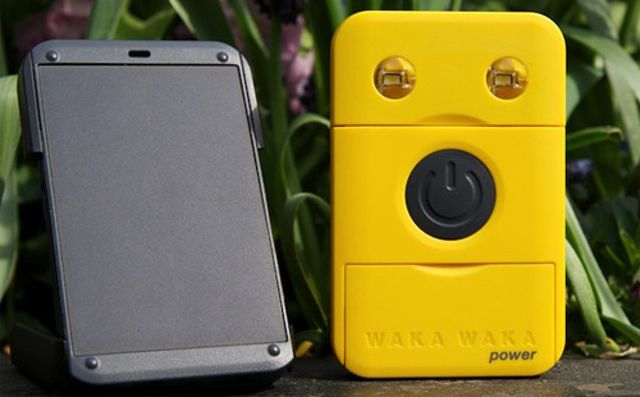
If you’ve been looking for a stylish smartphone or tablet charger with sustainable economic benefits to boot, then this Cult of Mac Deals offer is going to be a sight for sore eyes.
Waka Waka POWER’s patented chip technology allows for solar charging that is 200% more efficient than most competitors. Rock-solid durability and the capability to charge via USB (smartphones, tablets, bluetooth devices, and everything else that charges via USB), solar, or AC guarantees you’ll never be without power again. And Cult of Mac Deals has it for only $59.99 for a limited time.
Suing Apple for patent infringement is so de rigeur right now that even colleges are getting in on the action: Boston University has just sued Apple for infringing upon one of their 1997 patents.
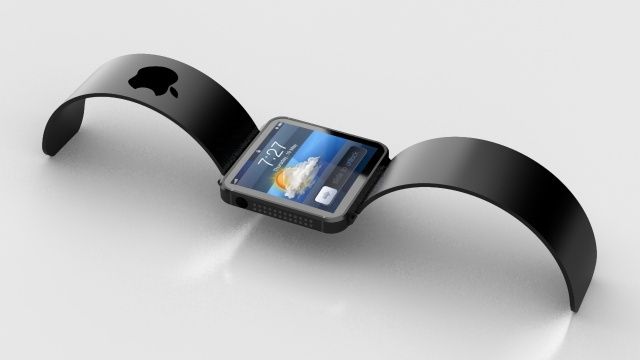
Apple has applied for the “iWatch” trademark in Japan following months of speculation that has claimed the company will launch its first smartwatch later this year. According to the June 3 filing with the Japan Patent Office, which was spotted by Bloomberg, the iWatch name will cover products including “a handheld computer or watch device.”
Things have gotten slightly worse for Apple's supply chain workers. Photo: Apple Photo: Apple
It’s been a stagnant year so far for new Apple product announcements, and Foxconn, Apple’s biggest manufacturing partner, is starting to feel the pitch: sales are down 12.6 this year, against a target of 15% growth. And in response, Foxconn’s looking to become a lot less dependent upon Apple, who generated 60 percent of the company’s 2012 $100 billion in revenues.
Ever since Jony Ive took over Apple’s industrial design, it has been important to Cupertino to make their products out of material with authenticity and substance, not just cheap plastic. In the pursuit of these goals, Apple has managed to revolutionize the mass-production of not one, but two different materials that had previously gone virtually unused in gadgets, at least externally: glass and aluminum. And Apple’s made big plays to experiment with even more cutting-edge materials, like Liquid Metal.
Here’s a question, then. Apple likes to make its Macs and iPhones out of materials that feel authentic, that give them a unique look and feel. In the pursuit of those materials, Apple has revolutionized at least a couple of industrial design processes.
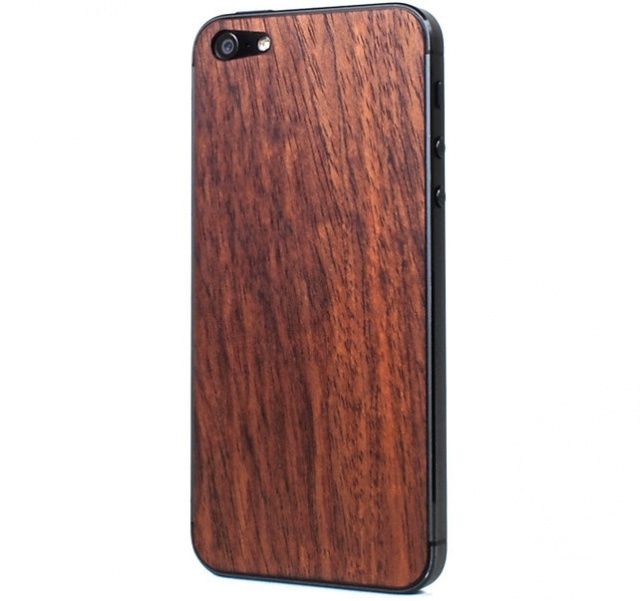
So what if Jony Ive got it in his head to make iPhones out of wood?
Q: How Does Bob Marley like his donuts?
A: Wi’ Jam in [1].
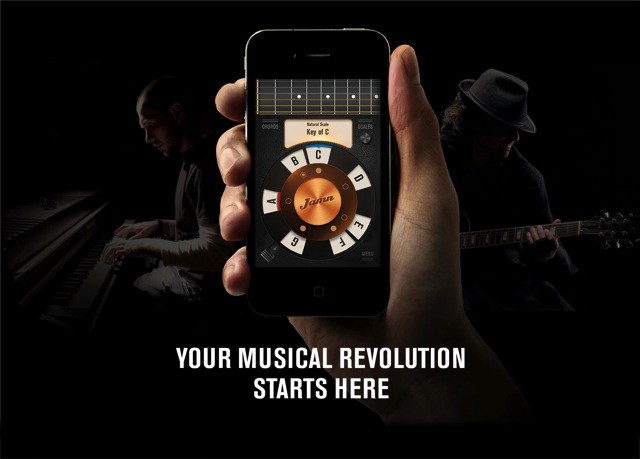
And Jamn is also the name of this little pocket software toolkit for musicians. It’s an iPhone app which shows you the notes in a any scale in any key, but it has a rather clever gimmick that makes it a lot easier to read: the notes are on a wheel.
Update: Brown’s report has proven to be completely false. AnandTech has posted a lengthy explanation as to why Brown’s report is patently false –
“Apple doesn’t limit cellular data throughput on its devices — there’s both no incentive for them to do so, and any traffic management is better off done in the packet core of the respective network operator rather than on devices. Sideloading tweaked carrier bundles isn’t going to magically increase throughput, either.”
Brown’s original report has since been deleted and he has resigned from his post.
Over the last few years, cellphone carriers have become notorious for throttling iPhone users’ data speeds. Most of the time carriers claim they only throttle users when they’re consuming way too much data, but that actually might not be true at all.
Joseph Brown, the guy who made all the iPhone carrier hacks for Sprint, AT&T, Verizon and T-Mobile has thinks he has proof that AT&T, Verizon, and Sprint have all worked with Apple to bake a soft throttle into your iPhone via carrier updates, and there’s nothing your can really do about it.
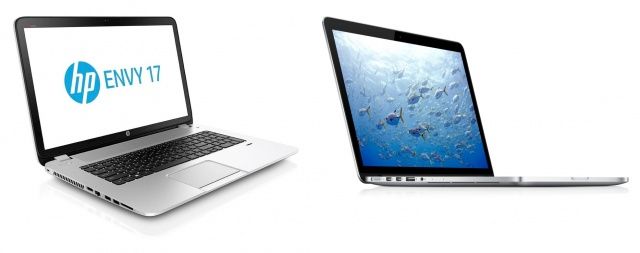
PC makers have been copying the Mac for years, but every now and then you just have to shake your head yet again. HP has unveiled two laptops that blatantly rip off Apple’s designs. It’s so painfully obvious that it makes you wonder if HP wants customers to be fooled into thinking they’re buying from Apple.
Google has been forced to hand over Android source code documents sought by Apple in an ongoing patent-infringement lawsuit against Samsung.
The search giant initially argued that it was not required to give up the documents and that it would be too burdensome to collect them, but U.S. Magistrate Judge Paul S. Grewal in San Jose, California, has given the company two days to give them up.