Mobile menu toggle

Search results for: apple tv

Good News For Mac Users: Boxee Media Platform Is Going Windows

By

post-12134-image-c613160d0e5e0c1c2c2237ae01fe0987-jpg

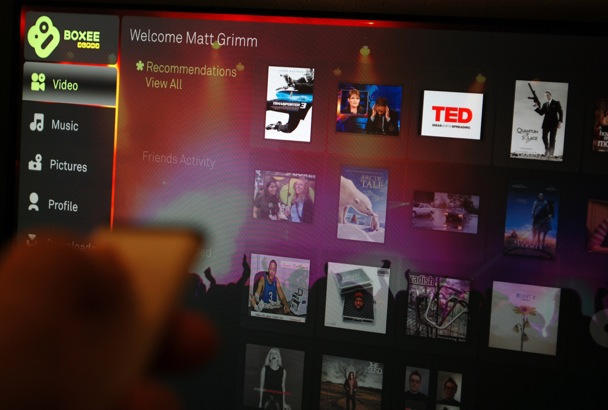
The popular Boxee media center software is the rare app that starts on the Mac before going to Windows. CC-licensed pic by Matt Grimm.

Here’s some good news for Mac users of Boxee, the popular media platform for Macs and Apple TV: The software is going Windows.

At a developer event on Tuesday night in San Francisco, Boxee released its first version for Windows PCs.

This is good news for Mac users because the Boxee platform will have a much larger user base for developers to create plug-ins for. Significantly, the software will run on Windows Media Center PCs, which is by far the biggest installed base of computers connected to TVs.

Get Lost with Boxee on Your Mac

By

post-7413-image-51e3182f3c598e4a090bbcdd49300d58-jpg

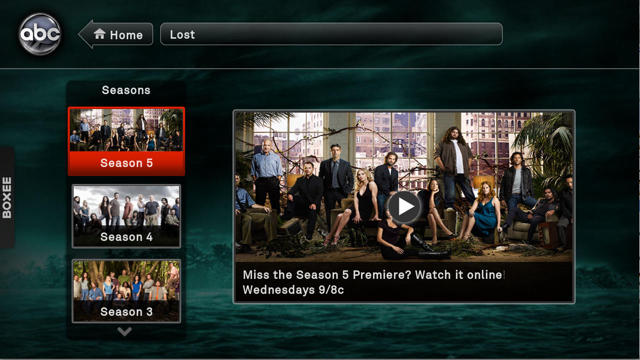
Boxee released a new version of its free, open source social media software for Mac Thusday that includes support for ABC. Included, of course, in ABC support is access to one of the most popular network TV shows, “Lost,” which serendipitously had its season premier,…wait for it, Wednesday.

The Boxee peeps are duly excited because ABC also produces two other ragingly popular TV shows, “Desperate Housewives,” and “Gray’s Anatomy.”

News from torrentfreak indicating “Lost” was the most downloaded TV Show on Bittorrent in 2008 dovetails with Boxee’s plan, according to a spokesperson, who told Cult of Mac, ” we strongly believe that given the option, most users will opt for streaming a TV Show (with a reasonable amount of ads) rather than using a file-sharing service.”

Online streaming offered by ABC, CBS, NBC, Fox, etc. has made progress over the past 12 months in terms of quality, breadth of selection and release windows (i.e. the time it takes for the show to be available online after it originally aired). In this respect, a service such as Boxee is a great alternative to the file-sharing networks.

Boxee hopes to release an Apple TV version within the next few days and is still working on making it available for Windows and Ubuntu.

Boxee May Seek Embedded Hardware Future

By

post-7398-image-e7cf212264a5c2b6fabfaa1b5b68103e-jpg

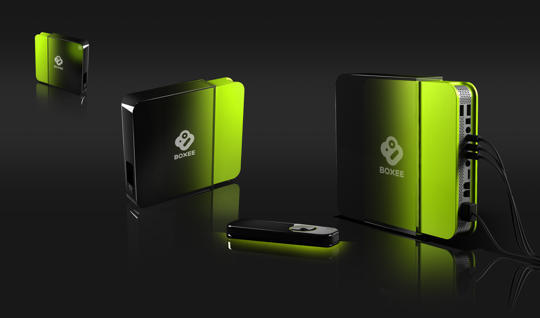
The makers of the Boxee media center are reportedly investigating whether to emded its television streaming software in a variety of hardware, including game consoles.

“During CES we were approached by several device makers that wanted to speak with us about embedding boxee into existing or future products,” Avner Ronen wrote Thursday at the company’s blog.

Choosing a hardware solution would avoid requiring consumers either stream video from a computer or modify an Apple TV, a process that could interfere with using the Apple device to stream Netflix videos to your television.

Although embedding Boxee software is not in the near future, Ronen offered a poll, asking customers what hardware (set-top box, TV tuner, blu-Ray DVD, etc.) they would prefer and at what price.

In 2008, Boxee fixed their software after an update to Apple TV disabled the media streaming service. Boxee has received $4 million in venture funding from CBS, Netflix, Hulu and others.

Opinion: Mac is Dead; Long Live Mac!

By

cult_logo_featured_image_missing_default1920x1080

The media and the public trickled onto the Macworld exhibit floor in the wake of Phil Schiller’s Keynote speech Tuesday in San Francisco with a collective yawn, casting a sad and listless pall over Apple’s final year at the seminal trade show dedicated to Mac and Macintosh innovation. Gone was the excitement generated in recent years by the introduction of revolutionary new products such as iPod and iPhone. Gone was the sense that Steve Jobs contagious’ enthusiasm and obsessive secrecy could somehow reward us with ever more new, beautiful, elegantly designed products that would change our relationship to technology and with each other.

Instead, Schiller left the Apple community pondering battery life and notebook aftermarket resale values, wondering how a little face paint and eye shadow applied to iWork and iLife is going to drive increasing revenue to One Infinite Loop between the end of Macworld on Thursday and the next Cupertino Town Hall event sometime later this year.

One the surface of things, a mood that I might liken to one in a household where the divorce has been agreed to but not yet finalized, is curiously appropriate to the uncertain economic horizon each and every one of the hundreds of Macworld exhibitors – as well as, of course, the show’s anchor tenant – is facing.

Sure it would have been exhilarating for Phil Schiller to have whipped out a thoroughbred upgrade to the Mac mini today, or a revamped Apple TV that might challenge the assumptions of what an interface between the office and the living room could look like. But I talked to several long time Mac addicts on the floor this afternoon, who confided they were relieved not to be tempted by any groundbreaking hardware innovations from Apple – because big ticket expenditures of every stripe are on hold until further notice.

In its way, then, Apple proved it still has the pulse of its audience well in hand – why offer revolutionary new products that would require hundreds or thousands of dollars in new investment (not to mention the huge investment in manufacturing required to roll out new hardware) when the company can let its legions of loyal consumers who have already bought Macs and iMacs over the years try on new software outfits at $50 – $80 a pop? Lean times may be coming for everyone but by golly you can spend your downtime learning how to play guitar with John Fogarty and marvel at the face recognition amazements of new iPhoto software.

Some of the busier booths on the exhibit floor this afternoon were ones hawking accessory items costing well under $100. Big gear manufacturers with shiny new products costing in the hundreds and thousands of dollars, not so much. And the reps of a couple of those exhibitors told me some of the newest stuff they have at the show are just prototypes, with no big production commitments coming into place until the economy and consumer spending shows signs of taking an upturn.

Compared to recent years, Day 1 attendance was significantly lower, something I could tell in the sparse lines at the concession stands and in the reliability of the WiFi connections available throughout the hall. But fewer people were here today because Steve Jobs was not here today. Tomorrow, when you’d expect the attendees interested in Macworld regardless of Steve Jobs’ presence, we’ll get a better idea of just how deflated the Mac community is over Apple’s final Macworld appearance and a sense of how much air has gone out of what was until pretty recently a high-flying market for computer technology.

Cult of Mac Readers – Become a Boxee Alpha Tester!

By

post-3573-image-babf8c4bdd23332facc79b6536459517-jpg

Interested in trying out a cool media center for use with your Apple TV? Cult of Mac readers are invited to receive expedited applications for testing the alpha release of Boxee, a music, video and picture management solution to let your Apple TV play practically any DRM-free multimedia file. Follow this link to receive your alpha testing invitation.

Boxee for (Intel based) Mac works on OS X 10.4 (Tiger) and 10.5 (Leopard). Boxee for Linux is supported on Ubuntu 7.10 (Gutsy Gibbon) or 8.04 (Hardy Heron) x86 (not x86_64) operating systems. The Boxee patch works with the 2.2 update to Apple TV, but remember to install the update before you install the Boxee patch.

Detailed instructions for installing the Boxee patch after the jump.

Oh Tablet Where Art Thou…

By

mac-tablet.jpg

Take a trip with me to Fantasy Island”¦

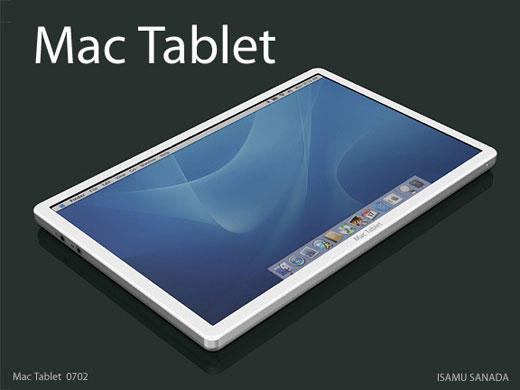
The last Tuesday of the month is come and gone, and yet again my dreams of a Mac Tablet are dashed. I know it’s improper to lust after equipment this much, but perhaps that’s just where I am in life. I’ve reached a point (no matter how sad), that were I to see an attractive member of the opposite sex in a park with a Nikon D3 and Macbook Pro, I’m just as likely to think “Man, nice gear!” as any other potentially litigious thoughts. Now I know Apple doesn’t ask consumers about product design, but if they asked me about my oft-dreamed-of-tablet, here’s what I’d say:

#1. It’s an Accessory, not a Computer.
You could say the same thing about the MacBook Air, but the MBA isn’t priced like an accessory, it’s priced like a computer. The “Dream-Tablet” should be an $800 accessory to my existing collection of Macs.

#2 Because of #1, it doesn’t need to be powerful
We’ve already got “Back to My Mac,“ so if Apple beefed up this service a bit to run better over public networks, the Tablet simply becomes a “Cloud Computing” device; allowing me access back to my primary machine, whose power I can harness (alternatively, Apple if you’re listening: work with VMWare and make a “Mac Cloud” that these Tablets could tap into. You could do it if you wanted to, read Nick Carr if you want to know why you should).

Disconnected, if I’m on an airplane, or a cave in Bosnia, I should still be able to read a book, play music, drive iWork, Aperture or (Lord help me) Office. That said: I don’t need to be able to produce HDR images in CS3 un-tethered.

What I’m saying is: “Dream tablet” doesn’t need the latest lap scorching chipset from Intel.

#3 It doesn’t need a big hard drive.

Really. Solid state, instant-on OS is way better than storage for the sake of storage. If I had 16 Gigs to hold documents or photos that I needed to work on (or books I wanted to read) while contemplating the fate of the kid who keeps kicking the back of my seat, that would be plenty.

But lets make it expandable, here’s a novel idea: give me a slot, where I can “dock” my 160gig iPod classic. Just slide the whole sucker in there like some kind of removable drive, and we’re good to go; storage, music, movies whatever, making 2 accessories work together seamlessly, now that’s something uniquely Apple.

mactablet

#4 Remember, it’s an Accessory.
Really, so when I’m back home, I don’t want to just put it on the shelf until my next trip (which is all too often). Lets make it into an active accessory I can use in my main computing environment. Watcom digitizing tablet anyone? Apple TV remote Control? Portable media hub? (I can totally see hooking this thing up to my TV and streaming video and audio), even just as an extra monitor, whatever, lets be flexible with it.

#5 It does not need to be:
An iPod, iPhone, iTypewriter, or a super-computer capable of composing a sountrack in Logic Pro and cutting a film short in Final Cut while waiting I’m for the First Class lavatory to become available. Nor does it need to use that goofy fake electronic paper stuff from Sony (which is cool for eBooks, but nothing else). None of that, just world-class “Back to my Mac”, and the ability to run regular OS X applications with a reasonable (say Mac Mini) level of performance. That and simply OUTSTANDING battery life.

Is that too much to ask?

Readers: what would YOU want out of a Mac Tablet?

MacBook Air – The Final Word. At Least For Now.

By

post-1676-image-27bede56d3d7d17989d5b359ddfe26d3-jpg

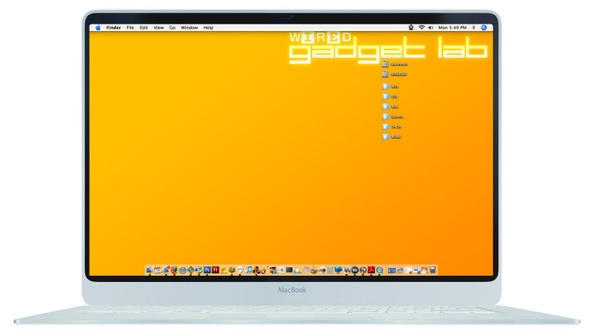
Though we’ve all ranted and raved about the MacBook Air since Tuesday’s launch at MacWorld, i think we’re not getting any closer to a final decision. Many people see this incredibly thin machine as an ideal travel laptop, while I think Apple got so caught up in its focus on thinness that sacrificed far too many other features. Some argue that this is a typical Apple move to kill off unnecessary features ahead of the rest of the industry, but I don’t think that’s what’s going on here. There’s a lot on my mind, but I’ll use some reader comments to get into it.

Brendan West: But if they had a super-thin bezel, the edges of the computer could not reach that mythical 0.16″³, you see. The thinning of the shell means the still-pretty-bulky-for-its-size-LCD screen has to stop at a certain thickness.

With the MacBook, the bezel was so thick (I think) because of the emerging magnetic latch tech. With the MBA, it’s because (I think) they just couldn’t do it, cap’n.

That’s all true, but why does going down to 0.16″ matter? Any laptop is going to take up as much space as its thickest component. Apple couldn’t have gotten 0.25″ and gotten a better-looking bezel and bigger screen in the process?

Anon: “It’s still bigger than a 12″³ Powerbook.” And not just a little bigger. It’s two inches wider. I just measured, it won’t fit in the laptop bag that totes around my four year old Powerbook. I agree with all the Air’s compromises (speed, ports, I can even live with the integrated battery.) But the huge footprint is probably a dealbreaker. It means the Air’s thickness and weight is more about looks then portability. I’ve had one Powerbook after another for the last 15 years, but I’m worried: I don’t see my next machine in Apple’s lineup.

You and me both.

Bone: Hey, Pete”¦

When you get that masters in product design / mechanical and electrical engineering maybe you can explain to Apple’s designers/engineers how to fit an 8mm thick 1.8 HD where a 5MM thick version probably barely fits and keep the thing just as thin. Same goes with the bezel.

So long as they can tell me why shaving off that 3mm is more important than providing an $1800 laptop that would have as much storage as a $349 portable media player, I’m ready to have that conversation. Three millimeters is 0.11 inches. Oh noes! The MacBook Air might be 0.76″ in more places than its hinge! Call the cops!

Ian: I also looked at my kids needs. We have wi-fi at home and they mostly use their Mac now for iPod and Thumb drive. The last time my kids listened to a CD or watched a movie on the Macbook was an age ago. They don’t know what a Firewire cable is and so will not miss it. So I think this is a great product for students as well. It is targeted at a different market”¦

An interesting perspective. I can’t say I disagree.

Greg Baines: It is no doubt a beautiful machine. But I was just looking at the Hong Kong apple site, and I worked out for around the same price as the air I could buy an iMac, Apple TV, and an iPod touch.

If I really needed a portable and walked intot he Hong Kong store with the money for an air, I could by an iBook, an iPod touch, an iPod classic, and an Apple TV for the price of an air.

I’d love to buy one, but it just costs too much. What a shame. With all these really decent low cost machiens coming out (but poorly designed), why couldn’t apple also bring something simple and beautifuly designed that people actually need? What about the education market?

Maybe we should all boycott the Macbook Air- it is no doubt the most beautiful computer ever made, but why do we get pushed overpriced products all the time?

That’s a bit extreme, but I agree in part. What about the education market?

Finally, I wanted to take quotes from two celebrity commentators on the MacBook Air: Wil Shipley, founder of Delicious Monster, and Steve Jobs himself. They’re both fans.

Shipley: I don’t buy a laptop because I want to replace its drive in a year. I buy it because it seems great and meets my needs today. If my needs magically morph over the coming year, I guess I’ll sell it on eBay. Or pay Apple to throw in a different drive, or something. Honestly, I think we need to admit that just because machines get faster every year, doesn’t mean that the majority of people need faster machines.

In two weeks I’ll be writing Delicious Library 2 on a MacBook Air, every day. Because it’s simple and beautiful, and I crave those things.

Well, obviously, Wil, but my 12″ Powerbook G4 is nearly five years old, and I don’t think Apple is interested in putting it back on the market as an executive laptop. Besides, people do constantly need more data storage as video editing, photo editing, podcasting and other kinds of creativity got democratized — mostly thanks to Apple’s iLife suite. I have a really hard time believing that your Air isn’t going to spend most of its time at home hooked up with either a server or NAS, Wil. Right now, 80 gigs isn’t enough for anyone really interested in maintaining a big iTunes library and adding TV and movies into the mix, as well. It just isn’t. There’s no getting around this issue. And ordinary people don’t have external hard drives, home servers or other such solutions.

Jobs: “I’m going to be the first one in line to buy one of these,” he said. “I’ve been lusting after this.”

Yep. Just as I suspected. Steve made a machine for himself, as ever. It’s just a shame that this time his view of the world was so vastly different from the realities most of us have to deal with. He lives in Palo Alto, where WiFi is ubiquitous, so forget about a 3G modem on the Air. He has a million external data storage options and more powerful computers at his disposal, so keep the hard drive tiny. He won’t buy the one with a regular hard drive, so throw in a slow, unreliable iPod hard drive instead of a real one. The rich people like Steve will all buy the one with the SSD in it, so who cares about the low end?

At the end of the day, this is my take on the MacBook Air: Gorgeous design solving a questionable goal of ultimate thinness. The model with the SSD is a dream secondary computer for the rich and famous. The other one is going to be unsatisfying to a lot of people. Most importantly, it’s just not small enough. Who decided that thin was the only way to go about making a full-featured laptop that doesn’t weigh much? And the 12″ Powerbook still hasn’t been topped as a design triumph at Apple. Period.

2007: The Return of Golden Convergence

By

post-1591-image-cd5591744307a20b7067bdec01f3995e-jpg


Image copyright Andre Gunther

As another year in the Apple-watching game comes to an end, I wanted to take a quick moment to look back on the year that was and search for themes. Given how much Apple got done in 2007, there were a lot to choose from, but one really stands out: Golden Convergence Strikes Back.

For those who weren’t closely watching the moves of Apple closely during the mid-’90s, this might be a new term for you, but it’s a long-time idea in Mac circles. Variously credited to Bahamut of MacEdition and Robert Morgan of Recon for Investors, Golden Convergence speaks to the idea of taking a lot of seemingly divergent technologies and suddenly integrating them into a superior and seamless whole. Originally tagged to the rumored launch of the Apple Media Player in early 1998 (never happened), Golden Convergence has shown up dramatically throughout the second coming of Steve Jobs, from the standardization of USB and FireWire down to the wide use of Mac OS X despite initial resistance by the installed base.

But 2007 was when it really blossomed. We saw Apple take dozens technologies and roll them out to multiple platforms. OS X mutated and got optimized for the AppleTV, iPhone and, later, the iPod Touch. CoverFlow, initially created for iTunes 7, showed up first on the AppleTV, then the iPhone, then the iPod Classic, Nano and Touch before becoming the centerpiece of the Leopard UI. Front Row moved from the AppleTV to virtually every Mac on the market. Flexibility bred new uses, new interactions, new consistency. Everything Apple worked on had a tighter link than ever to another Apple product.

And nowhere is this more evident than the iPhone, the most flexible platform Apple has created since the original Mac. For now, it’s officially impossible to install third-party software on it, but that will change in early 2008 with the release of the iPhone and iPod touch Software Developer’s Kit. The reason that the iPhone is great is that nothing about it makes it a phone only. Its form is built for maximum flexibility. Few hardware buttons. Multi-touch creating hardware controls where and as they are needed. It can be an Internet browsing tablet, an iPod and an e-mail reader. Nothing about its hardware design precludes any future uses. If you build it, this thing will come along.

And that right there is the essence of Apple’s new spin on Golden Convergence. Don’t design anything in hardware that locks you into a current use or goal. Instead, build an interface flexible enough to accommodate all kinds of future uses or even new businesses. The iPhone could become a very powerful gaming platform is Apple decided to steer it in that direction. It could be slightly modified into a point of purchase device. The next version, upgraded with 3G and a GPS chip, could easily become a navigation device to challenge Garmin’s product line. Get a decent CCD into it with a better lens and a flash, and it’s a decent consumer digital camera.

It’s brilliant design, and it flips on its head the way that Apple approached new technologies in the 1990s. Back then, Apple wanted to make everything: printers, digital cameras, scanners, PDAs, stereos, game consoles — everything. Now, Apple still wants to play in all kinds of product categories, but they’re setting themselves up to do that with a single device. Don’t sell everything. Sell everyone iPhones. You’ll reduce your number of SKUs while also locking people into a product that generates monthly revenue long after its purchase price has been swallowed. Every year, build in faster chips and add a few features that are locked into hardware. Do everything else via software.

Apple already started this process in 2007, and I expect to see it increase dramatically over the next five years. After all, would you rather by an Apple TV or just get a high-capacity next-gen iPhone that can wirelessly stream video to your TV? It’s the safest way to innovate, and Apple nailed it. Happy New Year, everyone!

News Burrito

By

cult_logo_featured_image_missing_default1920x1080

Reuters | Apple seen having upper hand in music negotiations:

NEW YORK, April 20 (Reuters) – When Apple sits for contract negotiations with the major record companies over the next month, it will probably seek further concessions from them on selling music without copy-protection software.

AppleInsider | Target stores to pick up Apple TV:

Big-box retailer Target is poised to become just the second third-party retailer to market Apple Inc.’s new Apple TV device at its brick-and-mortar retail stores, AppleInsider has learned.

Fortune | Inside China’s PC frenzy:

While MP3 players are everywhere, and imitations of an Apple iPod Nano go for about $50 (a two gigabyte model with a larger screen than Apple (Charts, Fortune 500) offers), if you want the genuine article you’ll get fleeced. For an 80 gigabyte black iPod like one Amazon sells for $330, one salesman quotes me a price of about $700. As for PCs, Apple’s presence here is minimal.

News Burrito

By

cult_logo_featured_image_missing_default1920x1080

FT.com — Music labels ask Apple to adopt subscription:

The world’s biggest music companies are expected to ask Apple to introduce a music subscription service to its iTunes digital media store as part of negotiations to renew their agreements with the computer company.

Ars Technica — Why Apple can’t sell movies:

There are at least five problems the Apple TV alone cannot solve for the iTunes Store:

3. Access: At present, there is no option to rent movies on the iTunes Store, and, unlike music purchases versus subscription services, renting movies is a preferred method of consuming content. Further, purchasing movies through the iTunes Store still requires a computer, rather than direct shopping using the touted Apple TV.

Webomatica — Apple iTunes: Music Subscription No, Movie Subscription Yes:

If Apple is even remotely thinking about offering iTunes Store subscriptions for its music, I really hope they don’t – and instead apply the subscription model to iTunes Movies instead.