We reported last week on developer/blogger Erica Sadun’s discovery of an undocumented feature in Apple’s iPhone SDK that allows video out from an iPhone to be displayed on a TV monitor. Friday she revealed what is sure to become a popular exploit of this feature.
Sadun contacted developers at Freeverse, producers of the popular mobile game Moto Chaser and convinced them to create a TV version of their game. In a few hours, Freeverse code monkeys were able to come up with the demo version of Moto Chaser featured in the video above, which seems to herald happy days ahead for fans of iPhone gaming.
The detailed technical ins and outs of how Freeverse managed to pull off its feat are available in Sadun’s post at Ars Technica, but it’s worth noting that the TV version of the game played best on the second-generation iPod touch. The newer touch is built on a 532MHz CPU versus the original iPhone’s 412MHz. This extra speed helps up the frame rate produced by the device, the key component for any first person interactive video game.
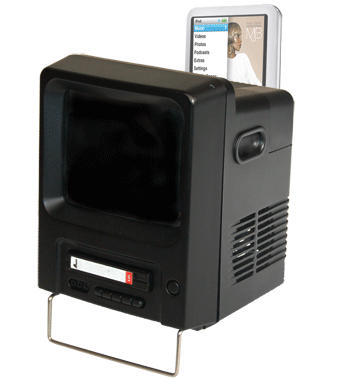
iPhone has a handy TV-Out functionality that lets you watch stored video on a TV monitor connected to the iPhone, and as demonstrated in the video above, can even push live camera input through the updated MediaPlayer framework included in version 2.2 of the iPhone SDK.
Developer/blogger Erica Sadun enlisted members of her family to assist in documenting this cool development over the Thanksgiving holiday, and credits fellow developers Drunkenbass and Greg “go2” Hartstein with helping her integrate user input through iPhone’s on-screen controls.
As Sadun mentions in her post at Ars Technica, this feature may useful in making the iPhone an active participant in the development of new video/phone hybrid apps and as a vehicle for delivering Keynote/PowerPoint-style presentations.
With iPhone, it just keeps getting better and better.
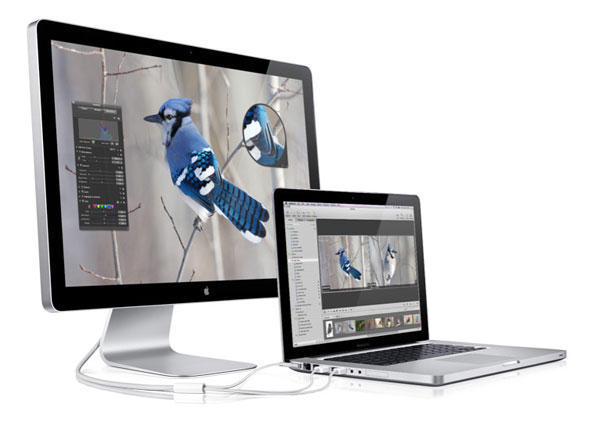
MacBook fans are in an uproar after discovering the new laptops contain hardware-based copyright protection that prevents the viewing of iTunes movies on some external displays, such as a second monitor or a projector.
“This movie cannot be played because a display that is not authorized to play protected movies is connected,” is the warning MacBook users receive when using an external display that doesn’t support the High-bandwidth Digital Content Protection (HDCP) protocol.
The HDCP technology is part of Apple’s Mini DisplayPort Content Protection built into MacBooks. Hollywood studios looking to protect their movies appreciate the 128-bit copy protection measures included in DisplayPort, according to reports.
I took quite ill on Thursday, and literally didn’t leave the house at any point between Friday and Sunday mornings. And, like a lot of bed-ridden people, I was in far too much pain to actually think about reading, writing, or, well, thinking. Instead, I got caught up on all of the junky entertainment I never find time for otherwise. Comic I hadn’t yet read. DVR’d episodes of Top Design. And virtually all of the content on Netflix Watch Instantly.
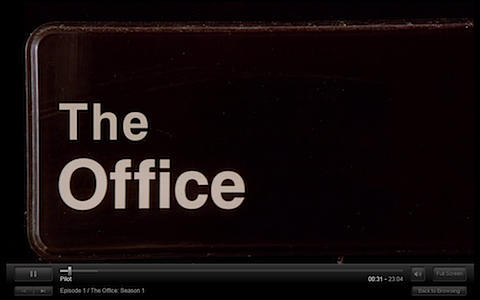
Now, for those of you who still haven’t had the chance to try out streaming Netflix, I will say that it works incredibly well. Movies start quickly, the new interface allows you to scrub through looking for your exact place, it resumes play if you accidentally quit. (I had a few films with skewed soundtracks, but it was a rare occurrence). What’s astounding, however, is just how tiny the Netflix streaming library is compared to Hulu, iTunes, or, you know, Netflix DVD service. After a few days in bed, I’d watched literally everything that I had any interest in seeing that the streaming service had. I mean, there are only two seasons of 30 Rock.
And that’s when it hit me: everyone who’s called for Apple to start a monthly subscription model for iTunes has been almost right. There’s tons of money to be made there. But the opportunity isn’t from making its full music library available for $15 a month. It’s in charging $20-30 a month for unlimited TV show access.
Think about it: Apple has the largest library of digital downloadable video on the planet right now. Sales haven’t been as good as hoped. Apple has begun to rent movies, which means it has the DRM to prevent people from keeping a permanent copy of a rented clip on their hard drive. And yet TV shows are still available only for $1.99 each. While that’s a pretty good price, it’s not one that I’ve paid since Apple first made TV available through iTunes (I briefly had 10-pack passes for The Daily Show and Colbert way back). But I would gladly ditch my Netflix subscription and pony up the same $20 a month for unlimited rentals of the TV shows on iTunes, even without movies. That’s $240 gross from me that Apple and the TV studios wouldn’t see otherwise.
Now, if it were anyone but Apple, I would say that kind of price is too high to pay. But this wouldn’t be a streaming competitor to Hulu — it would be for files that could work on any iPod or iPhone. That’s a compelling proposition right there. It would further cement Apple’s vertical integration as the premiere agent for digital entertainment on earth. It would make an AppleTV as essential as a TiVo. It could even begin to make the cable companies nervous if Apple’s selection continues to improve (live sports being an obvious exception).
I think it’s a slam dunk. Does it make sense to you?
With refreshed Apple iPod and notebook computer product lines having hit the shelves in the past few months we wouldn’t exactly call it a lump of coal in our stocking, but some people are bound to be disappointed there will be no new products from the company in time for holiday gift buying.
Apple spokesman Bill Evans said, “”Our holiday line-up is set,” according to a report today at Macworld.
The official word out of Cupertino would seem to quash a host of recent speculation regarding the MacMini, AppleTV and even the iMac, which was already juiced with new processors in the spring.
Seems logical Apple would feel comfortable with the lineup it has in place going into what promises to be a nervous retail season amidst what some are calling the worst economic downturn in 50 years.
Possibly in a fit of friendly rivalry with its competitor Fortune magazine, atop whose list of the 50 Most Admired Companies in the world Apple sits for 2008 at #1, Forbes magazine featured its list of the 10 biggest Apple failures this week, a gallery of which we reproduce for you below.
There are at least a couple of items here that grabbed a few hearts, but what do you think? Are these all Apple strikeouts? Let us know in comments.
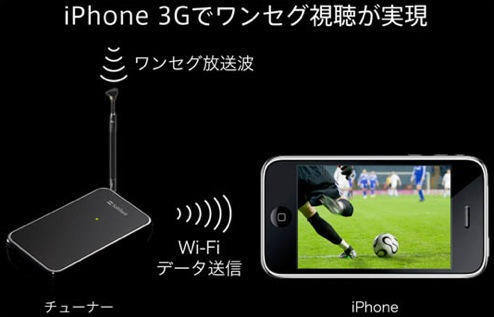
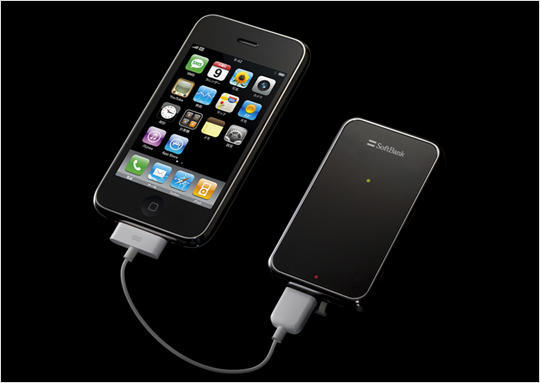
Japanese mobile telecom provider Softbank announced Thursday it will offer iPhone customers a peripheral digital TV tuner slated for arrival by mid-December. With sales of the iPhone in Japan already looking to be only half what the company once expected, Softbank appears to be hoping the availability of high quality One Seg TV broadcasts will lure more buyers to the Apple phone in the saturated Japanese mobile handset market.
The device, with a footprint only slightly smaller than the iPhone itself, is expected to cost about $100 and will also feature the ability to extend the iPhone’s battery when connected to the iPhone by a dock connector.
Color me skeptical that the vaunted Japanese consumer’s love of gadgetry will make this a game changer for iPhone’s fortunes in Japan.
UPDATE: This piece has been edited for clarity on the timeline for the legality of same-sex marriage in California.
Citing the vote as an issue of “a person’s fundamental rights,” Apple today made a $100,000 contribution to the NO on 8 campaign, an effort to defeat a measure on next Tuesday’s ballot in California that would overturn the state’s laws permitting same-sex couples to marry.
Apple’s contribution and public stance supporting the No on 8 campaign is noteworthy not only because it is rare for the company to take a public position on political matters, but also because it helps combat the effects of millions of dollars that have been spent by out-of-state religious groups on TV advertisements threatening dire consequences if gays are allowed the right to marry.
California gays and lesbians were first able to marry in 2004, when San Francisco Mayor Gavin Newsom arranged for ceremonies at City Hall. Conflicting rulings at the state level confused the issue until the California Supreme Court ruled this year to allow gay marriages throughout the state on equal protection grounds.
The Apple announcement came on the heels of similar public support for defeating the Proposition from Google. Sergey Brin, CEO of the Mountain View-based company wrote in the company blog, “we respect the strongly-held beliefs that people have on both sides of this argument [but] we see this fundamentally as an issue of equality. We hope that California voters will vote no on Proposition 8 — we should not eliminate anyone’s fundamental rights, whatever their sexuality, to marry the person they love.”
Apple’s Hot News release on the matter says, “Apple views this as a civil rights issue, rather than just a political issue, and is therefore speaking out publicly against Proposition 8.”
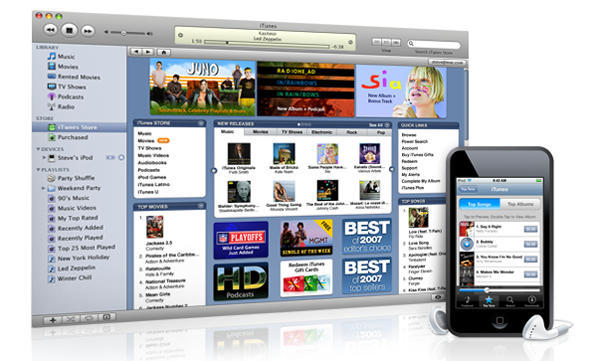
To mark the one-month anniversary of launching HD sales at its iTunes Store, Apple announced it will offer more than 70 episodes of Fall prime-time hits from ABC, CBS, NBC, Fox and cable.
Among the HD episodes are ABC’s “Desperate Housewives,” “Lost,” “Grey’s Anatomy” and “Eli Stone.” CBS shows include “CSI,” CSI: New York, “CSI” Miami” and “Numb3rs.” NBC show in HD on iTunes include “30 Rock,” Heroes,” “The Office” and “Law and Order: SUV.”
Apple said it has also sold 200 million television episodes and 1 million HD episodes. The HD episodes from ABC, CBS, NBC and Fox cost $2.99 a piece while each regular episode from the iTunes Store carry a $1.99 price tag.
In September, Apple kicked-off HD sales, offering 12 high-definition NBC episodes for free. The announcement coincided with the release of iTunes 8 and the return of NBC, which left the iTunes Store in August 2007, following a dispute over pricing of its television shows.