As mobile devices begin to outnumber people, Apple's integrated ecosystem becomes a serious competitive advantage.
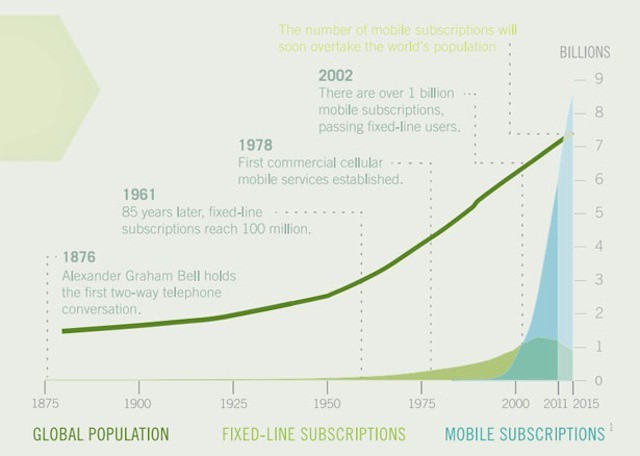
According to a report issued by the World Bank this week, there are now six billion mobile device subscriptions worldwide and the number of phones, tablets, personal hotspots, and other mobile devices continues to grow and unprecedented rates. The report noted that the number of active mobile devices and mobile carrier subscriptions/accounts “will soon exceed that of the human population.”
That raises some interesting implications for a world mobile market in which Apple’s iOS and Google’s Android are expected to dominate for the immediate and foreseeable future.
When Ron Johnson left Target to become Apple’s Retail Chief in 2000, people thought he was absolutely nuts. Apple was in danger of going out of business, and other PC manufacturers like Gateway were closing their retail locations. Johnson ignored all the warning signs because he says he saw that Apple was about to be a huge part of the digital revolution. He also recognized that Apple offered consumers something other companies couldn’t – amazing products and an incredible retail experience.
In a recent interview at Fortune Conferences, Johnson explained why customers choose to come to the Apple store to buy their products when they could get them on Amazon or Best Buy for a lot cheaper:
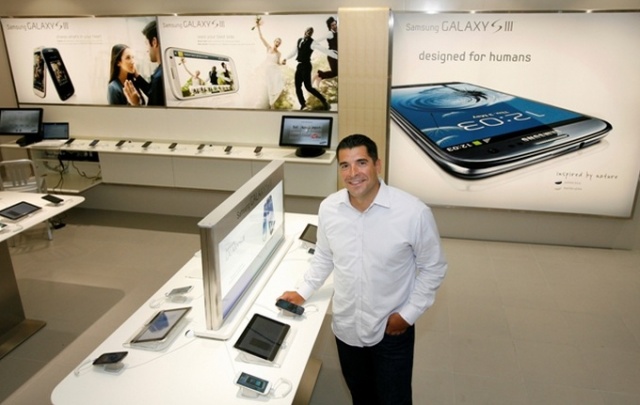
No sir, that’s not an Apple store you’re looking at, that there is a bona fide Samsung store. What looks like an episode of Punk’d, is actually Samsung’s first Canadian retail store in Metro Vancouver. This 140-square-metre store is located in Burnaby’s Metropolis at Metrotown and offers a plethora of Samsung’s latest mobile devices, as well as demo stations to see how they function and interact with other Samsung products such as TVs.
If this was good enough for the iPod shuffle, why isn't it good enough for the iPhone 5?
In 2006, Apple released an iPod that, to this day, is unique amongst all of the iPods it sells in that it didn’t come with a standard Dock Connector: the iPod shuffle.
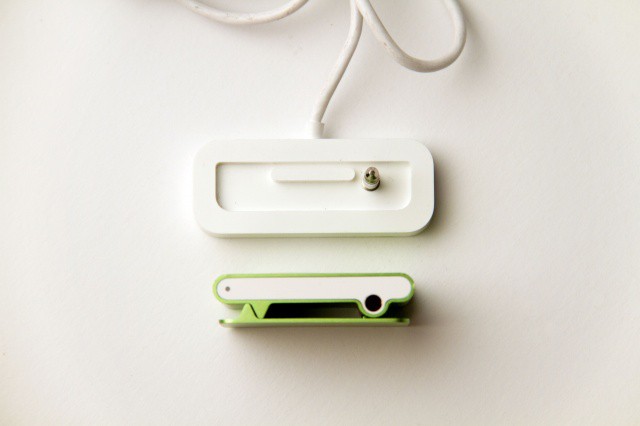
In order to save space in a design that was built from the ground up to be as tiny as possible, Apple jettisoned the traditional 30-Pin Dock Connector in the second-gen shuffle in favor of a clever implementation of USB that plugged in right through the 3.5mm audio jack.
For the last six years, Apple has favored this implementation of USB syncing and charging in its line of iPod shuffles, even as every other model of iPhone, iPod or iPad shipped with a much bulkier 30-Pin Apple Dock Connector.
As rumors have heated up that Apple will abandon the 30-Pin Dock Connector in the next iPhone for a slimmer 19-Pin Connector, a natural question to ask is, “why?” If Apple just wants to save space in the next iPhone, why not just adopt the time-tested iPod shuffle’s approach, which is about the most efficient and elegant implementation of USB ever designed?
The answer’s simple: while the iPod shuffle’s USB design is ingenious at syncing and charging, it’s really crappy at everything else that the 30-Pin Dock Connector is designed to do. But what does the 30-Pin Dock Connector do, why doesn’t Apple just use USB like most of its competitors, and why is 19-Pin — not 30 — the way to go?
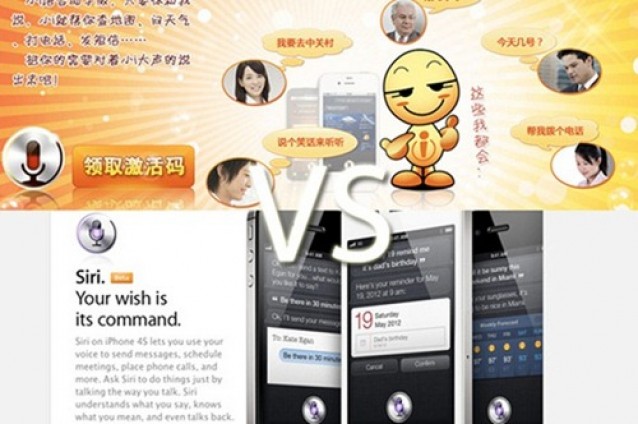
Was Siri inspired by a Chinese chat bot called Xiaoi Bot?
Apple is very quick to jump on rival companies who infringe upon its patents, and the company is currently embroiled in a number of legal battles with the likes of Samsung and HTC. But sometimes, Apple is on the receiving end of these complaints. In China, the Cupertino company is being sued for infringing upon a voice assistant patent with its Siri feature.
Over the years, Apple has increasingly put more and more moisture sensors inside their laptops: little stickers that tell Apple Geniuses when a device has been exposed to liquid, useful for denying you warranty coverage for the iPhone you dropped in the toilet, or the MacBook you spilled a beer on top of.
No surprise, then, that the Retina MacBook Pro has moisture sensors inside the chassis, but what is more surprising is how many it has: ten in total, two more than the MacBook Pro and MacBook Air.
I suppose it makes sense: the Retina MacBook Pro is an expensive piece of kit, and Apple doesn’t want to have to replace any more than they need to. You may want to watch out for your drool hitting the keyboard when you first check out that Retina display, though: Apple’s not going to fix that.
iOS gaming could be greatly improved if Apple invested some of its billions into a game streaming service.
On Monday, Sony Computer Entertainment acquired cloud-based game streaming company Gaikai for around $380 million in a move that is sure to excite fans of the company’s PlayStation devices. If the Japanese company uses its purchase to create a compelling alternative to OnLive, it has the potential to gain a huge advantage over rivals like Microsoft and Nintendo.
The same service could provide an even bigger advantage to Apple. In fact, there are a number of reasons why the Cupertino company should use its ever-increasing cash pile to make Mac and iOS gaming even greater.
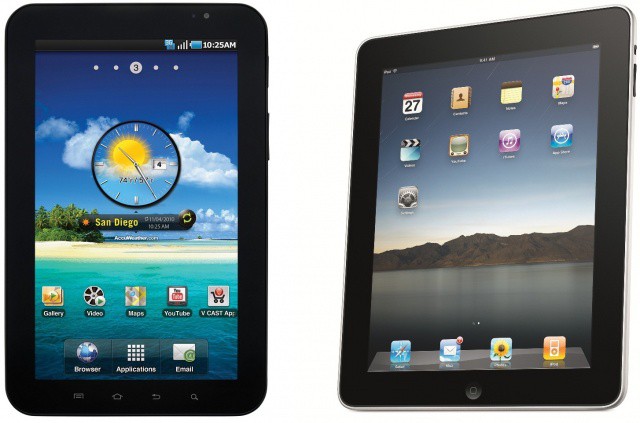
In another setback for Samsung today, a US judge rejected Samsung’s request to lift the injunction against United States sales of the Galaxy Tab, a tablet computer than runs Google’s Android and competes with the iPad.
As we reported last week, US District Judge Lucy Koh granted Apple’s request to block any US sale of the tablet. Apple claims that the Galaxy Tab infringes on several of Apple’s patents that apply to it’s iOS devices and operating system. Samsung had appealed the court to stay the injunction pending resolution of an appeal, but today’s judgement seems unequivocal.
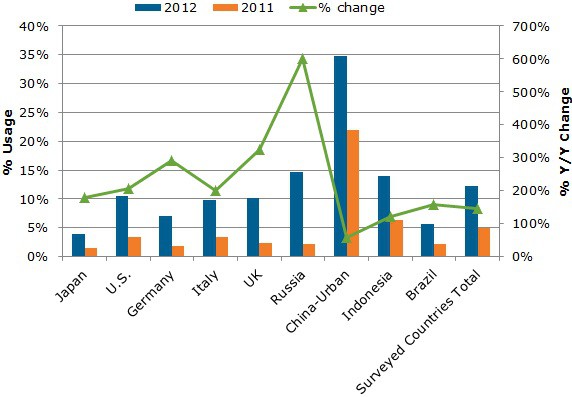
The NPD Group reported today that the use of digital tablets like the iPad has more than doubled across the globe this year.
According to surveys of approximately 14,000 TV owners across 14 different regions worldwide, the research group found that a whopping 10 percent of those surveyed reported using their iPad or other tablet to watch video. This is up from about four percent of the same population surveyed a year ago.
Apple first brought podcasts to iTunes in 2005, and now they're pushing for them again in iOS 6.
With the release of Apple’s own dedicated Podcasts app today, it’s clear that Apple is finally taking Podcasts seriously. When podcasts were first brought to iTunes in 2005, Apple made a strong push to promote what they felt was the future of broadcasting. Apple’s own Eddy Cue even said at the time: “We really think podcasting is the next generation of radio.”
Unfortunately, as time marched on, podcasts were pushed to the side and left pretty much unattended. iOS has always had minimal support for podcasts, and even iTunes itself offers no real compelling way to manage your subscriptions. What makes today’s announcement big is that it marks a new, renewed effort on Apple’s part to make podcasts a key part of their iTunes ecosystem.