Today’s deals include half-a-dozen new App Store freebies, refurbished MacBooks for under $600, and Apple’s ongoing Back to School hardware sale, which throws in a fee iPod Touch with a computer purchase. Plus many more.
Details of these and other Daily Deals can be found on the CoM Daily Deals page.
If you’re running Leopard, hit Command + Shift + 4 and then the space bar, and you’ll see an icon of a camera that harks back to Steve Jobs’s days at NeXT.
The decades-old icon is one of the last visible vestiges of NeXTStep, the old operating system that laid the foundation for OS X in the late ’90s.
The camera icon looks dated, but it’s pretty good by today’s standards. Look at some of the Windows icons from the same period.
The NeXTStep camera can be found in the Resources of the Grab tool (in the Utilities folder) and comes in several different versions with eyes, stopwatches and camera flashes.
Other holdovers from NeXT in Leopard include various system sounds, including Basso, Frog, Funk, Ping, Pop, and Tink, as one commenter notes at Robojamie.net, which first pointed out the camera icon.
And as another commenter says, there’s another old icon in: /System/Library/Frameworks/AppKit.framework/Resources/NSMultipleFiles.tiff
It doesn’t seem to be used anywhere though.
Steve Jobs founded NeXT in 1985 after he was booted from Apple. He had the company build advanced workstations, hoping to drive Apple out of business. But its black magnesium NeXT Cubes were too expensive except for select clients in academia and the CIA. NeXT eventualy dropped the hardware to concentrate on the its state-of-the-art software and operating system, which Apple bought in 1996 as the foundation for the Mac OS.
Apple got a lot from NeXT: Jobs came on as an adviser, and eventually took on the CEO role. A lot of Apple’s top executives came from NeXT and so did lot of its technology. As well as basing OS X on NeXTStep, Apple has built a lot of its online offerings on NeXT’s WebObjects, including its first online store, the iTunes Music Store, its DotMac website and the iPhone App Store.
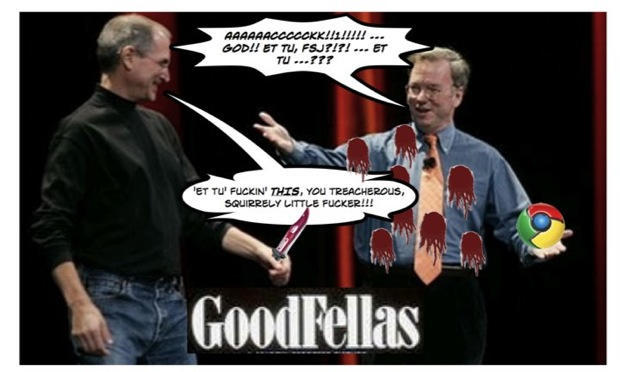
Fake Steve has a hilarious series of posts about Eric “Squirrel Boy” Schmidt’s resignation from Apple’s board. Much better than the real news and boring analysis. Starts with Squirrel Down! and continues:
“Eric, let me tell you something. After what you pulled here at Apple, no one will ever trust you again. You’re a dead man. Okay? You are the herpes of the tech industry. You lame-ass spy. You backstabbing, flack-fucking thief. You sat in our meetings and learned all of our secrets. You listened to our product development plans. Then you went off and copied our products and now you’re trying to fuck me in the ear with my own ideas.”
Then he goes on to detail the hilarious phone calls Steve has taken from wannabes looking to fill Schmidt’s empty seat, including Woz, Kara Swisher, Jon Shirley, Guy Kawasaki, Robert Scoble and Chris Anderson.
Worth reading in order to appreciate how the joke builds (I made the mistake of reading them backwards). Highlights are the Kawasaki and Anderson posts.
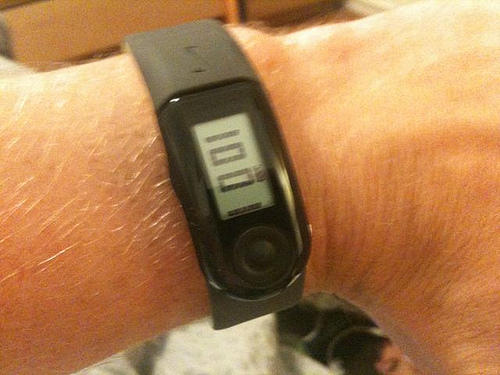
What it is: Nike+iPod-iPod. Basically, an inexpensive watch that doubles as a run tracker with the help of a transmitter in your shoe. Not an Apple thing, per se, although they did design the chip that goes in your shoe.
Why it’s cool: The Nike+ system originally developed for the iPod nano is a pretty remarkable little invention that allows you to keep track of your running statistics and inspire yourself to greater heights.. Unfortunately, it’s only recently been available across Apple’s mobile devices. If you own anything but a nano, a second-gen iPod touch or an iPhone 3GS, you can’t use Nike+ with your iPod. And, bizarrely, the Nike+iPod set-up actually behaves in obnoxious ways if you’re an urban runner. For example, if you get caught at a long stop light and pause your run clock, the iPod stops its music, too, making the wait that much more interminable. The NikePlus Sportband acknowledges the value of run tracking and music without making them interdependent. You can pause your workout and keep listening. And it obviously works with older iPods and iPhones, or even your shuffle.
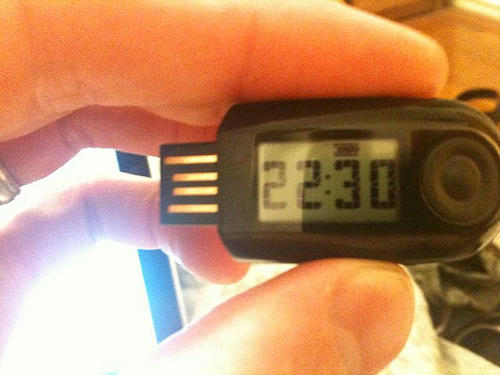
And the new model, out as of a few weeks ago (available in gray/neon yellow or white/hot pink), is brilliant and fixes some significant flaws with the previous generation. The original black and orange Sportband had poor sealing, which led to a lot of people ending up with unreadable watches as moisture left smears on the inside. Nike recalled the product and now offers one-for-one swaps if you help onto your original Sportband. Besides fixing the moisture problem, the new display goes for a pleasing black numbers on white background instead of the former’s extremely dim white letters on black. It’s very stylish, and the functionality is better than ever. Additionally, because the face clips off and syncs vis USB (see below)
The watch sets itself and can even charge its (already long-lasting) battery, which means it won’t die the way normal watches do. It’s fuss-free, and the nicest $59 watch you’ll ever find, whether or not you’re a runner.
Where to get it: Finer local running specialty shops or the Nike Store. If you’re making a swap, bring it into the original place of purchase, with or without a receipt. At any NikeTown location, they’ll even give you cash, including tax, if they don’t have enough in stock.
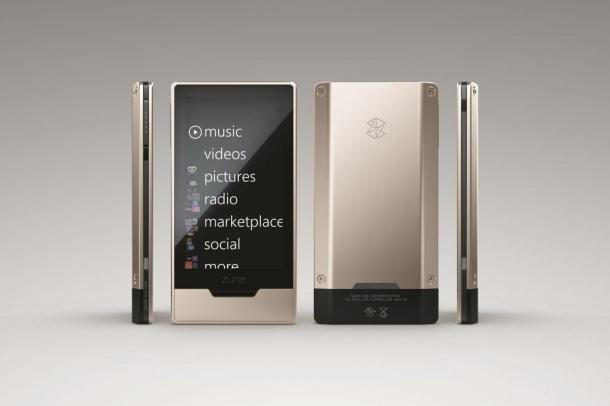
In sharp contrast to Apple’s largely upbeat recent quarterly earnings announcement, Microsoft reported “a number of grim statistics, including a steep decline related to its Zune portable media player,” highlighted in a report Thursday at MarketWatch.
The portable music player sector seems to have reached a general level of saturation, as even Apple’s iPod — a device that spawned the resurgence of an entire industry when it was introduced nearly a decade ago — suffered an 11% drop in sales during the most recent quarter. But that is nothing compared to Microsoft’s copycat gadget, the Zune, which saw a 42% drop in year-over-year sales.
“If Zune were going to make a strong move against the iPod, it already would have,” said IDC analyst Susan Kevorkian, and some analysts are now looking for Microsoft to admit defeat and announce termination of its ill-fated hardware venture.
When the company launched the Zune in 2006, Microsoft CEO Steve Ballmer believed its 802.11 wireless functionality would take out the iPod by creating a “community of entertainment aficionados” who’d enjoy being able to connect with one another and with other 802.11-enabled devices, but apparently there’s a reason devices such as the iPod and the Zune are often called personal media devices.
As late as March of this year, Ballmer still maintained the Zune is not going away, but unless the tepidly anticipated touch screen Zune HD is somehow a huge hit, declining numbers like the ones highlighted by MarketWatch foretell a grim future for the little PMP that couldn’t.
Today’s deals include refurbished iMacs starting at $999, a PowerBook G4 for $699, $99 8GB iPod nanos and many more.
Details on these and other Daily Deals can be found at CoM’s Daily Deals page.