Isamu Sanada’s day gig is photography, but his passion is Apple mock-up design.
An amateur designer of fantasy Macintoshes with a website that showcases dozens of his speculative designs for Apple gear, Sanada got his mock-up cred back when he posted an amazingly prescient take on the Titanium G4 PowerBook months before the real deal was released.
Though he’s gotten lots of praise for his designs, Sanada has been quoted regarding his design chops humbly, saying, “Apple’s thought is more splendid than my thought.”
Hit the jump for more Steve Jobs lookalikes and if you find one out and about — or happen to be one yourself — send us a pic or post it on our Facebook wall and we may feature yours in a gallery post down the road.
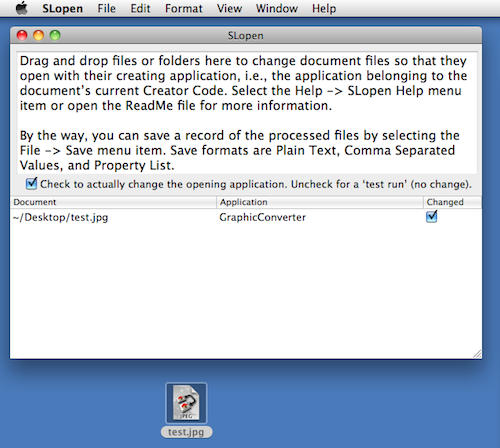
Some readers might remember the fuss a few weeks ago, when Snow Leopard came out and people noticed that it did something screwy to the way files behave.
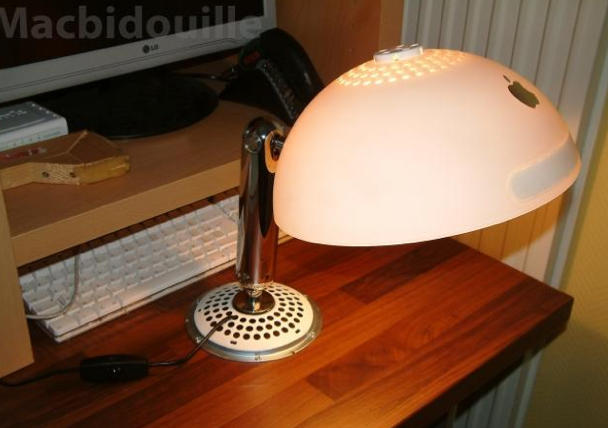
The swivel goodness at the base of the iMac G4 had a near-human flexibility and was nicknamed the iLamp in a nod to Luxo Jr., star of a short Pixar film.
Now, one of those aging bases from the early 2000s is living out its retirement as a lamp.
Creator Nicolas didn’t tell hardmac exactly how he did it, but did say it was easy:
“I decided to recycle my old iMac G4. With some spare parts, one can easily transform it into a nice lamp fully articulated thanks to the famous arm.”
Meet Ken Segall — the man who dreamed up the name “iMac” and wrote the famous Think Different campaign.
Segall is a veteran creative director who worked at Apple’s agency, TBWA\Chiat\Day, back in the day.
“I’ve put in 14 years working with Steve Jobs on both Apple and NeXT,” says Segall. “I’m the author of the Think Different campaign and the guy who came up with the whole “i” thing, starting with iMac.”
Segall collaborated closely with advertising legend Lee Clow, chief creative officer of TBWA\Chiat\Day, whose retirement was widely — but prematurely — reported last week.
In this exclusive interview, Segall talks about working with Steve Jobs, how Jobs initially hated the word “iMac,” and the importance of the Think Different campaign to Apple.
Security software developers must think Mac users are quite daft. Tuesday afternon Symantec sent out a press release flogging its ‘discovery’ of a new trojan horse targeting Apple’s OS disguised as a ‘space invaders’ style video game in which killing invading aliens results in the program deleting files from the user’s hard drive.
Ooo.
The game in question is an art project called Lose/Lose that first appeared on the web back in September, created by digital artist Zach Gage and featured in Electrofringe’s current exhibition of online art, Electro Online 2009.
The idea behind the project is to use game mechanics to call into question the idea of mindless killing for fun. Are gamers so obsessive they must kill aliens at any cost? In the game, each alien is based on a random file on the players computer. If the player kills the alien, the file it is based on is deleted.
Gage asks, “Why do we assume that because we are given a weapon an awarded for using it, that doing so is right?”
The game has a clear warning at start-up that says, in scary red letters: killing aliens in this game will delete files from your hard drive.
Now Symantec is sending out an alert flagging the art project as malware.
“A new threat cleverly disguised as a classic video game is targeting unsuspecting Mac users,” Symantec said in an email to CultofMac.com. It continued:
The Trojan horse, known as Trojan.Loosemaque, is designed to look like a Space Invaders/Galaga style game. However, for every alien ship the user destroys, the program deletes a file from the home directory. Symantec – the world leader in online security – recently discovered this new Trojan horse targeting Mac users and video of it in action can be seen here. Online games are increasingly becoming a target for virus creators, and this threat shows it’s a possibility regardless of the platform. While the author of OSX.Loosemaque actually informs people on his website that the game deletes files, there’s nothing stopping someone with more malicious intentions from modifying it and passing it on to unsuspecting users who don’t have security software installed.
Symantec is not the first company to flag Gage’s project. Security blockers such as Sophos’ Anti-Virus and Intego’s VirusBarrier X5 also define the game as a threat.
So is it art or is it malware? Are Mac users equipped to know the difference? Seriously, what do security software companies take us for?
We start out with a number of deals on MacBooks and MacBook Pro laptops. The deals are flying off the shelves at the Apple Store, with a 13-inch MacBook for $899. A similar MacBook from PC Connection is selling for $925. A 17-inch MacBook Pro with AppleCare is offered for $2,348. Also on tap are a number of deals for iPhone and iPod accessories, along with various cases. Finally, we round out the top trio with a number of software deals, including price cuts from the App Store and other bargains.
For details on these and other items, check out CoM’s “Daily Deals” page for the complete information right after the jump.
Virgin Atlantic Airways recently released an app for flying phobes. Called Flying Without Fear it’s modeled on the company’s brick and mortar course which they claim has a 98% success rate.
What do you get for $4.99? Well, a reassuring message from Mr. Hot Air Balloon Sir Richard Branson himself, plus relaxation exercises, answers to fear-based questions, fear therapy and a handy inventory of on-board noises so you know everything’s ok.
Whoopie Goldberg recently got her wings back after an airplane hiatus of over 10 years thanks to the Virgin course:
“The program works, I was a skeptic. I hadn’t flown in 13 years but after doing their program, I understood that while my fear was real, there were many things I didn’t know or had misinformation about, which they were able to clear up. So what happened? I now fly. It’s that simple.”
While not everyone can attend Virgin’s £199 ($326) full day course, it’s worth wondering whether an iPod app can substitute the real thing.
I once had a co-worker for whom flying was a real drama — he ended up in such a state he regularly had to be taken off planes and usually booked multiple times before able to stay aloft in the friendly skies — and I don’t know if passengers more than a little discomfited by air travel would benefit by a few reassuring words and games.
Hearing his story, I also wonder if you’d be able to use the app during take off and landing, which seemed to be the critical moments.
We might not be the biggest fans of Apple’s new Magic Mouse, but we know you want one anyway. Cult of Mac Facebook fans the world over submitted pictures of their workspaces that allowed us a look deep into their souls. New Macs, old Macs, and Macs wading in saltwater tugged at our hearts in a battle for a wireless peripheral that could truly drive each to creativity and productivity.
In the end, it was Nick Duarte’s optical illusion of an office that clinched the Magical Mouse. It could be that Cult of Mac was displayed on the screen, or the haphazardly hung pictures, but it was probably the wireless keyboard horribly paired with a USB mouse.
We can’t and won’t let you deal with this any longer, Nick. Your mouse is in the mail.
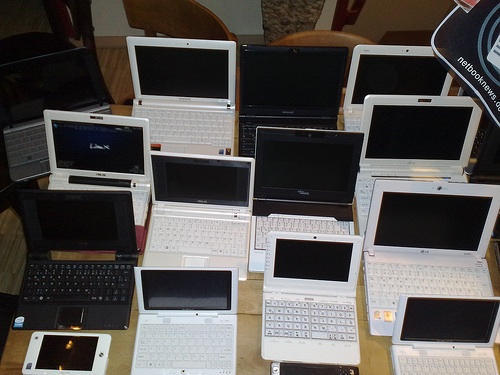
Apple appears to have frozen-out fans tired of waiting for an official Cupertino netbook, dropping support for Intel’s Atom processor from the latest build of Snow Leopard 10.6.2, according to reports. The move may signal Apple is clearing the way for its own netbook in tablet form.
For some time, Apple has dismissed the growth of small, low-powered notebook computers, refusing to join the army of computer makers producing so-called ‘netbooks.’ Apple COO Tim Cook described netbooks having “cramped keyboards, junky hardware, very small screens, bad software” and were not worthy of the Mac brand. In response to the lack of an official Apple entry, Mac fans have created hackintoshes able to run Mac OS X on netbooks using Intel’s Atom processor. Although 10.6.2 is currently only in the hands of developers, if the Atom omission is retained, the lack of support could either force OS X-based netbooks to vanish or restrict the hacked hardware to remain frozen at 10.6.1.