Working as a Mac consultant brings me in contact with several dozen different Macintosh systems every month. Many needs and tasks are common – OS upgrades, backups, system slowdowns, troubleshooting startup or WiFi problems. Like any good mechanic there are a few items in my toolbox which I favor above others. From built-in tools like Disk Utility, Network Utility and Console to third-party tools like DiskWarrior, FileSalvage and iStumbler, these items help get the job done.
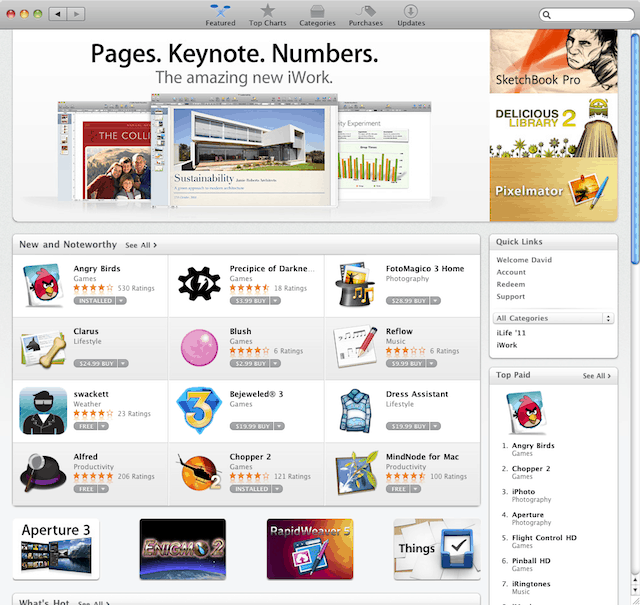
I’ve been exploring the Mac App Store and discovered another little tidbit that might pose a problem for some frugally minded people – like me. I was looking for apps that I already owned that might be in the App Store and I found one called RapidWeaver.
I was about to purchase it in the Mac App Store until I found out it would cost more to do so. Why did it cost more? The answer is simple – sales taxes and that is what led me to halt one Mac App Store application purchase this evening.
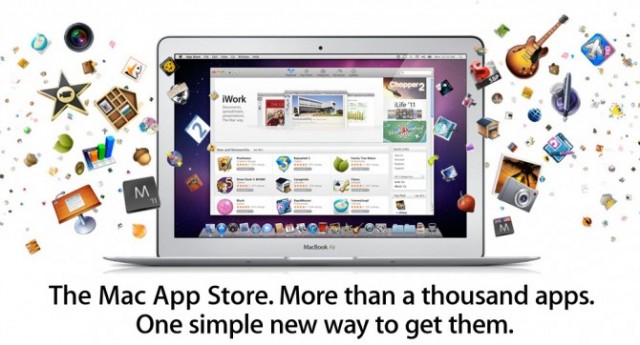
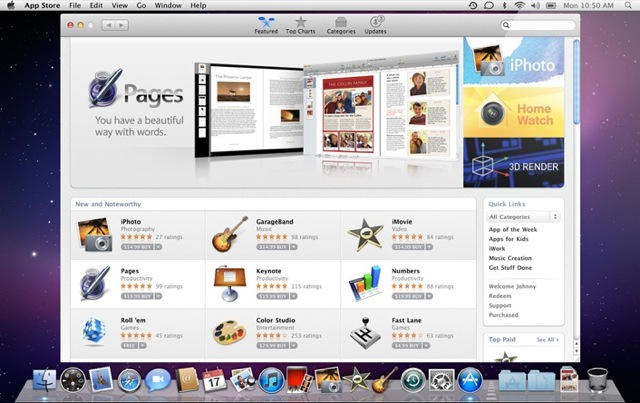
Apple has opened the Mac App Store today ushering a new era for Mac software distribution. It is an interesting new way to get software for your Mac in a way many of you are already used to using for the iPhone, iPod touch, and iPad.
It’s not perfect, but neither was the iTunes App Store for iOS. I’m sure that it will improve with time. I took a look through the Mac App Store today and I want to share some things about the new Mac App Store that you may have missed.
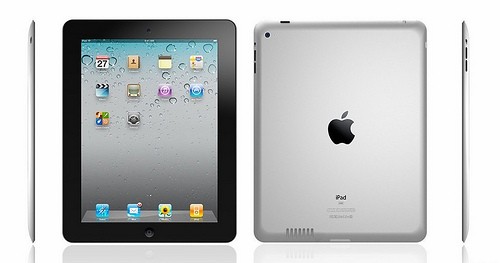
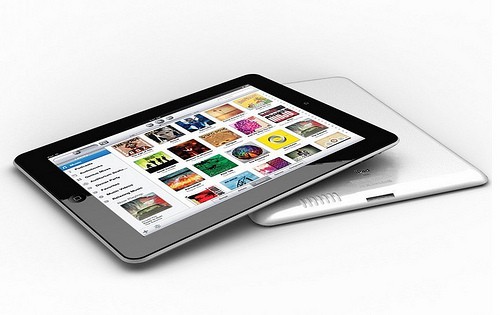
The ever-lovable China-based MICgadget blog waved a red flag at everyone drooling over new and possibly never-to-be-released gadgetry on the CES showfloor in Las Vegas Thursday, teasing web surfers with a headline about leaked photos of the much-anticipated iPad2.
These are pretty clearly mock-ups but with CES in full swing and an Apple vacation black-out in place, they signal a revving of the hype machine and ramping of new-gadget lust that ought to be at a near fever pitch by the time Apple announces a “special event” sometime in late January/early February.
What do you think Apple has in store for us in 1Q11?
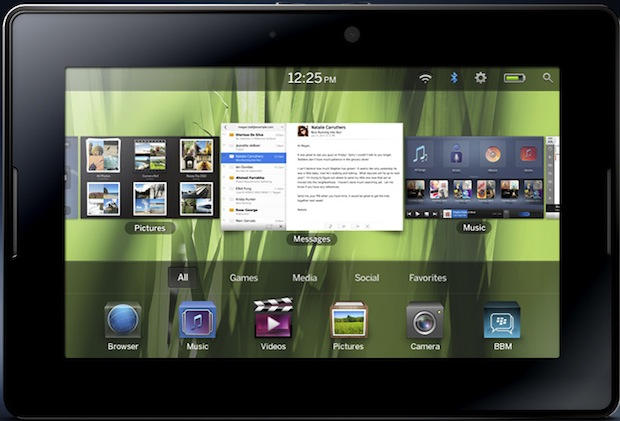
Research in Motion’s answer to the 3G Apple iPad tablet now has a release date and carrier: this summer and Sprint. At “under $500 a pop, the PlayBook 4G already has potentially “tens of thousands” of corporate customers, according to a RIM senior vice president.
The tablet was demonstrated Wednesday at the Consumer Electronics Show. The device “performed smoothly as it went through its paces,” according to one report. RIM took the time to denounced as “absurd generalizations” talk that Adobe Flash cutting battery lifetime. The retort follows reports RIM may need to delay the PlayBook after an analyst claimed the tablet had only “a few hours” of battery life.
A few hours before popular rumor indicated it would launch, Apple pumped Mac OS X 10.6.6 down through Software Update … most notably including support for the new Mac App Store, which is launching with more than a thousand apps, including a very sexy new Twitter for Mac client.
iWork ’11 is, surprisingly, not debuting on the Mac App Store, but you can find Aperture, at least, as well as iLife ’11. Check out the press release after the jump, and check in later for more of our impressions.
Short of an official announcement from Apple, it’s anyone’s guess whether or not Apple’s next-generation desktops and notebooks will use Intel’s recently unveiled Sandy Bridge architecture… but even if Cupertino defies expectations and sits this CPU gen out, don’t sweat it: you’ll at least be able to put yourself together a Sandy Bridge Hackintosh.
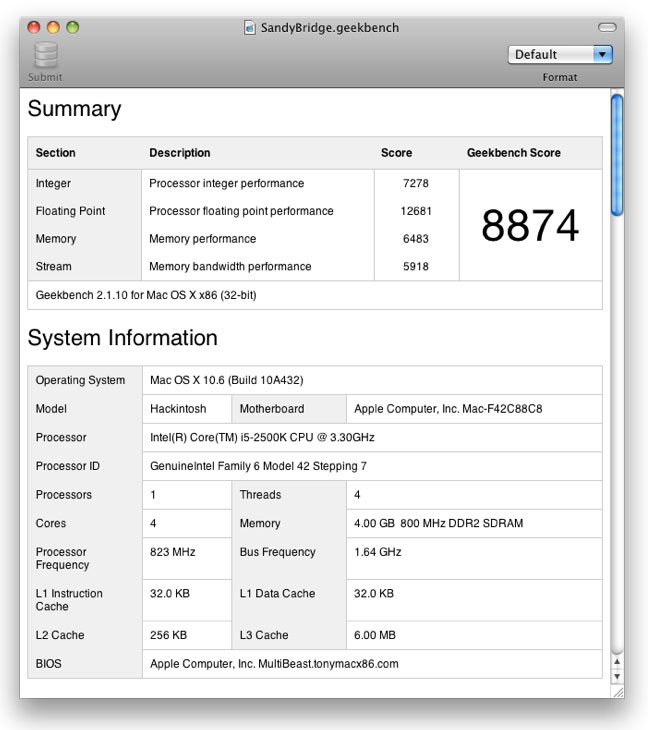
With remarkable alacrity, hackers with early access to Sandy Bridge wasted little time upon the lapse of Intel’s non-disclosure agreement to install Mac OS X on a Sandy Bridge processor, pushing Snow Leopard onto a machine running the new Intel Core i5-2500K CPU running at 3.30GHz.
How’d it run? Not as well as it will once OS X officially supports Sandy Bridge: a Geekbench score of 8874 and an Xbench score of 282.40. As it is, the hackers needed to patch the kernel to even get Snow Leopard to boot. Still, if there was any doubt, the benchmark scores do make it pretty clear that when Snow Leopard starts supporting Sandy Bridge, we’ll all be looking at the fastest Macs yet.
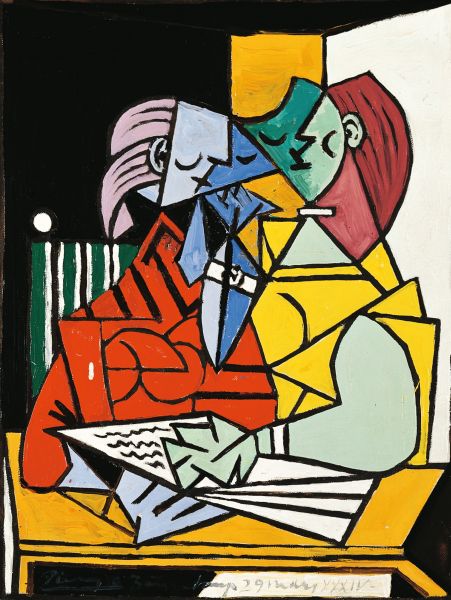
The double mirrored face in the blue Mac Finder icon has always been a recognizable piece of Macintosh lore. But did the concept for this graphic originate in Cupertino in the 1980s, or much earlier on another continent? Blogger Cattani Simone has noticed some similarities to a portion of Picasso’s painting Two Characters (Deux Personnages), 1934, located at MART, the Museum of Modern Art in Rovereto (TN) Italy:
The icon of the Macintosh Finder seems very similar to the face of one of the characters of the work of the Spanish artist … Initially I told myself that it wasn’t possible … I’ve never heard about that and anyway someone would know the story for sure … but on the internet there seems to be no correspondence between these things … or at least … No one has mentioned it in the network ….
Coincidence, or Great Artist Stealing? Inquiring minds need to know…
The team at Realmac Software – makers of apps like LittleSnapper and RapidWeaver, among others – have posted their thoughts about what changes the Mac App Store may bring.
Lower prices is one. Perhaps not as low as we’ve seen for iOS, but certainly lower than many developers charge right now. The old argument applies: Apple is creating a marketplace that didn’t exist before. That’s why it takes its 30% cut, and why the overall volume of sales should increase (hopefully).
Another prediction is simpler apps that do, ahem, one thing well. Complicated do-everything applications are hard to put into categories, and hard to explain to customers in the limited space available on a typical App Store page. Apps that just do a single job are easier to understand in an instant, and therefore easier to sell.
That said, it’s important to remember that the Mac App Store is, for now at least, just one way to get software installed on your Mac. Developers will be free to sell their wares via their own websites using traditional methods. There’s going to be a transition period where software is bought and sold both ways. The question everyone’s asking is: how long will that period last? Years? Months?
If you develop for OS X, do you agree with Realmac’s thoughts? Are you planning to reduce prices, and re-focus your apps for selling in the App Store? Do you think the App Store is going to completely take over, and how long will that take?