Former Forbes writer Daniel Lyons, uncovered last year by The New York Times as the man behind the blog The Secret Diary of Steve Jobs, posted news today that his often hilarious and always outrageous character “Fake Steve Jobs” is sailing into the sunset.
Lyons wrote “Fake Steve is not really going away. He’s just taking on a new form.” But in a fashion true to form, the post left threads untied and destinations open to the imagination. Lyons begins work as a Newsweek columnist in the fall and is publishing a novel inspired by his work on the blog, according to a post today in the Times’Technology blog.
Software developer Information Appliance Associates (IAA) leaps to the head of a line of design entrepreneurs helping Blackberry smartphone users “Macintoshify” their handhelds with the release of PocketMac Mac Themes for Blackberry. Counting on the likelihood that there are many, many Mac users who have and intend to keep using Blackberry mobile phones, the San Diego-based software maker is selling what the company claims is the first tool to transform the look and feel of a BlackBerry into a miniature Macintosh.
Available for a number of models of the Research in Motion (RIM) smartphone (with support for the Blackberry Bold on the way), PocketMac replaces the standard icons and images of the BlackBerry with those of original, yet very familiar Mac-like icons, complete with familiar colors and backgrounds, to create what some are calling a MacBerry.
“I’m a passionate Mac user. I love my Mac and I love my BlackBerry,” says IAA CTO Terrence Goggin. “We created the PocketMac MacTheme [because] all of our customers love the BlackBerry but they preferred something that reminded them of home… their Mac.”
Greatest of all time.
I just got back from visiting a friend in San Luis Obispo, California, and he pointed me towards the Mac Superstore. I’d never heard of the place, and Apple has so thoroughly eradicated all unofficial Mac retailers that I didn’t think there were many left (sadly). But I decided to give the place a close look from the inside. What follows, here and on the jump, is a photo-tour to the coolest Apple store that the company doesn’t own – and maybe ever. Best Doorstops Ever.
The experience at the MacSuperstore, founded in 1998 by Shane Williams, a graduate of Cal-Poly San Luis Obispo, begins before you even walk in the door. Since the weather is almost always sunny and calm in SLO, Williams and staff use vintage all-in-one Macs to hold the doors open to the faithful. I checked closely, and one door is propped by a Mac Plus while the others are SE/30s. The effect is inviting – and a bit disturbing. I last used an SE/30 in mid-1999, and it seemed pretty far from a doorstop then.
All the most interesting stuff is inside, however, so please read on.
Fake Steve has been outed by (of all publications) the New York Times, and turns out he’s Dan Lyons, a senior editor at Forbes. Here’s the story: A Mystery Solved: ‘Fake Steve’ Is an Editor
“Mr. Lyons said he invented the Fake Steve character last year, when a small group of chief executives turned bloggers attracted some media attention. He noticed that they rarely spoke candidly. “I thought, wouldn’t it be funny if a C.E.O. kept a blog that really told you what he thought? That was the gist of it.”
Ironically, Lyons was the author of a Forbes hit piece on blogs last year, called Attack of the Blogs. It begins: “Web logs are the prized platform of an online lynch mob spouting liberty but spewing lies, libel and invective.”
Of course, libel, lies and invective is what makes Fake Steve fun, but a lot of it was aimed at his fellow journalists. It was pretty clear Fake Steve was a journalist or editor — given all the pops he made at fellow Silicon Valley scribblers. He called Gawker publisher Nick Denton a “macrocephalic sodomite” (Denton is gay and has a large head).
Now that he’s been outed, it’s going to be pretty uncomfortable for him running into his targets.
UPDATE: Fake Steve has just posted his won entry about the Times story. He’s glad he was busted by the Times and not Valleywag, which has been on the hunt for months. Fake Steve writes:
“One bright side is that at least I was busted by the Times and not Valleywag. I really, really enjoyed seeing those guys keep guessing wrong. For six months Dr. Evil and Mr. Bigglesworth put their big brains together and couldn’t come up with the answer. Guy from the Times did it in a week. So much for the trope about smarty-pants bloggers disrupting old media. Brilliant. My only regret is that we didn’t get a chance to see Bigglesworth take a few more swings and misses.”
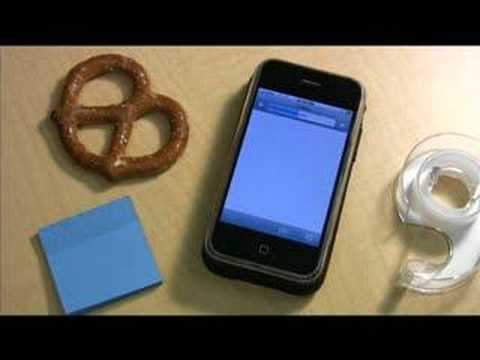
Watch the video up top. It’s a pretty terrifying video of a totally compromised iPhone through a new exploit of Safari, both on iPhone and likely PCs and Macs. A fix is already in the works, but I have to say I’m not that bothered. Why? Because it, like every other really dangerous exploit of a Mac or Apple product I’ve seen is heavily reliant on social engineering. For your iPhone to freak out and possibly shoot your cats with an iLaserbeam, you first need to go to a website specifically designed to make your iPhone freak out and kill your kittens. And I’m sorry, there’s no amount of protection that can protect people who are dupes for fraud. You can only go so far. This hole needs to close, no doubt, but if people vulnerable to harm on the web don’t know to only go to links they can trust, they probably shouldn’t be using the web at large.
Now, when people can make this happen over WiFi without the use of an exploit-focused website, then I’ll panic. And probably go back to landlines.
Apple will bring multitouch technology from the iPhone to the mainstream Mac OS X. That much is a foregone conclusion. The technology is too powerful to restrict to just mobile platforms. The only question becomes what multitouch might look like on a full-size computer compared to on an iPhone.
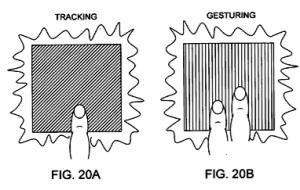
One initial possibility is shown in a patent filing uncovered yesterday for a backlit trackpad that would light up differently based on how many fingers the user applies to the device. In a lot of ways, this is no more than an enhancement to current MacBook and MB Pro trackpads, which are capable of two-finger scrolling, but by highlighting this functionality, Apple could start to drive adoption of the technology. The more people get used to the idea that they should be ready to deliver a variety of interactions, the more ready they’ll be for a wholesale replacement of the mouse or traditional trackpads.
This is an interesting concept, but I would guess this won’t actually come to market exactly as depicted. Patents usually trail implementation a bit these days, and I don’t know if I’ve ever seen a product based directly on one of these patents ship after the patent approval. Typically, it’s at best a good way to learn about the thinking behind a technology after it ships.
Either way, hope for true multitouch on a laptop is keeping me from upgrading right now. This just sustains my hopes.
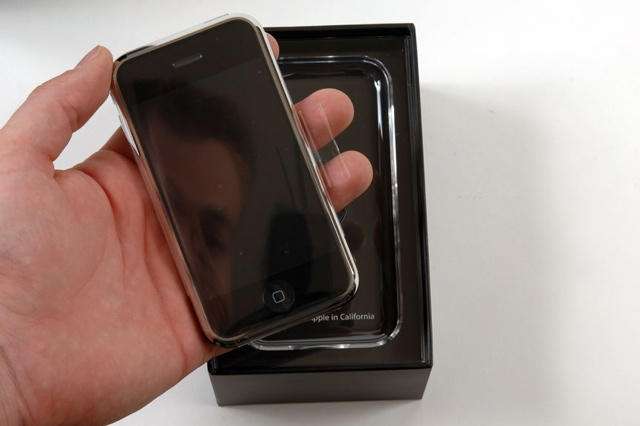
This never takes long anymore, does it? The guys at WirelessInfo.com seem to have been the first to film and post an unboxing video of their new iPhone to the Intarwebs, as you can see above. A bit excited, yes?
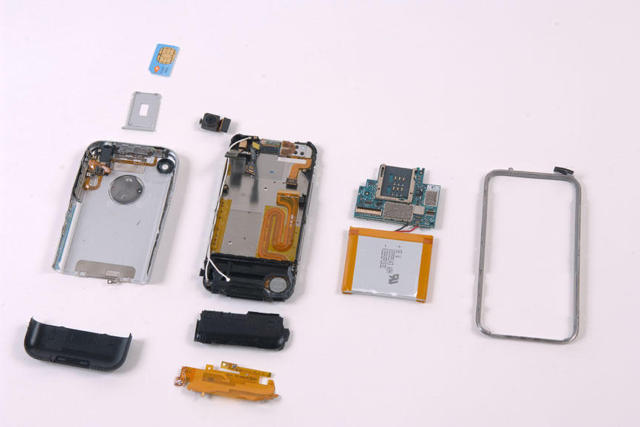
iFixit, meanwhile, not only posted an unboxing gallery, which you can see here, they took it all the way to the logical conclusion: TOTAL DISASSEMBLY. Do not try this at home, folks. Damn.
Via Digg and Apple 2.0
“To be clear, I certainly don’t encourage people to pirate our music. I have poured my life into my band, and after two major label records, our accountants can tell you that we’re not real rock stars yet. But before a million people can buy our record, a million people have to hear our music and like it enough to go looking for it. That won’t happen without a lot of people playing us for their friends, which, in turn, won’t happen without a fair amount of file sharing.
As it happened, for a variety of reasons, our label didn’t put copy-protection software on our album. What a shame, though, that so many bands aren’t as fortunate.”