Image via Flickr
Boosted no doubt by the surge of sales in the iPhone 3G over the past 30 days, Apple’s phone is now the most-used cell phone camera used to shoot pictures posted to the popular photo-sharing site, Flickr.
Via Ars Technica
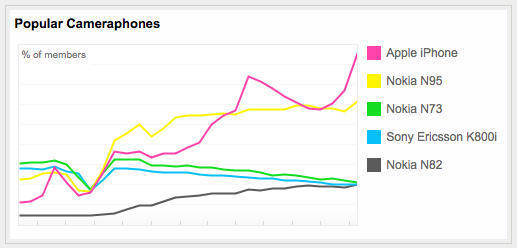
Image via Flickr
Boosted no doubt by the surge of sales in the iPhone 3G over the past 30 days, Apple’s phone is now the most-used cell phone camera used to shoot pictures posted to the popular photo-sharing site, Flickr.
Via Ars Technica

Steve Jobs told the Wall Street Journal users downloaded over 60 million iPhone applications and rung up sales of close to $30 million in the first month the AppStore was open for business.
While many of the iPhone applications available at the AppStore are free, paid apps such as Sega Corp.’s $9.99 Super Monkeball game helped bring in nearly $9 million to the top ten developers selling apps on the store. In all, Apple will distribute over $21 million in revenues from the 70% cut of sales developers make for software sold through the AppStore.
Jobs said the early results point to the success of Apple’s strategy to invest in the AppStore as a means of differentiating the iPhone among competitors in the smartphone handset market. He speculated on a potential $1 billion marketplace, saying, “I’ve never seen anything like this in my career for software.”
“Phone differentiation used to be about radios and antennas and things like that,” Jobs said. “We think, going forward, the phone of the future will be differentiated by software.”
The Apple CEO also confirmed reports of a “kill switch” in the iPhone’s software that would allow the company to remotely disable software users had previously paid for and installed on their phones. He argued that Apple needs it in case it inadvertently allows a malicious program — one that stole users’ personal data, for example — to be distributed to iPhones through the App Store. “Hopefully we never have to pull that lever, but we would be irresponsible not to have a lever like that to pull,” he said.
Via The Wall Street Journal

Go ahead. Watch the clip. You “deserv” it. Then download the cracked version here.Via TUAW
 First off, we don’t want to take any heat about this entry’s placement in our list. Certainly the “1984” commercial announcing the original Mac is more important than to place dead last. So don’t read anything more into this week’s entry than we wanted to begin our list where this whole adventure began: on January 22nd 1984.
Pete Mortensen:
I have to confess something here: I never had the opportunity to see the original “1984” commercial when it originally aired. I was, after all, 3 years old, and my parents, clearly thought I should go to bed before it aired on the East Coast. I did, however, seek it out in 1995, the darkest days of Apple’s history and the apex of my Mac fanaticism. I read countless summaries of the spot, clicked through very slowly loading galleries of screenshots, and finally, sometime around January of 1996, I got to see it on TV in my parents’ basement during a rather insufferable “Greatest TV Commercials of All Time!?!” special on CBS. I loved the ad, but I had built it up in my mind to an experience comparable to transfiguration. It wasn’t. That didn’t happen until “Think Different” came out, the first signal that Apple wasn’t just going to lie back and take it anymore. The birth of a new era…
Lonnie Lazar:
In 1984 I was 2nd year law student still using IBM Selectric and Smith-Corona electric typewriters. I thought spooled white-out correction tape was a great invention! By the dawn of the 90s I had a friend on the SF peninsula working for a custom PC maker and it would be over a decade after the debut of Macintosh before I used my first Apple, a Color Classic II in 1995. I remember being very impressed with the dramatic effect of Mac’s introductory commercial when I saw it live during the Super Bowl, but as a bit of a political radical and anti-Reaganite, I read more of an underlying social statement into it. It’s significance as a harbinger of change to come in the realm of the personal computer went right over my head. After all, those Selectrics were the gold standard at the time.
Leigh McMullen:
I remember the commercial vividly, we had been studying Orwell in school that fall, and so its timeliness and visual impact were stunning. That said, I was an Atari guy when the Mac launched, and to be honest the allure of a computer that lacked color graphics, or bad-assed arcade style games eluded me for quite some time. It really wasn’t until a few years later, playing the original SimCity at the Drake University computer lab, that the little beige toasters started to grow on me.
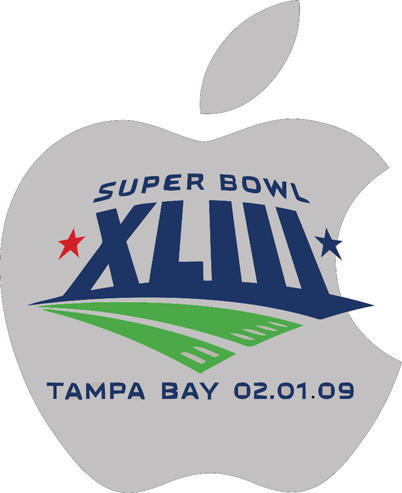
Here at Cult of Mac we’re not content just to report other people’s rumors we occasionally start our own. Hence this post’s title (The question mark makes it A-Okay, right?).
To be clear, we have no specific information that suggests this might be true. No rough voiced informant leaking this news to us from the bowels of some dungeon in Cupertino. No circumstantial evidence (like a Chiat/Day media buy) dug up through hard-nosed investigative reporting.
Nothing, Nada, Zip, Zilch, Zune.*
Yet here’s the post anyway, what gives?
First, I’m making up this rumor because I really, really want it to be true. Not only does it have a certain symmetry to it that OCD dictators like Steve would gravitate to, but it would be the perfect forum to unleash something truly game-changing on us. Something that would upset an entire industry, something as profoundly impacting as the original Macintosh.
Secondly, because it is exactly 25 weeks until Superbowl Sunday, and while this year’s Superbowl doesn’t fall on the same date as the airing of the original “1984 commercial”, it marks a symbolic milestone for that Anniversary. To that end we’re going to use the next 25 weeks to count down the Greatest Moments in Mac History. Culminating (I hope) in an announcement from Cupertino that will change everything forever, just like the last one 25 years ago.
(*Thanks to Rip Ragged for letting me borrow that line).
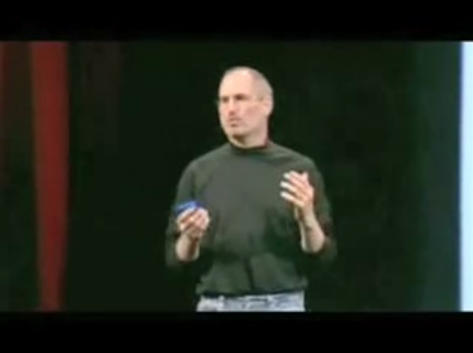
| Click the pic the watch the video at YouTube. |
Wouldn’t it be great if mere mortals could make unbelievable presentations like Steve Jobs? It would be huge. It would be pretty cool, huh?
Via TUAW
In the wake of last week’s NetShare takedown, the fizzle this week with Box Office, and the it-might-be-a-crime-if-it-weren’t-so-funny debacle of I Am Rich, third party iPhone developers are starting to clamor for more, well, actually, any transparency from Apple about the process for approving and disapproving listings in the AppStore.
Many really wish the NDA would just go away, or at least apply only to developers whose applications remain unreleased, but that’s not likely to clear Apple legal. We do think it’s not unreasonable, however, to ask the company to be more responsive to requests for information about the approval and rejection process.
In many ways, we’re living in a golden age for Apple. The entire product line is rock-solid, and the only complaint any of us can muster is that Apple hasn’t released whatever top-secret products it has in the wings yet. Market share is way up in Macs, dominant in iPods, and rapidly growing for iPhones. The current crop of software for the Mac is better than at any time in the history of Apple (sorry, Framemaker-lovers), and the iPhone development community shows tremendous promise (a few apps are already the best to ever appear on a phone).
So why are so many long-time Apple fanatics, myself included, feel a bit bummed out by the current state of affairs? Is it because we hate the thought of outsiders getting in on our little secret or that we really miss CyberDog and QuickDraw GX? It’s worse — we’ve all become de facto Apple spokespeople. I don’t draw a salary from Apple, but I am a full-time Mac genius in my social circle. If you share my pain, click through.
A former Apple engineer who worked at the company from 1995 to 2007 has filed suit and is the lead plaintiff in asked the court to certify a class action seeking restitution from Apple for overtime pay and meal compensation under California labor law.
David Walsh, a former Network Engineer claims he was required to work after hours and weekends without overtime compensation and that Apple “intentionally and deliberately created numerous job levels and a multitude of job titles to create the superficial appearance of hundreds of unique jobs, when in fact, these jobs are substantially similar and can be easily grouped together for the purpose of determining whether they are exempt from overtime wages.”
During his on-call hours, Walsh “was required to remain on stand-by for the entire night, every night of the week, for the entire week without compensation,” contends the suit, which was filed in U.S. District Court for Southern California.
Walsh’s attorneys are asking the court to grant class status to all of Apple’s California IT workers, including those who are dispatched to perform support functions at Apple retail stores.
Apple has yet to make a formal response to the suit.
Via TUAW
A mobile applications development author has discovered functionality in iPhone 2.0 software that would allow Apple to blacklist and remotely disable iPhone applications on users’ phones. While the company already retains control over third-party iPhone apps through its certificate signing program, this more targeted system gives Apple the ability to kill specific applications and effectively places all iPhones under potential surveillance as long as they have an active internet connection.
iPhone 2.0 (as well as the updated iPod touch firmware) uses its CoreLocation framework to point to a secure website that appears to contain at least placeholder code for a list of “unauthorized” apps, according to iPhone Open Application Development author Jonathan Zdziarksi.
“This suggests that the iPhone calls home once in a while to find out what applications it should turn off,” he says. “At the moment, no apps have been blacklisted, but by all appearances, this has been added to disable applications that the user has already downloaded and paid for, if Apple so chooses to shut them down.”
Via AppleInsider
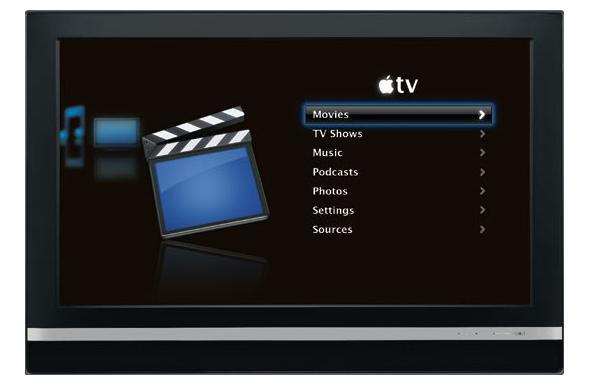
In February next year, receiving over-the-air television signals will require either a digital converter for current analog TVs or a digital TV set, creating a huge potential market of people looking to upgrade home viewing technology. Could this be the area for the mysterious “product transition” Apple CFO Peter Oppenheimer mentioned last month?
We would like to think so. Of all the products that Apple could do, a smart TV makes the most sense. It would be like the AppleTV, but without a separate box to hook up. All the functions of the AppleTV would be built into the new Apple TV.
Netflix is already getting into this sector by teaming up with hardware makers to stream movies directly to living-room devices — a DVD player from LG, a movie box from Roku and MS’s XBox. Building the AppleTV’s smart functions into a flatscreen LCD TV would differentiate Apple’s offering from competitors like Samsung and Sony, and help the company dominate the emerging market for streaming television programming and movies the way it has come to dominate music distribution through iTunes.

Ladies and gentlemen of the Cult, I bring you bad news: As of 2:18 p.m. Pacific yesterday, I Am Rich is no longer available from the iPhone AppStore. At the behest of VentureBeat and many other bloggers, Apple has yanked a brand new app in the prime of life. Yes, I know. It’s tragic. Never again will you get to spend $1,000 NOW JUST $999.99!!1! for an utterly useless program that just displays a red gem to flaunt your wealth to passersby.
Now, I Am Rich was obviously intended by author Armin Heinrich to be either a joke or a piece of art, and it wasn’t particularly successful as either. It’s sort of one-note, you know? But its removal actually reflects an extremely obnoxious habit that Apple has had as of late: they’ve been pulling apps, including the extremely popular NetShare and Box Office, neither of which appears to violates Apple’s SDK (not that anyone knows, thanks to the blanket NDA…)
Jason Kottke puts it well:
Excluding I Am Rich would be excluding for taste…because some feel that it costs too much for what it does. (And this isn’t the only example. There have been many cries of too many poor quality (but otherwise functional) apps in the store and that Apple should address the problem.) App Store shoppers should get to make the choice of whether or not to buy an iPhone app, not Apple, particularly since the App Store is the only way to legitimately purchase consumer iPhone apps. Imagine if Apple chose which music they stocked in the iTunes store based on the company’s taste. No Kanye because Jay-Z is better. No Dylan because it’s too whiney. Of course they don’t do that; they stock a crapload of different music and let the buyer decide. We should deride Apple for that type of behavior, not cheering them on.
Hear, hear!
Apple has been selling the same Cinema Displays, with occasional price adjustments and minor spec improvements since 2004.
MacRumors adds today to growing speculation about What’s Next for Apple”, suggesting the Cinema Display line may get a major makeover in time for Macworld 2009, scheduled for January 5th – 9th at San Francisco’s Moscone Center.
The new Cinema Displays are expected to incorporate LED backlights to fulfill Steve Jobs’ promise that Apple would completely eliminate flourescent-backlit displays.
In an increasingly populous iPhone app universe, iUseThis may become a useful method for finding the sturdy trees in a deep dark forest of what some are calling “useless crap.”
Blogger Erica Sadun calls it “basically a Digg for iPhone apps,” but says, “[the] site shows early promise should it manage to attract a large enough user base.”
Via TUAW
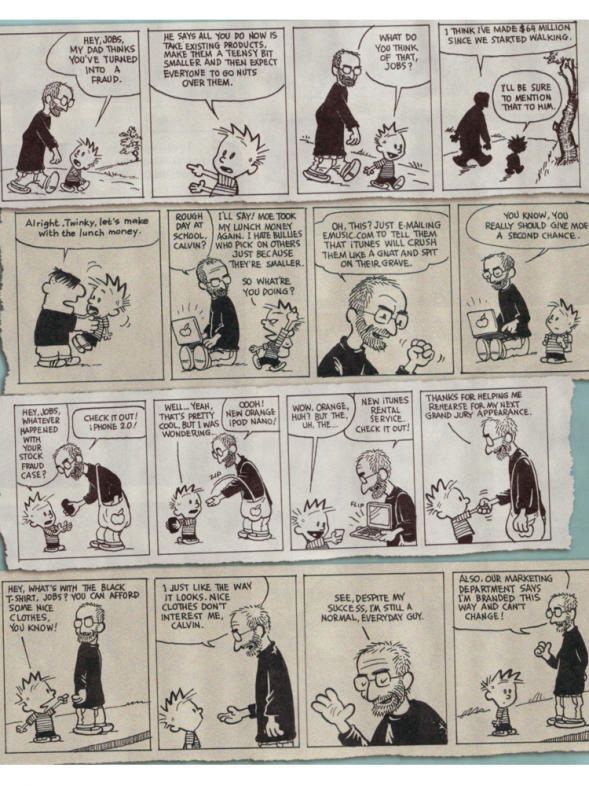
In my childhood, I had two obsessions: Calvin and Hobbes and Apple. And someone has finally had the foresight to bring them together for Calvin and Jobs, which chronicles the adventures of a boy and his imaginary Apple CEO. It’s quite witty, very much in the tone of the real series. The cartooning isn’t so elegant as (almost certainly disapproving) Bill Watterson, but that’s pretty much a certainty. Still, my favorite remix comic since Garfield Minus Garfield, so well done, PinkFloyd99 of Flickr! Click through the jump for four more adventures of Calvin and Jobs!
Update: This set of cartoons was written by Jacob Lambert and drawn by Gary Hallgren, and is from a two-page spread in the current issue of MAD Magazine.
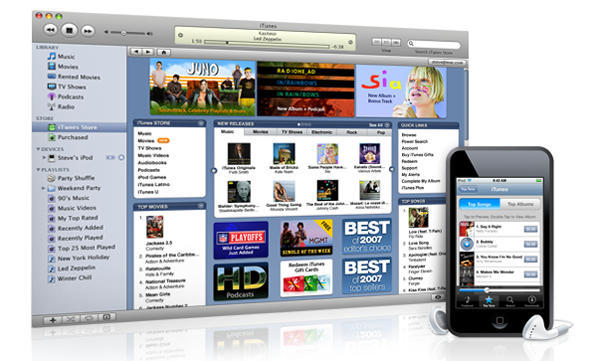
More people in the US turned to Apple’s iTunes Store for their music purchases in the first half of 2008 than to any other music retailer, according to a MusicWatch consumer survey released today by NPD Group, a leading market researcher.
Apple’s digital distribution sales outpaced the three leading physical cd distributors, WalMart, Best Buy, and Target. Amazon, which launched a digital distribution service last year, moved from fifth place into fourth based on consumers’ increasing preference for downloading files over owning physical cds.
“We expect Apple will consolidate its lead in the retail music market, as CD sales continue to slow,” said Russ Crupnick, entertainment industry analyst for NPD. NPD combines digital and physical sales for those outlets who market music in both formats and tracks digital music sold by the song or album, not music purchased under subscription from services like eMusic, or subscription revenues from Rhapsody and Napster.
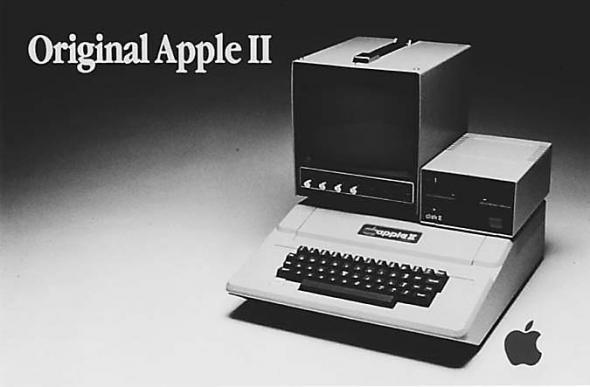
UPDATE: The MIT design team referred to in this post is basing its design not on the Apple II, but on the Nintendo Entertainment System, which used the same processor chip. We regret our error, which was originally reported by The Boston Herald article to whcih our post was linked. Thanks to David Zeiler at The Baltimore Sun for the clarification.
Derek Lomas, an American graduate student, has recruited Apple II enthusiasts at this month’s MIT International Development Design Summit “to give Third World schools Apple II computer labs like the ones I grew up with.”
Lomas, Jesse Austin-Breneman and other designers want to create a computer that Third World residents can buy for much less than the ones currently being developed by MIT’s Nicholas Negroponte, who has been working since 2005 to provide $100 laptops to Third World kids. “We see this as a model that could increase economic opportunities for people in developing countries,” sas Lomas. “If you just know how to type, that can be the difference between earning $1 an hour instead of $1 a day.”
Lomas discovered kids using a cheap keyboard and Nintendo-like console hooked up to home TVs running simple games during an internship in India last summer and hit on the idea of upgrading the devices’ 1980s-era technology. He and others at the Massachusetts Institute of Technology symposium hope to get buy-in from programmers to help upgrade the systems – which are based on old Apple II computers – with rudimentary Web access and more.
The six member team at MIT is working on writing improved programs and connecting to the Web through cell phones. The group also wants to add memory chips – which the devices currently lack – to allow users to write and store their own programs. “We think we can develop a really good educational tool that could give kids exposure to keyboards, typing and mouse usage at an early age,” said Austin-Breneman, a 25-year-old MIT graduate and a mechanical engineer.
Adding to recent criticism charging Apple with inadequate attention to security concerns, Consumer Reports takes the company to task for the lack of phishing protection in Safari. Among seven common online blunders that can “ruin your computer or invite identity theft,” thinking your Mac shields you from all risks comes in at #5, according to the report.
Citing a State of the Net survey that says Mac users fall prey to phishing scams at about the same rate as Windows users, CR recommends Mac users ditch Safari for Firefox or Opera until Apple builds phishing protection into its flagship browser.
Man, Apple is really trying to make things right today. First, the company released iPhone OS 2.0.1, which everyone seems to agree fixes virtually everything wrong with the prior release (except cut, copy, and paste, of course), and now, it comes to light via Ars Technica that Steve Jobs himself apparently sent out an e-mail announcing the reorganization of the Mobile Me team, saying the internet services suite is “not up to Apple’s Standards.”
The new leader of a combined internet services team will be Eddy Cue, the current iTunes honcho. Jobs noted that the company intends to make Mobile Me into “a service we are all proud of by the end of this year.” That might be possible, but I’m beginning to wonder if the computer side of the equation will ever offer the true Push syncing that was originally promised. Web and iPhone are there, but not the local client apps.
But it’s good to see that even this high-flying Apple crew can admit its mistakes. It was never a good idea to try to launch Mobile Me, the App Store, iPhone OS 2.0 and the iPhone 3G on basically the same day. Is it any wonder that all four of those major hardware, software and service launches experienced some growing pains? Had Mobile Me merely offered over-the-air iPhone syncing at launch, as Jobs suggests in his e-mail, the rest of the suite could have been saved for a 2009 launch with a Snow Leopard Mail and Calendar combo optimized for Push. Let’s hope Apple really takes this to heart — iPhone software development had a negative impact on the launch of Leopard, and the quadruple launch of July 11, 2008 messed up, well, everything. Let’s get some discipline and make the best technology products in the world even better!
Image via Fail Me is More Like It

Kris Arnold’s pisstake of the Chris Cocker/Britney video starts off pretty funny — see the video below — but like the original, it goes on a bit too long.
Still, there’s some good lines:
“How f—ing dare anyone even think about selling their Apple stock!”
“All you people care about are Mac rumors, and stock shares! He’s human!… mostly… except his brain… we think.”
“You’re f—-ing lucky he even gave you the iPhone, you bastards!”
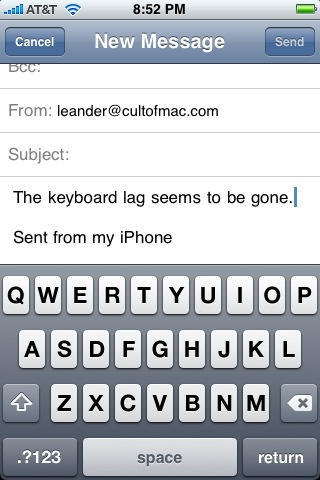
I just installed the whopping 250-Mbyte iPhone 2.0.1 update, and it seems to fix most of the problems everyone complained about. Among the highlights:
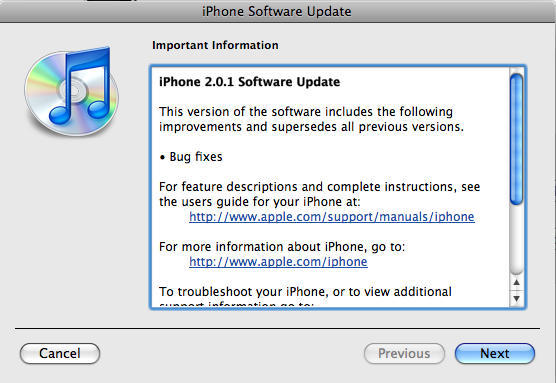
As readers of this blog know, we’ve been a bit disappointed in Apple’s July 11 launches, from the mangled mess that is Mobile Me to the crashtacular iPhone OS 2.0 to the absurdly constrained supplies of iPhone 3Gs.
Fortunately, Apple might be turning the corner, at least on the iPhone OS, which shipped in a highly unstable form. Today, effective immediately, Apple has launched a software update for iPhone that promises to deliver, and here I quote, “bug fixes.” All that in a 249-megabyte download. That’s a lot of bugs, folks. I’d love to know how it affects your iPhone and iPod touch experience — particularly as it pertains to third-party app stability.
Launch iTunes and hit the update button to make it happen.
Via Gizmodo
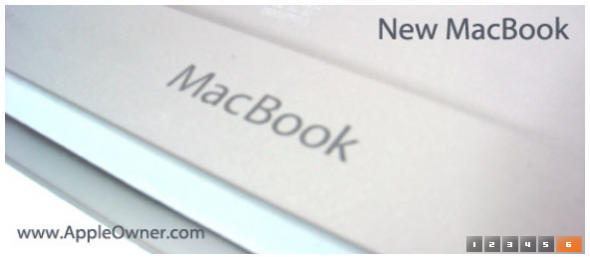
AppleOwner.com, a Taiwanese Apple-oriented website, has leaked what are purported to be pictures of the new MacBook, a highly anticipated revision to Apple’s line of increasingly popular notebook computers expected to be available within the next six weeks.
The photographs are long on suggestion, but short on detail, and may well be noting more than placeholders on the AppleOwner website. Make of them what you will.
Via Gizmodo.
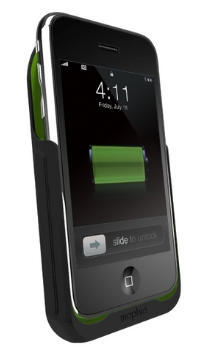
The mophie juice pack 3g, coming in September from mStation, promises to more than double the useful life of Apple’s iPhone 3G battery. Despite Steve Jobs’ insistence that iPhone 3G batteries would be an improvement over the those in the original model, many users have found surfing the web on AT&T’s 3G network, running Bluetooth and using the many applications they have downloaded from the AppStore actually leaves them wanting much more out of an iPhone battery charge.
The juice pack 3g is a rechargeable lithium polymer battery that will come ‘pre-charged’ and ready to go straight out of the package. The battery is housed in an ergonomic, comfort-grip case with a soft-touch, non-slip finish. The added “juice” will give users up to an additional 350 hours of standby time, 6 hours of talk time on 3G, 12 hours of talk time on 2G, 6 hours of Internet use on 3G, 8 hours of video playback, or 28 hours of audio playback, according to a company statement. The battery’s proprietary design provides short circuit, over-charge and temperature protection as well as smart power management. It features a 4 LED ‘charge status’ indicator letting you know how much juice is left, and connects to your computer via USB passthrough – making it easy to simultaneously charge and sync your iPhone 3G.
“iPhone 3G users have demanded a product that will boost battery life for extended on-the-go use” says Ross Howe, Sales and Product Development Director for mStation/mophie. “juice pack 3G delivers this exceptional battery enhancement while keeping the unique style and feel of the iPhone intact.”
Mophie is currently taking entries to raffle off 10 free juice pack 3Gs when they ship this fall.
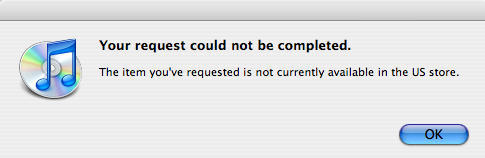
Fans of Box Office, an iPhone lifestyle app that lets users leverage the GPS functionality of the iPhone to list theaters and movies playing within a user-definable radius (e.g. 10 miles) will be disappointed to find the application no longer available on Apple’s AppStore.
Metasyntactic, the developer responsible for the application, claims to have gotten no notification from Apple that the application had been pulled and has been unsuccessful in reaching anyone who could explain why it was taken down. “I’m in regular contact with all my data providers, and none of them have had an issue with my app,” he explained in a post on the MacRumors forum. “I’ve tried to contact [Apple] about the issue, but it’s been a complete dead end.”
The Box Office takedown comes on the heels of NullRiver’s NetShare roller-coaster ride on Friday, in which the app was mysteriously gone from the AppStore, then available again, and finally gone again, all with apparently no communication between Apple and the developer.
Via The iPhone Blog
