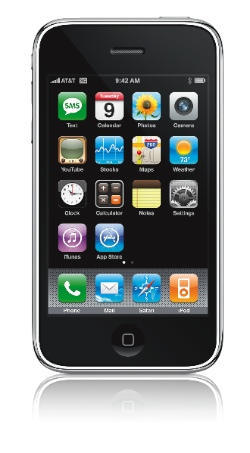
The iPhone’s diddy little camera wins no photography awards, and rarely even a positive remark from fellow iPhone owners in the pub.
But that doesn’t mean it can’t come up with some interesting images when it tries hard. Or even when it doesn’t try hard at all, and just acts weird. We’ve seen iPhone cubismcovered before, but how about iPhone slants?
Today, the finest minds from Google, HTC, and T-Mobile on hand to launch the Android platform proved, beyond a shadow of a doubt, that the iPhone's monomaniacal whole-widget development model is the only way to claim genuinely new territory in a market.
Today, the finest minds from Google, HTC, and T-Mobile on hand to launch the Android platform proved, beyond a shadow of a doubt, that the iPhone’s monomaniacal “whole widget” development model is the only way to claim genuinely new territory in a market. The T-Mobile G1 comes up tragically short in the race to launch a widespread, modern mobile OS to prevent the proliferation of Windows Mobile. As Steve Jobs has learned, if you want to do something right, you have to do it yourself. In fact, the Android Troika is making the same assumptions that have ensured that Linux will always be a marginal desktop OS in developed markets. Here are the top three reasons why:
3. Presuming that Someone Else Will Fix Your Problems
Google has left a lot undone with Android: no built-in Exchange support; no desktop syncing; no video playback; a comically variable UI. But it’s OK, Google says: third-party developers will definitely come up with solutions. While that’s probably true, it also means that standards won’t get established for these features, which means that new features will always lag behind more tightly controlled platforms like the iPhone. Worse, the Exchange omission ensures that this will never play with corporate IT environments that are looking to replace a fleet of aging Treos right now. That means the only credible alternative to Windows Mobile and BlackBerry? iPhone. I never thought I would see the day when Apple was more corporate friendly than the open alternative.
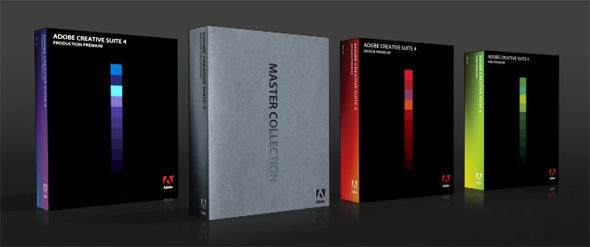
Adobe announced its “biggest ever” product release on Tuesday. The Creative Suite 4 product family, a new series of media applications scheduled to ship in October, features tightly integrated workflow solutions designed to advance the creative process across print, Web, mobile, interactive, film and video production.
The entire product line includes Adobe Creative Suite 4 Design editions, Creative Suite 4 Web editions, Creative Suite 4 Production Premium and the Creative Suite 4 Master Collection.
Photoshop, the most widely used Adobe product, will take advantage of new graphics processing unit (GPU) hardware in the CS4 edition ($699) to deliver a smoother pan and zoom experience, allowing users to easily edit images at even the highest magnifications. For an additional $300, Photoshop CS4 Extended give users the ability to manipulate 3D imagery, such as painting directly on 3D models and surfaces, merging 2-D files onto 3D images, and animating 3D objects.
InDesign, Adobe’s page layout program, also comes in for some interesting upgrades, including a feature that highlights potential production problems in real-time from within the layout and directs users to the problem area to resolve the issue. Other new features make it easier to create and manage long documents such as manuals and textbooks, including a Conditional Text feature that lets users quickly produce multiple versions of a document for different uses such as multi-lingual documents or Teacher/Student materials.
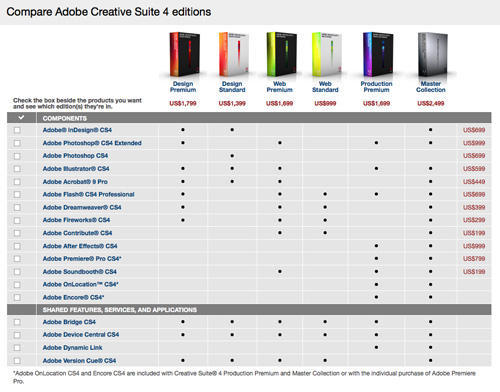
Below we reproduce Adobe’s comparison chart to help give you an idea of the range of options available in the new applications and their bundles, but be sure to visit the Adobe website for detailed information and several arresting demos of the kinds of work supported by these products.
I really enjoyed Philip Michaels’ post at Macworld yesterday, in which he discussed the success of retail Apple Stores over the years: you hear a lot about Apple Stores opening, but you never hear about them closing again.
When the news first came out that Apple was going to start opening its own chain of retail stores, there were groans from far and wide. “Apple’s a computer company,” the cynics said (myself included). “They’ll never make retail work.”
Oops. On the contrary, Apple has made retail work, and Philip’s post spells out some of the reasons why: Apple has looked to the long term, taking losses in the early days with the expectation that profit will come later. And it has chosen the store locations with great care, picking out high-profile, high-traffic spots that will pull in a very large number of people, lured in by window displays of attractively priced iPods.
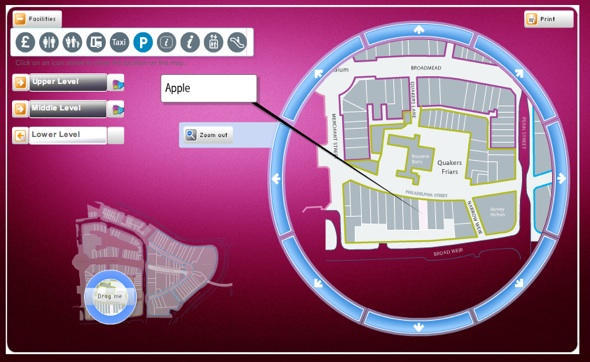
A new Apple store opens this Thursday, just up the road from me in Bristol, and it conforms to the rules. It will be located inside the shiny new Cabot Circus development, a vast mall erected where once there was a grimy, dismal 60s shopping area.
As usual, the store’s opening will be marked with hoopla, cheering, and free T-shirts for the first 1000 people through the door. I’m going to go along; not for the T-shirts, but to meet some of those people.
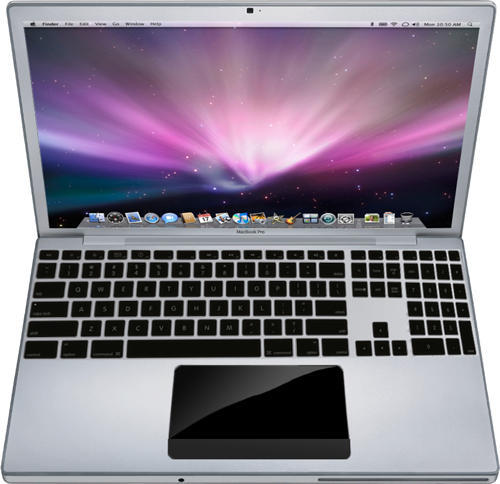
Rumors around the changes in store for Apple’s laptop line started way back in July. One of the more persistent has expectations set to ‘high’ for a MacBook with a glass, multi-touch, gesture-oriented trackpad.
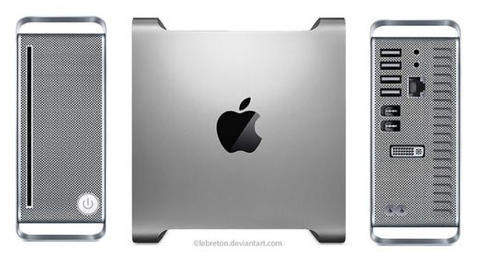
Apple fans are speculating madly about a new product code-named ‘brick’ that could be anything from a fat Mac Mini to an entirely new product category.
The word ‘brick’ has Apple fans speculating particularly fervently. It goes against the company’s traditional code-naming practices, and evokes images of a very un-Apple object, although the Apple mouse is kind of a brick and the iPhone is, too. Websites and forums are lit up with speculation– not that Apple fans need anything in particular to get the speculative juices flowing. It’s become almost de rigueur… as soon as a product is officially out, the rumor mill starts up about the next one, like clockwork, every quarter. Indeed, it’s part of Apple’s business model by now.
The ‘brick’ rumour started circulating when the Apple-oriented website 9to5 Mac spoke to an Asia-based tipster, who said next month’s ‘Big Event’ will be “all about ‘the brick.'” 9-to-5 says the tipster is “reliable” — as the source had previously made the early call on this month’s ‘rainbow colored’ Nano, though the initial interpretation among Apple fans led to expectations for a single ‘rainbow colored’ device rather than the device eventually delivered in a ‘rainbow of colors.’
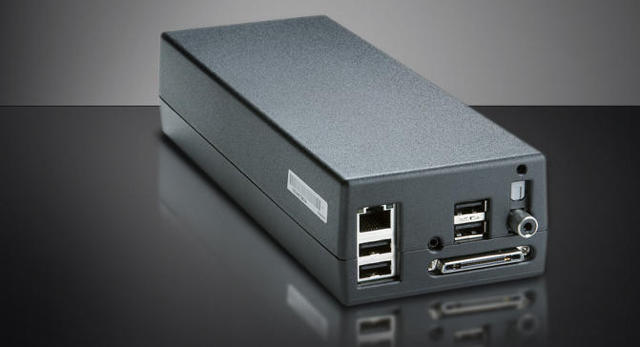
On MacRumors forums, readers are speculating Apple might be taking a page from Gateway’s playbook and will bring us a standalone input hub like the one pictured above
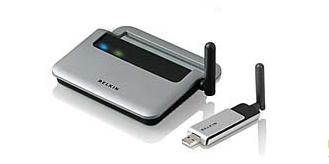
ComputerWorld writer Seth Weintraub posits the brick is a wireless USB hub similar to one already on offer by Belkin:
iPhoneSavior thinks it’s possibly a redesigned Mac Mini:
The Mac scientists at MacEnstein wonder if we can simply look for a Windows-killer. Hint: How do you break windows? With a brick.
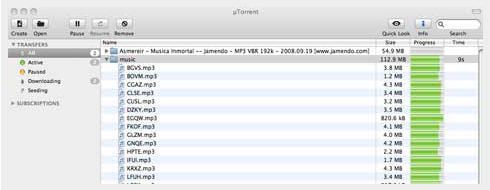
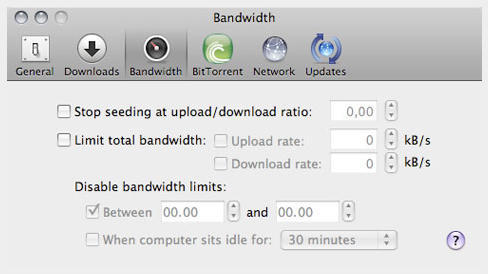
An Alpha version of the long-awaited BitTorrent client for Mac has been leaked, according to a post at Pirate Bay. The application is still in development, but as expected, looks very Mac-like, and reportedly runs better than its Windows counterpart.
BitTorrent’s VP of Product Management, Simon Morris, said in response to the leak, “An internal development build of uTorrent for Mac has been leaked publicly. It [is] an “alpha” quality build. We did not intentionally release this build and would strongly recommend folks not to use it as it isn’t yet complete or stable enough to be released to the public.”
Early user reports say the application is largely functional, though search appears to be broken. The good news for P2P lovers is that BitTorrent seems serious about releasing uTorrent for Mac in the near future.
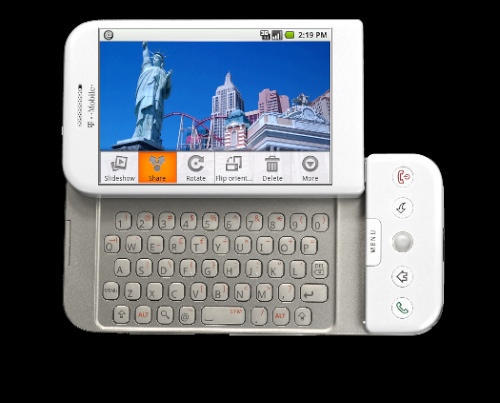
As Apple fans digest T-Mobile’s announcement of its G1, analysts say the handset starts with an immediate deficit: brand awareness.
“I think the most important point is that although Google is a familiar name for many consumers the brand power is not the same as Apple,” Gartner research director Carolina Milanesi told Cult of Mac Tuesday.
Milanesi said most people don’t know what Android is or G1. “You sure cannot say that about Apple,” the analyst said.
An interesting little rant at The Daily Telegraph lists the five features the Android-powered Google phone (known as the G1) needs to have to “see off” (that’s east London speak for “compete with”) the iPhone.
Those five requirements are, in a nutshell:
“Lots of Google” — Google integration with everything
“Entertainment” — a vague notion that the G1 needs video and music and stuff
“Looks” — it must match the iPhone in terms of stylish design; I’d argue that this isn’t really a requirement. There are lots of people who value function over design and will gladly put up with the uglies if it means they get a cheaper smart phone
“Online” — it must have a decent browser and push email; duh
“Applications” — there must be an App Store
According to the pre-launch leaks and rumors flying around over the last 12 hours or so, most of that list is indeed present on the phone: Google everywhere, video player, an App Store-a-like, and so on.
So, yeah, a reasonable list of things that an iPhone competitor should be thinking about, but it misses out some other ideas. Such as:
“Multi-touch” — one reason why people like the iPhone so much, from the moment they pick it up, is the multi-touch UI. It adds a great deal to the user experience and makes the phone more appealing. I’ve said it before: it makes people smile
“Price” — much more than multi-touch, much more than any of the others, this is the one feature that I think G1 and its ancestors progeny (sorry, my mistake, see comments) will be able to compete on very well indeed. No matter how many smiles the iPhone generates, it remains an expensive choice. If the Android army can offer a good experience overall (not necessarily one that matches the iPhone feature-for-feature at all) but at a reasonable price, it will have customers lining up at the tills.
The official announcement comes later today. Hold on tight.
We wanted to find out more, so we asked him what it was all about.
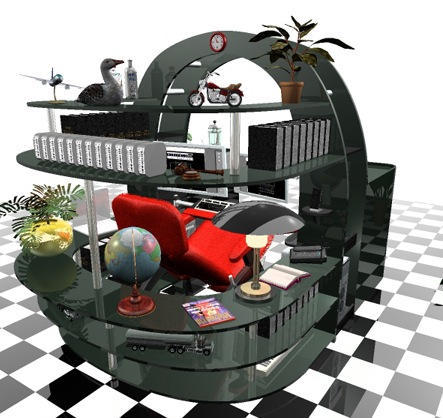
“This desk is a design I came up with after unsuccessfully trying to find a desk for use with a zero gravity chair.
“The desk at the bottom of the page (in woodgrain) with just shelves front and rear was the original design but I decided to take it to the extreme and the result was the design at the top of the page and depicted in the animations. The large arch holds two slide out bays that will each hold a Mac Pro and battery backup unit. The arch also provides a support for multiple monitors.”
Multiple monitors we can understand. But two Mac Pros and 12 Mac Minis? What’s that all about?
“I wanted a unit that would hold at least two Mac Pros because I get tired of waiting for a test image to render and wanted to be able to switch between machines. I thought the 12 Mac Mini render farm would be just the ticket for rendering my 3D lenticular images because it takes 10-12 frames to comprise a 3D image and each frame can take hours or even days to render just one frame.
“The full blown desk was designed to replace the typical office cubicle with a 7′ x 10′, ergonomically comfortable, workstation solution based around a reclining zero gravity chair.”
Right now the PerDesk is just an idea in Peter’s head. But if any manufacturers are interested in turning into a product, he’d like to hear from them. Perhaps we should put him in touch with the OneLessDesk guys, although then they’d have OneMoreDesk, so maybe not.
A number of users are reporting iPhone 2.1 firmware appears to disable automatic email retrieval under certain circumstances, according to active Apple support forums
A number of users are reporting iPhone 2.1 firmware appears to disable automatic email retrieval under certain circumstances, according to active Apple support forums. Specifically related to the 2.1 update loaded onto various models of the phone, users report the phone will not automatically check for mail, whether set to fetch new items on a schedule or to push mail in real time, and will only download new mail when asked to do so manually.
It is uncertain at this time how widespread the problem may be, though at least one forum participant reports having “just received a telephone call from [an iPhone] product specialist, and he confirms that 6 other iPhones in their building are exhibiting the exact same problem,” adding, “This is a global problem. This in their eyes is a ‘major’ issue and is getting escalated as we speak.”
Is your iPhone running 2.1 failing to get mail unless you ask it to? Let us know in comments below.
American Technology Research analyst Shaw Wu says Apple’s Friday recall of iPhone 3G ultra-compact power adapters is a “minor speedbump” and affects “only a small number of users.”
In an advisory to clients, Shaw writes a check with supply chain sources finds “little disruption” in sales of the iPhone 3G 8GB. In fact, some AT&T stores are running out of supply, he said.
Shaw said Apple faces a “headline risk” from negative publicity surrounding the potential danger of defective USB power adapters. However, Apple retains its positive customer support image by offering free exchanges.
The reaction from the recall will further be lessened because many iPhone users opt for a USB cable to charge their device, much as they do to sync content with iTunes.
The analyst said he maintains a “buy” rating on Apple of $205.
In a related development, Piper Jaffray analyst Gene Munster increased to 5 million his estimate for iPhone sales during the quarter ending Sept. 30. Munster had previously expected Apple would sell 4.1 million handsets.
Apple will sell 5 million iPhones by the end of the fiscal fourth quarter, Sept. 30. That’s the word from Piper Jaffray analyst Gene Munster Monday. The new estimate is higher than the 4.1 million handsets Munster had previously projected.
The analyst told clients he is “incrementally more confident” in Apple sales after market researchers at NPD Group said earlier this month Apple had a 32 percent jump in growth. Wall Street had predicted growth of around 25 percent.
However, Apple CEO Steve Jobs may not get his wish of 10 million iPhone sales by the end of the calendar year. Adding the 5 million Munster expects for the fourth quarter with the 2.4 million iPhones sold earlier in the year, Apple would reach 7.4 million handset sales, according to Fortune.
Along with boosting his outlook for iPhone sales during the fourth quarter, Munster also raised his estimates for other Apple products. Some 2.8 million Macs will be sold during the period, an increase from 2.5 million projected earlier. IPod sales will also top out at 11 million, a raise from 10.8 million in sales the analyst had predicted.
In a sign of the growing importance of the iPhone to Apple’s bottom line, Munster said the phone will account for 21 percent of Apple revenue, a jump from just 4 percent during the third quarter.
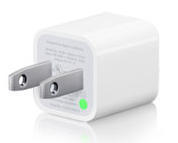
Apple has issued a recall for the ultracompact USB adapter that shipped with iPhone 3Gs sold in North America, Japan and certain countries in Latin America. The rectangular metal prongs that insert into a wall socket have shown enough of a propensity to break off, exposing users to the risk of electric shock, the company was spurred to offer redesigned adapters free of charge.
Web replacement forms went up on the Apple support site Friday; replacement adapters are expected to begin shipping on October 10. You can also exchange adapters at Apple Retail stores beginning October 10, according to the Apple communication.
Replacement adapters will feature the distinctive green dot shown below.
UPDATE: Initial analyst reaction to the recall news indicates this is more of a tempest in a teapot than a black eye for Apple. Shaw Wu of American Technology Research commented that while the threat of electric shock is a “negative” with the potential for “headline risk,” the number of people likely to be affected by the faulty adapters is believed to be minimal. The recall can also be viewed as a customer service coup for the company, which keeps its standards high by “doing the right thing” and offering free replacements.
The humorous side to this development, if there is one, was highlighted by a commenter on the MacRumors forum, who wrote, “I thought the sparks meant it was working.”
Apple has denied AppStore certification to a third party developer’s mail application that the company says “duplicates the functionality” of the iPhone’s built-in Mail app. Angelo DiNardi’s MailWranger app claims to let users check multiple GMail accounts without manually logging in and out and to provide functionality unavailable through the iPhone’s native mail application, including support for threaded views, access to Google contacts, and support for easy mail archiving.
The dispute here recalls last week’s brouhaha over Podcaster’s denial of service based on similar claims the app would “duplicate the functionality” of the podcasting functionality of iTunes. Whether MailWrangler will follow Podcaster creator Alex Sokirynsky and resort to ad hoc distribution is uncertain at this time.
By any analysis, however, Apple’s gatekeeping behavior with the AppStore seems increasingly capricious. If “duplicating the functionality” of native apps is a standard, for example, can someone at Apple explain why there are nearly two dozen tip calculators in the AppStore?
UPDATE: The t-shirts are a protest from Murderdrome, the digital comic Apple banned from the iPhone App Store. As reader Alan notes in the comments, the t-shirts were handed out as protest by infuroiuscomics.com, the Northern Irish outfit behind the banned Murderdrome digital comic.
What is this t-shirt everyone is wearing at the grand opening of Apple’s first store in Northern Ireland?
The overnight camping, high-fives and excited whooping are very much a part of grand openings in the U.S., but oddly, there’s one weird difference: Few people are wearing Apple shirts. Instead, half the crowd seems to wearing the same skull and bones shirt in either red or black.
UPDATE: Tons of People have signed up already. It will be this afternoon before I can add anyone else. I’ll have an update on the specific prized to be awarded later this week!
For those of you who’ve been following our Greatest Mac Moments posts. We’ve not discontinued them. They weren’t generating the kind of discussion I’d hoped, so we’re moving the format to monthly, where we’ll publish 5 at a time, which ought to spur some discussion.
Also, we’d like to announce another project. Following on the heels of our ridiculously successful “Just One More Thing” timeline, we’d like to create a timeline of Apple Products, complete with Dates, times and announcement videos if we can find them.
We would like Your Help! We’re going to open this one up to CoM readers to contribute. The top contributors will be eligible for prizes like an iPhone, iPods and other cool gear!
The Timeline is Here. It’s blank right now, but we hope to have it complete by the 25th Anniversay of the Mac in January.
If you’d like to contribute, send an email to: CoMTimeLine at gmail dot com, include a valid email address and we’ll get you set up.
I usually steer clear of a point by point repudiation of another writer's work, but reader Handsomematt asked me to, and there is little I won't do to satisfy the desires of our readers ( are you reading this, Scarlet? ... Chrome on top of a File management system like MS-DOS (or more exactly, a highly scaled down, ultra secure Linux) IS an OS for cloud computing that could run on $200 hardware, and satisfy the needs of most consumers.
I usually steer clear of a point by point repudiation of another writer’s work, but reader Handsomematt asked me to, and there is little I won’t do to satisfy the desires of our readers (are you reading this, Scarlet?)
It all started with my piece about how Chrome is an operating system for cloud computing, and why Apple isn’t scared at all. Handsomematt (hereafter: ‘Mat’), forwarded me an article indicating that apparently I was completely full of it. What’s more, what I thought was a piece of insightful analysis disappointedly turns out to be conventional wisdom.
Nevertheless Matt, here you go, Writing on the Wall, or Premature “Googasm“, follow us after the break, and you decide.
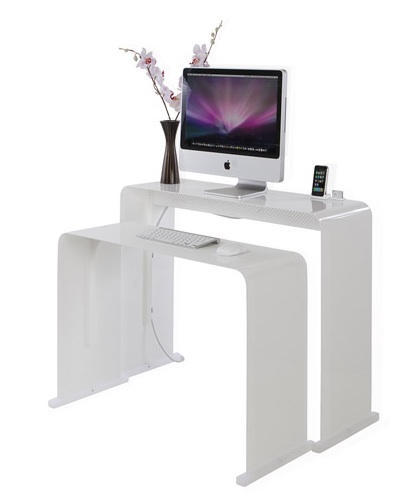
They call it the “OneLessDesk”. They say it will be “the last desk you’ll ever own”. It’s … quite a desk.
Sleek. Silvery. (Unless you buy the white version.) Made out of solid steel, strong enough to hold two 24 inch flat panels side-by-side, cut from raw sheet metal with lasers, baby.
“Built”, they say, “like an American tank.”
And a steal at just $649. I’ll have two. I’m going to melt them down. I could do with a tank.
Steve Jobs and Steve Wozniak became fabulously wealthy using minimal resources beyond their own time and talent, working out of Job’s garage. Today, Jobs and the company he and Wozniak founded are making similar rags-to-riches stories possible with the iTunes AppStore and applications created by third party developers for Apple’s iPhone.
Steve Demeter, developer of a popular $5 iPhone game, Trism, announced he made $250,000 in profit in just two months, according to a story by Gadget Lab blogger Brian Chen. If his profits continue at their current rate, Demeter will earn $3 million by July 2009.
Demeter by no means tried to reinvent the wheel. Trism is basically a version of Bejeweled that uses the iPhone’s accelerometer to good advantage, giving the game what Demeter believes are the fundamental requirements for success at iPhone app development: unique gameplay and high replay value. He also designed support for an online leaderboard that creates community and says applications with great content sell themselves, something the developer of another popular game, Tap Tap Revenge, agrees with.
Bart Decrem was one of only four people who originally worked on Tap Tap Revenge, a free application that hit a milestone of 1,000,000 downloads just two weeks after its launch. Decrem’s company recently began inserting advertisements in the game, and it also has plans to release a premium version that will cost money in addition to the free app. He says iPhone development is “reminiscent of the early days of the web in terms of the amount of green fields and opportunity,” according to Chen. “You really don’t need a huge amount of capital. You need attention to detail and product, and that’s going to keep increasing.”
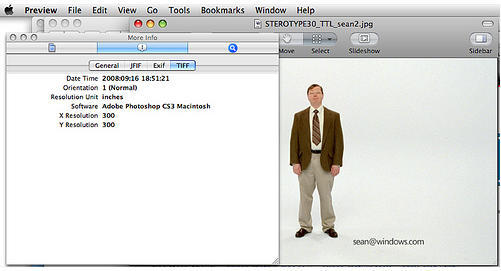
Flickr user LuisDS discovered metadata on the creative copy of the “stereotyped PC user” and other photos appearing on Microsoft’s “I’m a PC” website that reveal they were produced using Macs running Adobe Creative Suite 3.
Microsoft code monkeys scrubbed the identifying information from the website stills overnight.
Author and Mac guru Adam Engst has just released the third edition of Take Control of Buying a Mac, in which he talks about what’s new and what hasn’t changed about buying a Mac since the Intel transition. The book reviews why hard drive size isn’t important, but RAM is, and why an iMac may be your best choice. Laptop or desktop? Which laptop? Engst delivers answers to these questions and more in the 98 page book.
The book features a chart of Apple’s model launches over the last 5 years to help predict when new Macs will appear and worksheets help you match your needs and budget to the right model Mac. Engst explains when readers can purchase to get the most bang for their buck, compares different venues for where to shop, gives advice and step-by-step instructions for transferring files from an old Mac to the shiny new one, and offers thoughts about how to get the most out of the Mac that’s being replaced. The book costs $10 and is available at Take Control Books.
I was intrigued when I read my colleague Johnny Evans’ post about 7digital and its 4 million DRM-free tracks available in 320k MP3 quality, so I went to the site to pick up a copy of the classic Harry Nilsson album, The Point, which I’ve been wanting to buy.
I found the site easy enough to navigate, with a pleasant balance between text and graphics that seemed a refreshing change from iTunes’s hevavily-graphics-oriented interface. I located The Point quickly, listened to a couple of preview tracks and thought, hey, why not? Signing up for an account was even relatively painless and straightforward, and when it came time to give my address, I put in that of a friend who lives in London, which is when the deal started heading south. See how after the jump.
But, really, they say very little. Instead of finding these adverts a refreshing antidote to the brash and somewhat tiresome arrogance of Apple’s ads, they just come across as a feeble and overly defensive response, like a weedy geek whimpering “stop picking on me, dammit!” Microsoft should have blazed on to the scene, proving its worth and reasoning why it’s better than Apple, or at least hammered home its point with a little humor.
Instead, we get dry, by-the-numbers, designed-by-committee adverts that are borderline nauseating. Little more than a self-congratulatory pat on the back, they tell us what we already know: lots of people use PCs, and PCs can be used for diverse things. Thrilling. They don’t say lives can be made better by using PCs, nor do they provide any compelling reason whatsoever to check out Microsoft’s output over the competition. (Possible exception: beard lovers.) They’re also dull, unimaginative and unoriginal, riffing weakly off of Apple’s ideas, rather than Microsoft coming up with its own. While that might make them very relevant to Microsoft, that doesn’t make them good adverts.
Apple’s gains on Microsoft haven’t been down to advertising—in fact, one might argue that Apple’s advertisements actually put many people off the brand. Instead, they’ve been down to user experience, and rallying against complacency. Until Microsoft can offer similarly persuasive arguments, I can’t see its adverts convincing anyone to stick with ‘PC’, let alone switch to it.
For years, Microsoft and others have attempted without much success to shake Apple’s tight grip on the digital music scene. From subscription services to the Zune, companies have searched for the winning alternative to the iTunes, iPod bundle. Analysts now believe Finland’s Nokia may have a good shot of chipping away at Apple’s dominance.
More than 80 percent of people would pay for Nokia’s ‘Comes with Music’ service – particularly when it feels like they are getting tunes for free. Nokia says it will launch the handsets Oct. 17 in Britain.
Strategy Analytics said cost and selection trump brand – even ones so tightly woven as Apple, iPod and iTunes.
“Nokia Comes With Music effectively bundles a year’s subscription of music downloads (PC and mobile) into the price of a handset,” analyst Pitesh Patel told Cult of Mac.
Patel said Nokia – the largest handset maker – could overwhelm Apple’s iPhone.
“Nokia’s strong distribution and handset marketshare means that it currently sells more music playing devices than Apple,” the Strategy Analytics wireless analyst said.
However, we are not likely to see a head-to-head battle between the two companies in the United States. Nokia instead will challenge the iPhone in Europe and Asia – areas where Apple’s name awareness gives way to the handset maker.
The key point in this dust-up is that digital music fans care little about the name on their music player.
“It turns out that brand is irrelevant,” said Patel.







 A
A