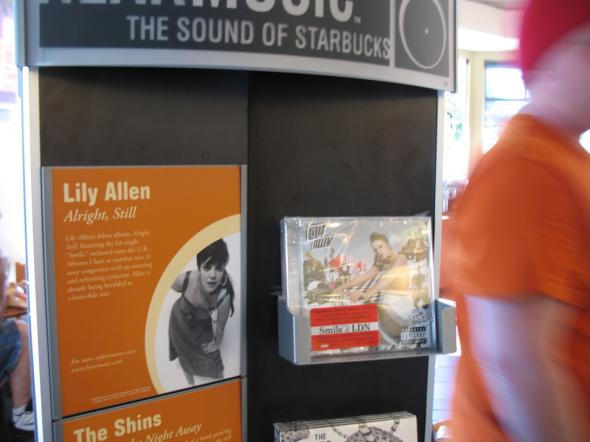
Once hailed as a savior of the music industry’s physical distribution model, Starbucks will abandon the sale of CDs and iTunes gift cards in its thousands of outlets by September, according to a report released today by Silicon Valley Insider. The company will continue to offer free Wi-fi access to Apple’s online music store and may continue to try to sell entertainment online, but the dream of record company executives who saw Starbucks at the vanguard of a new class of unconventional sales outlets that could keep the CD alive in an age of digital downloads is now dead.
The company reported its first annual profit decline in eight years and saw half a dozen senior executives depart from its entertainment unit this year, forcing the Seattle-based retailer to look for ways to restart growth in its core business of selling $4 cups of coffee.
Apple is ensuring the secondary market success of iPhones by building secure data wipe into the 2.0 version of its software, according to AppleInsider. Several sources report the Gold Master versions of the software could be released internally at Apple and possibly to developers as early as Friday.
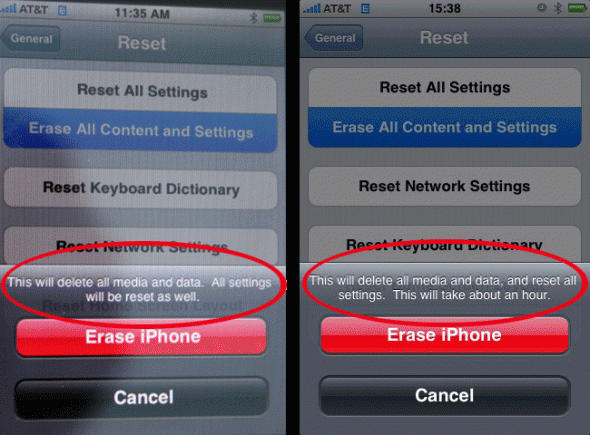
Citing “People familiar with the beta versions of iPhone Software v2.0,” the AppleInsider report says the upcoming release will employ a more foolproof method of erasing all personal data and settings from an iPhone. As is the case with the existing version of iPhone software, the function will be accessible by selecting Settings > General > Reset > Erase All Contents and Settings.
Unlike today’s iPhone software the revised function will wipe data in similar fashion to the “Secure Empty Trash” function of Mac OS X, by which all data is deleted, unlinked, and then overwritten several times to make it irretrievable by even the savviest of recovery tools.
This feature should be welcome to anyone looking to sell their first-gen iPhone and upgrade to the 3G model, as well as to those who will follow the same path with subsequent iterations of the phone.
The caveat is that the new method will take considerably longer than the method available by the current software version, but time seems a small price to pay for piece of mind.
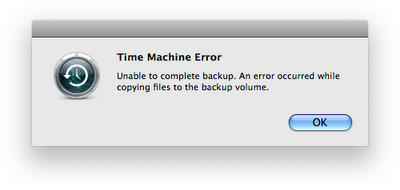
A bug in the OS X 10.5.3 update creates trust issues with the reliability of some Time Machine backups, writes Baltimore Sun reporter David Zeiler. Hourly system backups to some Mac Pro machines are inconsistently met with the vague error message
which leaves the option of staring at the screen or clicking the OK button and pretending the failed backup doesn’t matter.
MacRumors has had a discussion thread going on this topic since the end of May, and the support forums on the Apple website show a question on this topic that remains unanswered after 69 replies.
A simple fix may help in some cases, according to blogger David Alison. Run the Console application in your Utilities folder, and select All Messages on the left. Then start searching using the box in the upper right. All Time Machine activity is logged under the process name of “backupd”, so searching for that will pull up all the relevant logs. If you’ve got an open backup that’s listed as “In Progress,” even though Time Machine is not running, try deleting that to see if it allows your backups to continue.
UPDATE: This post originally borrowed liberally from an article written by reporter Dan Warne for APC Magazine. Though I linked to Dan’s piece and indicated the “10 Reasons” were his ideas and not mine, I realize now that reprinting his article with only the slightest changes and editing on my part could be seen as misleading at best and were certainly not in keeping with the standards to which I and Cult of Mac aspire. I ask for readers’ – and especially for Mr. Warne’s – forgiveness for my error — Lonnie Lazar.
People have been dying for the iPhone 3G for over a year, ever since the first user attempted downloading a web page on AT&T’s excruciatingly slow EDGE network. And let there be no doubt, when the phone hits global streets on July 11, people will rejoice, the coffers at Apple HQ in Cupertino will once again groan with excess and mobile carriers from AT&T to Vodaphone to O2 will breathe short-lived sighs of relief.
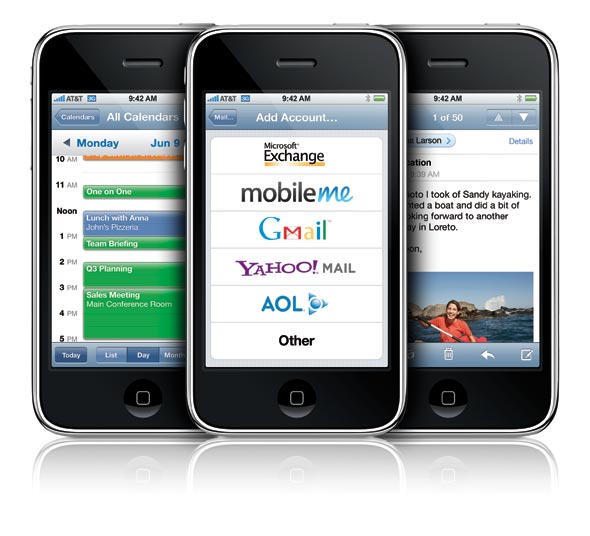
But in spite of the wow-inducing touchscreen interface, the bright and bold display, the push-synching of email, contacts, calendar, tasks and photos from Apple’s new MobileMe services, and the relative pleasures of speed on the 3G network – as always – Apple will have released a product that fails to meet some consumers’ insatiable expectations.
Herewith, 10 reasons to feel like Steve Jobs is ripping you off once again, as compiled by APC Magazine reporter Dan Warne:
Om Malik has a great post up digesting today’s news that Nokia is going all in on Symbian Limited, saying there’s three players now in mobile phones — and Google ain’t one of them.
Noting that today anyone can make mobile phones using off-the-shelf components and factories in Asia, Malik argues the future of mobile computing and communications will focus almost entirely on design, user experience and software. He likens the mobile phone business to the PC business – which Microsoft dominates with its Windows platform – and says the winners in the handset market will depend a lot on the software developers creating apps for mobile platforms.
According to Malik, “In this platform game, the winner is going to be the one that can attract the most developers,” and the problem, for Nokia and some of the Symbian Fondation’s other members (among them, Motorola, NTT DoCoMo, AT&T, LG Electronics, Samsung Electronics, STMicroelectronics, Texas Instruments and Vodafone) is they are backing a confusing array of platforms, including Linux.
Apple has long been a poster child for the wisdom of Adam Smith’s Invisible Hand. With active trade in some of its discontinued products, such as the iSight camera (which regularly sells on auction sites such as eBay for more than the original purchase price), and high-resale values for “previously owned” and “refurbished” models of its computers, the reality has been that the cost of owning an Apple over the years has not been nearly so high as its reputation for premium pricing might indicate.
The iPhone is providing additional confirmation that, despite complaints about the company’s obsessive desire to control the user experience, they must be doing something right at 1 Infinite Loop.
iPhone Atlas reported recently on the high prices still being fetched at resale by the original model phones, indicating concern over the ability to unlock and/or jailbreak the upcoming model, combined with significant demand in countries where the iPhone 3G will not initially be on sale, including Russia and China.
While the current value of first-generation iPhones may be high, with reports of the bid on 16GB phones near $600, some believe the market for the phones will stay active with prices coming down as the availability of 3G models gets closer. Michael Johnston at iPhone Alley suggests the window for high prices may be closing soon and Dennis Sellers writes for Macsimum News that active trade in the post-3G launch market for first-gen iPhones could see prices come down under $100.
With Apple and AT&T seeming to have foiled the unlocking/jailbreaking movement that flourished in the wake of iPhone’s initial release, Stateside customers who must have the speed and features of the 3G model but still have, or want, service with a carrier other than AT&T, will either have to wait and see if the new models can be jailboken or look to Apple’s deals with a different carrier in almost every country overseas, where the phones will go on sale next month. Across both ponds Apple has had to agree to a wide range of prices and options for selling the iPhone 3G, making it likely that in quite a few countries outside of the U.S., you’ll be able to buy an iPhone without a contractual agreement.
Kevin McLaughlin writes for Channel Web, an IT Channel News source, Microsoft’s biggest hiring spree in eleven years has been looking to fill spots in its Mac Business Unit.
In a recent post to the Office for Mac Team blog, Craig Eisler, general manager of the Mac Business Unit, announced the hiring campaign and highlighted the unique place the group occupies within the Microsoft galaxy. “We are the brightest, coolest, and most interesting business unit at Microsoftif we do say so ourselves,” Eisler said in the blog post.
Office 2008 for Mac has been selling “really well” since its launch in January, according to Sonny Tohan, CEO of Mac Business Solutions, an Apple specialist based in Gaithersburg, Md.
“Microsoft finally started taking advantage of some of the core technologies and user interface features in OS X,” Tohan said, and Apple partners worldwide see the changing landscape in Redmond as evidence of the robust health and continued emergence of their preferred platform.
The addition of support for Exchange in the iPhone and the coming proliferation of 3rd party iPhone apps should keep Microsoft’s Mac Business unit busy for the foreseeable future. “Microsoft needs to compete in a space of growth since the PC market is in a state of decline, and I’m sure they’re looking at writing applications for the iPhone,” according to George Swords, marketing manager at PowerMacPac, an Apple solution provider in Portland, Ore.
In the blizzard of numbers being tossed around concerning the much-anticipated debut of iPhone 3G, the most significant one could be the price of the phone itself. As Pacific Crest consumer electronics analyst Andy Hargreaves notes, sales of both Apple’s iPod and Sony’s PS2 gamestation saw exponential gains in the wake of being offered below $200.
Aidan Malley reports for AppleInsider on the explosive growth anticipated for new phone sales in the coming year. “The relationship [between price and sales] is shockingly consistent,” Hargreaves says. “At average prices above $200, Apple never sold more than [6 million] units in a rolling four-quarter period. At prices below $200, Apple never sold fewer than [8 million].”
Should Apple fulfill even industry analysts’ most modest sales expectations, savvy decision-making in the company’s sourcing and supply-chain business units could translate into much higher margins on the 3G models than those seen with the original iPhone, all of which adds up to very good news for Apple investors and shareholders.
Cory Bohon at The Unofficial Apple Weblog reports on skuttlebutt concerning the next update to OS X. 10.5.4 is said to have no known issues. Beta testers were asked to focus on AirPort, networking with Windows, Spaces and other frequently used (and often problematic) aspects of OS X.
The update is likely to also include support for Apple’s new Mobile Me service, which will replace .Mac and incorporate web services designed for the iPhone 3G. Perhaps as a consequence of these preparations, the company’s .Mac service experienced some downtime yesterday.
Thus far, Apple has been using very low-key terms to describe the improvements to OS X 10.5 set to hit with the release of “Snow Leopard” next spring. Despite the company’s insistence the software update promises no more than an overall improvement in how Mac OS X works under the hood, Roughly Drafted has uncovered at least ten improvements it deems worthy of a pat on the back for Apple’s code optimizers.
Some of those improvements, while significant, may in fact be transparent or unnoticed by many users. Additions such as SproutCore, the LLVM Compiler, the CUPS printing engine, native exchange support, and self-contained Web apps can rightly be said to reside “under the hood.”
But as Apple Insider details, others, such as a new multi-touch framework, file size reductions, text-processing features, auto activation of fonts, and full ZFS support may prove quite noticeable, indeed.
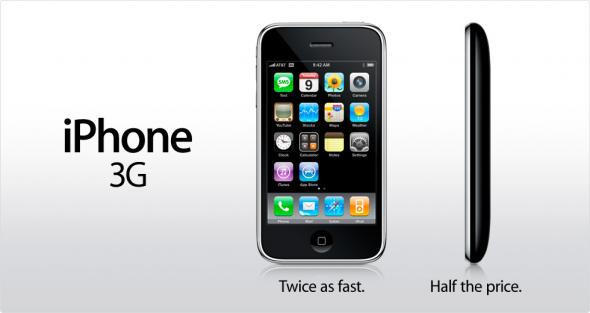
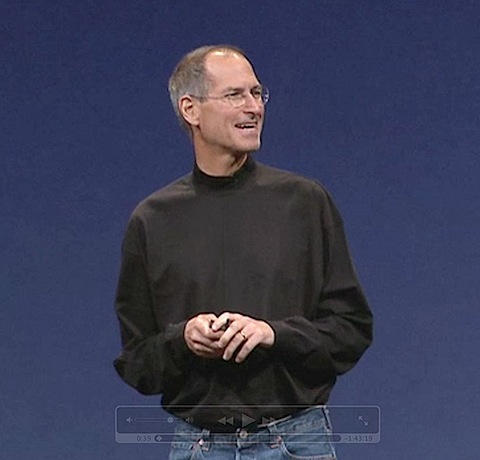
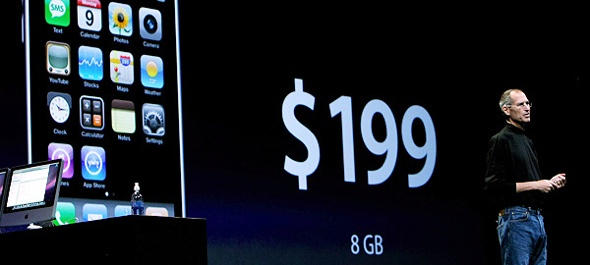
Steve Jobs saw fit to ballyhoo the price reduction for the iPhone 3G when he announced it at WWDC earlier this month, calling his newest release “twice as fast at half the price.” On the surface of it, $199 for the 8GB and $299 for the 16GB versions seems a grand gesture from the company that charged the phone’s earliest adopters $599 for the 8GB model.
It wasn’t long before plenty of people had figured out that, when the true costs of not only buying the phone but putting it into service with AT&T were factored in, the 3G model is actually a bit more expensive than iPhones purchased after the initial price reduction to $399 for the 8GB model last September.
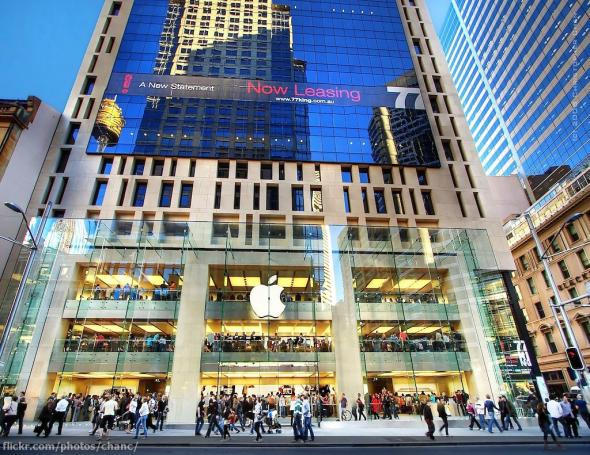
Proving themselves every bit as susceptible to consumer hype as their American counterparts, thousands of Apple fans attended the grand opening of Apple’s first retail store in Sydney last week, with several hundred having queued up as long as 31 hours prior to the opening hour.
Accommodated by agreeable weather, the large crowd helped continue Apple’s success in rolling out its innovative retail concept, which makes the stores themselves almost as much of a draw as the products inside.
Ford & Lincoln / Mercury cars are now shipping with a voice activated technology they call “SYNC”, which proudly proclaims “Powered by Microsoft” on all the adds they’re running. My first thought was: ‘Now what the heck would anyone willingly admit that?‘
My second thought was: ‘Why isn’t Apple just OWNING this space?‘ Click through, and we’ll chat about this after the jump.
Confident now that it’s got a winning product, Apple is set to release the iPhone 3G simultaneously in 22 countries on July 11. And unlike the limited distribution model in the US, where consumers may only purchase phones from the company or from AT&T, overseas customers will be able to find the new phone in plenty of places.
Apple Insider reports that Deutch Telekom, T-Mobile’s German parent signed a first deal which will let Gravis sell iPhones attached to a T-Mobile service plan, allowing customers there to pick up a phone without visiting a T-Mobile retail outlet.
Dutch and Italian consumers will also have a variety of outlets to choose from, according to an item in Macworld. The high-street-availability distribution model appears to derive from the success Apple and UK carrier O2 had in bringing Carphone Warehouse on board to maximize availability of the product.
If you were hoping Adobe’s new interfaces were going to quietly disappear into the ether, like a bad smell after eating too many beans, think again. MacRumors reports that that, yes, Photoshop–the leading light in Adobe’s application suite (and a rather good application in CS3, despite the Windows-oriented palette widgets)–is also being clad in the digital equivalent of a $1 suit. With a hole in the knee. That’s been sprayed with manure. That reduces grown men to tears in mere seconds.
Suggestions are that we can ‘look forward’ to a fall release. (That’s autumn, Brit-chums.) If so, we have four months to brace ourselves for Photoshop’s head-on crash with a brick wall. Buckle up, everyone!
For years, one of the more compelling arguments in the debate between PC and Mac users held that Macs are more secure. With hackers worldwide dreaming up viruses and Trojan horse programs designed to crash hard drives and compromise personal data, Microsoft and security software manufacturers struggled to keep PC users safe by constantly releasing software updates and security patches for Windows operating systems.
Mac users surfed happily along the Internet’s boundless realms, content in the knowledge that Apple’s tiny OS market share was little incentive for hackers and malicious social engineers. As the universe of Mac users continues to grow, however, that sense of security may begin to prove false.
The newer, faster iPhone 3G, set for release on July 11, promises to chart new frontiers in mobile pornography, according to Time magazine.
The $13 billion adult entertainment industry sees the new Apple phone as a key in the shift from physical distribution (IE. DVDs) to a business model based on downloaded and streaming smut.
The iPhone is “by far the porn-friendliest phone” on the market, says Devan Cypher, spokesman for San Francisco-based porn producer Sin City Entertainment.
The porn industry may have problems with Apple, however. An Apple spokeswoman told Time it does not condone porn on the iPhone and promises to ban adult content from applications being built by third party developers for distribution by the company’s AppStore.
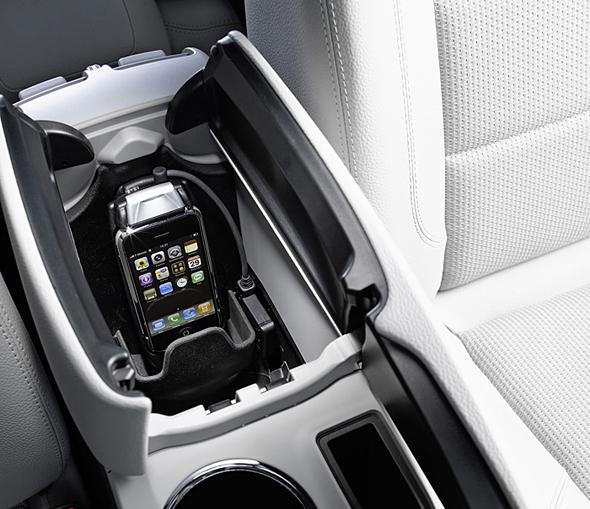
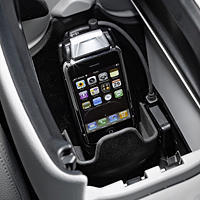
Following on the heels of competitor BMW’s optional iPod dock, Steve Jobs’ preferred German automaker Mercedes Benz announced a custom cradle for the iPhone available as an option on nine classes of its vehicles. The interface will allow seamless integration between the iPhone’s music and telephone functions and the vehicle’s systems, Mercedes says.
Placed in the Mercedes’ onboard cradle, the iPhone’s music and phone functions can be controlled with the help of multifunction steering wheel controls, while the vehicle’s display indicates phone status, music functions, etc. The cradle features automatic recharging as well as increased reception with the help of the vehicle’s antenna.
AT&T may be subsidizing up to $425 of the cost of each new iPhone it activates for service when the 2.0 3G models launch next month, Barron’s reports.
According to Oppenheimer analyst Yair Reiner, AT&T will cover an additional $125 premium over the carrier’s typical $200 smartphone subsidy because the company thinks the iPhone will increase subscribers and average revenue per user. Apple will receive an additional $100 bounty for every new AT&T customer who signs for service at an Apple Store.
The early book on the new phone is very bullish, with Reiner calling for 15 million units to be sold in 2008 and another 33 million in 2009.
Everyone is concerned about Steve Jobs’ health, prompting the obvious question about succession plans at Apple. The company seems doomed without him. Who has the vision and drive?
But Apple will be fine without Jobs, although it won’t be the same.
Some strange things are going to happen to this website over the next few hours as the design is amended. Apologies for the inconvenience.
UPDATE: And we’re done. We hope you like the shiny new design. If you come across any problems with it (as in, “IT’S ALL GONE WRONG!”, not “I wanted it to be blue!”), leave a note in the comments. Also, if you’ve any general feedback about the design, or any ideas about what you’d like to see in future revisions, please let us know.
I’m a fan of both Firefox and Safari and regularly use both on my Macs. I like Firefox because it lacks some of Safari’s “Squirrely-ness” with some websites –particularly those using scripting, and I like Safari for private browsing, and because it is so fast. So after a day of use, am I prepared to drop Safari forever for the Fox? Click through, and lets discuss.
Mac users seem split on whether Mac OS X’s Dashboard is the Best Thing Ever or a mildly irritating component that’s accidentally accessed when fingers stray on to a function key. Opinion appears to be drifting towards the latter option, but there are a few Dashboard widgets that are staggeringly useful.
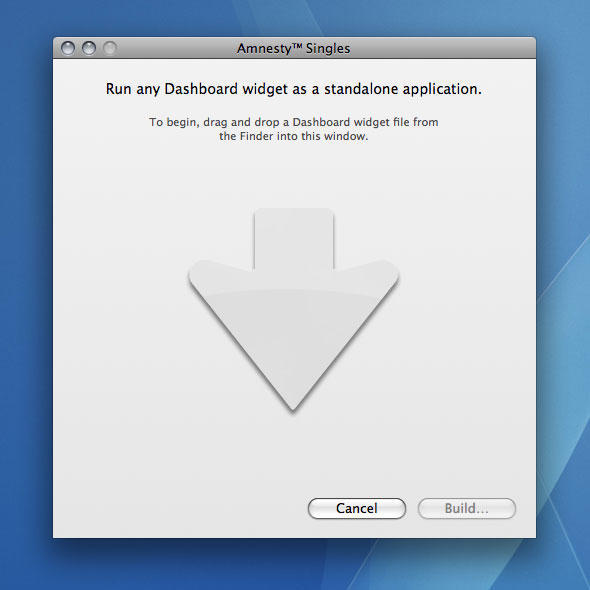
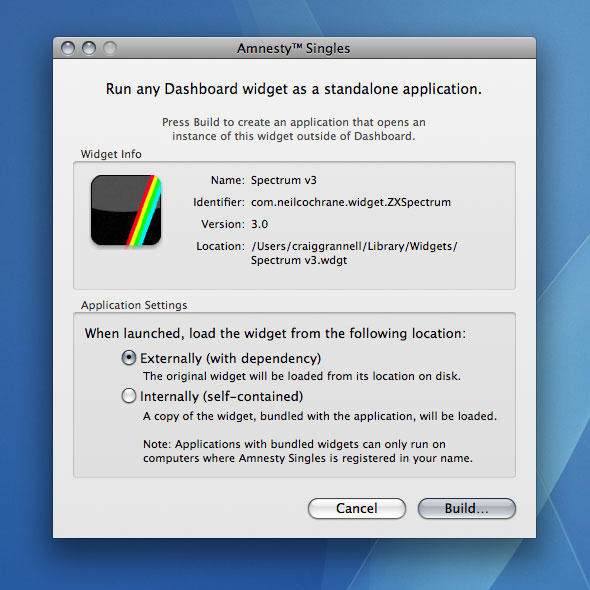
For some, the Dashboard mechanism itself is the main barrier to working with widgets. Although Vista didn’t win fans by grabbing a chunk of desktop space for its Dashboard wannabe, having the option for widgets to remain on-screen would doubtless be handy for many Mac users, and it’s this functionality that shareware application Amnesty Singles provides.
The interface is pretty much idiot-proof. You drag a widget from Finder to the whopping great arrow in its sole window, decide whether you want to create a standalone bundle or an application with a dependency on the original widget (as in, nuke the original and your Amnesty application won’t work), and click ‘Build’. Once Amnesty Singles does its thing, your app will be sitting wherever you saved it, ready for use.
When the application is launched, it should work like the original widget, but free from Dashboard. (Quick caveat: not every widget we tried worked and a few simply aren’t suited to being outside Dashboard; most, however, work fine.) Using your new application’s menus, you can force it to desktop or ‘on top’ level, along with defining a refresh rate. With some widgets being more akin to mini-applications, chances are you’ll get more use from them in this form than if they were hidden behind F12 (or F4 if you’ve a shiny new Apple keyboard).
Mac OS X ninjas will no doubt start bellyaching that Amnesty Singles doesn’t really offer anything you can’t do yourself. And, yes, if you’re keen to muck about with Terminal, you can toggle Dashboard’s dev mode and detach widgets from Dashboard. However, you don’t get the flexibility that Amnesty offers, nor the ability to hide and quit widgets like regular apps, nor the ease of use.
If you can’t figure out how Amnesty Singles works, there’s really no hope for you.
Amnesty applications can be created as standalones or by loading the widget from disk.
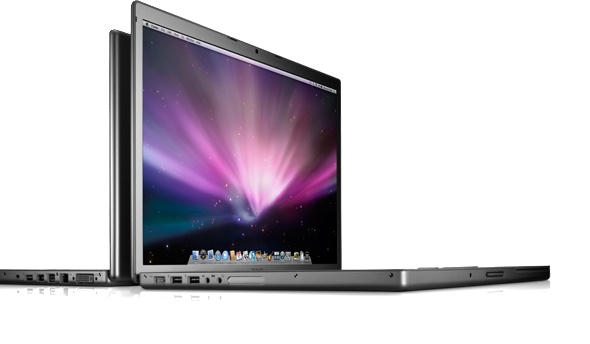
By the time this message posts, I might have already put in an order for a brand-new MacBook Pro. And, like any good Machead, the prospect of new hardware makes me miserable. After all, my old PowerBook G4 is incredibly obsolete, and I’m used to its idiosyncrasies. But I can’t deal with the idea of something spendy, flashy and new that’s behind the curve. I’d rather be way behind the times than just a few minutes off the mark.
This is the tremendous irony of loving Apple. The company’s computers are more elegant and functional than any other devices on the market, even without OS X. Unfortunately, Apple does such an amazing job adding features over time, that even a three month-old Mac can look a little long in the tooth. Now, I know this is meaningless quibbling. There will always be a great reason not to upgrade. New software, new I/O, new GPU, new processing architectures. But that’s particularly unlikely these days. The current MacBook Pros have multi-touch, very strong graphic processors, high-end Core 2 Duo chips, 802.11n, ExpressCard, MagSafe, and Mac OS X Leopard. That’s a set-up that will rock for years to come.
On the other hand, the following technologies should become relatively ubiquitous and economical in the next two years: SSD, mobile quad cores, WiMax, USB 3.0, ExpressCard 2.0, eSATA, DDR3 RAM, LTE, Blu-Ray, DisplayPort, ray-tracing graphic acceleration. I’m sure I could come up with others if I tried hard enough.Intel is supposed to release a few new Core 2 Duos for mobile with the launch of its Centrino 2 platform on July 14, and the most promising aspect is lower power consumption with a faster front side bus. Which doesn’t mean Apple will have new hardware on the 14th — Steve usually waits a few weeks.
The point being, I’m terrified of Apple taking the wraps off a new set of MacBooks and MacBook Pros the second that I invest, and I’ve lost the ability to accurately predict when the company will jump. Everyone knows the anxiety of the Apple early adopter – what on earth can be done for the agony of the late adopter? Anyone else dealing with the same pain?
BusinessWeek has an interesting but slightly over-the-top story about the misery the iPhone 3G will inflict on the rest of the wireless industry. It’s quite maudlin in its focus on the needs of the establishment wireless service providers. It even seems to mourn threats to the dominance of the existing wireless carriers. Perhaps the only news to glean in between the forecasts of doom is that Palm, once the dominant player in Smart Phones is now too niche to merit a mention in a round-up story like this. Apparently, the hole Palm needs to climb out of is so deep that the iPhone 3G’s coming ubiquity doesn’t even make things worse.