Holds toilet paper and an iPod, but is it an alibi for murder?
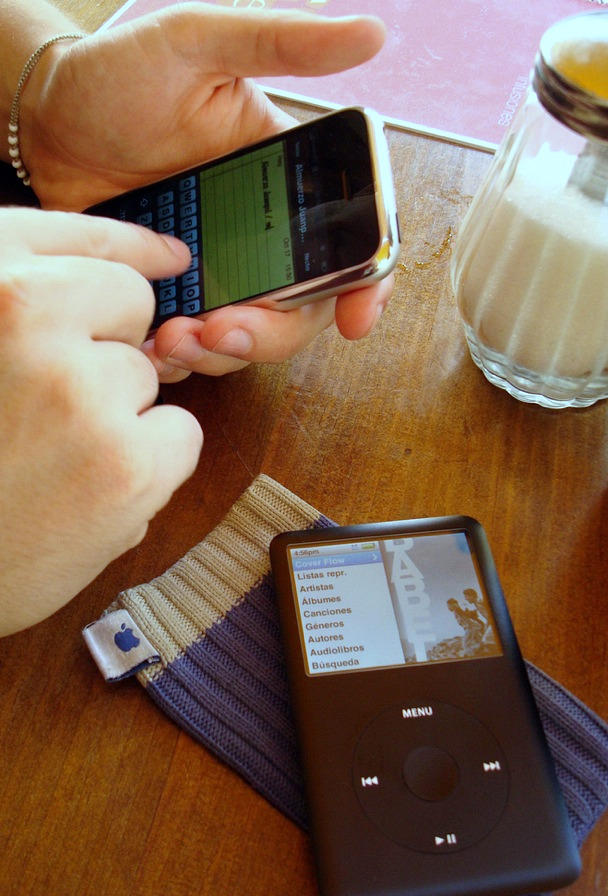
A man appealing his conviction for murdering a British student in Italy testified Wednesday that he heard the victim arguing with an American defendant in the case minutes before she was slain — while in the bathroom listening to his iPod.
In November 2007, British student Meredith Kercher was murdered in Italy, during a study abroad program in hill town Perugia.
In October 2008, Rudy Guede was sentenced to 30 years for his part in the killing, for which Kercher’s roommate, American student Amanda “Foxy Knoxy” Knox and her boyfriend, Italian IT grad, Raffaele Sollecito, are now on trial.
During what has been hypothesized was some sort of late-night Halloween sex game where the 21-year-old Kercher was an unwilling participant, Guede maintains he was out of commission during the murder while in the bathroom of the young women’s apartment.
The hunt is on for a new codename for Mac OS X 10.7
Just months after releasing its latest Mac OS X 10.6 operating system, Apple began work on its successor, 10.7, according to reports. Indications of a new build number in an OS component and a new error message lead some to believe the Cupertino, Calif. company has begun development.
A database for Mac OS X’s boot software “launchd” mentions “11A47,” causing some to feel the Cupertino, Calif. company is at work on a new version of its operating system. MacRumors, which first reported on the hints, suggested the “11A” portion means Apple is working on an early version of the OS. The “47” portion indicates the company has been working on the new version “for at least the last month or two.”
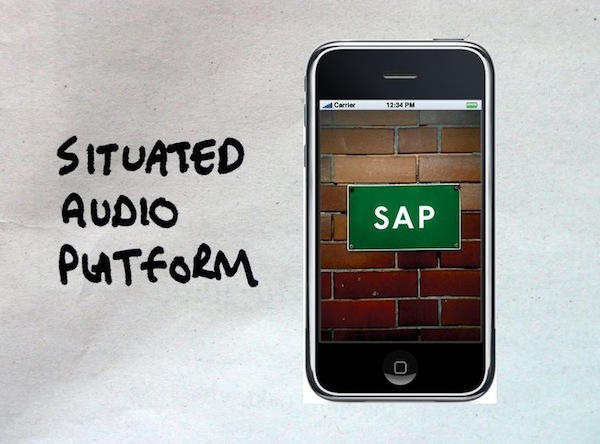
Russell Davies does lots of things that are interesting, including, um, Interesting and Newspaper Club and a bunch of other stuff, but the other week he did a talk at the Playful event in London, culminating in this fabulous mock-up of an augmented reality game using an iPhone.
The idea is genius: you start playing the game with one tap, and after that you don’t have to look at the device at all. You walk around with your earphones in, and it alerts you with sounds when there’s stuff to interact with. This video explains it better:
For those of you reading this on a Mac IIvi, I have excellent news for you: Twitter is finally available for Macintosh System 6. And 7. And 8. And even 9, for those of you mad cats who have installed a PowerPC upgrade card.
It’s called Grackle68k, and it’s awesome. First, it allows you to post things to Twitter. Second, it allows you to learn that your post has gone through successfully. Genius.
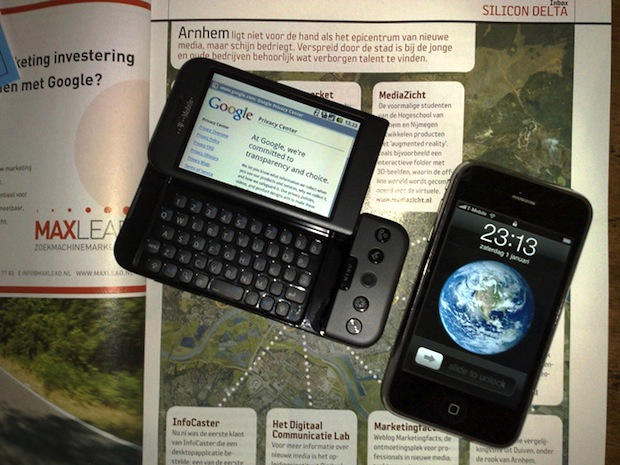
Uh, oh. Looks like there’s trouble in Android land. The rapid growth of Google’s smartphone OS is causing developers conniptions as they struggle to support multiple versions of the OS and different hardware configurations. With more than a dozen Android phones on the market, all the different configurations are leading to serious platform fragmentation, Wired.com reports:
“A slew of problems have made managing Android apps a “nightmare,” they say, including three versions of the OS (Android 1.5, 1.6 and 2.0), custom firmware on many phones, and hardware differences between different models.”
For users, it means buggy apps that sometimes won’t work on their hardware at all. One developer tells Wired.com that instead of concentrating on adding new features, he spends all his time making sure his apps work on all the different hardware and software configurations.
Looks like Google might be wandering into Microsoft territory. Microsoft had exactly the same problem with it’s now-discontinued “Plays For Sure” music-player platform, which became known as “Plays For Shit” because of the difficulty supporting multiple hardware and software configurations.
Just goes to show that there’s distinct advantages over owning both the hardware and the software, like Apple. Apple has released just three different hardware versions of the iPhone, and does a pretty good job of making sure most iPhone owners are running the latest software. In addition, the tightly-controlled App Store ensures a high-level of software compatibility. Even Android developers say its a good idea, according to Wired.com:
For developers, Apple’s autocratic ways may be frustrating, but they can pay off.
“Apple maintains an iron grip on what they do and there’s an advantage to that,” says Kelly Schrock, owner of Fognl, which has three apps on the Android market. “IPhone developers don’t have to worry about fragmentation and creating apps for the iPhone is much easier.”
The app looks as if it has the bells and whistles of its standalone Roadmate brethren, like turn-by-turn directions, highway lane guidance and voice guidance with spoken street names.
In fact, its siblings might be a little jealous as the iPhone version adds a pedestrian mode, in-app music control and direct navigation to contacts on your address book.
The icing on the cake is an iPhone car kit Magellan is releasing in December with a GPS receiver that improves accuracy over the iPhone’s, an amped speaker and Bluetooth capability
The app costs $79.99 and the car kit will set you back a further $129.99
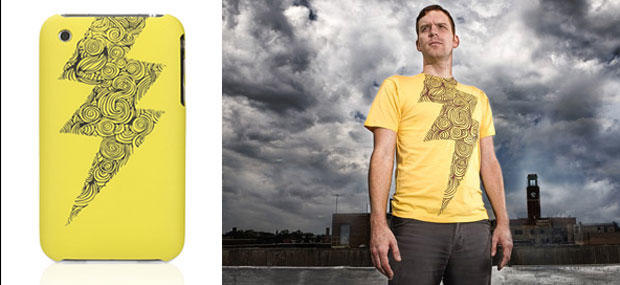
Threadless, the online tshirt company best known for its community-designed apparel, is expanding into iPhone cases.
Threadless has teamed up with Griffin, the long-time maker of fine Apple accessories, to offer a pair of iPhone cases designed by members of its community.
The two limited-edition cases — Clouds within the Thunder by Joe Van Wetering; and Birds of a Feather by Ross Zietz — are both available now at Apple Stores for $34.99.
No word though on whether Threadless is going to open up iPhone case design to the masses. I’ve put in a call to Griffin PR to find out, and will update here.
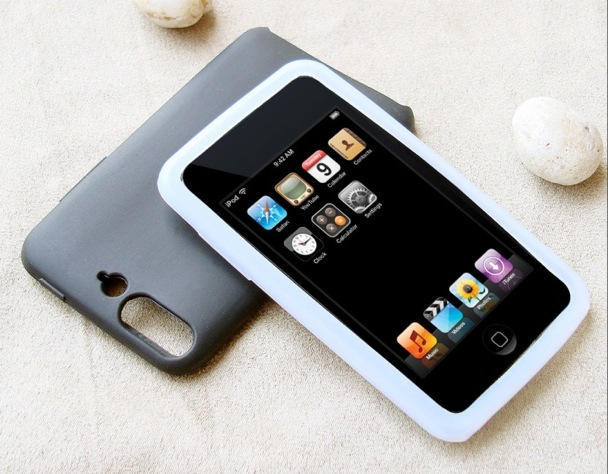
We have an on-the-go extravaganza today, with items everyone needs to keep their iPhone or iPod powered, give them a voice and protect them with style. First up is a travel charger that usually cost $3.95, but when you use the code, the price drops to 99 cents. Likewise, we have an FM transmitter for your iPhone or iPod that normally costs $20, but is offered for just $15. The final top three is a clear shell case for your 2nd or 3rd generation iPod touch for $3 (usually costs $8). Along the way we have deals on software, iPhone apps — even 90 percent off on other cases.
As always, for details on these or other bargains, check out CoM’s “Daily Deals” page right after the jump.
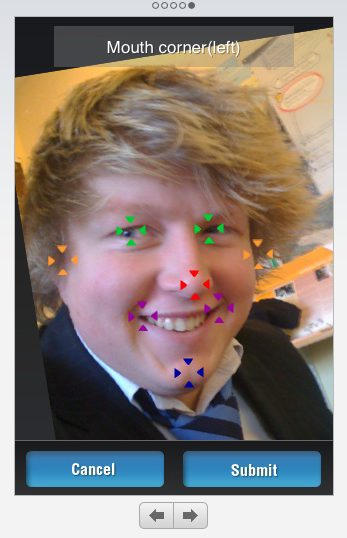
Eighteen-year-old English entrepreneur Ed Nash has come up with a 99-cent iPhone app that claims to use Fibonacci’s golden ratio to scientifically determine whether or not a face is aesthetically pleasing. Just snap a photo of the hapless subject, adjust the anchor points, hit the button and viola, instant decision.
Fit or Fugly’s App Store page suggests you use it “to break the ice at dinner parties.” Sure. But we’re going to suggest “the ice” isn’t the only thing that’ll get broken when your iPhone decides the girl sitting next to you is “fugly.”
When a Belgium carrier had trouble keeping iPhones in stock, local thieves took matters into their own hands, stealing up to 4,000 of the popular Apple handsets worth $3 million from a warehouse. Investigators suspect the theft, which happened over the weekend, might be an inside job.
The thieves climbed a fire ladder to the roof of a warehouse owned by CEVA Logistics, a Netherlands-based logistics company in Willebroek. The unknown number of participants then cut a hole in the roof directly above where the iPhones were located, taking between 3,000 and 4,000 devices, according to local reports.
Apple’s App Store is a big hit with China’s iPhone owners, despite a series of issues that might hobble sales. The China App Store is set to earn $1 million in sales this year with a potential $6 million by 2010, according to a report. Popular apps include a Chinese-to-English translator and dating software.
While the figures seem promising, Apple’s main App Store sells $200 million each month, according to AdMob, a mobile advertising company.
Top-selling titles include Friday Night Lights, iSpy Game, iReferee, Pet Peeves (a social network for griping pictured above), iSexyRef2, Pro Rodeo Fan, Sit Up Counter and Shake 2 Count.
CoM had a quick word with owner Brice Milliorn about the sale, what’s next for him and how he sees the future of apps.
CoM: Was JBMJBM sold?
BM: No, I have not sold company or apps yet. I am in talks with one guy about buying me out via stock, but it doesn’t look promising.
CoM: What plans to you have to sell it now?
BM: No plans to sell again, just going to continue doing what I am doing and do more freelance work as well.
CoM: What changes would you like to see in Apple’s app store?
BM: I don’t have a problem with Apple, you follow their guidelines you get things approved, simple as that. The few items that I have had issue with them, they called explained, I fixed and it got approved. I even wrote the number down and called the guy back a few times when I was having issues and within a few hours it was fixed.
CoM: Where do you think the future of app development is headed?
BM: I think the future of the iPhone is opening it up to Verizon. That will be another huge influx of potential app buyers and I look forward to this happening.
I also believe all this hype on the Droid and all those other handsets that will ultimately never get to the level of the iPhone. The only company to match the iPhone and better it is Apple itself.
Verizon Wireless has shot back in court at rival AT&T’s attempt to stop it’s ‘There’s A Map For That’ ad campaign. In court documents, Verizon lawyers wrote their company’s ads are true “and the truth hurts.”
“AT&T did not file this lawsuit because Verizon’s ‘There’s A Map For That’ advertisements are untrue; AT&T sued because Verizon’s ads are true and the truth hurts,” the New York-based company responded. The language was sure to inspire a few headlines and continue the battle between the two carriers.
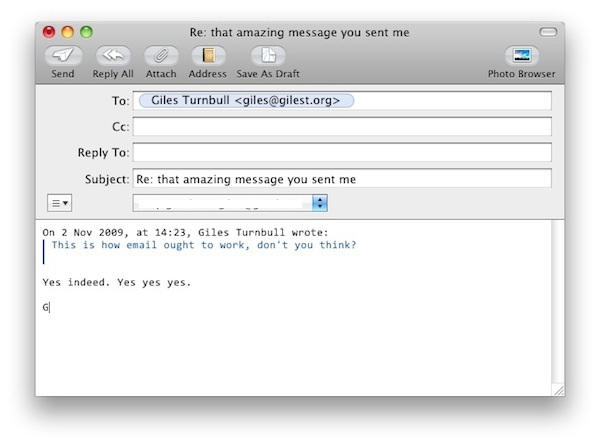
First: QuoteFix for Mac fixes the problem of top-quoting in Mail! Now you can use Mail and reply to email messages underneath the text of the message you’re replying to, as God intended things to be.
Second: I got this tip from Tim Gaden’s Hawkwings blog, which has had a fresh burst of energy over the last month or so, and is now buzzing with tips about using Mail (and other cool things to make your Mac using life easier). If Hawkwings isn’t in your RSS reader or on your list-of-sites-to-keep-an-eye-on, I urge you to add it there.
Addendum for people who can’t see what the fuss is all about
There’s an old internet joke that you’ve probably heard a thousand times:
A: Because people don’t like reading backwards
Q: Why is top-quoting a bad idea?
Email is a very personal thing. Most people don’t care how their replies are displayed in their email software, but for those of us who’ve been around long enough to remember when “email client” was the term used for “email software”, some things – like whether you quote at the top or the bottom – matter a lot.
Most modern email services top-quote. By which I mean when you hit reply, the original message is underneath and your reply is on top. Makes no logical sense, but people have got used to things being that way. It’s just How Email Works for millions.
Gmail made things a little better, by retaining top-quoting but keeping messages in context as threaded conversations. Combined with its “Show quoted text” feature, it makes top-quoting bearable.
Thing is, Mail top-quotes too, and those same people – you know the ones I mean – hate it for that. Now, at last, there’s something for them. QuoteFix sorts it all out and makes it work the way it should. There. That’s better isn’t it?
Never one to rest on its laurels, Apple is piling on following its record Q3 with a big push for the holidays. Today, it launched its opening salvo for the season with “Gift” (above) and “Song” (after the jump). The former, in typical fashion, starts with something immediately relevant (using the Target app to get gift recommendations) before going off on tangents (photo editing, “Monopoly,” Zipcar?).
“Song,” meanwhile pretty much just goes full-on for the “There’s an app for that” mantra, touching on real estate, The Sims, Facebook, and Shazam. And honestly, in both cases, it’s pretty effective. There are more than 100,000 apps, after all, even if there’s no Google Voice. The campaign works because it’s welcoming and says you can find what you want to do easily. (via MacRumors)
Unfortunately, that selling point is actually pretty different from the real experience of using the App Store. Once you hit 100,000, discoverability becomes the killer app, not any single product within. This isn’t that big a problem yet (except for developers), but it will become an increasing one over time. What good are 100,000 apps when I struggle to use more than 10 on a daily basis?
Consider this: iTunes offers more than 10 million songs, but lots of users have several thousands of songs (I have nearly 5,000 and add more every year). Assuming that the average for a power user is around 2,000 songs per user, that rounds out to there being 5,000 songs to every one that most people download.
With apps, by contrast, there are 100,000, but I would guess most power users carry fewer than 30 on them at any given time (I’m actually closer to 20 beyond the initial set). That’s 3,300 apps per one download, a ratio that starts to get really dramatic as the app store grows toward a million choices but people install no more of them. It’s already pretty rough trying to break through as an obscure band on iTunes — it could get much worse as the ratio grows increasingly unfavorable for apps.
Fortunately, problems tend to highlight opportunities to innovate. Everyone knows that a more robust Springboard app is needed to help us sort through our many apps to find the one we want when we want it. Apple could also come up with new forms of App Store search to better surface apps better suited to you (imagine if Genius for Apps worked!), or it could take note of developers whose work you’ve enjoyed previously and recommend those. Moreover, Apple could even offer different ways to market oneself on the App Store. We’re used to bundling on the desktop side; why shouldn’t there by an iPhoneHeist next year to bring together rock stars with rising contenders on the fastest-growing platform ever?
The growth of the iPhone has been fascinating. OS 1.0 was about defining a new kind of mobile experience. OS 2.0 was about opening the platform to true development and making it more than just a product. OS 3.0 has been about fixing the most-requested problems, including MMS, copy-and-paste, and tethering (not that AT&T has implemented the latter). OS 4.0, it seems to be, would be an excellent time to figure out how one might actually benefit from owning a couple hundred different apps.
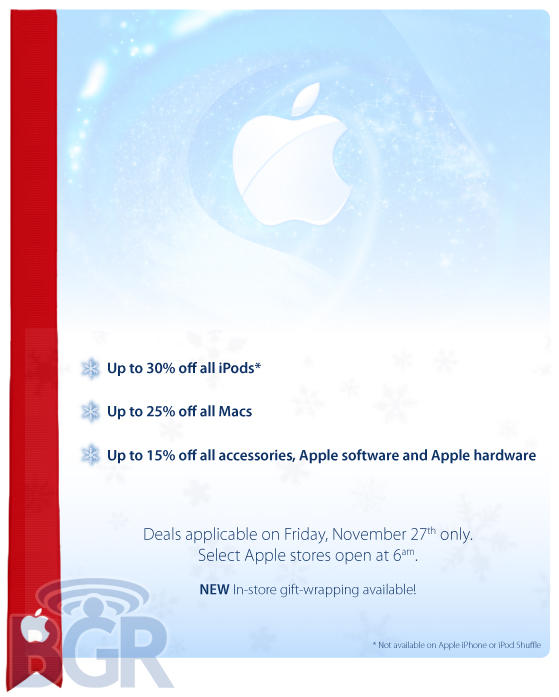
Boy Genius Report has obtained details of Apple’s Black Friday deals — maybe. The site was sent an email flyer, due to go out shortly, that says Apple will offer 25% off all Macs; 30% off iPods (except the iPhone and iPod shuffle); and 15% all accessories as well as Apple software and hardware.
These deals look pretty killer. Maybe too killer. BGR cautions that it’s “unconfirmed.”
BGR says the deals are good only for November 27th, and that Apple stores will open at 6AM.
We kick off another week with more bargains from Apple and others. MacBook Pro laptops are always a popular item and this time the Apple Store has nearly two-dozen factory-refurbished units. The MacBook Pros start at $999 for the 2.26 GHz 13.3-inch item. Others MacBook Pro laptops range from 2.53 GHz to 2.66 GHz and are priced between $1,299 and $1,949. Also on tap is Logitech’s Pure-Fi Express Plus speaker dock and a new round of iPhone freebies.
For details on these and other bargains (such as the PocketCPR) check out CoM’s “Daily Deals” page after the jump.
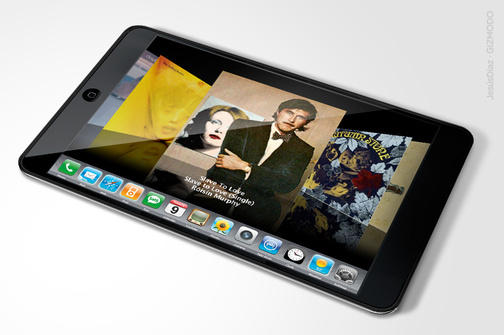
Apple’s much-awaited tablet device may include graphics capable of “stunning resolution” able to outshine the iPod, iPhone and possibly sound a death-knell for Amazon’s Kindle. The device, which many expect to see during the first quarter of 2010, may also offer a Webcam for mobile video conferencing, according to a survey of analyst speculation.
Analyst Laura DiDio of ITIC told CNNMoney.com the device will include a “high-end graphics card” for its 10- to 12-inch screen. “The tablet will change the game, because Apple will throw down the gauntlet at the competitors, and force them to follow along,” DiDio told the Web site.
Used with a cc-license, thanks to juanpol on flickr.
The Economist’s quarterly mag Intelligent Life did round robin interviews with a number of design luminaries, literati and museum curators about what objects define life in the aughts.
The iPod and iPhone came up most frequently, leading the editors to name this the iDecade.
That doesn’t mean they have anything nice to say about them, however.
Most of the comments veer towards the “these devices cut us off from humanity” type. Young’uns in other times were more social and less social media, apparently, we were all the better for it.
A few choice excerpts:
STEPHEN JONES, Milliner
iPhone. Txt spk
What is the Mini of today? Probably the iPhone. I wish I could say floor-length dresses or big green hats, but I can’t. Communication is the issue now, not freedom and mobility: iPhone, MySpace, Facebook, Twitter. This is a big sea-change: it is more about communication through the word and less about the image…
DOMINIC SANDBROOK, Author of “White Heat: A History of Britain in the Swinging Sixties”
iPods. Extreme materialism. Politicians cycling.
People listening to iPods on their way to work—and not merely as a symbol of technology, but as a representation of a sort of introversion, a retreat within our own bubble…
EKOW ESHUN, Artistic director, Institute of Contemporary Arts, London
The Prius. iPods. Style jams
The Prius is the car of the decade. It’s unlovely in lots of ways, but it has become an icon of aspiration. And then the iPod and social networking. Something that spools from these is that we don’t really have style subcultures anymore. Instead we have a playlist culture, where you’re allowed to mash up everything around you in a sort of pick’n’mix…
You know how the new amazing new augmented reality concept, in apps like Bionic Eye and Urban Spoon, have you blindly following the screen’s marker and bumping into people? Or the side of buildings? No? Fine, maybe it’s just me.
Point is, it’s usually easier to navigate to the nearest Starbucks with a map rather than AR.
But using AR to predict the future — hey, now that’s a cool idea. Sun Seeker does exactly that, estimating where the sun will be in the future. hold the iPhone up the sky, and an overlay displays the sun’s current position (usually not too difficult to find, even without AR) and its predicted path overhead.
If you’re not into AR, the app has a more conventional screen that provides a top-down overview.
Who will use this? Like the app’s iTunes Store page says, Sun Seeker is probably a great boon for pilots, architects, photographers and the like. Or residents of London or San Francisco. Sometimes it’s just good to know the sun is still there.
Currently, the only Apple-made game listed in the Cupertino, Calif. company’s App Store is Texas Hold’em. That may change as Apple reportedly begins searching for “a passionate” gamer able to help design for the iPhone and iPod touch. The job search would fit Apple’s vision of gaming as the next arena for its handheld devices.
In September, Apple unveiled two new iPod touchs, each with beefier hardware for gaming. To reinforce the importance of gaming, the company labels the iPod touch as the “funnest iPod ever.”
Be careful what you wish for. That may be the lesson Florida-based Psystar received after a judge issued a summary judgement in favor of Apple. “Psystar infringed Apple’s exclusive right to create derivative works of Mac OS X,” the court ruled.
Judge William Alsup denied Psystar’s motion for a summary judgement alleging Apple’s End User License Agreement was a form of copyright abuse. Alsup also ruled Psystar violated the Digital Millennium Copyright Act by installing a version of Apple’s OS that would run on the company’s computers.
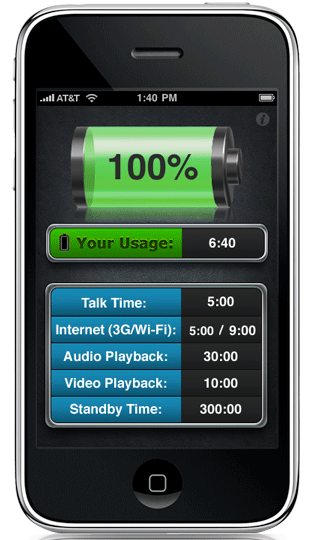
I’m always wondering how many Onion vodcasts I’ll get though while waiting in line at the DMV before before my iPhone’s battery shuts down and leaves me staring at the back of the bald guy’s head in front of me.
Not only will Battery Gauge tell me that, say the folks over at Tap Mode, but it’ll also crunch the numbers and give you an idea of how long I have remaining for any of the other myriad activities the iPhone is good for, like audio playback, connecting to the Internet and yammering on the phone. It’ll also reveal how much standby time is left.
Battery Gauge figures all this out by monitoring your iPhone use, and apparently needs to watch you through just one single charge-cycle.
Not bad for a buck. Also works with the iPod Touch.