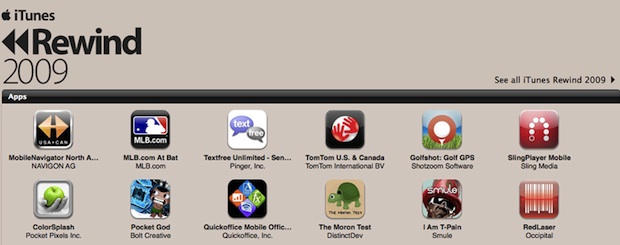
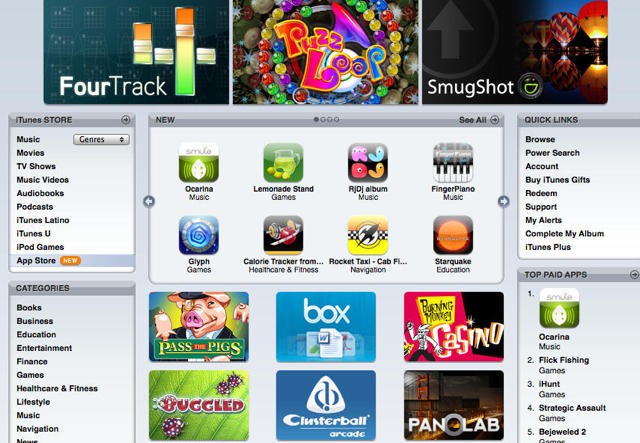
Apple has just unveiled iTunes Rewind 2009, a feature on the iTunes Store that lists all of the year’s best selling content, across music, video and apps. For some, the feature will be confirmation of the intractable cretinism of that mouth-breathing biomass, mankind. For others, it will be a handy primer on popular media they might have missed this year. Let’s dive in!
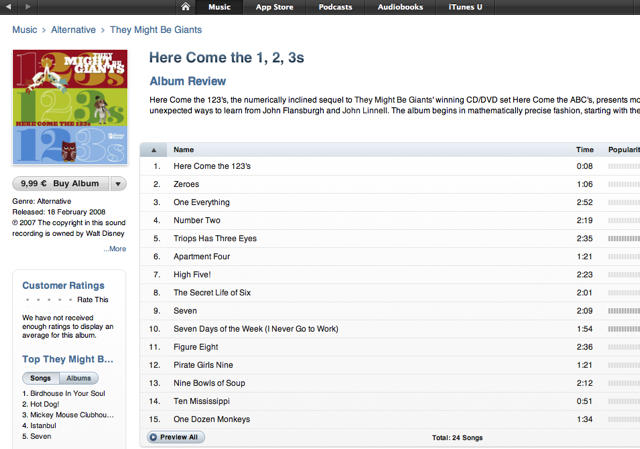
It’s a small update, but it’s an important one: Apple has just quietly upgraded iTunes to allow buyers the ability to preview whole albums at a time.
iTunes has always allowed buyers to preview tracks before they buy: thirty second snippets that allow users to confirm that the 99 cents they are about to pluck down for “You Shook Me All Night Long” is, in fact, the AC/DC version, and not the migraine-inducing caterwaul of Miss Celine Dion dueting with Anastasia.
If you wanted to buy an entire album, though, you had to click the preview button in iTunes for every single song. No longer: now, a handy “Preview All” button is available on each album page in the iTunes Store.
Some nice functionality, to be sure, but long, long overdue. Amazon’s MP3 store has allowed users to preview full albums for over two years, and it’s hardly difficult functionality to ape. But better late than never.
Apple likes Intel’s desktop line of Core i5 and Core i7 CPUs well enough to put them in their iMacs, so it makes sense that they would want to avail themselves of Intel’s three new Core i5 and i7 mobile CPUs (codenamed Arrandale) for any forthcoming refresh of the MacBook line. But things may not be that simple.
One way the Arrandale line of processors differs from previous Intel mobile CPUs is that the chips include mandatory integrated graphics. According to the Bright Side of News, Apple’s not interested in that: even the most inexpensive Macs now contain NVIDIA GeForce 9400M GPUs, which offer far superior performance to integrated graphics solutions.
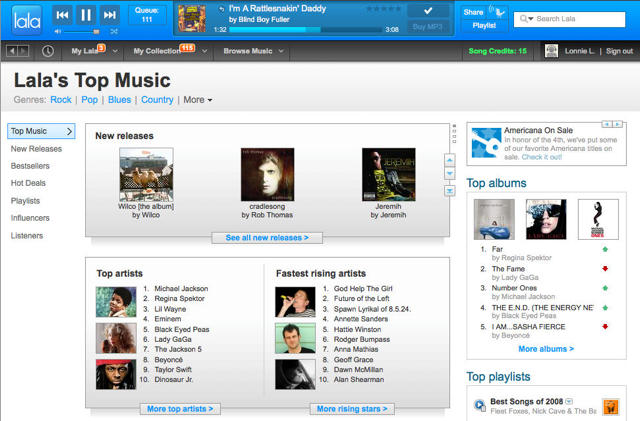
Apple paid $17 million for Lala, the streaming music site, according to reports Tuesday. The final purchase price was even lower – $3 million – due to $14 million already in the Palo Alto, Calif. company’s coffers, said TechCrunch.
“Lala had plenty of cash in the bank, but they were burning $500k/month,” according to sources with indirect knowledge sited by the blog. The purchase price is similar to similar media buys, such as MySpace’s $10 million deal for social-music site iLike or the $1 million paid for music site iMeem.
Without dedicated analog controls, playing emulated console games on an iPhone or iPod Touch is always going to be a maddeningly imprecise experience, but even so, it’s can be nice to see the graphic capabilities of Apple’s touchscreen line explored.
The latest emulator to hit the iPhone is the 3G4, a Nintendo 64 emulator developed by fourteen year old programmer, “Doogie.” That’s a regrettable internet handle for a precocious teenager smack dab in the voice cracking throes of pubertal hormone imbalance, but it is apropos: the 3G4 is an impressive display, not only of the iPhone’s capabilities, but the programmer’s as well.
It’s not perfect by any means. The graphics have had to be heavily rendered down to work smoothly on the iPhone, and Doogie is still struggling with some elements of the interface: namely duplicate button registers, delayed button presses and a few mysterious crashes. He’s also yet to implement the L, R, and Z keys… and, in truth, it’s hard to see just where he’d cram them on 3G4’s already cramped display. But Doogie’s working on it, and anticipates a release sometime next year… although obviously not through the App Store.
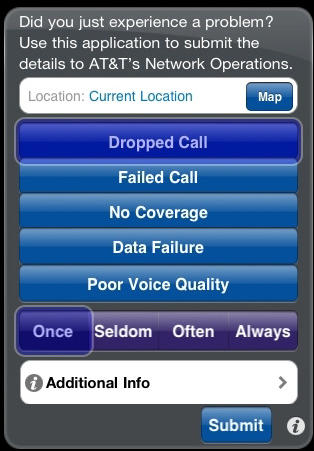
AT&T have released a free tool to the App Store to allow iPhone users experiencing sub-standard service to help AT&T’s technicians improve the network.
By downloading the free Marks the Spot App to your iPhone, you can easily report any service failures you might experience. Dropped a call? No coverage? Data failure? Poor voice quality? Simply load up the app, allow it to pinpoint your position using GPS, select how often the problem happens to you in that area, then fire off your complaint to AT&T’s crackerjack network engineers, who will presumably slap up a new carrier tower in the blink of an eye. Or, at least, roll their eyes, theatrically yawn and go back to sleep.
Right now, of course, it’s impossible to know if the Mark the Spot app is just a placebo public relations tool to mollify their customers, or if AT&T will actually prioritize improving their network by identifying the holes in their cell tower web and patching them up.
Either way, though, it’s a fantastic idea: so fantastic, I wonder how long it is before tools like the Mark the Spot app ship on all smartphones across all networks. In fact, given the fact that the iPhone can already detect when a phone experiences network service problems like dropped calls, I wonder why the iPhone OS doesn’t automatically cough up a tool just like Mark the Spot when it detects an outage.
In an unusual move, Apple has removed 1,000 applications sold by Chinese developer Molinker from its App Store. The mass purge follows questions whether the developer had ‘gamed’ the popular iPhone online store. Along with the apps – which amounted to one percent of those sold through the App Store, ratings were also deleted.
“This developer’s apps have been removed from the App Store and their ratings no longer appear either,” Apple marketing head Phil Schiller confirmed to iPhoneography, a blog that originally asked whether a scam might have been afoot.
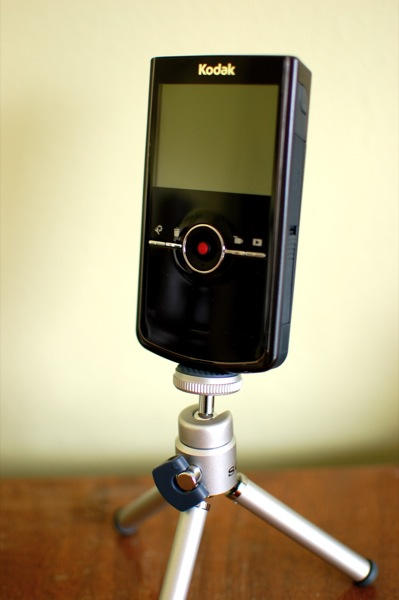
As Christmas approaches, you might be thinking of buying a pocket sized video recorder for your loved one. But which one should you get? A Flip? An iPod Nano?
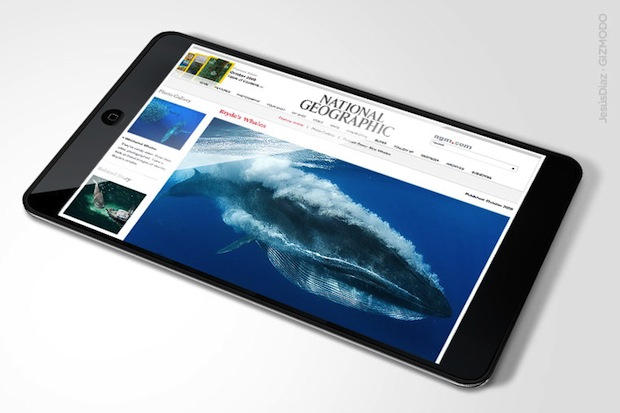
A group of four magazine publishers and media conglomerate News Corp are expected to announce Tuesday a joint venture aimed at developing new standards for digital magazines, according to a report. The move is seen as preventing Apple or other e-reader developers dictating a new age of digital publishing.
The new company — as yet unnamed — will be jointly owned by Hearst, Time Inc., News Corp., Condé Nast Publications and Meredith Corp., according to The Wall Street Journal.
We start the week with a grab-bag of gadgets, including more refurbished MacBook Pros from Apple. The computers, starting at $1,299, a 2.53 GHz processors and 13-inch screens. Next up is a Star Trek Internet Communicator that works with your iChat, Skype, MSN or AIM account. Finally, if you get chilly while using your MacBook and the mothership hasn’t beamed you up to somewhere warmer, slip on a pair of stylish gloves heated by the USB connection. Along the way, we also check out new iPhone software, earphones and iPod accessories.
For details on these and many other gadgets, check out CoM’s “Daily Deals” page after the jump.
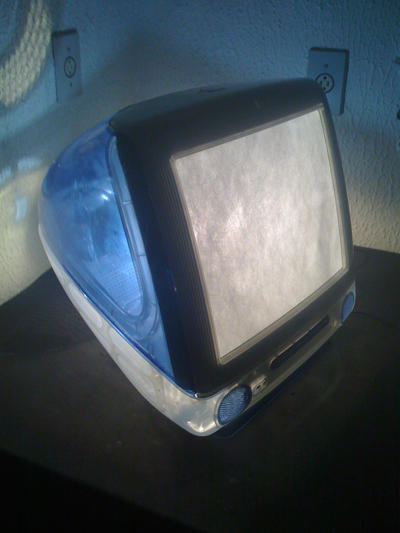
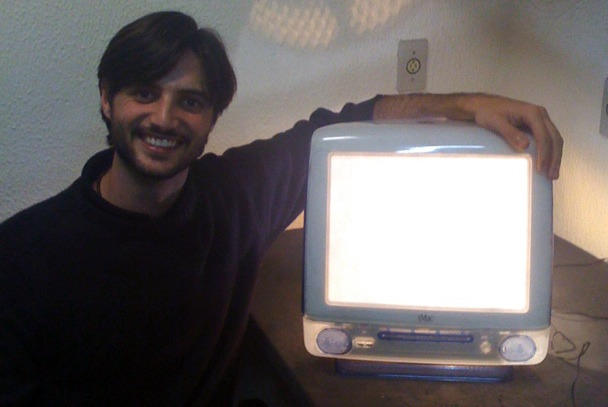
Cult of Mac reader Tiago Piccini from Brazil wrote in with yet another idea — following our posts on cat beds and hackintosh holders — for recycling the shell of a dear, departed iMac.
He spent under an hour gutting his non-working iMac, then adding a lamp socket and switch device, powering it with a 40w bulb and adding a piece of fabric under the screen to soften the light.
Piccini, who by day works at an Apple Solution Expert, calls his creation the iAbat-jour…It’s an easy DIY project that gives off a nice glow, no?
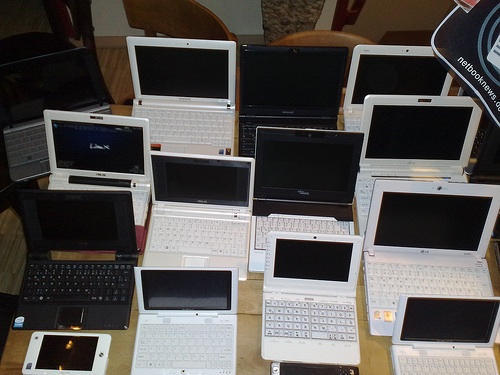
Remember when Apple Chief Operating Officer Tim Cook described netbooks as ‘junky’ at a time PC makers were flooding the market with the low-cost computers? A new reliability survey seems to defend Apple’s decision to avoid entering the netbook arms race. Apple has earned the top spot as most reliable computer maker, dethroning ASUS, creator of the Eee PC netbook.
Apple’s score of 374 reverses the lead ASUS had in late 2008 and earlier 2009, according to computer repair firm RESCUECOM. “Now that many of the netbooks by ASUS have been out for a while, there is obviously a higher need for service,” said the repair company’s CEO David Millman.
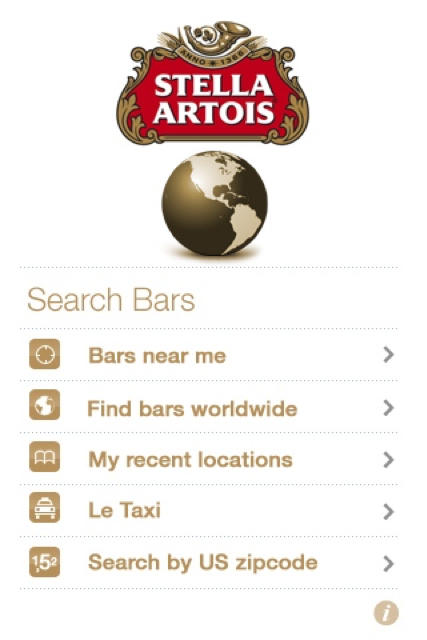
Now, if you’re in the middle of a pub crawl, your reality is already pretty augmented. But if you’re just starting out, or aren’t yet wasted to the point where dropping the iPhone down a street grating is a real possibility, then finding the closest watering hole has never been easier — thanks to Belgian beer-maker Stella Artois’ just-released, free, augmented-reality bar-finder app.
Although officially tight-lipped on details, Apple may use recently-acquired music streaming company Lala to upgrade its iTunes service and potentially other applications, reports suggest Monday.
“Lala gives Apple browser/Web-based technology to access music anywhere,” financial analyst Maynard Um told UBS Investment Research clients. Um believes Apple will combine the Palo Alto, Calif. company with a planned $1 billion server farm to “provide seamless access & mobility of digital content across all of its products, including media-focused content of iTunes and user-generated content of MobileMe.”
The iPod touch, Apple’s game machine, is becoming Cupertino’s way to introduce younger users to the iPhone. The phone-less iPod represented more than 40 percent of the devices running the iPhone OS software sold through September, according to researchers.
The iPod touch is “quietly building a loyal base among the next generation of iPhone users,” announced mobile analysis software firm Flurry. The study also suggested young iPod touch owners are using the device for games and social-networking. Flurry found 42 percent of the iPod touch sessions include social-media while gaming is 49 percent of the device’s sessions.
AT&T’s latest advertisement to tackle Verizon’s “There’s A Map For That” ads uses Luke Wilson, his twin and a decapitated doppelganger to make its point: AT&T’s 3G network is faster than Verizon’s.
As an ad, it’s certainly funny to watch Luke Wilson stumbling around, noggin-less. Guillotined by Verizon’s slower 3G service, Wilson’s body becomes a random engine of nerve endings chaotically firing, like a chicken with its head chopped off. The ad ends as Wilson’s headless body collapses to the floor, deftly cutting away just before his bowels loosen. The intact Wilsons then wander off for a snuggle.
The argument the ad is making, however, seems poorly thought out. AT&T certainly does have a faster network than Verizon… in fact, Verizon’s never contested that fact. What AT&T doesn’t have is anything even approaching Verizon’s coverage.
If you break this ad down to what it’s saying beyond the quirky charm, AT&T is making the following argument: if you are in an area with AT&T’s fastest 3G coverage, you can download a JPEG of Luke Wilson 20% faster than you can download it anywhere on Verizon’s network. That’s great, but most people would take reliability over a 20% boost in speed. AT&T would do better taking the money they are spending countering arguments Verizon has never made into their infrastructure, countering arguments Verizon has made.
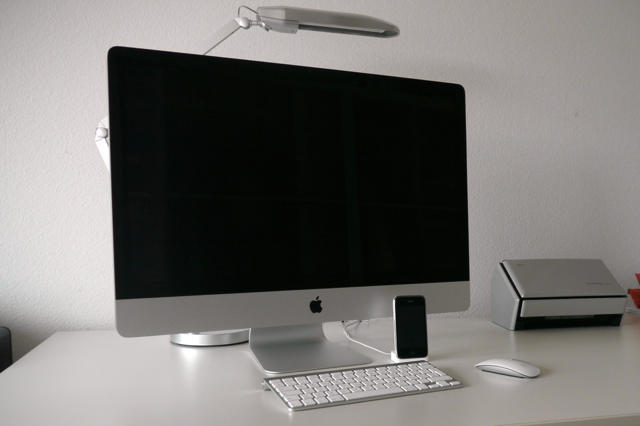
It should be no surprise to anyone that the newest iMacs catapulted to the top of the sales charts when Apple released them in October. But just in case you have any bets going on the matter comes sweet analyst confirmation: Apple computers topped the list of the most popular machines sold at retail in October, according to the NPD Group. Gentlemen, collect your outstanding beers and pony rides.
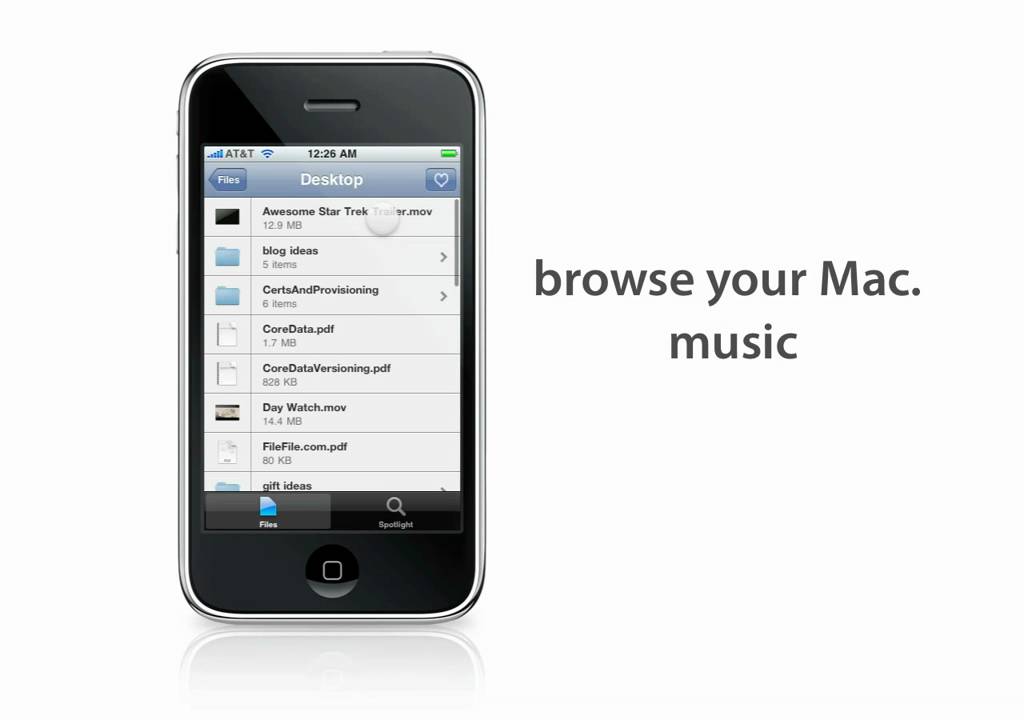
If you’re inclined to use your iPhone or iPod Touch for hauling around non-natively supported files like Word documents and Powerpoint presentations, there are apps that will allow you to copy over your files… but those only work once you are out of your house. The awkwardly named Here, File File! aims to change that, offering easy access to the contents of any of your Macs, from anywhere.
Although Here, File File! hasn’t hit the App Store quite yet, the teaser video compelling demonstrates how the app works. After installing the contents of a small DMG on your Macs, Here, File File! allows you to browse, search, slurp and stream any file on your machine or its connected folders to your iPhone or iPod Touch, keeping things secure through user authentication and SSL encryption.
The stand-out functionalities of Here, File File! seem to be its effortless Spotlight integration, the ability to send emails with files attached from your host machine, and functionality for streaming movies or music from your Mac to your iPhone from anywhere, and over any connection (although, presumably, the streaming media feature only works with natively supported formats like MP4 and MP3.)
The developers claim that Here, File File! should be available on the App Store in January, although the price has yet to be announced. In the meantime, you can sign up to be notified when the app is released.
In America, filing for a patent is simple, and a patent is often approved by clerks with no actual knowledge of the technology in question. That makes it all too easy to file for frivolous, overly broad patents… then sue other companies for massive pay outs when they unknowingly infringe.
You don’t need any more information to recognize that the entire patent system is completely broken than to just mull over the fact that Apple is being sued over the iPhone’s camera by a small company made up of exactly two lawyers and six staff members whose entire business is patent infringement. And Apple is likely to pay.
(A meaty smack of the palm on the expanse of forehead above the pineal gland, and then the hand trails downward to shield the eyes, as if from a bright light, leaving only the grim rictus of a man self-repulsed still exposed. “Oh, jeez, thanks, Apple!” the blogger says. “Now I look like an idiot!”)
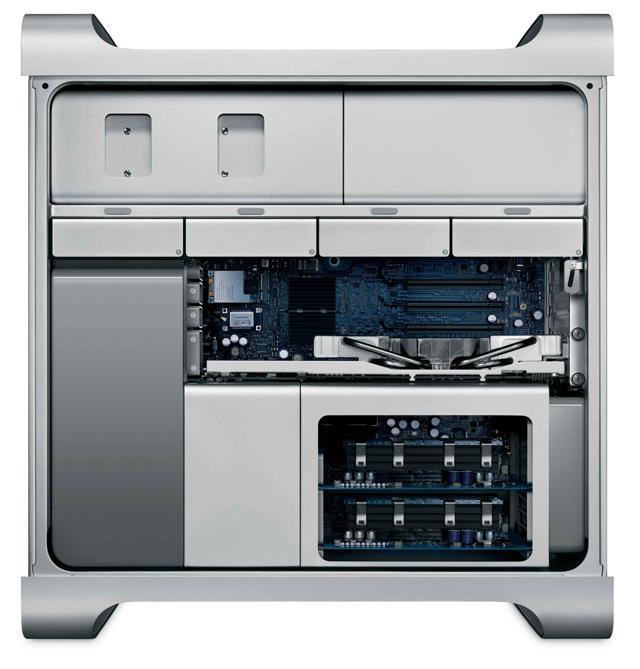
In addition to offering the new processor configuration, Apple has also expanded the hard drive space, now offering up to 8TB of storage in the Mac Pro, spread evenly between four hard drive bays. And while the quad-core 3.33GHz Mac Pro will add another $1,200.00 to the price of your machine, the 8TB of hard drive space is now standard.
While they were at it, Apple’s Xserves also got a bit of a beef-up, with the hard drive options again being expanded to 6TB across three hard drive bays. They’ve also updated their build-to-order RAM options on the Xserve, offering 4GB RAM modules which double the capacity of the quad-core Xserve to 24GB and the octuple-core Xserve to 48GB. Apple also states that the X-Serves will support up to 96GB of RAM under Snow Leopard, so 8GB RAM modules should work in these machines.
Despite the rumor of a dual Intel Core i9 Mac Pro configuration making a lot of sense (my guess is we’ll still see it at some point), Apple needed to patch the Mac Pro quick if they didn’t want the highest-end Core i7 iMacs cannibalizing sales, due to the latter machine’s superior price-to-performance ratio. A slight bump to the CPU frequency is a swift and easy patch to make while Apple looks into a more drastic refresh… although it also resets the countdown timer to the next Mac Pro refresh. My guess is we’ll see the Core i9 Mac Pros sometime early next year.
As a sidebar to her mega-tribute to Apple’s mobile dominance, Jenna Wortham of the New York Times asked Phil Schiller about his favorite iPhone apps. And, quelle surprise, they’re all extremely popular, many of them having been featured in TV ads and Apple keynote events.
Shazam — The remarkable music-identification app has been featured in a TV commercial and regularly appears in print
CNN — The country’s No. 2 24-hour news network (and one of the most popular websites on the Internet) has been a perennial top-seller on the App Store, at one time hitting No. 1 for all paid apps
Facebook — Featured in more than one ad, and is the most popular social network in the world
MLB.com At Bat — Featured in TV ads and not one, but two Apple keynotes
NBA Game Time — Basically the above, but for basketball
ESPN ScoreCenter — The same, but for more sports
Eliminate — Demoed on stage at the introduction of the iPhone 3GS
geoDefense — Actually not that hyped. Probably the most obscure title on the list, but it’s still been named one of Apple’s top 4 favorite iPhone games
Best Camera — Created by award-winning iPhone photographer Chase Jarvis, but a legitimate app store success story developed by an indie team and rising thanks to its merits
What do you reckon? Does your taste trend with Phil’s, or is he hopelessly vanilla in his picks?
In yesterday’s Sunday Business section of the New York Times, tech reporter Jenna Wortham essentially declared the war for smartphone dominance over — with Apple as the champion thanks to the out-sized success of the App Store strategy. Interviewing developers, competitors, Apple execs, and analysts, Wortham looks everywhere for cracks in the iFacade, but ultimately comes up empty. If someone is going to unseat the iPhone as the most profitable and desirable mobile platform, they haven’t emerged yet, all apologies to Android, Palm, Microsoft and RIM intended.
What struck me as I read the article was just how much of a shock to the entire mobile industry the iPhone has been. I see that less in the outsized numbers the magical handheld has posted than I do in the day-late, dollar-short responses of pretty much everyone else (Google possible excepted). Palm still claims that its use of widely embraced web-coding techniques in WebOS app development will help it counter the iPhone, but the 500 apps in its woeful App Catalog counter this notion. RIM and Microsoft note, correctly, that the correlation between quantity and quality isn’t always clear (what else can you say when you’re out-numbered by more than 30-to-1), but offer only vague promises of innovation:
RIM Co-CEO Jim Balsillie: “We’re much more interested in changing the applications and changing the user experience and really unlocking the promise and the money and revenue opportunity for the ecosystem.”
“Our strategy is to look holistically at how we can provide the best all-around user experience,” says Victoria Grady, director of mobile strategy at Microsoft. The Marketplace now has more than 800 apps.
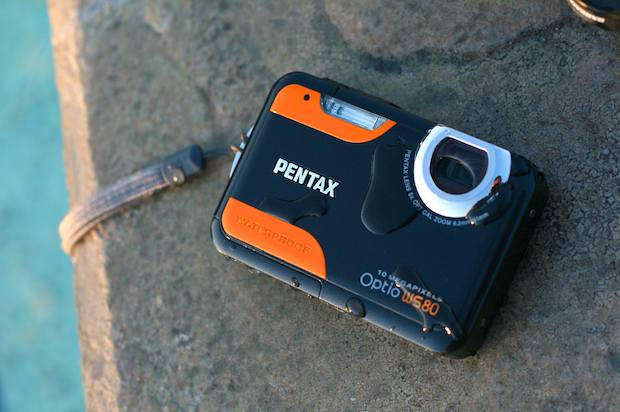
In a sea of bulky, boxy waterproof cameras that do little to encourage stashing them in a pocket and bringing along for the ride, the Pentax Optio WS80 is a refreshing change — it’s tiny, and practically begs to be stuck in a pocket and brought on the next romp. But that scaled-down size is at least in part responsible for scaled-down performance.
Harry McCracken at Technologizer is worried that Apple’s rumored purchase of Lala could be the best thing for iTunes – or the worst.
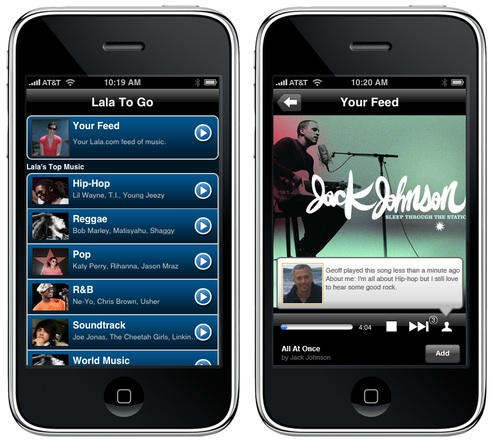
Harry has been testing LaLa’s as-yet-unreleased iPhone app, and it’s just like iTunes in the cloud. The app streams your iTunes music collection to wherever you are, plus you can buy new songs for a dime (well, streams of new songs).
“…all of a sudden, the iPhone’s relatively skimpy memory isn’t nearly as much of an issue, since you can stream all the music you’ve got in iTunes on a PC or Mac to your phone. You can also listen to and buy songs from Lala’s 8-million song store. It’s all surprisingly fast for a streaming service, and it even caches recent music you’ve listened to so you’re not completely out of luck if you don’t have an Internet connection.”
Harry is in love, and hopes that Apple will roll Lala’s functionality into iTunes if Apple buys the company. But he’s also worried that Apple may be buying Lala to kill it — it’s a competitive threat to iTunes.
Over at Silicon Alley Insider, the same notion is implicit in a quote from an industry insider who says LaLa’s licenses are non-transferable:
One industry source with years of experience in the digital music business is very surprised by the apparent deal. “I would be completely shocked,” he says. “None of the licenses are transferrable (not that Apple has a hard time getting licenses). Why would they buy it? Again, I’d be shocked.”
Thing is, as far as I know, Apple has no history of buying companies to shut them down. Anyone know any examples? And as Elliot Van Buskirk at Wired points out, Apple does have a history of buying companies to kickstart new products. Apple’s iTunes was based on SoundJam.
In addition, as we reported in August, Apple is building a one of the world’s largest data centers in North Carolina. Given it’s enormous size, the new data center is likely to focus on cloud computing, perhaps hosting services like Lala’s for Apple’s giant iTunes customer base.