Two music companies representing rapper Eminem have settled out of court with Apple over a download dispute.
Eminem’s publisher, Eight Mile Style, and his record company, Aftermath Records, sued Apple for allegedly making the rappers music available for download without permission.The rapper was not involved in the case.
There’s frustration over stuff like dropped calls and tethering troubles, then, you know, there’s Frustration.
The latter was apparently what fueled Donald Goodrich, 38, to threaten to pull a gun on his iPhone at the Kenwood Towne Centre Apple Store in Cinncinati.
To prove he meant business, Goodrich flashed the employee a gun hidden under his jacket.
The cool-headed employee told Goodrich she’d get his phone fixed and walked him over to a Genius. She then told her manager of his iHomicidal intentions, who called police.
Goodrich was charged with aggravated menacing, causing fear of harm to an Apple employee. He’s expected to be arraigned this morning.
No word on exactly what drove him to want to kill his phone.
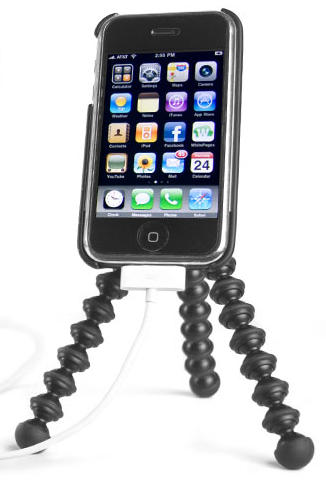
I didn’t know until today that the iPhone had created its own branch of videography – iPhoneography. That’s the reason flexible tripod-maker Joby gives for introducing the Gorillamobile for the 3G and GS. “The proliferation of ‘iPhoneography,’ in addition to the 3GS’ video and camera upgrade, has only increased the already demonstrated need for an adaptable iPhone stand,” Joby CEO Forrest Baringer-Jones said.
Joby has adapted its line of Gorillapod tripods for the iPhone. Unlike previous versions, which attached to the iPhone via a suction cup, the Gorillamobile includes a custom soft-touch iPhone case that then connects directly to the articulated Gorillamobile tripod.
Along with the case, the Gorillamobile includes two-dozen bendable leg joints that can be positioned in endless combinations. Rubberize foot grips provide a stable contact with any surface.
Just in case you want to switch-out your iPhone for another camera, the tripod comes with two adhesive clips that leave no messy residue and a universal camera mount.
The $40 price of the tripod set is reasonable, according to Gadget Lab. “Compare that to the average $30 for an iPhone case and it looks like a pretty good value,” wrote Charlie Sorrel.
There have been previous attempts to find the ultimate iPhone tripod. Over the summer, Zgrip unveiled the Zgrip iPhone Jr. which included multiple “fingers” that grasped the iPhone. The Zgrip iPhone Jr. then attached to a standard tripod. An innovative alternative was the Monsterpod, an orange and black blob of Viscoelastic Polymer, allowing the ufo-shaped device to stick to virtually any surface.
Thumbs up: three recent Hockney iPhone pieces. @nybooks.com
Veteran pop artist David Hockney has been demonstrating his passion for creating works on his iPhone since he started fingerpainting on one six months ago.
Turns out Hockney first got his hands on an iPhone one a year ago, when he grabbed it from Lawrence Weschler, writer and director of the New York Institute for the Humanities at New York University.
Weschler interviews Hockney about it what reads like a 1,528-word love letter to the iPhone for the New York Review of Books.
There’s been a lot on the 72-year-old’s use of the iPhone, not so much about how he gets the mini-masterpieces on touch screens.
Hockney’s technique? He doesn’t finger paint as much as thumb paint those flowers and landscapes he sends to friends daily.
Hockney limits his contact with the screen exclusively to the pad of his thumb. “The thing is,” Hockney explains, “if you are using your pointer or other fingers, you actually have to be working from your elbow. Only the thumb has the opposable joint which allows you to move over the screen with maximum speed and agility, and the screen is exactly the right size, you can easily reach every corner with your thumb.” He goes on to note how people used to worry that computers would one day render us “all thumbs,” but it’s incredible the dexterity, the expressive range, lodged in “these not-so-simple thumbs of ours.”
Brushes is Hockney’s app for painting on the iPhone — though a footnote to the story says the latest upgrade released in August is not to his liking and he continues to use the earlier version.
Interestingly, Hockney doesn’t think the art created is so great, once it’s off the device or a screen:
“Though it is worth noting,” he adds, “that the images always look better on the screen than on the page. After all, this is a medium of pure light, not ink or pigment, if anything more akin to a stained glass window than an illustration on paper.”
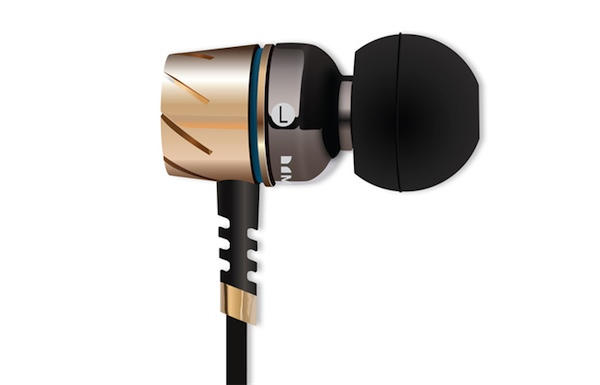
Monster’s $250 Turbine Pro ear buds are a far cry from the $50 ‘buds we wrote about Thursday. The most noticeable difference: the iFrogz Timbre earbuds are encased in wood, while the Turbine Pro is wrapped in 24k gold.
Then there is Monster’s branding campaign, describing the Turbine Pro as “in-ear speakers” rather than your run-of-the-mill earbuds. Essentially, the company has stuffed in a full-fledged driver one would expect to find in Monster’s larger home speakers. Before the Turbine Pro began shipping, reviewers, such as Boing Boing, explained earbuds typically use armature drivers which sit “directly inside a magnet, producing a considerable amount of sound without a lot of power—the low impedance is perfect for portable music players which don’t have the luxury of power pouring limitlessly from the wall,” wrote Joel Johnson.
The promotional copy strips away the technical jargon, proclaiming the Turbine Pro is “like a subwoofer for your ears.” Unlike iFrogz’ product, which hopes to infer wood equals better-quality tones, the Turbine Pro employs a high-density metal casing to absorb unwanted vibration while providing an “inert,non-resonant acoustic chamber.” To get that perfect fit, the unit comes with five isolating ear tips.
As Griffin pointed out last month with its line of MyPhones headsets for children, the cable between your iPod and your ears is the weakest link. Monster said it is shipping the Turbine Pro with the company’s patented Magnetic FluxTube technology.
If reading technical data isn’t your cup of tea, Monster’s promotional campaign is using the latest tactic to sway consumer opinion: a YouTube video. The video includes testimonials from several recording engineers and producers.
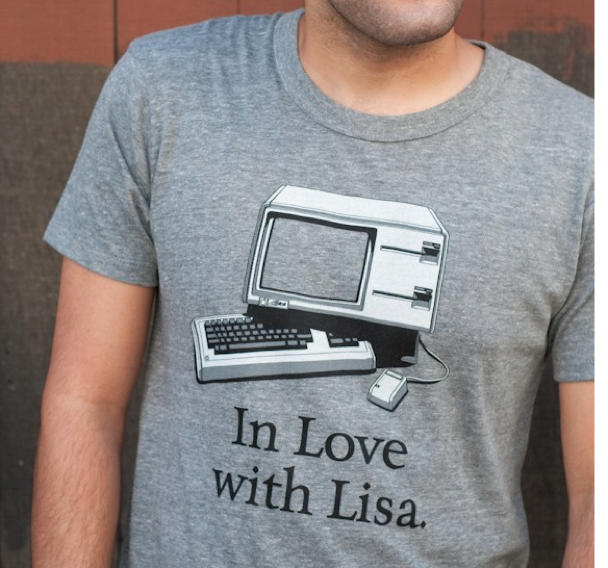
Although the $9,995 price tag was one of the reasons the computer Lisa didn’t sell well, showing some love for Lisa in T-shirt form will only set you back $32.
Often considered one of Apple’s flops, the ill-starred Lisa was the first computer on the consumer market with a graphical user interface (GUI) but despite this innovation the high cost, lack of software programs and general sluggishness led it to the computer graveyard in 1983 after two years and 100,000 units sold.
Bruce Tognazzini, the interface guru at Apple once said, “The Lisa was a great machine. We just couldn’t sell any.”
Show that you agree with this T-shirt, available on Etsy.
We cap off the week by highlighting a trio of tactile Mac gadgets. Keyboards are likely the way most Mac cultists commune with their Apple devices. In the New York office, I change keyboards like a woman (sexist alert) might change shoes. The “professional” keyboard included with my iMac quickly gave way to Apple’s slim-line MacBook-like keyboard. Logitech’s diNovo Edge Bluetooth wireless keyboard also sports something the company describes as “TouchDisc navigation” that appears close to the iPod’s. Next up on the tactile parade are cases. It is ironic that Apple’s design team put so much effort into creating a sleek, slick and that I-just-gotta-touch exterior, only to have owners quickly hide it behind a forest of cases. We look at a new clip-on rubber case and a crystal clear protector. Finally, after keyboards and cases, cables probably are the most dragged, pulled or kicked component. Wouldn’t it be great if the snakes nest of cables could retract into a compact house? Well, we have just the gadget for you.
For details on these and other bargains, read CoM’s “Daily Deals” page.
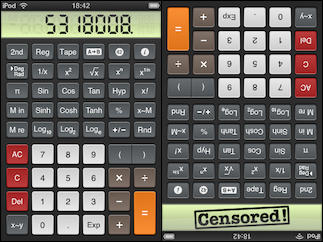
When I was a kid, digital calculators were roughly the size of a brick, and had satisfyingly chunky displays. They also, in those pre-internet days, provided a means of minor technical mischief. Type in 5318008, flip your calculator upside down, and it appeared to say ‘boobies’. If you were five, this was the most hilarious and original gag in the history of the world.
In this modern and rather less innocent age, the media would have you believe that personal technology devices in the hands of children merely teach them how to joyride while murdering innocent puppies and simultaneously fashioning bombs out of string, jelly babies and bits of twig. It’s presumably for this reason that Apple considers it a good idea to warn you (Every. Single. Time.) when you download an eReader from the App Store that it—shock!—potentially enables you to view content that some people might deem objectionable.
Enter, stage right, James Thomson, creator of iPhone/iPod touch calculator PCalc. In a minor slice of design genius, he combined the two issues mentioned above and PCalc now slaps a huge ‘Censored!’ sign across ‘naughty’ words when your device is flipped, thereby ensuring fragile little minds aren’t warped beyond all recognition.
This is a smart, funny, satirical swipe at the recent trend towards over-zealous censorship. Unless you’re, say, Sajid Farooq of NBC, who, inexplicably takes Thomson’s joke seriously (and, sadly, he’s not alone) and states PCalc’s change would “make even George Orwell shudder in his grave”. I’m thinking Orwell would be more likely to laugh his CENSORED off.
Three’s a crowd… unless the three in question are the latest bags from hip Australian bag maker Crumpler.
Branching out from its original line of messenger bags, Crumpler now offers, amongst others, the Salary Sacrifice (a laptop rucksack), the School Hymn (a laptop clutch case) and the Barney Rustle Blanket (a messenger bag). The names are weird, but the bags aren’t.
Jobs has a net worth of $5.1 billion, Forbes says, thanks mostly to nearly $4 billion worth of stock in Disney. Jobs became the largest individual Disney stockholder after the company bought Pixar in 2006.
“Best investment: bought Pixar from George Lucas in 1986 for $10 million; created string of hits (Finding Nemo, Toy Story). Sold to Disney in 2006 for $7.4 billion in stock,” says Forbes. “Today is Disney’s largest shareholder; stake worth $3.9 billion.”
Last year, Jobs placed 61st on Forbes’ list, and despite a decline in net worth of about $600 million, he comes inside the top 50. The economic climate hasn’t been as kind to other billionaires, poor souls. His previous highest showing was 49th place in 2007.
Jobs climbed up the ladder thanks to a massive 90% rebound in Disney’s stock price, and a similar doubling of Apple’s. Just six months ago, in the middle of the slump, Jobs slipped to 178th place.
Jobs has drawn only a $1 annual salary from Apple since returning to the company, although he has received massive stock option grants and a private Gulfstream jet.
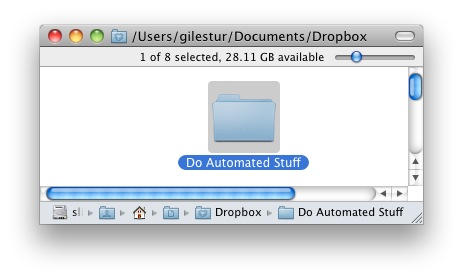
Ken’s trick depends on a little bit of Applescript to make it work. But not everyone knows Applescript, which is where another app called Hazel comes in handy.
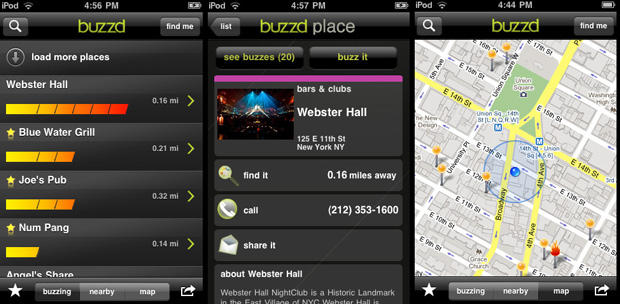
The realtime city guide Buzzd has just released a slick and easy-to-use dining-and-drinking app that tells you what’s buzzing right now.
Available for free, the Buzzd iPhone/Touch app uses the company’s “buzzmeter” algorithm, which pulls in data from services like Twitter and Buzzd, to tell you what local venues are hot. Drunksourcing, it’s been called.
To drunksource venues you need to be a Buzzd member (it’s free) but the app will return hot places to eat and drink whether you’re a member or not. A quick test of my local neighborhood highlighted what looks like a pretty good list of the hot restaurants and bars around 16th and Valencia in SF’s Mission.
It’s certainly a lot easier to use than the overrated Urbanspoon app, which I’ve never really liked. Buzzd looks like a venue-finder I might actually use. Reviews are short and snappy, and the popularity of something is usually a pretty good yardstick of quality.
Plus, it’ll probably also function as a pretty good reverse warning system, alerting you to venues packed with insufferable hipsters.
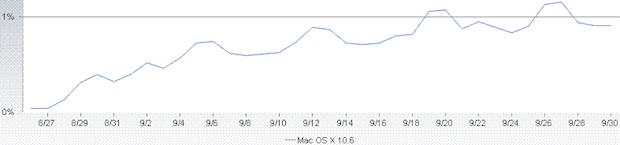
Snow Leopard was released on August 28. Thanks to its low $30 price tag, Mac users are pouncing on it. But a nearly 20% percent adoption rate is fast — by anyone’s standards.
Net Applications estimates market share by measuring the number of visits to a network of sites, recording things like browser and operating system. According to the firm, about 1% of all computer users are currently running Snow Leopard. The firm estimates that 5% of computer users worldwide are Mac users, which means about 18% of Mac users are running Snow Leopard.
On interesting thing to note is the peak in Mac users during weekends. Presumably, people are surfing on PCs at work during the week, and using a Mac at home over the weekend.
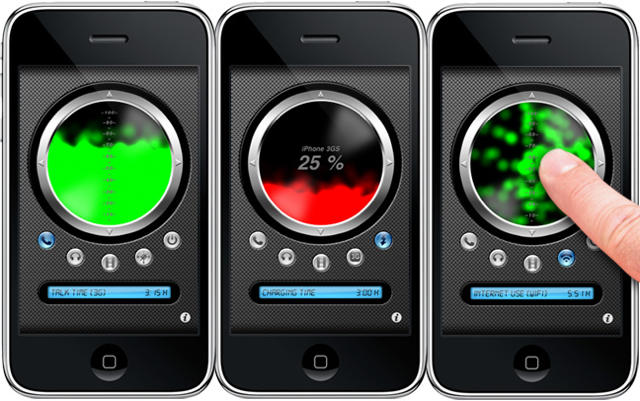
All Power Pro is a cool battery meter for the iPhone/Touch that displays your battery level as an animated plasma engine.
The amount of plasma in the window indicates the amount of juice in your battery pack. Double-tap the screen for the actual percentage of charge. The plasma flows with gravity or tap the screen to watch little plasma explosions. It also estimates how much juice you’ve got left for talking, listening to music, or surfing the web.
Very cool idea to turn something mundane into something clever by putting a new interface on it. Here it is in action.
When we think of wooden music devices, our memories go back to the hulking consoles that created mellow tones. You’d think that today’s release by iFrogz of their wooden EarPollution Timbre earbuds would be just as warm and fuzzy – and if you did, you would be wrong.
The $50 earbuds practically fell apart in the hands of Gadget Labs’ reviewer Charlie Sorrel, who told readers the earbuds produced harsh sounds and music akin to listening to your playlist over the telephone.
The video above shows why tablet computers are so exciting. Using your fingers to directly manipulate objects onscreen (as opposed to hitting radio buttons with a stylus pen) is clearly a powerful and intuitive way to interact with our machines.
The video shows a demo of BumpTop, a 3D desktop overlay for Windows 7. As you’ll see, it makes the computer desktop just like a real physical desktop. It’s pretty magical. Just look at the way photos are cropped — by chopping them with your finger!
Greenpeace has given Apple a “pat on the back” for last week’s publication of a detailed breakdown of its greenhouse gas emissions.
The environmental group also credits Apple for being ahead of the industry in removing toxins from its products. While Apple eliminated poisonous chemicals from its entire product line about a year ago, other companies are lagging.
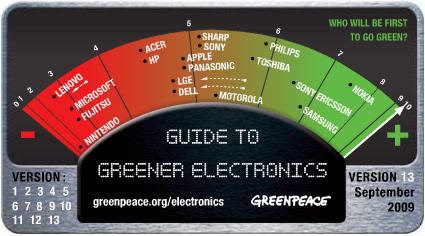
Apple sits in the middle of the pack of 18 tech companies, well behind the leader, Nokia, but Greenpeace acknowledges the guide went to press before Apple published its environmental report.
“We went to press before Apple’s updated environmental information was published last week but the welcome news of their transparency about greenhouse gas emissions and other environmental disclosures will be factored in to the next edition. Apple can justly pat itself on the back for listening to their customers who asked for greener gadgets. And all you Apple users should pat yourselves on the back for asking.”
The group also praised Hewlett-Packard for attempts to eliminate toxins and releasing a computer that is virtually free of PVC (Polyvinyl Chloride, or vinyl plastic) and brominated flame retardants (BFRs). Earlier this year, Greenpeace launched a HP=”Hazardous Products” campaign against the company, pressuring it to match Apple.
“HP has made the first step in catching up with Apple, which eliminated these materials from its entire product line almost a year ago, and now puts pressure squarely on HP’s competitors to put more products on the market that are cleaner and safer,” the group says.
Greenpeace saved its greatest praise for consumers who pressure companies to be greener. “The big points go to activist consumers for proving once again that public pressure creates positive change.”
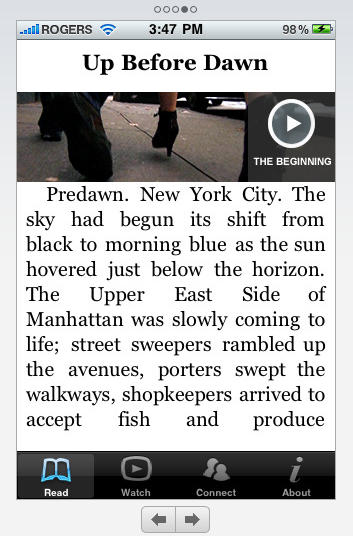
Publishing house Simon & Schuster just launched a new product dubbed “vook,” a dumb name for what sounds like a smart video book.
The idea? Vooks blend text and video into a reading and viewing experience, so the next time you’re not really getting a sense of place from a novel, or want to see how exercises are done you can watch a video. It’s also got all of the social media trappings, so you can discuss, rant etc. about the vook, (pronounced to ryhme with book), too.
Deals on MacBook Pro laptops keep landing on our desk – and we keep passing them on to you. This week’s cage fight is between the mothership herself and ExperCom. While ExperCom’s offer has more power under the hood (2.93GHz versus Apple’s 2.66 GHz alternative), Cupertino appears to lead in variety. For discount shoppers, we have a battle between Mac Mall’s 75% off and PC Micro Store’s 50% off on iPhone accessories. Finally, we round out the top tier with a smattering of cases and assorted equipment.
For details on these and other bargains (like App Store price drops), head over to CoM’s Daily Deals page.
With over 75 gazillion apps in the iTunes App Store now having generated more than Umpteen billion downloads, it might seem a tad preposterous to try and pick the 10 with the most beautiful GUIs.
But we’ve never let being a tad preposterous stop us before and we’re not saying these are the 10 most beautiful apps in the App Store — we’re just saying these 10 are beautiful. In almost every case, too, they have other redeeming features that make them worth checking out if you don’t have them already.
And don’t forget to let us know in comments if you’ve found something useful and beautiful that we may have missed here.
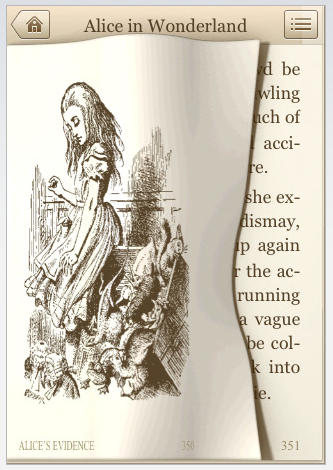
Classics is the, uh, classic reader app that lets you experience some of the greatest works of literature ever produced — in a digital format that’s so natural and so obvious, it just feels right. Meticulous care has been given to the typography and illustration of works such as Alice in Wonderland, The Art of War, Paradise Lost and many more, with sensual touches like realistic 3D page flips, a satin bookmark to remember where you left off reading and a beautiful woodgrain bookcase to store your collection.
Placebase offered a sophisticated mapping application and API called Pushpin, which can create rich, detailed maps from all kinds of public and private data sets — much more than Google. See the example above, which shows gas stations and auto service shops in the L.A. area.
Steve Jobs has always said he likes to control the primary technology in his devices. Can he be preparing to move away from Google, especially its Mapping app, which is behind some of the iPhone’s primary functions and underlies new mapping features in iPhoto?
As Weintraub notes, Apple has been fighting with Google lately over the Google Voice app, and Google CEO Eric Schmidt quit Apple’s board to avoid conflicts of interest.
“Whilst I’d love it if Apple were looking at doing exactly this, I find it unlikely,” he says.
But Collingridge does think there’s huge opportunity in reinventing the ebooks as “digital books,” and that Apple’s tablet presents some interesting UI opportunities.
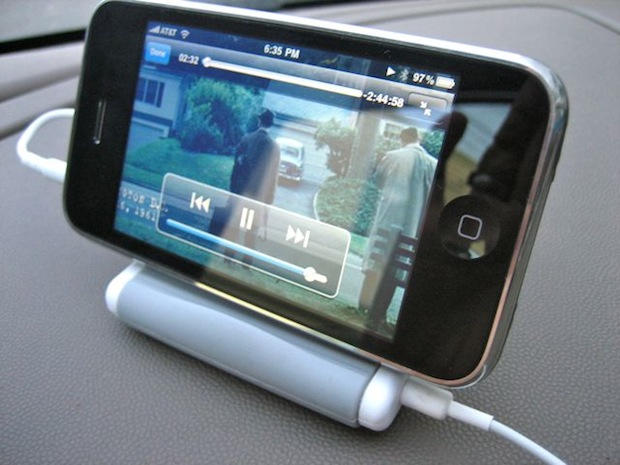
The latest release into the already crowded market of iPod/iPhone holders is the StandHear Travel Stand & Headphone Splitter from Agent 18.
The compact, fold-out case allows you to support your iPod/iPhone at four different viewing angles, leaving your hands free to do whatever they might need to be doing whilst watching your favorite movie or reviewing por… er, important documents.
If Apple has learned anything from the iPod, it’s that a modern consumer electronic device is a three-legged stool: hardware, software, and media that fills it.
Apple doesn’t want to launch a tablet without media to consume on it. This is the mistake Apple made with the Apple TV: It’s a great piece of hardware and software, but the content isn’t there yet (especially the paucity of Hollywood movies).
So Steve has set out to persuade publishing houses, magazine companies and textbook publishers to make interactive books and magazines that make sense on an interactive, multitouch device. Here’s the key paragraph from Lam’s story:
“Some I’ve talked to believe the initial content will be mere translations of text to tablet form. But while the idea of print on the Tablet is enticing, it’s nothing the Kindle or any E-Ink device couldn’t do. The eventual goal is to have publishers create hybridized content that draws from audio, video and interactive graphics in books, magazines and newspapers, where paper layouts would be static. And with release dates for Microsoft’s Courier set to be quite far away and Kindle stuck with relatively static E-Ink, it appears that Apple is moving towards a pole position in distribution of this next-generation print content. First, it’ll get its feet wet with more basic repurposing of the stuff found on dead trees today.”
But what might this “hybrid content” look like?
One clue comes from Enhanced Editions, a U.K. startup founded by former-book industry executives that seeks to marry technology with traditional print publishing. “We have long-since seen the destiny of the latter bound to its embrace of the former,” the company says.
I lost all my game progress, and all I got to show for it was this lousy dialog box.
One of the dumbest decisions Apple made regarding iPhone and iPod touch is devices wiping all traces of an app when it’s deleted, but providing no means for saving preferences and progress. Unless you use an uninstaller to remove an app or game from your Mac, you can usually pick up where you left off after a reinstall; savvy Mac owners can also fiddle around with preferences, moving them between Macs to ensure consistency across machines in app environments or videogame progress.
iPhone and iPod touch don’t allow such things. Spend hours making headway in Peggle and then, for whatever reason, delete and reinstall Peggle (by accident, or through having a restore go wrong), and your progress is gone—you have to start again. It’s like 1980s arcade games after the plug has been pulled, or cheap, miserly Nintendo DS games that lack a battery back-up in the cartridge, erasing progress and high scores when the device is powered down. For a platform Apple’s pushing as the best solution for handheld gaming, it’s asinine that you cannot export and import videogame progress and save states.
There is a workaround, however, using the shareware app MobileSyncBrowser, but it’s not for the faint-hearted…