Yuck — it even moves. By Mio I-zawa.
Check Out This Horrific iPhone Umbilical Charging Cord [Video]


Yuck — it even moves. By Mio I-zawa.
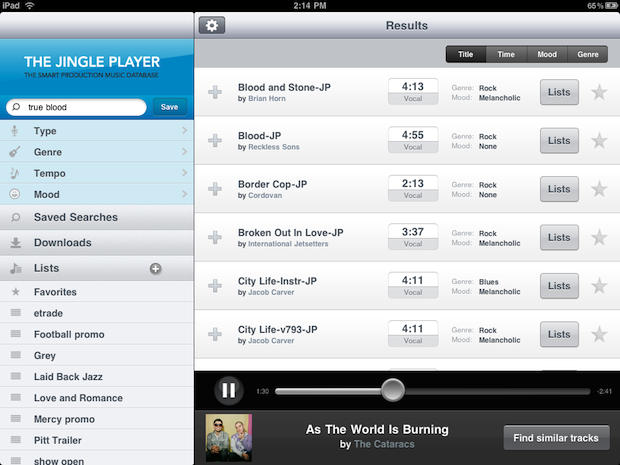
Ever wonder how they come up with those great songs you hear in TV, film, advertising and interactive media? You know, those songs that sound like they might be huge hits but are actually songs you’re probably hearing for the very first time?
Odds are — in recent years, at any rate — producers of that TV show, film or ad got the music from Jingle Punks, a New York-based firm with a proprietary search algorithm and a huge (and growing) library of independent music that is changing the way music makes it into consumer media almost overnight.
Time was, creative directors in the entertainment industry sat in offices behind mountains of cassette tapes and CD jewel boxes, sifting through demos sent in by every Indy band from Bellingham to Boca Raton, searching for the right sound to make their productions sing. Often it amounted to drudgery as a job and a crap-shoot for musicians and songwriters, who never knew if their masterpiece would get played for the right set of ears.
Now, thanks to Jingle Player, an iPad app with advanced meta-tagging magic built inside, former drones for the likes of NBC, MTV, VHI and countless ad agencies on Madison Avenue are suddenly freed from their dank hovels to roam the earth brandishing iPads, fulfilling the dreams of indy musicians toiling in obscurity. The Jingle Player’s secret sauce lies in its ability to serve up the right songs based on the way people actually talk about music, using pop culture-relevant terms instead of technical music business jargon.

At first glance, offering an open-source mobile operating system like Android, wouldn’t be a major profit center for Google. However, one analyst Friday offered multiple ways Android could even further enrich the Mountain View, Calif. firm’s coffers, including become its own ‘virtual telco’ for smartphone owners.
Google gains $500 million per year because Android offers hardware makers and carriers an attractive alternative to payments to Apple for the iPhone, according to Goldman Sachs analyst James Mitchell. In addition, although Apple leads the mobile apps market and is increasing its share of the mobile advertising pie, Google collects 30 percent of apps sold through its Android market and 40 percent from in-app advertising via AdMob.
Perhaps most intriguing, however, was the potential for Android to turn Google Voice combined with Google’s stake in Clearwire into what Mitchell calls a “virtual telco.”
“Google could use Android to evolve into a virtual telco, providing a single contact number and populating its Internet-based calling services,” the analyst told investors.
There is a downside for Google, however. The analyst foresees slow growth of search in Europe and Apple’s continued domination of the mobile Internet.
[Fortune]

New details emerged Friday on Apple’s apparent plans to offer a touchscreen iMac. The Cupertino, Calif. company reportedly is testing samples of capacitive touch panels for a lighter and thinner desktop model with at least a 20-inch screen. The report that Apple is still considering touch panel designs may indicate a new iMac will not appear before 2011.
“The new iMac is rumored to have a good vertical and horizontal viewing angle, and its projected capacitive touch panel will adopt a one-glass solution, which integrates the touch sensor and cover glass, to reduce thickness and weight,” according to Taiwan-based industry publication DigiTimes. Apple’s tests involve samples from Sintek Photronics, which the report suggests “has a good chance” of becoming the supplier for the new iMac models.

One of the reasons owners of the iPhone 3G and iPhone 3GS have been waiting for a jailbreak for iOS 4.1 is to enable the iPhone 4’s impressive HDR functionality on their older handsets… a hack which is already available for jailbroken 3G and 3GS users on the iOS 4.1 beta through a Cydia app.
It looks pretty likely, though, that these users won’t need to jailbreak their devices to enable HDR functionality… Apple seemingly intends to add HDR in a software update coming down the line.
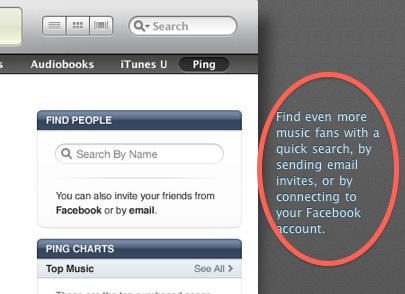
When Apple first unveiled Ping, its new music-based social network half-baked into the latest version of iTunes, Facebook integration wasn’t just promised… it was listed as a feature on Apple’s own promotional pages.
Nonetheless, much to users’ mystification, Ping launched with Facebook support M.I.A., a deal having fallen through at the last minute after fifteen months of talks due to what CEO Steve Jobs described as “onerous terms” on the part of the social network giant.
According to Silicon Valley Insider, though, Facebook CTO Bret Taylor is now saying that he is “very confident” that Facebook and Apple will figure out a way to work together on Ping.

Look-Up is an augmented reality shoot-em-up for iPhone (not iPad or iPod) in a Space Invaders style. And it’s fun.
Swarms of 1950s-style flying saucers fly down at you from the sky – you point your phone back at them and hit the fire button. Zappity zap zap. I tried it this morning in my office in flooding-with-rain Wiltshire, but I suspect it would be more exciting to play when you’re outdoors in the sun, like the guys in this demo video:
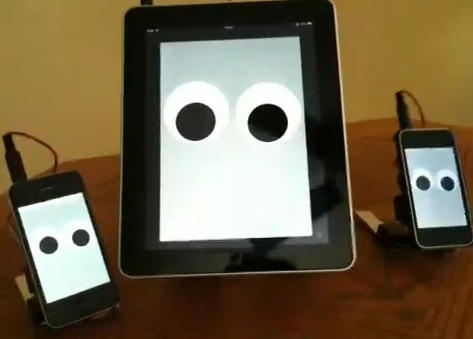
OK, you’ve used your iPhone to control robots. Now you can turn it into one, if you have the same techno wizard chops as Kazu Terasaki, the guy who’s done just that.
Here’s the video:
Perhaps “walking” isn’t quite the right word here. They’re sort of “sliding” their way across the table. But hey, all robots have to start somewhere, right?
(Via Gizmodo, and about half of Twitter this morning)
When Mozilla finally releases Firefox 4.0 for OS X, Mac users might notice that browsing has gotten quite a bit snappier for them, as it now looks as if hardware acceleration may, at long last, be coming to Firefox for the Mac.
It’s far from certain, though. The next beta of Firefox 4.0, b7, is the last before feature freeze kicks in on the latest version of the popular alternative browser… and Mozilla’s OS X software engineers have just decided to try to sneak it in.
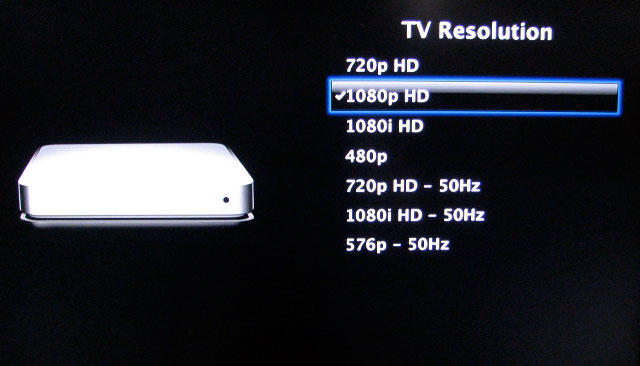
One rather mystifying omission from the new AppleTV’s feature set is the fact that it does not seemingly have the ability to play 1080p video. That’s a crock: hardwarewise, the new AppleTV is more than capable of 1080p, because the iPhone 3GS was capable of it, and it didn’t even have an A4 CPU to draw upon. The second-gen ATV should be more than up for the task if that lesser platform could manage it.
And, as it turns out, it is.

The tweet says it all: I’m back using Camino after switching to Safari when version 5 was released back in July.
Although I appreciate Safari’s speed while browsing, and the variety of extensions on offer was wonderful to see, there was one problem that drove me back to Camino: crashes and beachballs.
httpvhd://www.youtube.com/watch?v=adVp-IxcDHI&feature=player_embedded
The inclusion of an A4 chip and iOS in the new AppleTV made a jailbreak only a matter of time, but even we’re surprised by the Dev Team’s lightning-speed alacrity in cracking open Apple’s latest set-top box within mere hours of its delivery.
Just fives hours ago, Dev Team member MuscleNerd reported on his Twitter feed that he’d successfully jailbroken the second-generation AppleTV through the existing SHAtter exploit.

https://www.youtube.com/watch?v=WANpzCJHcvU
Augmented reality has been buzzed about, spun and just generally been hyped to death. Problem is, the technology has so far been used more for flash than actual function, with features like Yelp’s cool-but-useless “monocle” view a typical application.
But that’s about to change. Spearheading new possibilities — at least as far as the iPhone is concerned — is German-based augmented-reality expert Metaio, who yesterday flexed its muscles at its own AR conference in Germany.

Beijing’s flagship Apple store closed at noon after opening at 7am Wednesday, after massive crowds and store personnel began pushing and shoving as some customers bought 20 and 30 iPhone 4 units at a time, with the clear intention of turning around and selling them on the street, according to a report at the China-based blog MICgadget.
Perhaps the idea of removing the two-phone purchase limit and allowing Chinese iPhone 4 fans to by them in unlimited quantities was not such a great one.
At press time MICgadget is reporting that sanity has been restored: “All four Apple retail stores in China now require customer to show his/her identity card while purchasing the iPhone 4. Every customer could only purchase one iPhone 4. Apple employees will unbox the iPhone 4 for customers and activate the phone right away. So, the iPhone 4 scalpers could not resell the iPhone 4 as “brand new” and buy in large quantities.”
We start a rainy day of deals on the U.S. East Coast with a hardware bargains, some blasts from the past and the latest crop of free applications for your iPhone. First up is 2.53GHz Core 2 Duo Mac mini server for $750. Next are several older Macs, including a 450MHz PowerMac G4 and monitor for $100. We wrap up the spotlight with the latest batch of iPhone app freebies, including “GalaFire 3D.”
Along the way, we’ll check out other apps for your iPhone or iPod touch and also take a look at hardware, such as a solar charger for your iPhone. As always, details on these and many more items can be found at CoM’s “Daily Deals” page after the jump.
Qwiki, a startup offering a new way to get informed, won the $50,000 first prize and Disrupt Cup at the 2010 TechCrunch Disrupt conference in San Francisco on Wendesday.
Founded by Doug Imbruce, a self-described recovering software engineer, and Louis Monier, sometimes called the Father of Web Search for his role as the founder of AltaVista, Qwiki has the ubernerd community all aflutter over the prospects for its automagical transformation of the way we search for and obtain information. Combining text, audio, video, and images presented together in a seamless interface, Qwiki is meant to generate dynamic movies of whatever a user searches for.
The company’s software is designed to run on the web as well as in apps on mobile devices. Qwiki crawls data covering millions of topics and presents it to a user in an engaging and visual way, which, as it turns out, plays quite nicely with the super-portable, visually oriented attributes of the iPad.
The company’s official presentation at TCDisrupt showed only a concept video of an iPhone wake-up app based on the service, and a working prototype running on a laptop in Flash. As the video above shows, however, their iPad prototype that remains in development offers tantalizing possibilities.
The software engineer who showed this little glimpse backstage at the conference seemed pretty stoked about it, anyway.
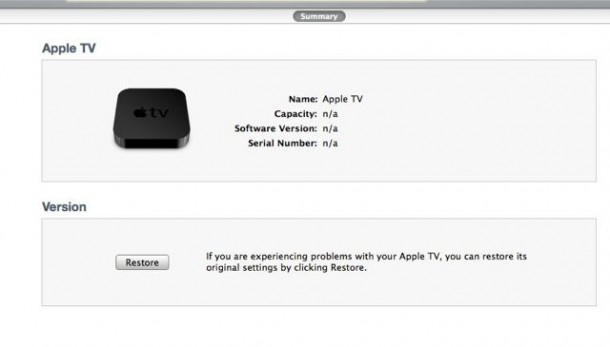
If, for whatever reason, your brand new iOS-driven AppleTV gets thoroughly corrupted, rest assured you won’t need to take it to your local Apple store: you’ll be able to restore iOS to your AppleTV yourself just by hooking it up to iTunes like any iPhone, iPod Touch or iPad.
It’s a little different, of course: the AppleTV doesn’t have an iPod Dock Connector, so you’ll use a standard mini USB cable. You also need to make sure that neither the power nor HDMI cables are connected, or the AppleTV won’t show up in iTunes.

Oh, what a difference a new handset and some heavy-duty subsidies make. China Unicom has sold 100,000 iPhone 4s in the first four days of availability, up drastically from the tepid 5,000 iPhone 3G customers when Apple first entered the market in 2009.
According to China’s People’s Daily, China Unicom sold 40,000 iPhone 4s on the first day with 200,000 preorders filed with Apple’s current exclusive provider in the Asian giant. The 100,000 customers who preordered Apple’s latest handset and have yet to receive iPhones will get units by the end of next month, according to the carrier.
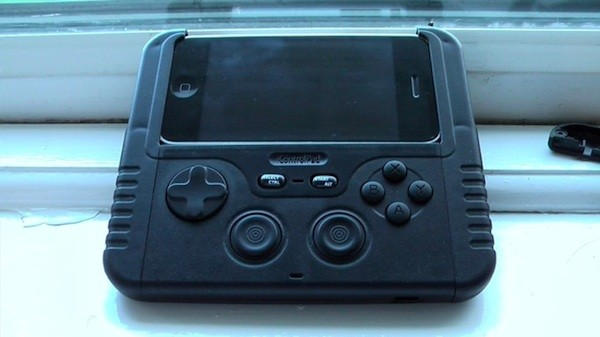
Last time we heard about the iControlPad, the long-delayed physical gamepad for the iPhone and iPod Touch had finally completed its two-and-a-half year journey from the brainpan of its makers to their hands as the very first model dropped off the production lines… now boasting a modular design that would allow the iControlPad to be easily updated to support future iOS handhelds. Since the official site was about to start taking preorders for the first 3,000 units, we imagined that the iControlPad was pretty much done.
Apparently not, though. As fallout to Cupertino’s recent decision to sue Sanho for using repurposed MagSafe adapters and iPod Dock Connectors in their line of HyperMac batteries, the iControlPad team has apparently gotten nervous about connecting the gamepad through the iPhone’s dock connector. Instead, they are looking to switch over to Bluetooth support.
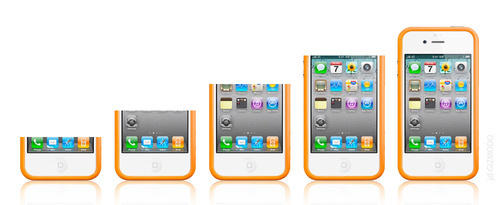
Just a friendly reminder: if you fancy a free case or bumper for your iPhone 4, today is your last day that Uncle Steve is going to make it easy for you to get one.
Yup. Today, September 30th, is the day that Apple’s free iPhone 4 case program comes to a close, making getting a bumper to wrap around your attenuation-prone iPhone 4 antenna as easy as downloading an app and waiting (quite) a few weeks delivery.

With it’s sleek minimalism of line, pearly white hue and surrounding belt of pale wood, Studio Conran’s latest iPhone and iPod dock could be either the speaker dock your Danish-design living room has been waiting for… or the far louder doppleganger of your Brookstone humidifier.
Designed (or at least branded) by famous English designer, retailer and writer Sir Terence Conran, his eponymous speaker dock boasts two fifteen watt stereo speakers, a large volume knob on the side and a streamlined niche to dock its sexy remote.
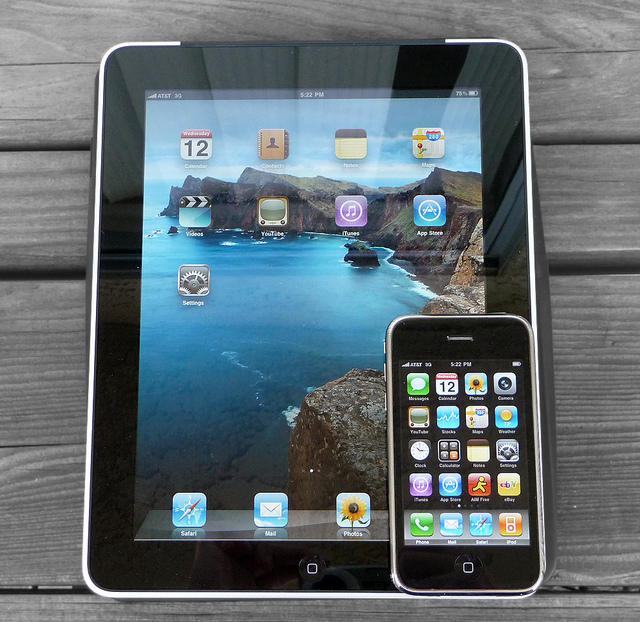
Recent reports coming out of China that Intel might not have much more time as the exclusive supplier of 3G chipsets for the iPhone and iPad wouldn’t be reason to start expecting a new iPhone coming to a Verizon outlet near you by themselves, but when those reports also peg Qualcomm as Intel’s baseband successor and the possibility of a CDMA iPhone (and iPad!) starts looking a lot more plausible.
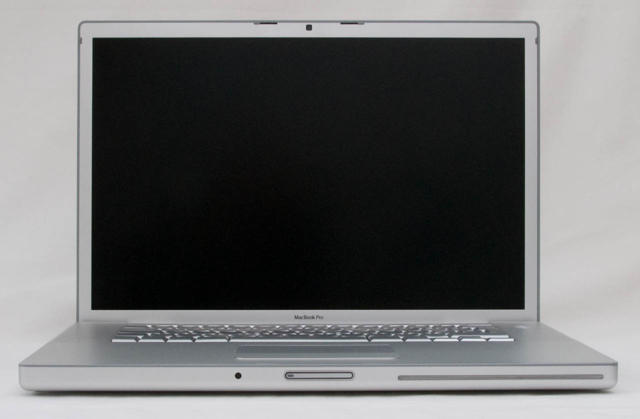
If you purchased a MacBook Pro between May 2007 and September 2008 and subsequently had problems with the wonky GeForce 8600M graphic chip inside, NVIDIA has just opted to settle a class-action lawsuit on your behalf.

Spirited Away is useful for people who like to focus. It just does one simple job. You’ll either love it, or be completely baffled by it.
It runs in the background, and hides all applications other than the one you’re using. That’s it.
So, if you switch to Mail halfway through working on your spreadsheet, Spirited Away hides the spreadsheet – and your chat client, your browser, your Skype window, everything else that isn’t Mail. It all just disappears.
So why would you want this? Well, removing visual clutter on screen can be helpful for people. It means you can concentrate your mind on the task at hand, and not allow it to be distracted by other stuff. It’s probably not much use if you’re just messing about, but if you want to actually get some work done, it comes into its own.
And it’s flexible enough to bend its own rules, if that’s what you want from it. If you’d like all the other application windows hidden except your iChat window, or except iTunes – well, you can tell it to leave those apps alone.
You might hate the idea of Spirited Away. You might think it’s a long way from being essential. But it’s essential to some of us, and might be essential to some of you, too.
(You’re reading the 15th post in our series, 50 Essential Mac Applications: a list of the great Mac apps the team at Cult of Mac value most. Read more.)
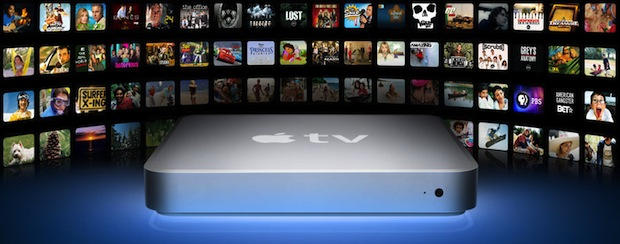
Apple appears to face an up-hill battle convincing studios of the wisdom of the Cupertino, Calif. company’s plans to rent tv episodes for 99 cents. Time Warner’s CEO became the latest to speak out against the proposal, saying it ‘jeopardizes’ sales by the networks.
“How can you justify renting your first-run TV shows individually for 99 cents and episode and thereby jeopardizing the sale of the same shows as a series to branded networks that pay hundreds of millions of dollars and make those shows available to loyal viewers for free,” Time Warner CEO Jeff Bewkes said during the London-based Royal Television Conference.


