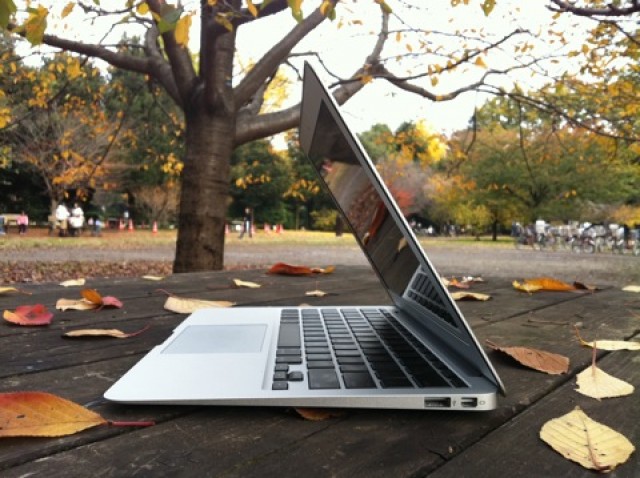
Over the course of the last week, Apple has began reaching out to current MacBook Air owners on what they’d like to see in future versions of their tiny miracle of a laptop.
Apple Customer Survey Hints At MacBook Air 3G

Over the course of the last week, Apple has began reaching out to current MacBook Air owners on what they’d like to see in future versions of their tiny miracle of a laptop.
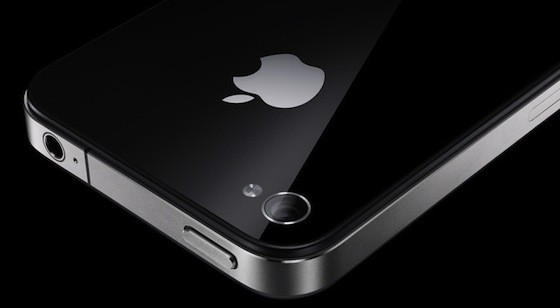
A Taiwanese Mac rumor site with a sometimes-accurate history of predictions is now claiming that Cupertino is testing three radically different prototypes of the next iPhone.
The first prototype is allegedly a Blackberry-like iPhone 5, boasting a slide-out physical QWERTY keyboard for faster typing. Ostensibly, such a device would be aimed at business users and texters.
The second prototype? Just a spec bump, making the iPhone 5 the equivalent of the iPhone 3Gs to the iPhone 4’s iPhone 3G. The design would closely resemble the existing iPhone 4, merely upping battery capacity and the megapixels on the rear camera. Presumably, it would also upgrade the iPhone line to the rumored dual-core A5 CPU which will debut next month with the iPad 2.
Of the third prototype, nothing is known, but it may be the 4-inch iPhone 5 we posted about earlier today.
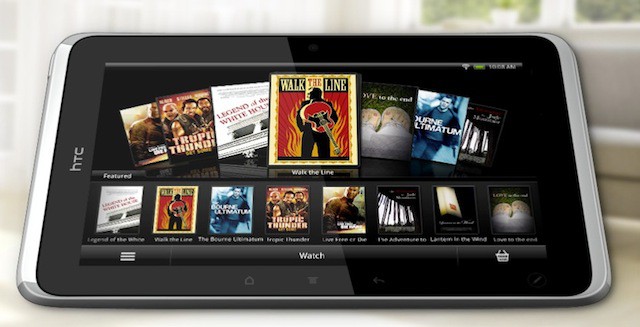
Here’s the next would-be iPad competitor: the HTC Flyer was just unveiled today at the Mobile World Congress in Barcelona.
The Flyer boasts a 7 inch 1024×600 pressure-sensitive screen, 1.5GHx processor, 32GB storage built-in (plus an SD card slot), WiFi, Bluetooth, cell network connectivity, and front- and rear-facing cameras. Oh, and it supports Flash.
The OS is Android with HTC Sense, a collection of HTC-specific add-ons designed to make using the device a little easier.
What I find interesting is the push HTC is making into portable gaming. Apple’s already taking a slice of the mobile gaming pie away from Sony and Nintendo, thanks to the iPod touch. Now HTC wants some of that pie too, and it’s promoting the Flyer as “a lightweight tablet that takes gaming to the next level”.
What do you think? Like the look of it? You should be able to get your hands on one later this year. By which time, of course, you might also be able to buy an iPad 2…
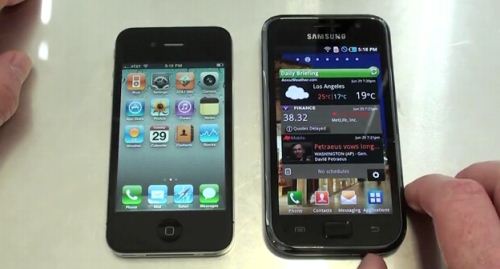
If you’ve ever seen a friend’s Android phone and marveled at just how big it was compared to your iPhone, Digitimes thinks you should start getting used to the bulk: they claim that Apple’s fifth-generation iPhone will pack a 4-inch display to directly compete with Android’s larger displays.
It’s a curious rumor. If true, it would make the iPhone 5 the same footprint as Samsung’s Galaxy S and Nexus S smartphones.
Remember when AT&T made bundles of cash hawking the iPhone, which only ran applications designed for Apple’s mobile platform? That appears to be a distant memory now that the carrier losts its iPhone exclusivity to Verizon. AT&T CEO Randall Stephenson Tuesday told a crowd in Barcelona, Spain all apps should run on all smartphones. Additionally, carriers should have their own app store as an alternative to Apple’s, Android’s and RIM’s.
“You purchase an app for one operating system, and if you want it on another device or platform, you have to buy it again,” the AP reports Stephenson saying in a keynote speech at the Mobile World Conference, a gathering of mobile phone industry players. “That’s not how our customers expect to experience this environment,” he adds.
Apple has just announced the launch of App Store Subscriptions, a service “for all publishers of content-based apps”.
It’s the same system used for News Corp’s much-hyped The Daily.
The deal is simple: Apple takes 30% of all subs bought through the App Store. Publishers are allowed to sell subs via other channels if they wish, and keep all the money.
Or in a comment attributed to Steve Jobs in the official press release:
“Our philosophy is simple—when Apple brings a new subscriber to the app, Apple earns a 30 percent share; when the publisher brings an existing or new subscriber to the app, the publisher keeps 100 percent and Apple earns nothing.”

Back in Tip #27, we showed you how to use QuickLook, an extremely handy way of previewing all sorts of different files on your Mac.
QuickLook is particularly handy for checking out image files, especially when you have a folder’s worth, all with identical generic icons rather than thumbnail icons, and you’re not sure exactly which one you want.
It also has a hidden secret feature: you can zoom in to images while in QuickLook mode. Here’s how.

The Clamcase an iPad case that promised to turn your iPad into a laptop earlier this year has finally arrived and it pretty much does what it says it will do. The company, Clamcase LLC, is finally shipping the device after a delay. It looked pretty awesome when I first heard about it, but I was a bit skeptical. So I asked the company to send me more information about it and they came through this week with a product sample.
I originally wrote a news post about this device in late December 2010 and then recently I noticed that several readers commented that they had not received their Clamcases yet even though they had been billed for them. I contacted the company and my advice to those readers is to contact Clamcase LLC to get a refund or to replace a missing shipment. The product is very real and the best case of this type I’ve seen so far.
The Clamcase gives a great first impression, but I’ll spend some time with it before you get to see my through review about it later this week.
In the meantime go ahead and feast your eyes on the Clamcase un-boxing pictures after the break.
Picture from EQueue
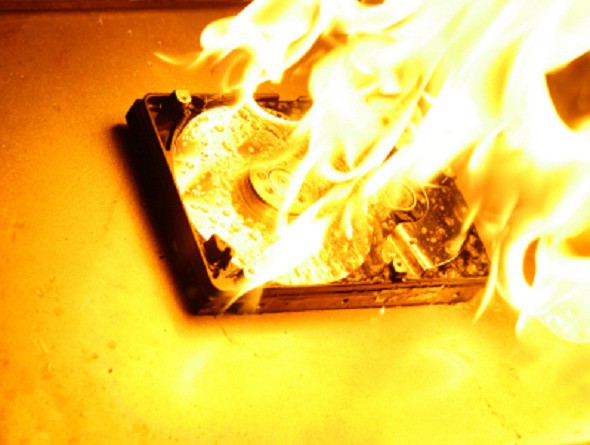
Friends, Romans, Applefans, I come to bury hard drives, not to praise them. The evil that poor technologies do live after them, and our good files are oft interred with their ashes. So let it be with hard drives.
Look at your MacBook Pro. It’s beautiful, no? Bright screen, thin body, buttonless trackpad, carefully engineered ports, MagSafe power port… it’s a master-work. Except for one thing. It carries a vestigial organ that all-too-often reveals itself to be the ruptured appendix of computing: a hard drive.
Yes, for all of our wonderful computing progress (spaghetti ports to USB; mobile dual-core processors, DDR3 DRAM, insanely fast GPUs), the lowly hard drive continues to exist based off of approximately the same technology it was back in the 1970s. Spinning magnetic platters with read/write heads, saving our entire digital lives in the process.
And while they have many wonderful qualities (massive storage capacity, more so than anything but TAPE; extremely low cost), they also have a fatal flaw, which is that they break and they break hard. Platters get warped, spindles get loose, heads get misaligned, and suddenly your computer stops working and you lose the project you’ve been slaving over for the last few months (see my wife’s recent calamity for evidence and a little solace in the iPhone).
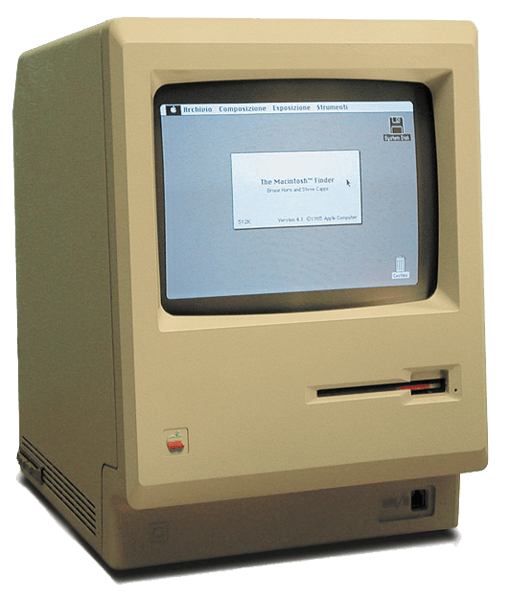
Fast Co.Design has a very interesting Apple history artifact posted up today: the birth of the Mac, as told by Jef Raskin, the late founder of the Mac project. Jef’s son Aza wrote the piece and provides scans of the original document if you’re into authenticity instead of legibility.
It’s worth noting before you dive in, which I highly recommend, that Raskin’s vision for the Mac was very different from what Apple actually produced once Steve Jobs took over the development team. Raskin wanted the most unified hardware and software imaginable. One screen, one keyboard, one processor, one memory configuration, no expansion slots, one box. Oh, and he wanted a printer built into the box.
He also wanted to get rid of all modality in a computer. So, for example, if you started typing, the word processor would open and capture what you were typing (rather than having Clippy note that you’re writing a letter). A lot of that stayed in, but Jobs made it much more powerful and, ultimately, diverse and fragmented a platform than Raskin ever envisioned (see the Canon Cat for that).
As Aza Raskin notes, his father’s philosophy is much closer to what’s going one with the iPhone and the iPad. After all, you can have any iPad you want, so long as it comes in brushed aluminum.
This item of controlling appearance is quite significant: for example it is impossible to write a program on the Apple II or III that will draw a high-resolution circle since the aspect ratio and linearity of the customer’s TV or monitor is unknown. You can probably promise a closed curve, but not much more. You cannot promise readable characters, either. Therefore, a predictable, documentable system must be entirely under Apple’s control. LISA is Apple’s first system to allow us to design in context, without depending on chance for the all-important visual aspects of the computer’s output.
Well said. And one of the few places Jef and Steve really saw eye-to-eye, in the long run.

The main point of performer Mike Daisey’s powerful one-man show about Apple and its Chinese factories is that in China, it’s cheaper to have people make products rather than have machines make those products. As a result, people are treated like machines. They perform the same tasks, day in, day out. They work excessively long hours and if they break down, they are discarded. Most tellingly, if they try to commit suicide, the factory puts up big nets around its buildings to catch them. Nothing about the work or the workplace is changed.
It’s these nets that Apple touts in its just-published Supplier Responsibility report, which details the progress it has made during 2011 in imposing standards on its overseas contractors. The report discusses child labor, factory poisonings and conflict materials. A whole section is devoted to the suicides in 2010 at Foxconn, its largest overseas supplier.
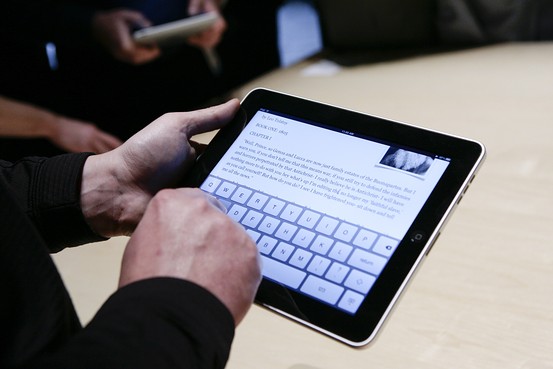
The use of gadgets has traditionally been discouraged during debates in the British House of Commons, but that could change with a new experiment underway with iPads in the U.K. parliament, according to a Sunday report in The Guardian.
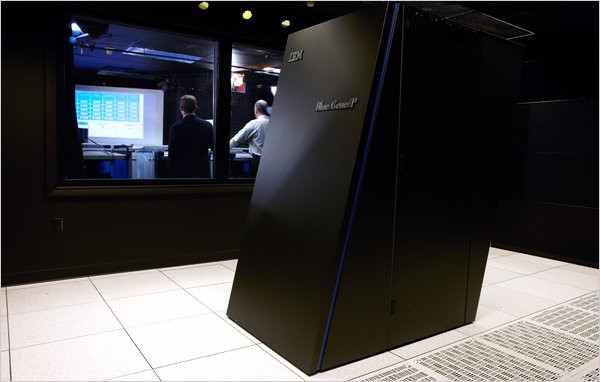
At the weekend, the Wall Street Journal reported an intriguiging detail about the upcoming iPhone nano: the new iPhone would feature “voice-based navigation.” (It will also be streaming-only, according to our report).
Could this be true system-wide voice control, as programming legend Bill Atkinson predicted at Macworld?
As we previously reported, Atkinson said it’s clear that iPhones would one day be controlled by voice, but he predicted the development to be several years away — two to ten years, he said.
But Atkinson reminded us we can get a sneak peek at the technology if we tune into Jeopardy! tonight. The history-making show features IBM’s DeepQA Project Watson supercomputer versus previous champions, Ken Jennings and Brad Rutter.
It’s likely to be a first public demonstration of the kind of natural-language and real-world knowledge technology to make it work.
“When we see computers interacting with a natural language interface, people are going to want it,” Atkinson said.
“I’d ask you all to watch Jeopardy on February 14,” he said. “It may be a momentous occasion.”
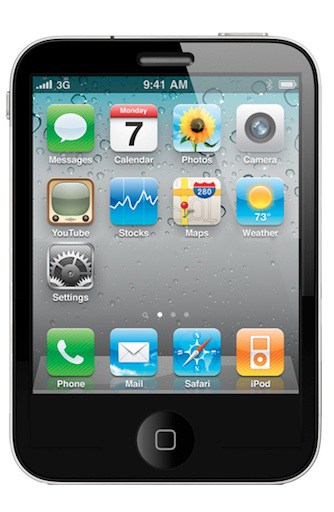
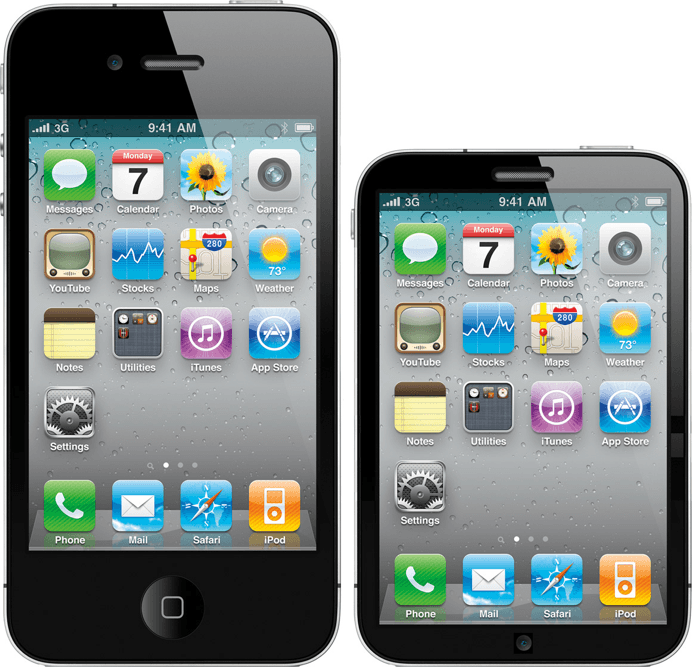
This is probably the best iPhone nano mockup so far from our friend Tyler Hojberg, who writes:
Hey, just thought I’d share my concept idea of the “iPhone nano.” Creating a smaller chunkier screen allows more room for a full sized keyboard and contrary to popular belief, I decided to keep the home button. I don’t believe Apple is ready to do away with the iconic home button just yet, as I believe it’s one of the distinguishing form factors of the iPhone. Notice the change in antenna at the bottom which I believe would be blocked because of the way a smaller iPhone is held, leaving only one at the top. It’s conceptual, but not too far-fetched.
What do you guys think? Would it work?
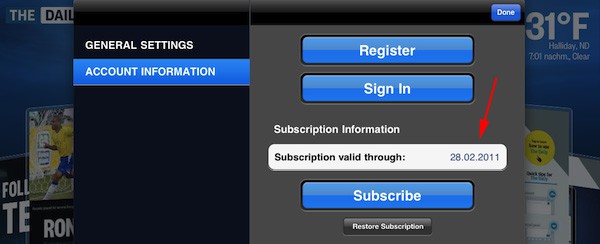
While the wait for iOS 4.3 and in-app recurring subscriptions continues, free access to The Daily has been extended beyond the original two-week trial period until February 28th, sparking rumors that suggest Apple’s next iOS update could also drop on the same date.
The extension to free access was picked up by German Mac blog Macerkopf, after the expiry date of their subscription changed within the “Account Information” in The Daily application. Because the application’s billing method relies on the recurring subscriptions feature iOS 4.3, customers cannot be charged for access to the service until the update is available.
Of course, Feb 28th may be nowhere near the release date of 4.3, and The Daily could be just extending its free trial to a random date in the hope that the update is available by then.
There have been rumors that the public debut of iOS 4.3 would be at 10 AM EST today, however, a quick glance at your clock right now will show that predication was an inaccurate one.
[via 9to5 Mac]
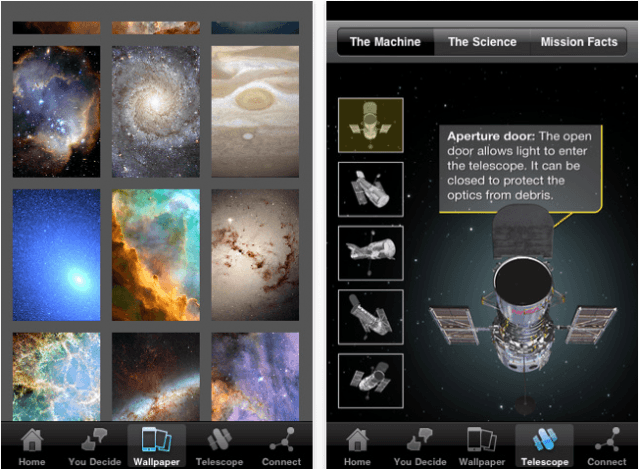
HubbleSite – (Free) iPhone – Education
Today’s must-have iOS application is HubbleSite, the online home of NASA’s Hubble space telescope. For over 20 years Hubble has orbited the Earth, beaming home images of celestial splendour; now you have access to the world’s most remarkable Hubble images at your fingertips, to enjoy on your iPhone anytime, anywhere.
Cast your eye over a vast collection of spectacular sights from the Hubble archives and vote for the images that you find the to be the most astounding. Download a selection of wallpapers for your device, all of which have been chosen and edited to deliver beautiful results on the iPhone & iPod touch with a Retina display. Read a compilation of amazing facts about the Hubble telescope’s history and the scientific discoveries it has revealed, from the age of the universe to the mysterious force known as ‘dark energy’ – all within the official Hubble iOS app.
For anyone interested in space and the universe around us, HubbleSite should be the next application you download from the App Store.

N.O.V.A. 2 – ($0.99) iPhone – Games
Although it’s not strictly a brand new release, today’s must-have iOS game has been chosen simply because it’s one of the most exciting first person shooters available in the App Store, and it’s on sale today for just $0.99!
N.O.V.A. 2 is the sequel to Gameloft’s first hugely successful sci-fi FPS – Near Orbit Vanguard Alliance, and this follow up title boasts new enemies with improved AI, a larger range of weapons and powers, and 10-on-10 online multiplayer – you won’t want to miss it!
Find out more after the break!

There is an app for practically anything and now there are apps that will help you to impersonate a cop. Especially a cop making traffic stops as one woman reported to Northwest Indiana police recently.
The woman called 911 late one night recently with the suspicion that the black Pontiac GTO with flashing blue and red lights at the top of its windshield wasn’t really a cop. She thought that the driver of the car was following her and attempting to pull her over.

We start off another week, this time with the iPhone in our deal spotlight. First up is a new crop of price cuts on iPhone apps, including “Fotopedia Nat’l Park,” a photo database of U.S National Parks. Next is a Google Apps Browser, an unofficial application for the iPhone and iPad, giving you access to the various applications, such as Gmail, Google Reader and Google Voice. We then wrap up on the featured bargains with N.O.V.A. 2 (that’s Near Orbit Vanguard Alliance for the uninitiated) for the iPhone and iPod touch.
Along the way, we check out some iPad and iPhone cases, accessories and software. As always, details on these and many other items can be found at CoM’s “Daily Deals” page right after the jump.
Rumors have been running rampant on the internet about AT&T’s response to the Verizon iPhone and one of those rumors was about adjustments that AT&T will be making or could be making to current data plans. Retention of current customers seems to be on AT&T’s mind lately and we can thank Verizon for that.
It all started with the fairly generous offer of 1,000 rollover minutes for customers who simply sent the word “yes” in a text message to 11113020. The system responded telling those customers that they would receive these minutes on their account within four weeks. However, the generosity hasn’t stopped there.
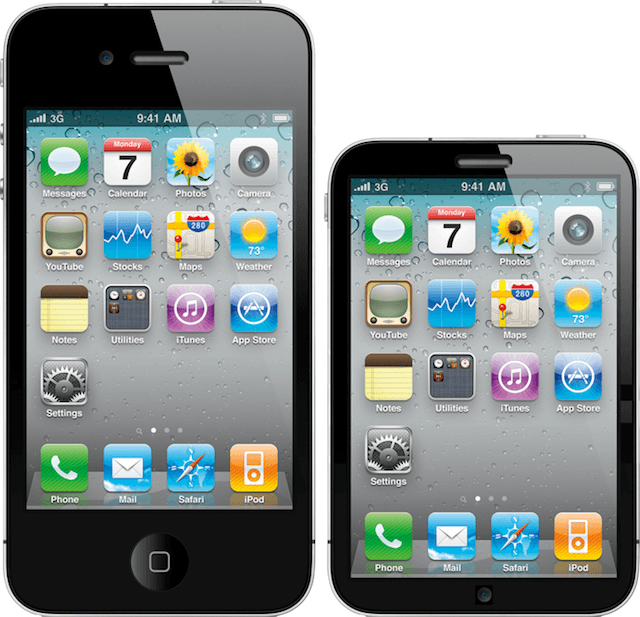
The iPhone nano mockups are coming in thick and fast.
The one above is by iOSboy. It has the same screen size as the full-size iPhone to make it easy for app developers. But he’s put the camera on the bottom. Does that make sense?
Here are some other interesting mockups:

For many users, the Verizon iPhone is a big step-up from AT&T when it comes to quality service. Service on Verizon is simply more dependable: calls don’t drop as much, the person you’re speaking to seems clearer, etc. That’s 95% of what most people care about.
That’s not to say the Verizon iPhone’s a slam dunk for everyone, though. It has its drawbacks. Verizon’s CDMA network can’t handle the simultaneous juggling of data and voice. 3G speeds are inferior to AT&T’s. And, if you’re a business user, the Verizon iPhone has some serious limitations when it comes to conference calling: not only are you limited to conference calls with just two other people, but you can’t switch between conference calls either.
These aren’t problems with the hardware: just limitations with Verizon’s CDMA network, and ones that every Verizon user has to deal with. This isn’t likely to be an issue for more than a small percentile of customers, but if you’re one of them, and need your network to handle conferencing robustly, you might want to think twice before making the switch.
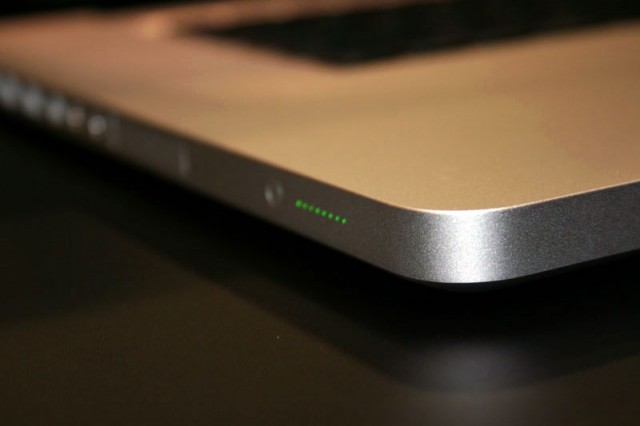
The iPad 2 isn’t the only new Apple product that is likely to hit stores in March. For weeks now, supplies of existing MacBook Pro models have been plummeting, and given Tim Cook’s obsession with supply, that indicates a refresh across the board.
So when can you expect the new MacBook Pros? Unknown, but according to Danish Blogger Kenneth Lund, the date he’s hearing in Denmark from Apple Resellers is March 1st.
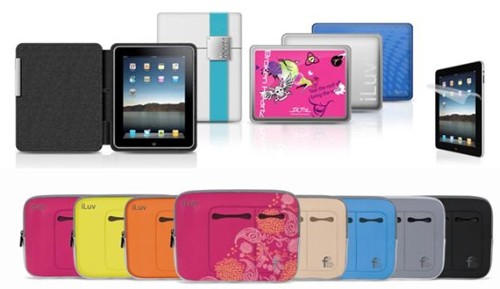
You only need to take the quickest and most cursory glance at the newsf eeds to know that the iPad 2 isn’t just coming, and it’s right around the corner, hitting Apple Stores no later than sometime in April.
But if you need more proof, consider this: AT&T is having a massive sale on all iPad accessories. They’re clearing house of all the accessories that in a few short months won’t work with the current-gen iPad, and they’re desperate enough that they’re slashing prices literally in half.
Yup, all iPad accessories are now 50% off at AT&T. You just don’t discount accessories on a successful current product like this if you aren’t expecting them to be obsolete soon. As for how soon, if AT&T knows something the rest of us don’t, my guess is that we’re looking at a March launch for the iPad 2 instead of April. Why clear house now if there’s still two months to go?
For the second year running, Apple has been named Barron’s most respected company in an annual survey of money managers.