Facebook CEO Mark Zuckerberg has replaced Tim Cook as the highest-rated CEO in tech, according to employee approval ratings on Glassdoor. Cook’s 97% approval rating from 2012 has dropped down to 93%, which takes him from first position all the way down to 18th. Zuckerberg now has an impressive 99% approval rating.
So the Consumer Electronics Show is over for another year, and for those who’ve been in Las Vegas covering it for us, it’s back to normality. While we allow the Cult of Mac team to sober up, it’s time to look back at the best gizmos CES had to offer. There were thousands of products on show — far too many to cover in one week — but there were a handful that really stood out.
We’ve put together a list of awesome things that we were blown away by, including smartphones, accessories, gadgets, and more. Check it out and tell us what you’re most looking forward to getting your hands on in 2013.
Apple could be looking to switch its graphics cards supplier from NVIDIA back to AMD for the iMac. The Cupertino company began using NVIDIA solutions for its latest all-in-one, which started shipping late last month, but a job listing on its website suggests it could already be preparing to switch back. Apple is looking for a Hardware Systems Electrical Engineer with experience in AMD graphics processing units (GPU).
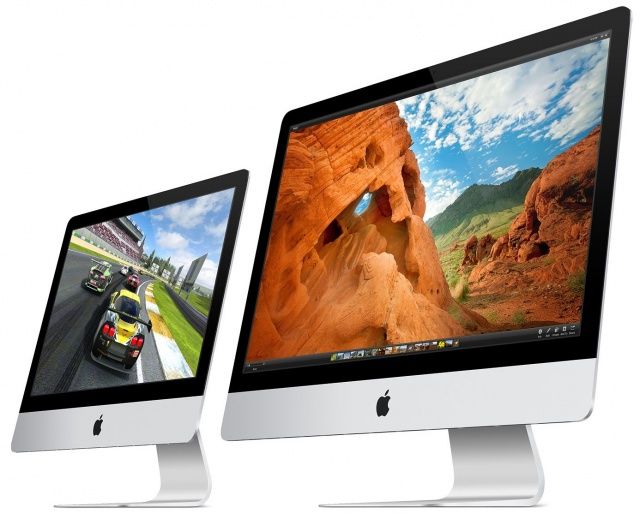
Apple promised us its new 21.5-inch iMac would go on sale in November, and it has just about met that deadline. You can now order the Cupertino company’s sexy new all-in-one via its online store, with shipping in 1-3 business days. The 27-inch model is also available to order, but that one will take 2-3 weeks to ship.
Apple promised us that its new 21.5-inch iMac would be available to order before the end of November, and it will be — just about. The Cupertino company has issued a press release confirming that the new all-in-one will be available on Friday, November 30.
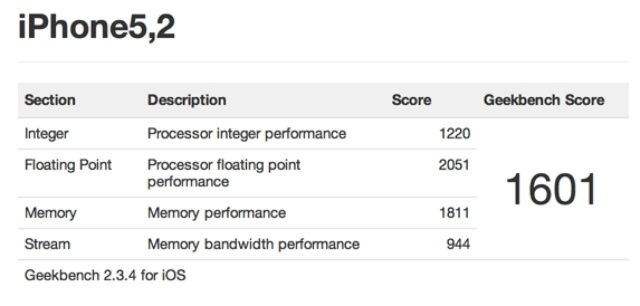
When Apple unveiled the iPhone 5 last week, the company promised that its custom A6 chip deliver performance twice as fast as its predecessor, the iPhone 4S. But according to the handset’s first benchmarks, this isn’t just the fastest iPhone yet — it’s also one of the most powerful smartphones money can buy.
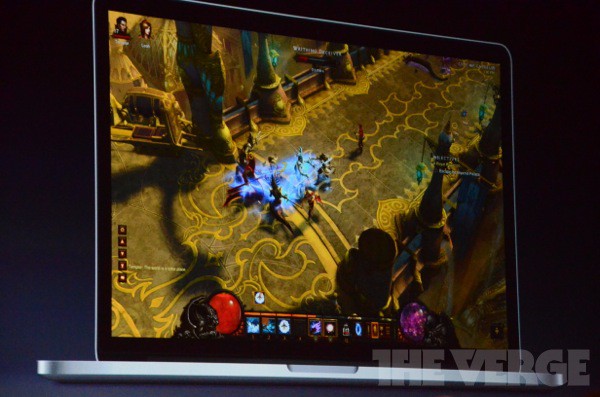
Mac gaming, long the red-headed-stepchild of the computer gaming scene, just stepped up its, well, game. Today’s World Wide Developers Conference in San Francisco saw several announcements from Apple regarding gaming, including the fact that the hot new MacBook Pro will have Retina graphics capabilities.
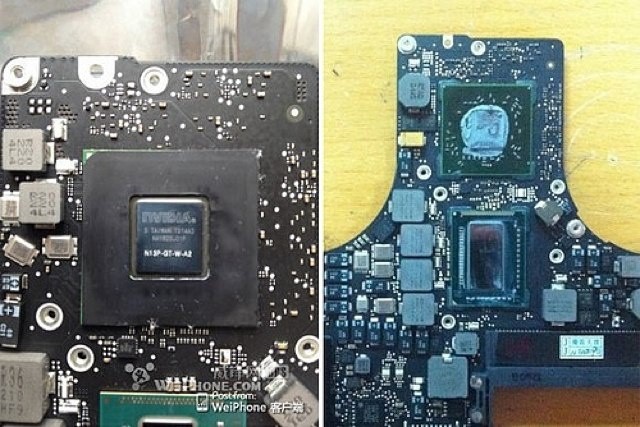
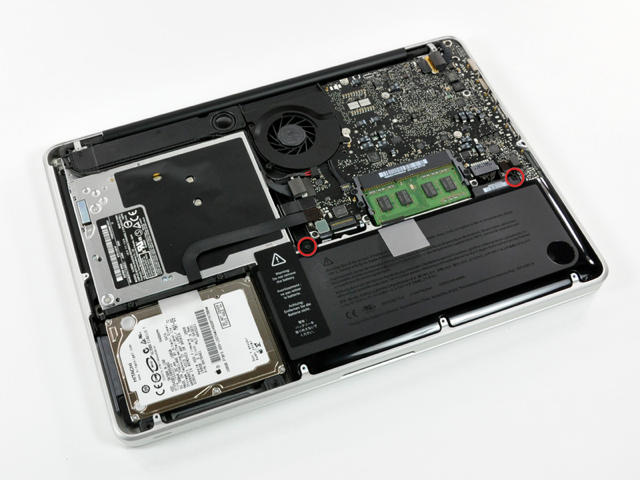
Apart from a new graphics chip, this MacBook Pro logic board looks exactly like the old one.
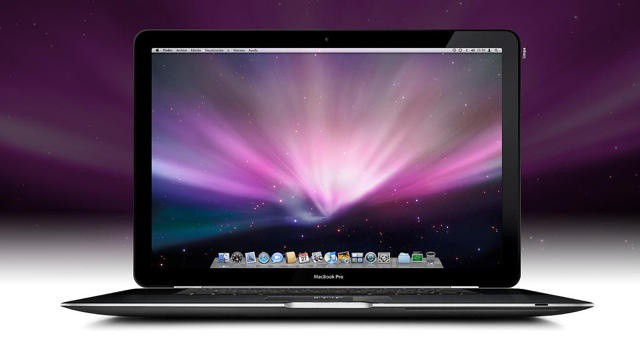
We’re almost certain Apple will announce a new MacBook Pro at WWDC this week, but what we’re not quite so sure of is exactly what the new notebook will bring. An Intel Ivy Bridge processor and a high-resolution Retina display seem like the most feasible changes, but there’s also been much debate over a new design.
Some reports have suggested the device will sport a thinner, lighter form factor that will be heavily influenced by the MacBook Air. While others have claimed the design will remain the same as existing MacBook Pros. Now a leaked logic board for the upcoming device seems to side with the latter.
Today has been a huge news day for the MacBook Pro, but the rumormill isn’t done churning just yet. A new report is claiming that Apple will release updated MacBook Pros this summer and that they will make the switch from using AMD GPUs to Nvidia graphics.
Late this afternoon The Verge confirmed Joanna Stern’s report that the new MacBook Pros will feature new Nvidia graphic chips. The report cannot confirm which specific chip will be used, but it is believed to be similar to the 28nm GeForce GT 650M – a chip that provides similar power and performance efficiency to the 28nm GeForce GT 640M.
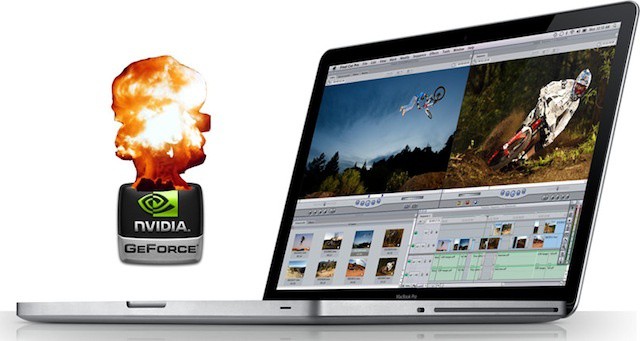
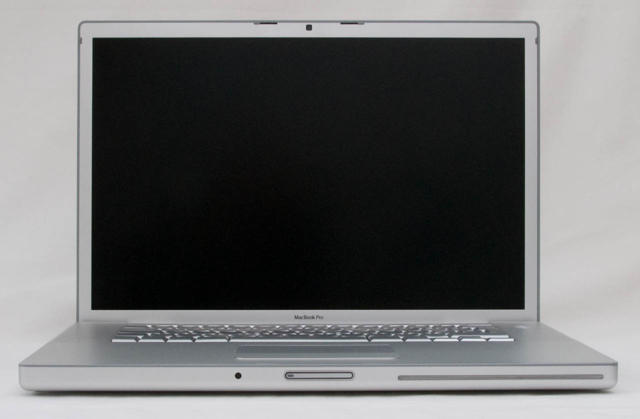
A few years back Seattle Rex had gone all out on a 17” MacBook Pro – spending approximately $4,500 on the then top-of-the-line machine ($5,100 including AppleCare). The particular MacBook Pro he bought turned out to be defective. The laptop’s Nvidia graphics processor started displaying symptoms of the defect shortly after his AppleCare expired. A few days later the laptop died completely – it wouldn’t even start up. At the time Rex’s laptop broke down the defect was a known and well-documented issue. Apple had even issued a tech note and was replacing defective models as they failed.
Apple’s not exactly the kind of company that boasts lightly. That’s not to say they don’t boast a lot — they’re probably the most bragging of all the companies in tech, and for damn good reason — but every boast is weighted against genuine success, not numbers fudging.
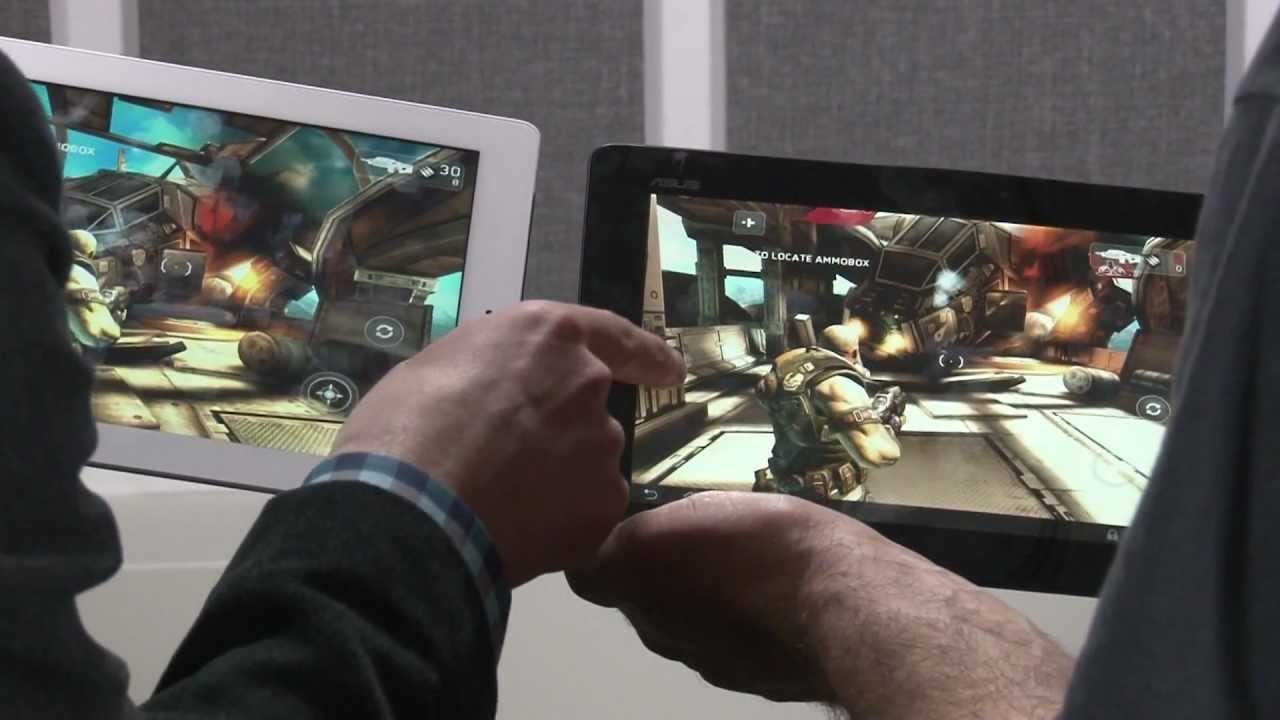
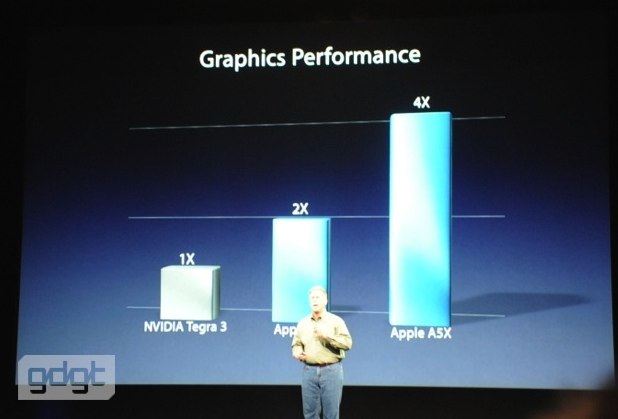
So when Apple debuted the new iPad a couple weeks ago and claimed that their tablet — powered by a dual-core CPU and quad-core graphics — outperformed the quad-core CPU and 12-core graphics of the NVIDIA Tegra 3 SoC, a lot of people arched their eyebrows. NVIDIA raised a stink, saying it couldn’t possibly be true. But we quietly suspected that Apple would be proven right.
So guess which is faster in independent benchmarks?
This is pretty hard to believe, but if true, it could have a huge impact on the future audience of the MacBook Pro line: Apple could have dropped NVIDIA as the supplier of the next-gen MacBook Pro’s discrete GPUs, and will instead go with Intel integrated graphics. Huh?
During Apple’s iPad keynote yesterday, Phil Schiller, its senior vice president of worldwide marketing, claimed the tablet’s new A5X processor offers 4X the graphics performance of NVIDIA’s quad-core Tegra 3 chip.
NVIDIA says that while it was “certainly flattering” to be called out by the Cupertino company, it will be performing its own benchmarks on the new iPad to see if Apple’s claims are really accurate.
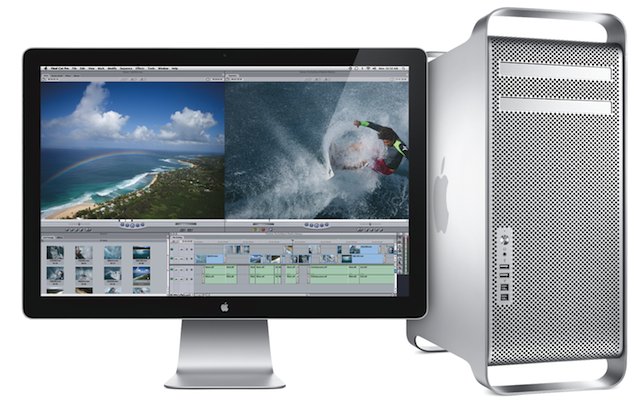
It’s been so long since Apple refreshed the Mac Pro that a number of reports have speculated the machine is set to be killed off. But it’s still available from the Apple store, and according to a new report, it’s going nowhere. In fact, it’ll soon to get a refresh that will introduce Intel’s Ivy Bridge processor and the new Kepler GPU from NVIDIA.
In the latest chapter from the Gang That Can’t Shoot Straight, Intel and Microsoft chase profits over a cliff. Unable to agree, the two companies created a rival tablet that costs more than the iPad and will likely hasten the move to ARM. The Wintel team is back at it snatching defeat from the jaws of victory.
After Apple finally converted its entire Mac lineup to AMD, SemiAccurateis reporting that Apple is switching back to NVIDIA as the graphics chip supplier for the upcoming MacBook Pro model in 2012.
While the report doesn’t specifically say why Apple is planning its move back to NVIDIA, it looks as though the rumored MacBook Pro refresh for 2012 will include NVIDIA graphics and possibly the Intel Ivy Bridge processor.
Image used under CC license from kodomut on Flickr
‘Coyote’ and ‘Hollywood’ are the code-names of two tablets rumored to be a part of Amazon’s
upcoming tablet ‘family’. Details obtained from one tipster reveal the Coyote will boast a dual-core processor much like Apple’s iPad 2, whereas the Hollywood has something even more audacious up its sleeve: hardware that Amazon hopes will potentially make the iPad 3 obsolete even before it launches.
Nvidia's GeForce GTX 850, currently its fastest Windows-only card, may soone be headed to the Mac, courtesy of a hack.
It looks like Nvidia’s fastest graphics cards could be headed for the Mac — courtesy of an unofficial hack.
The Russian hacker known as Netkas has hinted that he’s cracked Nvidia’s Fermi ROM, the firmware underlying its most powerful cards, which are currently Windows-only.
In a post titled “On the mac’s fermi ROM,” Netkas posted a winking smiley face — a hint that he’s cracked the drivers for Nvdia’s most powerful line of graphics cards.
Netkas is a highly regarded hacker, most famous for his Hackintosh EFI Bootloader hack, which allows generic PC hardware to run Mac OS X.
Given the hacker’s reputation, it is “certain that he has found a way,” says HardMac, which follows graphics hacks closely. Hardmac reckons Netkas was able to adapt the ROM of Nvidia’s Quadro FX 4000, which has Mac drivers.
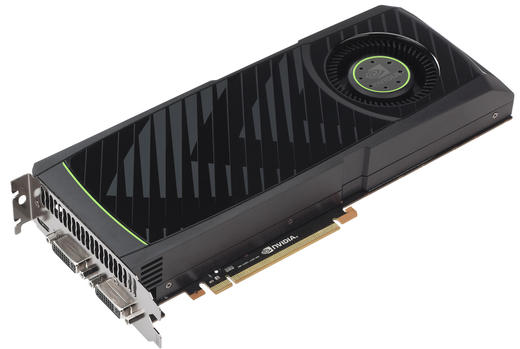
HardMac is hoping to see Mac ROM for Nvidia’s GTX 580, the most powerful Fermi card available.
There’s a thriving hacking underground that unofficially adapts Mac drivers for Windows PC cards, which are usually much cheaper than their Mac counterparts.
A little more than two years after the controversy started, graphics chip maker NVIDIA has agreed to a settlement of Apple, Dell and HP owners who bought laptops with faulty GPUs.
For Apple owners, the settlement covers anyone who purchased a MacBook Pro from May 2007 to September 2008.
You might remember that this generation of MacBook Pro was prone to graphics failure due to faulty NVIDIA chips.
On Apple’s part, they have been extremely good about servicing laptops for free that were affected by the bad NVIDIA chips, covering those laptops even out of warranty for up to three years and issuing refunds to those who paid for repairs.
Now NVIDIA’s doing the same. If you paid for a repair on an Apple notebook computer related to the NVIDIA GPU, you can submit a claim by filling out this form. For a replacement, send in this form.
One of the reasons why modern Mac laptops are able to attain such great graphics performance while maintaining excellent battery life is because Apple switched over to NVIDIA chipsets that marry their own superior mobile GPUs with Intel’s Core 2 Duo processors.
Unfortunately, Apple’s reliance on NVIDIA chipsets is also the reason why Mac laptops didn’t jump to the new Core i series of Intel CPUs last year, as Intel has been fighting it out with NVIDIA in court, trying to push the graphics maker out of the Intel-compatible chipset business.
Looks like they were successful. NVIDIA’s CEO Jen-Hsun Huang says that his company will be permanently exiting the chipset business to focus on SoCs (or systems on a chip).
The latest MacBooks (including the Pro and the new Airs) have been understandably criticized for their anachronistic adherence to Intel’s last-gen Core 2 Duo CPU when competing notebooks have all moved on to the superior Arrandale architecture.
There’s a good reason for that, though: a lawsuit between Intel and GPU maker NVIDIA that prevents the latter company from making chipsets for current-gen Intel CPUs that include an NVIDIA memory controller. That lawsuit may be on the cusp of being resolved.
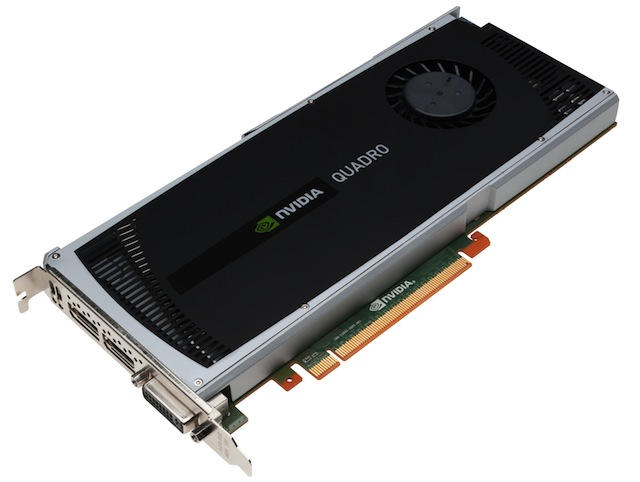
NVIDIA has just announced a mid-range upgrade graphics card for the Mac Pro: the Quadro 4000 For Mac.
Aimed at workstation applications (video, graphics, scientific data crunching), the Quadro 4000 falls in the middle of NVIDIA’s professional lineup. It features NVIDIA’s latest Fermi architecture, boasting 256 CUDA cores and 2GB of GDDR5 memory.
But for a mid-range card, it’s pretty pricey: $1,199 when it ships later this month. The PC-compatible card is about $700. It shouldn’t take long for GPU hackers to create a Mac-compatible ROM. We’ll keep an eye out.
If you purchased a MacBook Pro between May 2007 and September 2008 and subsequently had problems with the wonky GeForce 8600M graphic chip inside, NVIDIA has just opted to settle a class-action lawsuit on your behalf.