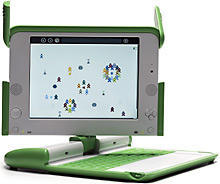
The One Laptop Per Child initiative seeks to bring technology to the developing world to make up for historic educational and economic inequities. Though I think the project has plenty of problems (Did anyone check to see that a laptop was the best way to repair inequalities in Africa and South America? Or, as Om Malik so succinctly put it, “What about the people?“), the actual XO laptop they’ve produced is quite cool and has capabilities rare on mainstream machines.
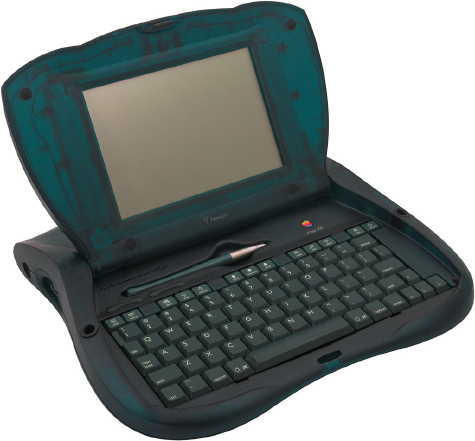
The machine is outfitted with a touch screen, a stylus, and a keyboard. In other words, it’s exactly like Apple’s eMate, a Newton product line extension from 1996 targeted at the educational market. Jason O’Grady has a great rundown of both the XO and the eMate over at ZDNet, but there’s a bigger point here that hasn’t been made: Technologies are not inherently interesting or bound to succeed. They require the right context and adoption strategies to take off. Though the XO is far from guaranteed to succeed in the long run, if it does, it won’t be because its technology or design is so superior to the eMate’s. It will be because it connects with people in just the right way. That’s all innovation is — the right idea at the right time for the right people.

Pete Mortensen is a design strategist for consulting firm Jump Associates and the co-author of Wired to Care: How Companies Prosper When They Create Widespread Empathy, a book and blog that are significantly more interesting than you might initially think. Pete’s particular Apple avocations are both around design–interface and industrial. Follow him on Twitter!