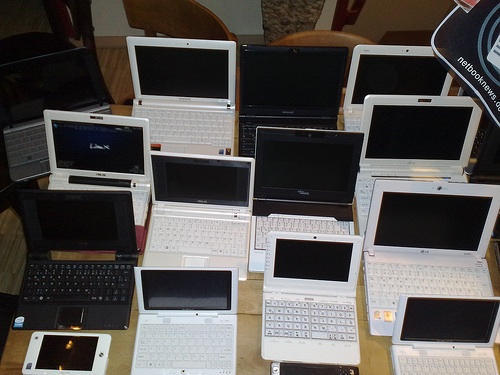
Netbooks outsold iPhones in the third quarter of this year, according to two recent reports. Netbooks, inexpensive laptops with a smaller footprint, sold 5.6 million units versus 4.7 million of Apple’s touchscreen handsets.
The netbook category grew 160 percent in the third quarter compared to 2007, according to DisplaySearch. Experts predict 14 million netbooks will ship by the end of 2008, boosting notebook PCs along the way.
“With the lone exception of Apple, all of the top 10 PC brands have entered the mini-note PC market, John Jacobs, DisplaySearch Director of Notebook Market Research said earlier this week.
For some time, Apple CEO Steve Jobs has wavered on whether to produce an inexpensive netbook. Although Jobs has said Apple won’t produce a $500 “piece of junk,” he has told analysts the Cupertino, Calif.-based company “has some pretty interesting ideas” if netbooks become more than what he’s deridingly called a “nascent” market.
Analysts say while netbooks are an interesting idea, they won’t compete directly with the iPhone.
“These are two completely different categories of products. Phones fit in your pocket, while even the smallest netbook requires a bag,” Current Analysis’ handset expert Avi Greengart told Cult of Mac.
While netbooks are shipping with 3G, they are still data – not voice – centered.
“Phones handle an essential daily communications task – voice – while netbooks do not,” Greengart said. Although you can add Skype and a Bluetooth headset, its just not the same.
“Try using it while buying groceries in a supermarket. It doesn’t work,” the analyst quipped.
Gartner analyst Ken Dulaney said netbooks may not last when notebook makers enter the market.
“They are really cheap XP machines,” Dulaney described netbooks to Cult of Mac. “When other notebooks drop down to this class the market may
dry up,” he said.
Dulaney claimed Intel was pushing the creation of netbooks as a product class separate from notebooks to prevent PC makers substituting the more expensive Celeron chip found in many laptops for the cheaper Atom chipset.
“Turns out that in some cases you can make a Celeron cheaper than an Atom but Intel wont let the manufacturer take it to this class of machines,” according to the analyst.

Ed Sutherland is a veteran technology journalist who first heard of Apple when they grew on trees, Yahoo was run out of a Stanford dorm and Google was an unknown upstart. Since then, Sutherland has covered the whole technology landscape, concentrating on tracking the trends and figuring out the finances of large (and small) technology companies.