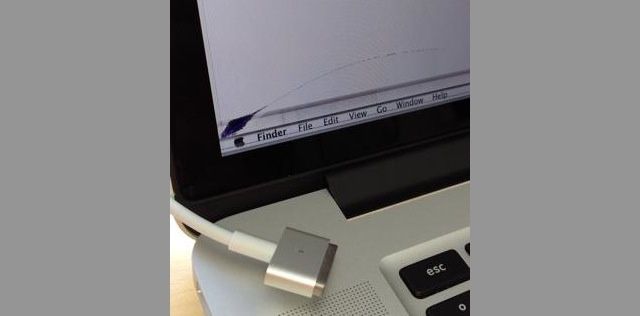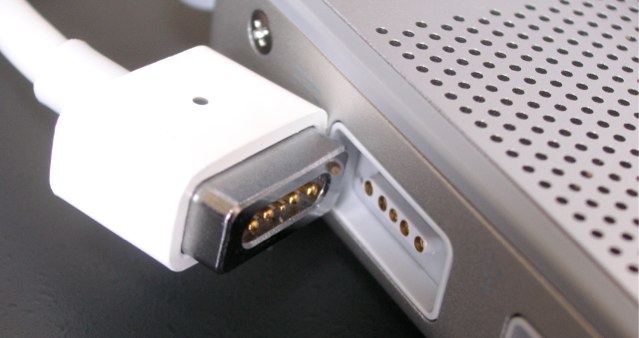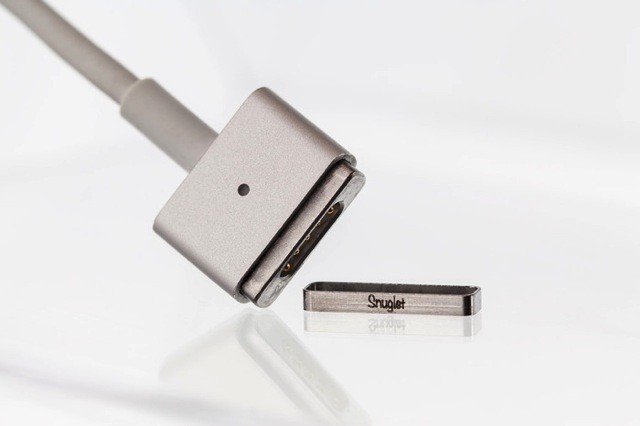
The MagSafe 2, it seems, is neither 'Mag' nor 'Safe.'
It’s widely know that that the MagSafe 2 connector found on the new Retina MacBook Pro likes to sever its connection at the slightest chance. But who cares, right? After all, if it comes loose, you just plug it back in – it’s not like it’s the cable to your boot drive or anything.
I’ll tell you who cares: Lukas Mathis. Lukas didn’t notice his weak Mag”Safe” connector disconnecting, and the result was a cracked and ruined Retina screen.
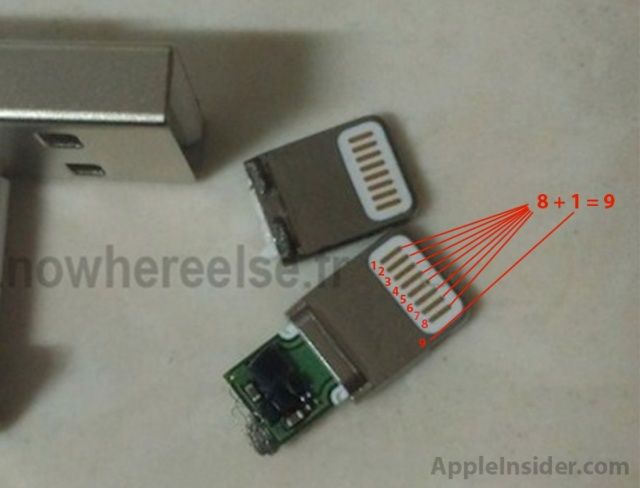
That 8-pin dock connector is really a 9-pin one upon closer inspection.
Will the next iPhone have an 8 pin or 9 pin dock connector? The iOS 6 beta says 9, but if you count the pins on the leaked dock components, there are only 8. Which is correct? Both: according to a new report, the new dock connector’s aluminum shell teams up with the 8 gold pins to make a ninth pin, resulting in 60% less real estate than the existing 30-pin connector, and better transfer rates with a fraction of the electrical contacts.
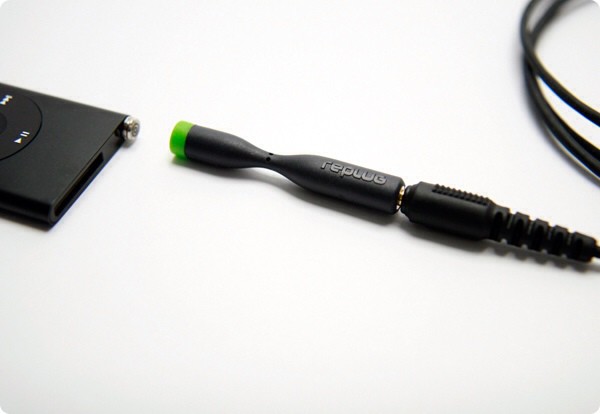
Snap! The Replug will break off in emergencies, leaving your cables safe.
Replug is a gadget that could – if it had existed a few years ago – would have saved me a fortune; literally hundreds of dollars. It is a simple and excellent idea: a magsafe connector for your headphones, only without the magnets.
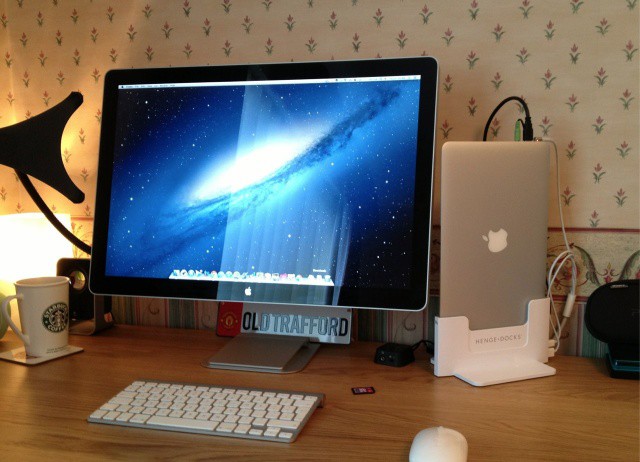
If you use your MacBook with a Thunderbolt Display at home or at the office, and you don’t use your MacBook’s display as a secondary monitor, then a Henge Dock is a great way to keep your desk neat and tidy.
Available for all recent MacBooks, MacBook Airs, and MacBook Pros from 11 to 17 inches — with prices ranging from $55 to $75 — it provides you with a place to dock your MacBook in a vertical position so that it takes up as little space as possible. Its integrated ports mean you can still all of your notebook’s USB ports, its MagSafe connector, audio jack, and more.
The Henge Dock promises to be the “first truly comprehensive docking station solution for Apple’s line of notebook computers” There are some things it could do better, however.
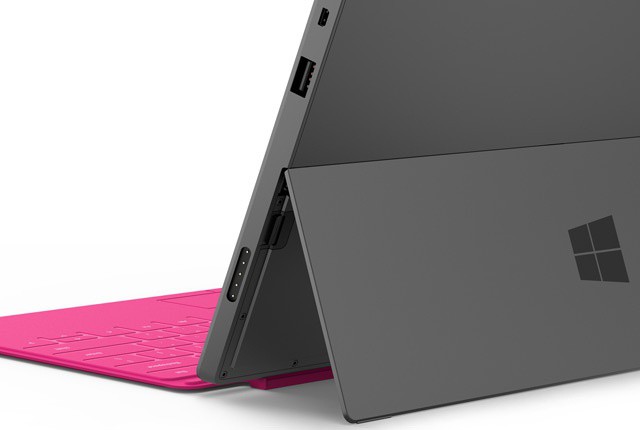
See that five-pin connector on the side of Microsoft's Surface? That's pretty much a MagSafe.
Ever since it first debuted in January 2006, Apple has jealously guarded its MagSafe technology from being poached by the competition. Patented up the wazoo, Apple doesn’t allow knock-offs and goes after companies that try to rip it off, even going so far as to sue companies that make MagSafe compatible accessories that use official recycled MagSafe connectors.
It’s through being so aggressive about its MagSafe IP that, to this day, none of the competition has anything like it. That’s about to change, though: the new Microsoft Surface tablet has a MagSafe-like connector. Prepare for a legal showdown.
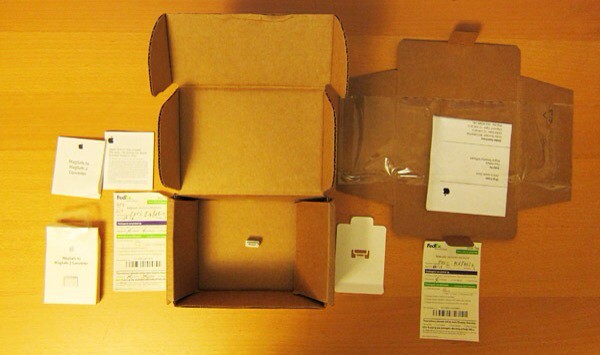
Apple is generally known not just for the minimal design of its products, but also for the minimal design of its packaging. But when it comes to the new MagSafe to MagSafe 2 adapter, the box is not only huge in comparison to its payload, it also consists of a frankly ridiculous number of individual parts. And Paul Kafasis, boss of Rogue Amoeba software, has the photos to prove it.
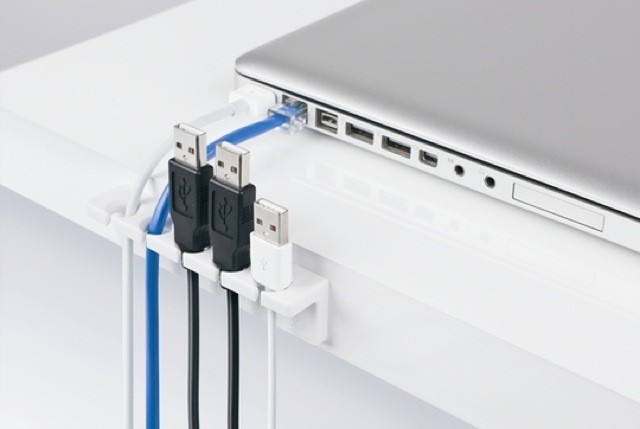
We all know that the best cable management system is a Thunderbolt-equipped cinema display, but it is also just about the most expensive way to wrangle all the wires you need to support the life of your MacBook. So Rockpool Designs’ CableStrip might be the next best thing, and it costs just $10.
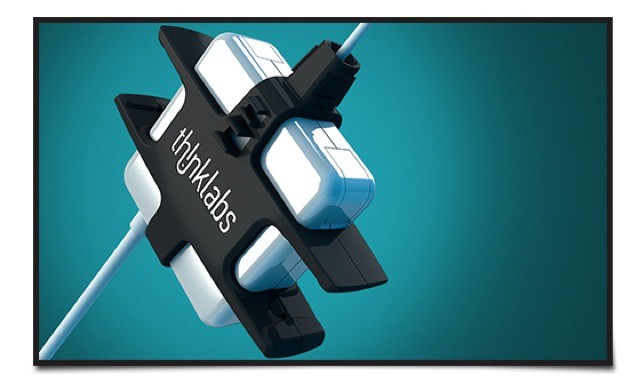
Wrap Up might just stop you burning down the house
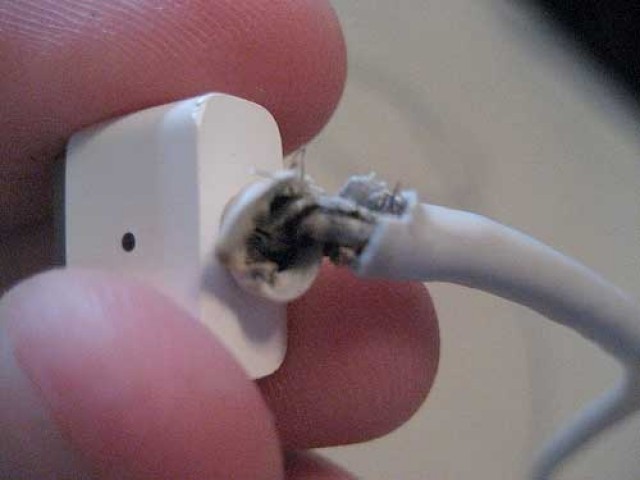
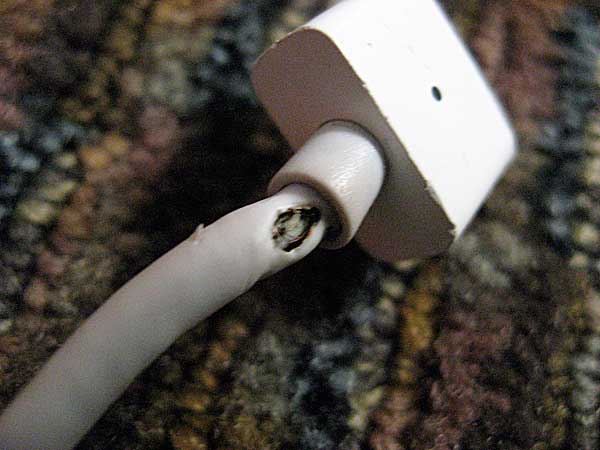
I have had to replace more than one frazzled MagSafe charger thanks to an uncharacteristically bad piece of design by Apple. Sure, the magnetic connection breaks away to save the connected Mac from a fall, and it’s great that the latest MagSafe adapters have newly-designed, tougher aluminum tips, but the junction between the cord and the chager itself is still pathetically weak. So weak it makes a sick kitten look like Chuck Norris.
Thinklabs’ Wrap Up is an effective solution to this.
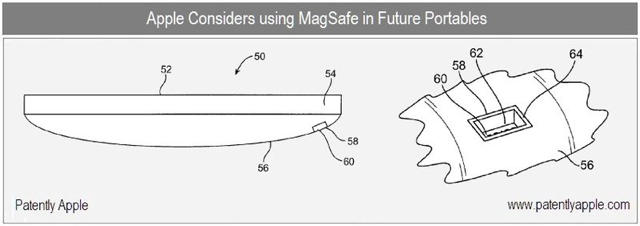
We already know from previous reports that Apple is working on a magnetic charging system for iOS devices, similar to the MagSafe connectors on its MacBooks. But one hurdle that stood in the company’s way was the MagSafe’s inability to transfer data.
However, a newly published patent entitled “Programmable Magnetic Connectors” seems to confirm that Apple is making progress on a magnetic connector capable of transferring power and data, which could spell the end of its 30-pin dock connector and even the headphone jack.
If you have plans to sue Apple for a faulty MagSafe power adapter that may have set fire to your home office, then you had better make it a priority on your to-do list. The deadline to make claims under the class action settlement relating to the device is fast approaching.
A couple weeks ago, we posted about TwelveSix’s PlugBug, a cute little attachment that plugs into your standard MacBook MagSafe charger and gives it a 10W USB port, perfect for charging your MacBook and iPad simultaneously.
The PlugBug’s an ingenious little idea, and I’m reviewing one now. However, PlugBug’s days might be numbered: a new patent says that Apple is working on a universal power adapter that can charge MacBook Pros, iPhones and iPads, all at the same time.
Has your Mac’s MagSafe adapter been worn down to the wires? Apparently, many people have experienced problems with MagSafe power adapters damaging where the cord and connector meet. So much so, in fact, that Apple had to redesign the MagSafe adapters to the L-shaped ones we know and love today just to try to resolve the problem, but to no avail.
No worries, though. Apple has launched an official Adapter Replacement Program for customers with damaged cables and broken hearts. There are now steps in place for getting your MagSafe adapter replaced and your money refunded.
If you owned an Apple notebook before 2006 when the MagSafe method of charging was introduced, you’ll know that if someone tripped over your power cord, they often took your computer down with them. Now we have the MagSafe, we don’t have to worry about the fool in the coffee shop who isn’t looking where he’s going, because your power cord just pops out with a slight tug.
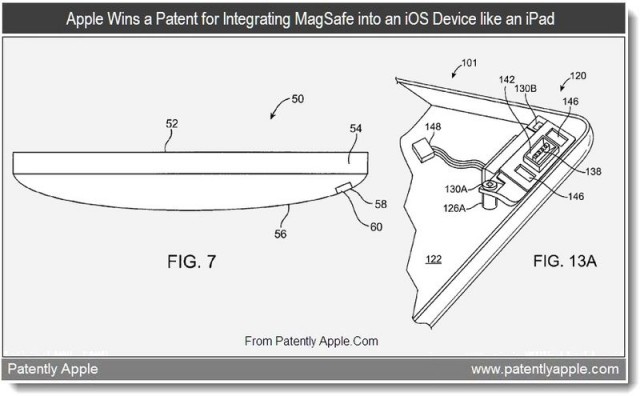
According to a new Apple patent, MagSafe technology could also be heading to iOS devices to safe them from clumsy feet.
That awesome MacBook Pro prototype with built-in 3G that we reported on yesterday was removed from eBay at the request of Apple last night, after bidding reached a whopping $70,000. However, its seller has been posting further details of the device on the MacRumors forums, revealing its magnetic MagSafe-like antenna setup.
They don’t do it often, but when they do, Apple doesn’t like to mess around when it comes to suing other electronics companies for infringing upon their patents and intellectual properties. No, Apple lawsuits tend to end like a round of Mortal Kombat, at least figuratively. Close your eyes and you can mentally transpose Steve Jobs for Sub-Zero; as the judgment comes down, he holds aloft the fluid-spurting spinal column of a defeated opponent while screaming and staring into the sun. The internet then provides the commentary: FATALITY.
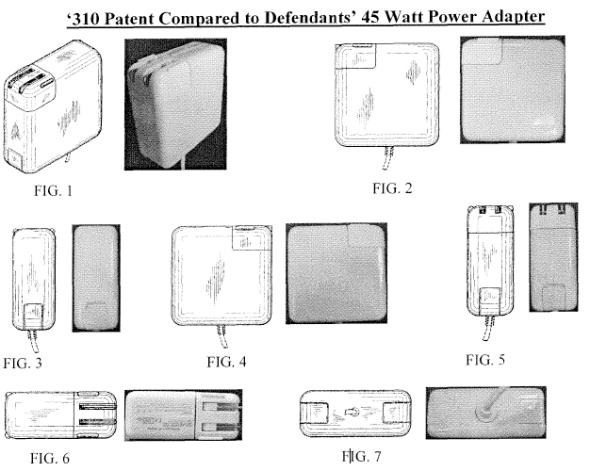
Bad news indeed, then, for Media Solutions Holdings, who must already be feeling the twinge of legal lumbar pain. Last week, Apple filed a patent infringement lawsuit against them, claiming that the company is using a host of different websites (such as laptopsforless.com, laptopacadapter.com and ereplacements.com) to sell knock-off MacBook and MacBook Pro MagSafe power adapters.