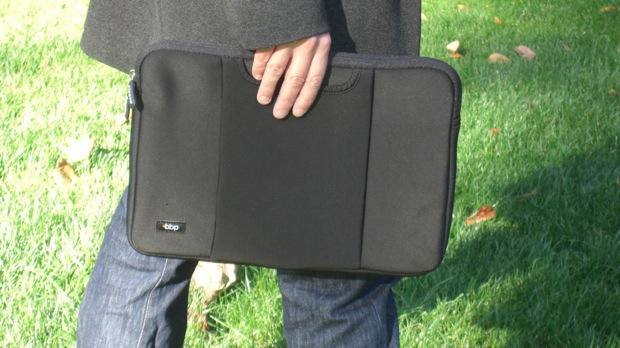
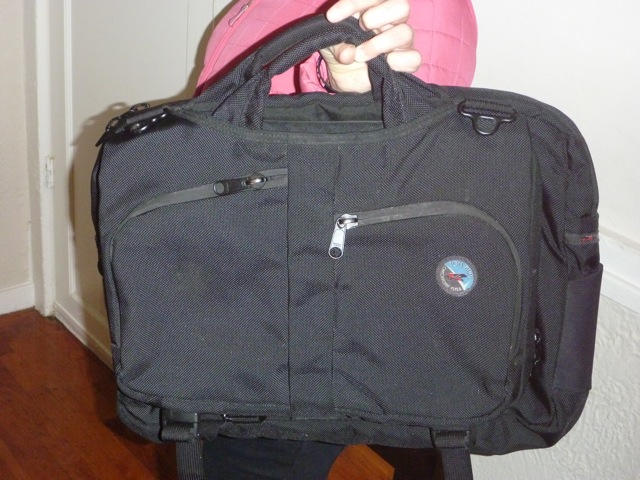
The Tom Bihn Checkpoint Flyer bag is designed specifically to get your MacBook through an airport security screening.
No more pulling out your MacBook and putting it in a plastic bin. With the Checkpoint Flyer, you can leave your MacBook inside the bag and breeze through the X-ray machine.
The bag has three compartments designed to be folded flat on an X-ray scanner bed. Laid flat, the bag gives the X-ray operator a clear view of the MacBook and anything else inside the bag. There are no pockets or metal components to block the screener’s view. Pretty cool!
Note: It’s Bag Week on CultofMac.com. We’re checking out some of the latest and greatest bags on the market. Read all the bag reviews here.
Having lost the ability to speak, Ebert is pouring himself into writing instead.
His astonishing online journal runs to more than 500,000 words on topics as disparate as his life, the afterlife (none-he’s atheist), alcoholism, travel, books, and friends, living and dead.
To communicate in everyday life, Ebert uses text-to-speech on his MacBook Pro, Stephen Hawking-style.
Well, turns out they actually come in two flavors, and we decided to put the Courier’s big brother — the Flap Jack Pack — through the Cult’s rigorous, uncompromising bag-testing procedures. The result was a demonstration of how applying the exact same design elements to a slightly different application can change things.
The Brenthaven MacBook Messenger bag allows you, the customer, to design your own messenger bag. You can choose from more than ten designs to personalize the front flap.
Wait, it gets better.
You get two different designs, one for each side of the flap. Allowing you to change sides depending on your outfit! It’s almost like getting two bags for the price of one ($129.95). The bags fit the 13-inch MacBook Pro and 15-inch MacBook Pro.
Note: It’s Bag Week on CultofMac.com. We’re checking out some of the latest and greatest bags on the market. Read all the bag reviews here.
The Incase Large Messenger Bag is strong, stylish and functional. It's one of the best messenger bags I've used. Photo: Nadine Kahney.
I’ve been a long-time user of messenger bags, ever since I was a bike courier here in San Francisco in the mid-1990s. I’ve been though a few of them, including an original Zo bag, but one of the best I’ve used is the Large Messenger Bag from Incase.
Note: It’s Bag Week on CultofMac.com. We’re checking out some of the latest and greatest bags on the market. Read all the bag reviews here.
I love the latest Horseman laptop bag from Crumpler.
The best thing about Crumpler’s Horseman Bag is its size, which I think is optimum for a messenger/laptop bag. I have owned messenger bags that are too big, really just a huge cavernous void for your stuff to rattle and roll around in.
The other end of the spectrum are bags that are too small, which I personally think look a little on the feminine side on a fully-grown man. Not The Horseman though.
Note: It’s Bag Week on CultofMac.com. We’re checking out some of the latest and greatest bags on the market. Read all the bag reviews here.
For the ultimate wow factor, bring the Knomo Bristol laptop bag to your next meeting or job interview. This well-made leather laptop bag is the ultimate accessory for white-collar workers.
The Bristol looks professional and so will you. Sold at Apple’s retail stores, this $150.00 bag is from Knomo, a posh new company from the West End of London.
Founded in 2004, Knomo’s mission is to make accesories that are as stylish as they are functional. With the Bristol bag they’ve outdone themselves.
Note: It’s Bag Week on CultofMac.com. We’re checking out some of the latest and greatest bags on the market. Read all the bag reviews here.
I must admit I love the BBP Hybrid Hampton bag, possibly my favorite of the year, in terms of style at least.
BBP’S Hybrid Hampton is the company’s flagship laptop bag featuring the Bak2Pak system that converts from a backback to a messenger bag in no time at all.
I’ve been on the lookout for a bag that is cool enough to be hip ‘with the kids’ while grown-up enough to take to business meetings without feeling like mutton dressed as lamb. And this bag is what I’ve been waiting for.
Note: It’s Bag Week on CultofMac.com. We’re checking out some of the latest and greatest bags on the market. Read all the bag reviews here.
FastMac's Michael Lowdermilk holds up the Impact Sleeve.
SAN FRANCISCO, MACWORLD 2010 — You’ve probably seen the late pitchman Billy Mays on late-night TV smashing his hand with hammer while it’s wrapped in Impact Gel — a super cushioning material used for insoles.
In fact, Impact Gel was featured in the first episode of PitchMen, the Discovery Channel show featuring Mays and his partner Anthony Sullivan.
Now, Impact Gel is being used to make a laptop sleeve that can be hit with a hammer and dropped without damaging the contents.
Primate Labs’ Geekbench is a tiny little benchmarking application with one really neat funcitonality: run it on your system and it’ll upload the results to their servers, allowing users to easily compare benchmark scores across computers to inform their next purchasing decision.
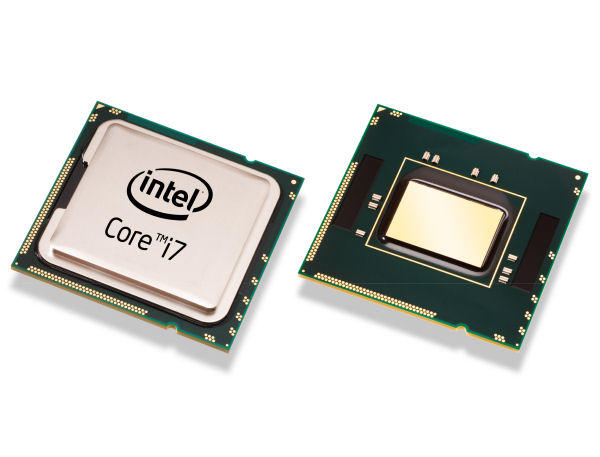
That’s swell, but hardly news in and of itself… except that over the weekend, someone downloaded the GeekBench app and ran it on a system referring to itself as a MacBookPro6,1, the commonly acknowledged successor to the current MacBook Pro line. Oh, and it’s packing an Intel Core i7 M processor.
A recent Intel contest ad “confirming” a forthcoming transition to Intel’s new Core i5 mobile chips for the MacBook Pro had all the hallmarks of a corporate gaffe…. and so it was. Intel has issued a statement, clarifying that they never meant to use MacBook Pros in the ad in the first place.
According to Spanish site faq-mac.com, which broke the story, Intel has now revised the promotion to give away HP Envy notebooks, which do contain a Core i5 chip, instead of the MacBook Pro. They’ve also apologized for the confusion, blaming the error on a lack of communication from their central marketing agency.
That’s not to say the Core i5 MacBook Pro isn’t likely to be unveiled sometime in the future… as usual, it just goes to show you can’t take a contest entry form as a prophetic glimpse into the future of Apple products.
An archeologically stratal cross-section of the port placement of Apple’s metal-skinned professional line of notebooks over the course of the last decade, courtesy of photographer and Mac enthusiast Robert Donovan. Fireflies dance in the background.
From top to bottom, the notebooks pictured are:
• The 13-inch Unibody MacBook Pro (2.53GHz Intel Core 2 Duo)
• The 15-inch Titanium PowerBook (400MHz G4)
• The 15-inch Aluminum PowerBook (1.25GHz G4)
• The 15-inch MacBook Pro (2.5GHz Intel Core 2 Duo)
For me, this is morbidly erotic. It’s like four ex-lovers stacked nakedly atop each other, two of whom were dumped for their younger, hotter sisters, one of whom ran off on me because of my drinking problems, and the last so emphysemic from passive smoking that she’s due to cough up a lung any day now… a medical emergency definitely not covered by Apple Care.
For Apple fans abroad, the price discrepancy between between the cost of an Apple computer locally and what it would cost in the States is often enough to justify a flight to the States. In first class. On a chartered Gulfstream jet. Loaded as cargo in the belly of an Anatov An-225.
Fine. I’ll cop to the slightest of exaggerations. But as an American living abroad, paid in dollars but doing business in Euros, the 40% premium on the cost of a new MacBook Pro or iMac is enough, sometimes, to make me want to weep. Apple’s not alone in this: across the board, gadget makers releasing their products in the EU set a MSRP assuming a dollar-to-euro exchange rate of 1 to 1…. even when, in reality, the actual exchange rate is 1 to 1.45. There’s optimistic ways to look at it, of course — commit to buying that new MacBook Pro I have my heart set on for its euro price but in the States, and I get a trip home “for free.” But this is meager comfort: in reality, it often feels like the low prices of gadgets in America and Japan are subsidized by the exorbitant markups people pay for their technology in the rest of the world.
Don’t believe me? Check out this helpful infographic over at CMYPlay, which colorfully and informatively breaks down the price discrepancies between the same model of MacBook Pro over a handful of countries. At the end of the day, the average Brazilian spends enough in local currency for one MacBook Pro that he could pick up two of the same model if he bought it in the States. It’s almost enough to make a native Brazilian woe the day he was born in that bright, sunny paradise of plump, bethonged bikini bottoms.
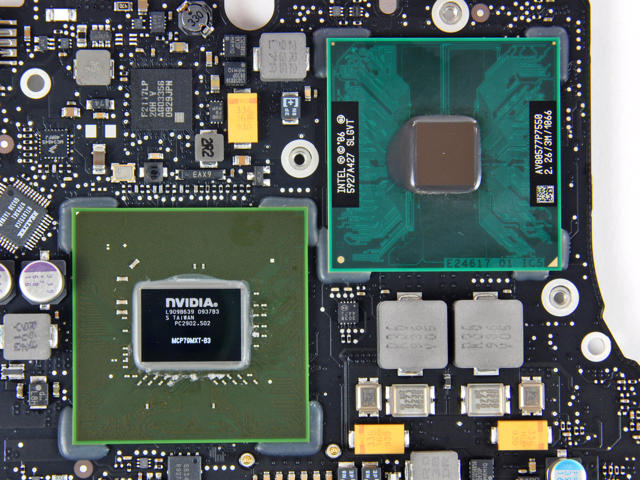
Intel’s decision to marry their new mobile Core i5 and i7 CPUs with integrated graphics has reportedly not gone over well with Apple, who are rumored to be demanding custom-designed chips from Intel for an update to their MacBook and MacBook Pro line of notebooks.
But perhaps there’s another solution. Gizmodo noticed that NVIDIA, maker of the MacBook line’s ubiquitous GeForce 9400M GPU, is now teasing a new notebook technology called Optimus that is supposedly capable of achieving the performance of discrete graphics in a notebook while still delivering great battery life.
It’s probably just scalable performance, but if the Optimus tech is as good as NVIDIA is bragging, it would allow Apple to ditch the substandard switchable GPU configuration of current unibody MacBook Pros, which requires a reboot, to a discrete-only solution, like the earliest MacBook Pros and PowerBooks.
TheDailyNewsEgypt interviewed Sussman, who explains what happened. She also gives some different views of the destroyed machine. Look what a rifle round does to a MacBook.
If you’re set to automatically grab new updates, you’re likely to notice Apple’s Software Update burbling insistently in your dock for your attention, after Apple released a couple of updates of both their Airport software and the MacBook / MacBook Pro’s EFI.
The Airport Client Update 2009-002 is a routine update, fixing a few routine issues. The update solves the inability to turn the AirPort on or off in some cases after upgrading from Leopard, as well as an occasional loss of network connectivity when using Wake on Demand and the inability to create computer-to-computer networks or share Internet connections on some MacBook, MacBook Pro and Mac Mini computers.
The MacBook and MacBook Pro EFI Update is more interesting, in that with the installation of SuperDrive Firmware Update 3.0, the optical drive of these machines should no longer sound like Cookie Monster trying to chew his way through a sheet of plate glass when waking from sleep or start-up.
As usual, you can either load up Software Update to automatically suck them down and install them (restart required), or you can grab the latest updates from Apple’s support page.
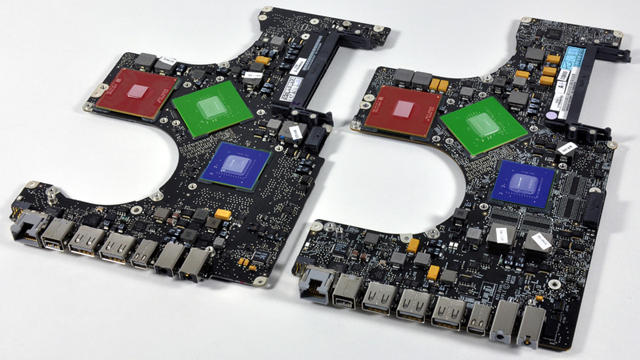
Apple likes Intel’s desktop line of Core i5 and Core i7 CPUs well enough to put them in their iMacs, so it makes sense that they would want to avail themselves of Intel’s three new Core i5 and i7 mobile CPUs (codenamed Arrandale) for any forthcoming refresh of the MacBook line. But things may not be that simple.
One way the Arrandale line of processors differs from previous Intel mobile CPUs is that the chips include mandatory integrated graphics. According to the Bright Side of News, Apple’s not interested in that: even the most inexpensive Macs now contain NVIDIA GeForce 9400M GPUs, which offer far superior performance to integrated graphics solutions.
It should be no surprise to anyone that the newest iMacs catapulted to the top of the sales charts when Apple released them in October. But just in case you have any bets going on the matter comes sweet analyst confirmation: Apple computers topped the list of the most popular machines sold at retail in October, according to the NPD Group. Gentlemen, collect your outstanding beers and pony rides.
For those unfamiliar with the ebb and wane of Apple’s actually pretty dependable product upgrade cycle, MacRumors‘ Apple Buyer’s Guide is a must–check resource for those looking to buy a new Mac, iPod or iPhone. With a glance, you can see how close any Apple product is to being refreshed, and if you check it now, you’ll see see that the MacBook Pro is only about a month away from getting an update.
So what will change in the next MacBook Pro? The new unibodies are only a year old, so it’s probably nothing much more drastic than a processor update, and not so coincidentally, Intel is planning to launch three new Arrandale-based, 32nm Core i5 and Core i7 mobile processors on January 3rd… just around the time MacBook Pros are historically refreshed.
They don’t do it often, but when they do, Apple doesn’t like to mess around when it comes to suing other electronics companies for infringing upon their patents and intellectual properties. No, Apple lawsuits tend to end like a round of Mortal Kombat, at least figuratively. Close your eyes and you can mentally transpose Steve Jobs for Sub-Zero; as the judgment comes down, he holds aloft the fluid-spurting spinal column of a defeated opponent while screaming and staring into the sun. The internet then provides the commentary: FATALITY.
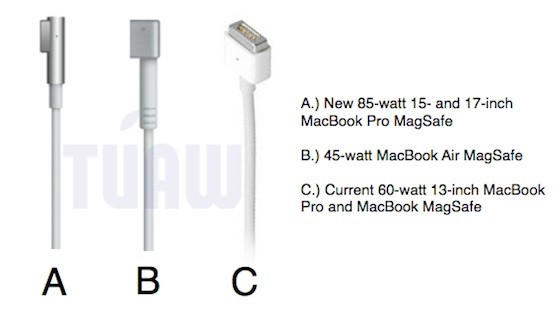
Bad news indeed, then, for Media Solutions Holdings, who must already be feeling the twinge of legal lumbar pain. Last week, Apple filed a patent infringement lawsuit against them, claiming that the company is using a host of different websites (such as laptopsforless.com, laptopacadapter.com and ereplacements.com) to sell knock-off MacBook and MacBook Pro MagSafe power adapters.
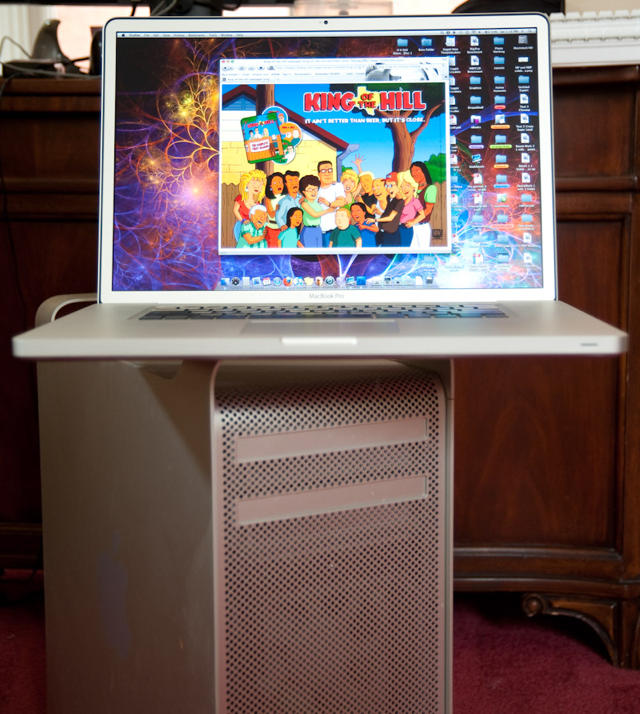
When I saw this snap in the Cult of Mac Flickr pool, I wanted to find out more. Who is the owner of the little family of Macs old and new, and how did they end up on this desk?