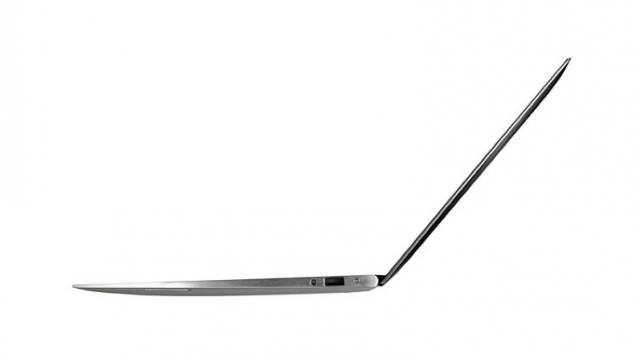
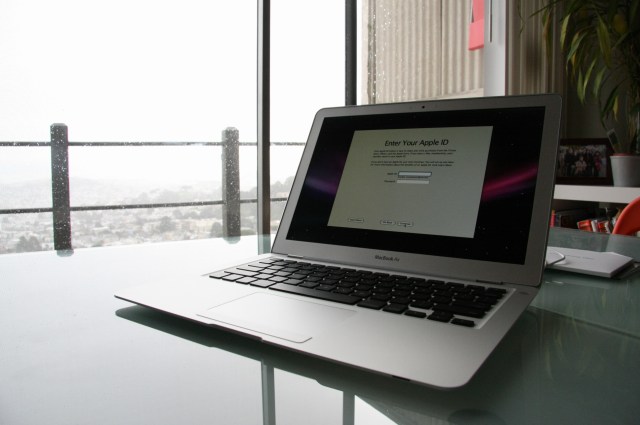
PC makers hoping to compete with Apple’s lightweight MacBook Air laptop want chipmaking giant Intel to cut prices in order to produce “Ultrabook” alternatives costing under $1,000. So far, the company has balked at any discounts, yet still seeks to capture 40 percent of the notebook market.
If you’ve plowed years of hard work into maintaining an iWeb blog, you must be concerned about what will happen to your site with the impending death of MobileMe just around the corner. But thanks to this handy conversion tool from RAGE software, you can transfer it all to WordPress within minutes.
With the news that HP is seriously reevaluating the longevity of the webOS platform, it looks like another mobile OS has fallen by the wayside.
After being largely abandoned by Nokia for Microsoft’s Windows Phone OS, Intel has announced a ‘temporary’ halt on development of Meego. The company will reportedly focus on hardware development for either the Windows Phone OS or Android.
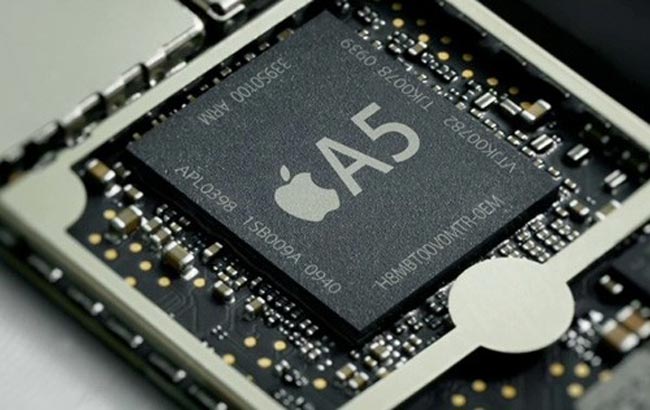
It’s been a long-standing rumor that Apple will switch to its own, proprietary ‘A’ series of ARM-based chips in its MacBook and desktop machines. Currently, Apple relies heavily on Intel to provide processors for its computers — the MacBook specifically.
In terms of the MacBook, a recent interview with the director of Intel’s Ultrabook group shows that Intel sees Apple switching to ARM processors as a very real threat. There could very well be a day when all Apple products run on the same series of chips — and that series will be exclusively made by Apple.
A “one of a kind” MacBook Pro prototype, which has been listed for sale on eBay, reveals Apple’s work on a notebook with built-in 3G connectivity. It’s the first MacBook Pro we’ve seen with an antenna built into the side of the display, and a SIM card slot beneath the memory cover.
One Intel director revealed in a recent interview with The Wall Street Journal that Apple threatened to drop the chip maker over its hungry processors if it couldn’t “drastically slash” the amount of power they demanded.
Responding to their customers’ garish ineptitude in trying to outprice the $999 MacBook Air, Intel has decided to do notebook makers’ work for them and put together a reference bill of materials on how to build cheap ultrabooks capable of competing Apple’s superslim ultraportable.
The MacBook Air has ushered in a new era of powerful netbooks that function more like prosumer computers. In our review of Apple’s latest 2011 MacBook Air, it’s obvious that the Air now packs a punch and accompanying price tag that most notebooks of similar size haven’t been able to dream of for years.
The PC market is looking to level the playing field between the Air and its competition, with Intel announcing a new platform called the “Ultrabook.” The Ultrabook is the PC industry’s proposed MacBook Air killer, but these upcoming notebooks will also have an ultra-price tag that’s higher than the Air’s. Apple’s entry-level MacBook Air retails for $999.
Apple’s latest line of Mac mini compact desktops offer some pretty impressive specifications. What with those latest Intel Core i5 and i7 processors and the opportunity to grab a solid-state drive with a custom build, you can get a super speedy mini if you have the money.
One thing you can’t get for your new machine, no matter have much money you have, is 16GB of RAM… at least not from Apple.
Apple is expected to announce the launch of its updated MacBook Air line sometime this week, but for those of you who are dying to know what the latest ultraportables will be packing when they arrive, here are the specs for the new 11- and 13-inch MacBook Airs.
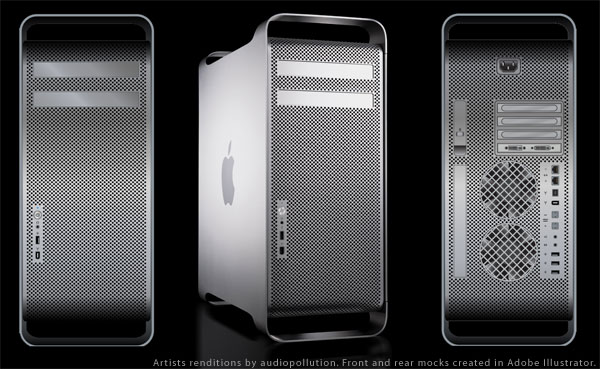
Although it hasn’t seen an update since last year, the Mac Pro isn’t dead… it’s just been getting a little beauty rest before it debuts next month post-Lion, boosting a new 16 core configuration capable of searing the melted physiognomy to even the most cynical benchtester’s skull.
At the close of markets on Friday, Apple had a bigger market cap than Microsoft and Intel combined — the so-called Wintel alliance that almost buried Apple a decade ago.
Here’s how much Apple, Microsoft and Intel were worth on Wall Street at the end of the week:
The iPad has already killed netbooks, and now it’s starting to do the same to laptops. Within five years, the iPad might even kill off the Mac, says NVIDIA… replacing it with ARM-based machines that can outperform even the speediest Intel processors.
A refresh to the MacBook Air lineup appears to be imminent this week as retail sources worldwide report that supplies and shipments of Apple’s ultraportable notebook are beginning to diminish.
Speculation that Apple is to introduce ARM processors to the next revision of its MacBook Airs continues, as one source claims the company is internally testing the ultraportable notebooks with its A5 processor… but will we really see an A5 powered MacBook Air? I don’t think so.
Intel’s family of Sandy Bridge processors is about to get a whole lot bigger as the chip manufacturing company ramps up production of new ultra-low voltage (ULV) processors that would be a perfect fit for my favorite portable computer — the MacBook Air.
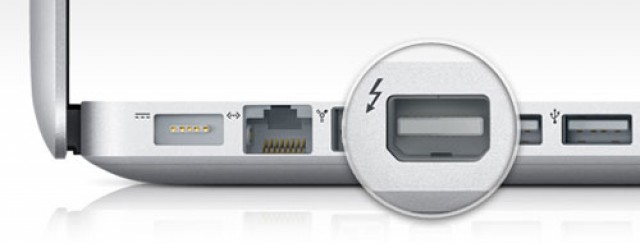
Intel was quick to clarify reports yesterday that Apple had secretly filed for the Thunderbolt trademark in Jamaica a year before the chipmaker unveiled their next-gen technology, and in doing so, have put some fears to ease: Thunderbolt is not another FireWire.
That new MacBook Pro of yours, may be more Apple than originally thought. Although Intel was credited with the Thunderbolt trademark on early 2011 Apple laptops, it now appears that Apple may have beaten them to the bunch and snuck in their own trademark application a year ahead of time. Is this cricket?
Will Apple, as rumored, shift the MacBook line over to an ARM processor this year, starting with the MacBook Air? If you answered yes to that question, one analyst has some compelling reasons why you might just be huffing fumes.
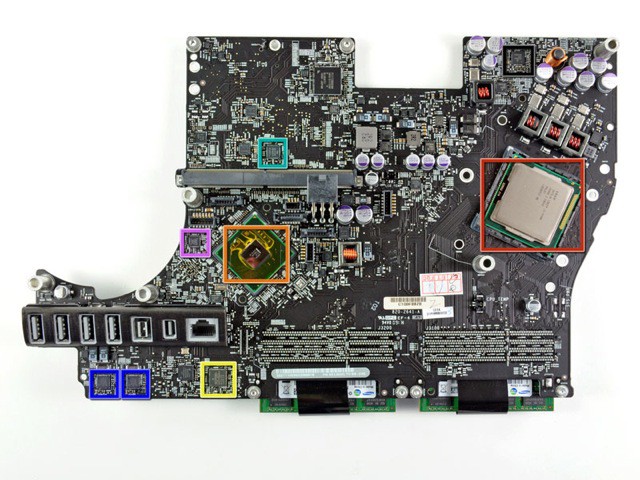
Apple’s new family of iMac all-in-ones released earlier this week boast an Intel BD82Z68 platform controller hub that isn’t scheduled for release until May 11th. The Z68 chip, designed for Sandy Bridge 1155, was first discovered by TonyMacx86 and later confirmed in an iFixit teardown.
The Z68 allows for solid-state drive data caching when a system is equipped with a combination of storage drives. So users could install a small, relatively cheap SSD along with their traditional hard disk drive and have the SSD serve as a cache – dramatically increasing access speeds to their files and applications. The new iMacs can be ordered with both an SSD and a traditional hard disk drive installed, and the Z68 can allow users to see this combination as just one drive on their Mac.
Apple’s online store is back up following some downtime this morning and just as we all expected, it now features a nice new family of iMacs.
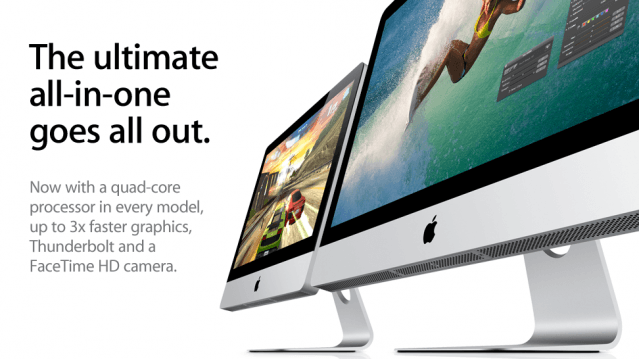
These new all-in-ones boast Intel’s next-generation quad-core i5 and i7 processors, the company’s high-speed Thunderbolt technology, 3x faster graphics, and a FaceTime HD camera.
There are four new iMacs to choose from starting at $1,199 – two 21.5-inch models and two 27-inch models – all four come with 4GB of RAM and a FaceTime HD camera capable of shooting video in 720p.
Citing sources “familiar with the matter,” a new report suggests Apple will launch its new lineup of iMacs tomorrow, May 3rd, featuring Intel’s newest family of Sandy Bridge processors, and the company’s high-speed Thunderbolt port in place of the current Mini DisplayPort.
Apple has recently been taking steps to ensure a smooth roll-out of the new iMacs, according to the same sources, who apparently continue to provide accurate information when it comes to Apple’s plans, says the AppleInsider report. One confirmed that a “visual night” is scheduled for the early morning hours of May 3rd, “so it is highly likely that whatever new product that is going to be refreshed or introduced will be done on [that day].”
A “visual night” is when several Apple retail employees are called in to work throughout the evening and into the early hours of the morning to make changes to store layouts, often removing old products to make room for new ones.
Previous reports have already speculated that Apple was getting ready for the imminent launch of updated iMacs, and stock of the current generation all-in-one is slowly diminishing. The last time the iMac family was updated was some 9 months ago.
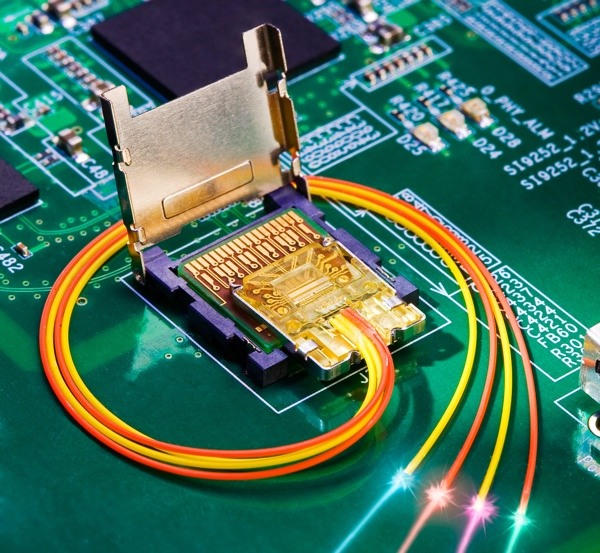
The new MacBook Pros are due on Thursday according to pervasive Internet scuttlebutt, and at the very least, a jump to Intel’s new Sandy Bridge architecture is a sure thing… but another state-of-the-art Intel technology might be coming to them as well, with Mactrast reporting that the February 24th MBP refresh might include the adoption of Intel’s Light Peak technology.
Yesterday, Intel announced a massive hardware recall that surely stopped the hearts of a few investors: the Cougar Point chipset used for their cutting-edge Sandy Bridge CPU had a hardware bug that caused the SATA 3GB/s port to degrade over time, potentially harming hard drives and other devices connected to it.
All things considered, it’s not actually a huge issue. Intel expects that over 3 years of use it would see a failure rate of approximately 5 – 15% depending on usage model. Still, at the end of the day, Intel expects to spend a billion dollars recalling and replacing the chipset. Oof.
The good news, of course, is that a Mac owner, this won’t affect your current system a whit: there aren’t any Macs available with Sandy Bridge just yet. Here’s the bad news, though. That imminent imminent Sandy Bridge MacBook Pro refresh? That might get delayed.
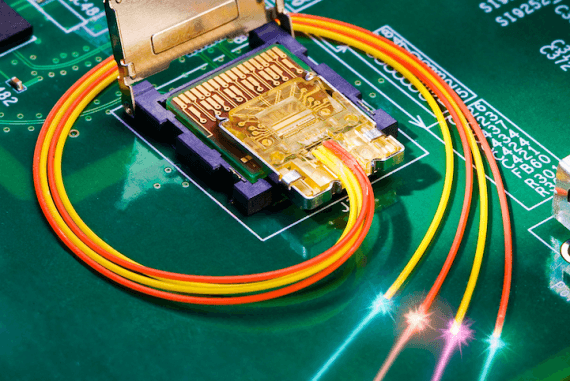
If you think 2011 is going to be the year that Intel’s Light Peak standard homogenizes the connections of your iMac into one tidy standard, think again… according to LaCie, it’snot even close to being ready for prime time.
“Intel has been the driving force for this technology. What we know for sure about Light Peak is that we know how to spell it,” LaCie’s senior engineer Mike Mihalik told PC World. “And that it’s intended to be a high-speed interface and it will support almost any protocol for transferring information from A to B.”
What;s the problem? Well, even though Light Peak will, in theory, obviate all other types of connections, including USB 3.0, it’s still just a lab experiment… despite the fact that Intel said it’d be in shipping products this year.
“Development needs to continue and we need to debug before we can turn the technology into a product,” reports Mihalik.
This is depressing news to guys like me, who assumed Apple’s reluctance to embrace USB 3.0 was due to their intent to leap frog directly to the more flexible Light Peak standard. They may still do just that, but it looks like we’ve got a couple years yet before we see it.