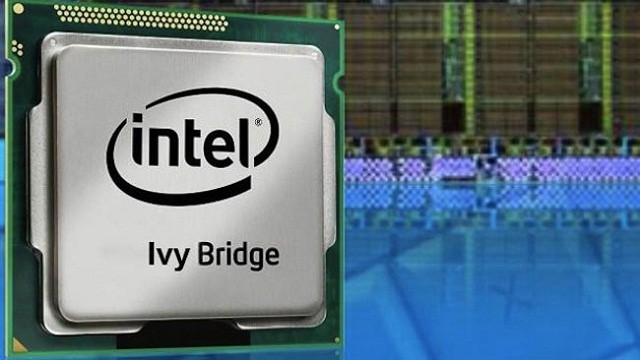
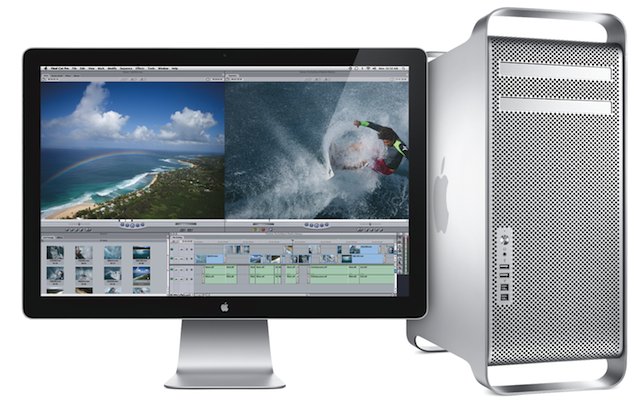
It’s been so long since Apple refreshed the Mac Pro that a number of reports have speculated the machine is set to be killed off. But it’s still available from the Apple store, and according to a new report, it’s going nowhere. In fact, it’ll soon to get a refresh that will introduce Intel’s Ivy Bridge processor and the new Kepler GPU from NVIDIA.
Some arguments about Apple never seem die despite the fact that reality has moved on. Arguments like the Mac not being compatible with Windows file sharing or disk formats and that all Apple products being inherently more expensive than any competitors. This morning, Computerworld’s Preston Gralla pulled several of these outdated arguments together to support his opinion that Apple would never unseat Microsoft in the enterprise.
Virtually every argument in this piece is easy to debunk with facts. What’s more important than responding to these outdated myths, however, is realizing that Apple doesn’t want to unseat Microsoft from its current place in the enterprise. Microsoft is actually doing a lot of enterprise heavy lifting for Apple.
Apple has been forced to cease online sales of its iPhone 3GS, iPhone 4, and 3G-equipped iPad 2 in Germany after Motorola triumphed over the Cupertino company in a Mannheim court, securing an injunction against several of its 3G devices. Those affected are no longer available to purchase from Apple’s online store, though they can still be obtained from its retail stores.
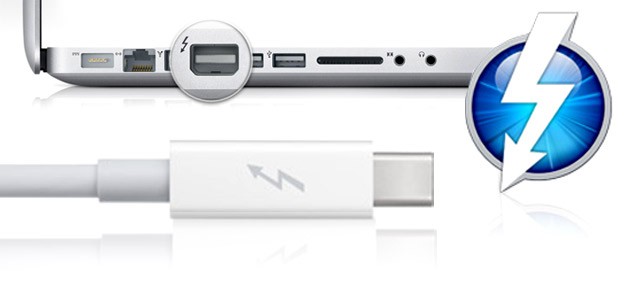
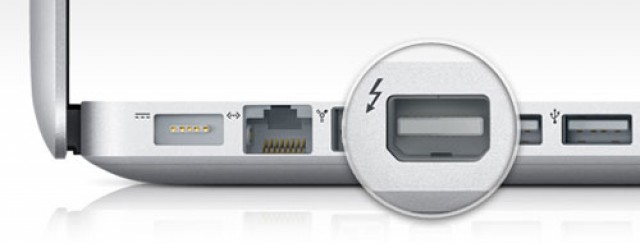
Apple first announced its incredible new Thunderbolt interface technology way back in February of 2011. Combining PCI Express and DisplayPort technology into a serial data interface, Thunderbolt allows for up to 20Gbit/s transfer rates, as well as the ability to daisy chain multiple devices, all in a tiny form factor that can fit even in the MacBook Air’s slim housing.
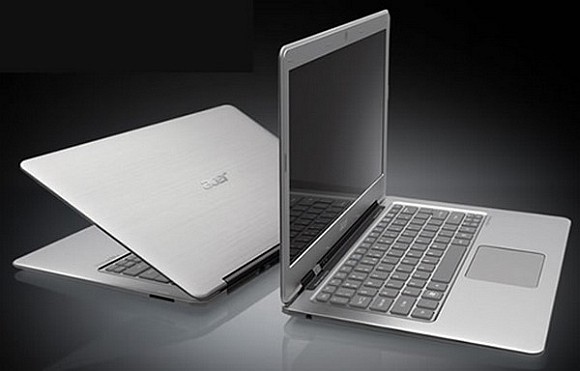
As usual, with Thunderbolt, Apple was at least a year ahead of the rest of the industry… and that’s not hyperbole. Only now are Acer, Asus and Lenovo getting ready to put Thunderbolt in their ultrabook offerings.
In the latest chapter from the Gang That Can’t Shoot Straight, Intel and Microsoft chase profits over a cliff. Unable to agree, the two companies created a rival tablet that costs more than the iPad and will likely hasten the move to ARM. The Wintel team is back at it snatching defeat from the jaws of victory.
Intel wants to be friends with Apple — or more specifically, Apple’s hoard of cash. As the PC industry craters and mobile devices seem to be the future, the chipmaker wants the tech giant to buy its Medfield design. Although Intel if talking, is Apple listening?
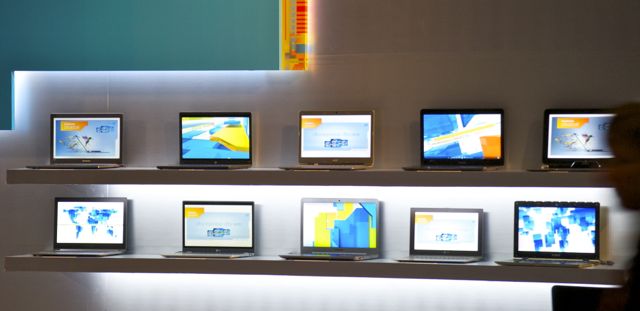
LAS VEGAS, NEVADA – Hundreds of tech journalists are huddled in the Galileo Showroom at the Venetian Casino this morning to hear the latest from Intel, and surprise surprise, Intel wants to talk about ultrabooks… the ultra-slim laptop form factor that the whole PC making industry is hoping will save them from being eaten at both ends by the iPad and MacBook Air.
Unfortunately, after all is said and done, most of what Intel had to offer to PC makers were a grab bag of gimmicks.
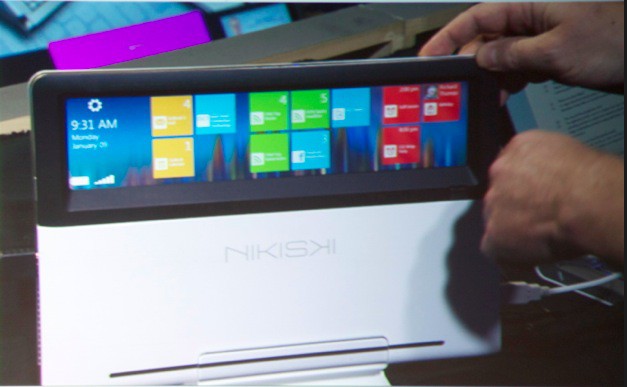
LAS VEGAS, NEVADA — Intel talked a lot at their press conference today about ways PC makers could take the ultabook form factor and distinguish it from the juggernaut that is the MacBook Air, but perhaps the most interesting concept of just what a MacBook Air-killing ultrabook would look like was the Nikiski, a hybrid ultrabook that looks like it just leaped straight from a sci-fi concept design.
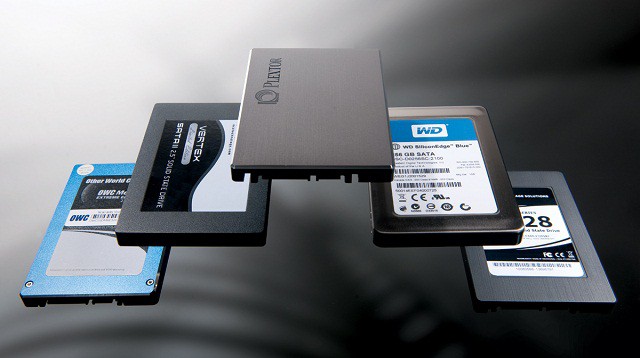
For years we’ve heard a lot of hype about SSDs and how they’re going to change computing, but their progress has been slow, and the masses have been getting impatient. Well CES 2012 will be the start of SSDs officially entering into mainstream use thanks to Apple Inc. The best purchase I made in 2011 was when I replaced my MacBook Pro with the new 11″ MacBook Air. Not only is the MacBook Air lighter than any laptop I’ve owned, it’s also powerful enough to do some really awesome things I’d never thought possible on a miniature computer (like playing graphic intensive games like Star Wars the Old Republic). Most of these technological marvels are all thanks to Apple’s inclusion on SSDs in the MacBook Air lineup. Of course, Apple didn’t invent the SSD, nor were they the first company to use them, but they’re responsible for bringing SSDs to the masses at an affordable price.
It’s hard living in a post-PC world, especially if you’re chip giant Intel. A Wall Street analyst downgraded the company from “Buy” to “Neutral” after key PC makers signaled plans to adopt rival ARM – not to mention the smartphones and tablets also throwing sand in Intel’s face.
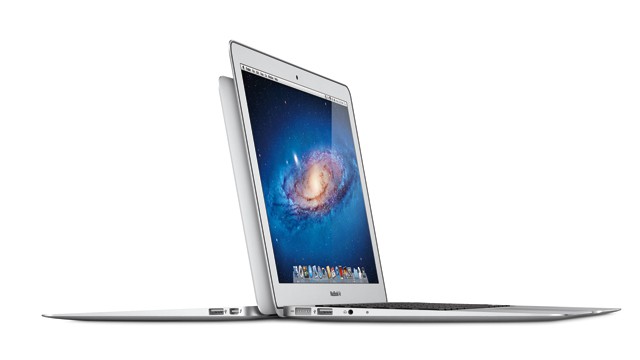
In late 2010, after years of abstaining from entering the netbook market, Apple finally succeeded in transforming the MacBook Air from a disappointing promise of laptops to come into a machine that revolutionized ultraportables the same way the iPhone revolutionized smartphones and the iPad revolutionzed tablets. Not only was the MacBook Air as thin as a samurai sword and about as small as a 12-inch netbook, it had the performance of a beefier laptop thanks to the inclusion of a proper CPU, dedicated GPU and ubiquitous flash storage… all at a sub-$1000 price point.
Overnight, the MacBook Air finished what the iPad had started and almost completely killed off netbook demand once and for all. Now all of the gadget makers who had previously been counting on netbook sales to boost their bottom lines are trying to catch up with Apple. But as usual, they’re about a year late.
What does this mean for CES 2012? Expect to see ultrabooks, ultrabooks and more ultrabooks.
Intel has reportedly begun notifying PC makers that it will “fully release” its Thunderbolt technology in April of 2012. This means that companies like HP and Dell will be able to sell Thunderbolt-equipped notebooks and desktops.
Apple and Intel partnered for the launch of Thunderbolt, and Apple has made the connection architecture standard for its notebooks and desktop computers, excluding the Mac Pro. It appears that Apple won’t be the only Thunderbolt-equipped computer company on the block anymore.
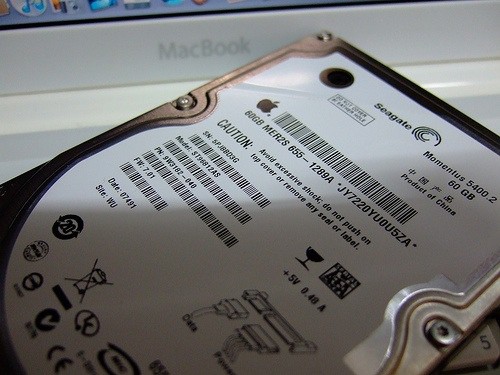
Apple is relatively unscathed by the recent Thailand flooding which threw for a loop PC makers more dependent on hard drives. That’s the word from Wall Street analysts who say Apple’s move to flash memory saved the Cupertino, Calif tech giant from the fate of Intel.
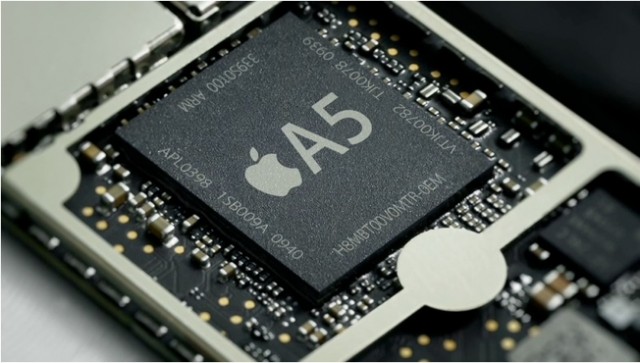
When you think of computer chips, Intel quickly comes to mind. However, Apple may have a lead on the chip giant when it comes to specialized silicon for mobile devices. A new report suggests Apple’s A5 design could lead to the Cupertino, Calif. company creating its own chips for MacBooks.
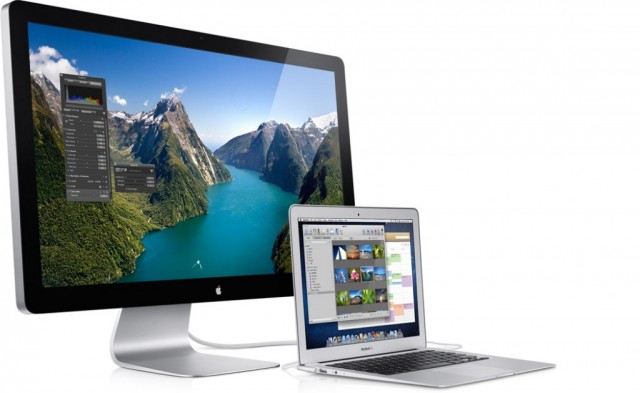
Your next MacBook Air should support a total of three displays at once via one Thunderbolt connection, according to a leaked roadmap of Intel’s plans for its Ivy Bridge processors in 2012.
With Apple’s next-generation laptops primed to sport Intel’s Ivy Bridge silicon, it’s very likely that future MacBook Airs and Pros will be able to support two external displays plus the MacBook’s built-in screen.
After Apple finally converted its entire Mac lineup to AMD, SemiAccurateis reporting that Apple is switching back to NVIDIA as the graphics chip supplier for the upcoming MacBook Pro model in 2012.
While the report doesn’t specifically say why Apple is planning its move back to NVIDIA, it looks as though the rumored MacBook Pro refresh for 2012 will include NVIDIA graphics and possibly the Intel Ivy Bridge processor.
Did Apple almost switch to AMD processors this generation in the MacBook Air? That’s the latest report, and while we’re really skeptical, if it’s true, it would have been quite the blow against Intel.
Last week’s three-month minimum delay to their Xeon-class Sandy Bridge processors may be the final nail in the Mac Pro coffin, inside sources are now reporting.
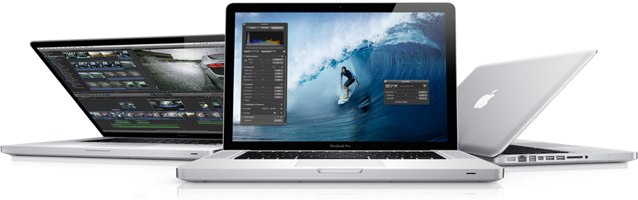
We’ve seen a number of rumors surrounding a MacBook Pro refresh in recent weeks, and just as expected, the latest models hit the Apple online store this morning. In addition to increased storage for some models, there are speed improvements across the board with faster Intel Core i5 and i7 processors.
Worried your nice new Mac won’t support those upcoming fiber optical cables? Well, worry no more. Intel has confirmed that the current range of Thunderbolt-capable Macs will indeed support fiber optical cables, which should be ready by next year.
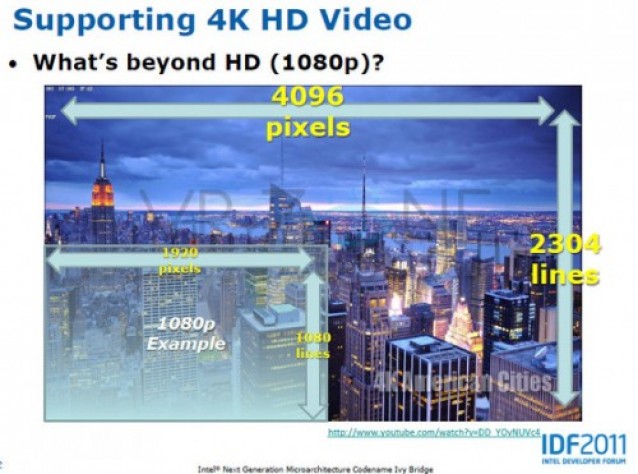
Intel’s upcoming Ivy Bridge processor could finally bring Retina displays to our Macs, after the company announced support for ‘4K displays’ last week. That’s a display with a staggering resolution of 4096×4096 pixels.
PC makers hoping to compete with Apple’s lightweight MacBook Air laptop want chipmaking giant Intel to cut prices in order to produce “Ultrabook” alternatives costing under $1,000. So far, the company has balked at any discounts, yet still seeks to capture 40 percent of the notebook market.
If you’ve plowed years of hard work into maintaining an iWeb blog, you must be concerned about what will happen to your site with the impending death of MobileMe just around the corner. But thanks to this handy conversion tool from RAGE software, you can transfer it all to WordPress within minutes.
With the news that HP is seriously reevaluating the longevity of the webOS platform, it looks like another mobile OS has fallen by the wayside.
After being largely abandoned by Nokia for Microsoft’s Windows Phone OS, Intel has announced a ‘temporary’ halt on development of Meego. The company will reportedly focus on hardware development for either the Windows Phone OS or Android.
It’s been a long-standing rumor that Apple will switch to its own, proprietary ‘A’ series of ARM-based chips in its MacBook and desktop machines. Currently, Apple relies heavily on Intel to provide processors for its computers — the MacBook specifically.
In terms of the MacBook, a recent interview with the director of Intel’s Ultrabook group shows that Intel sees Apple switching to ARM processors as a very real threat. There could very well be a day when all Apple products run on the same series of chips — and that series will be exclusively made by Apple.